Dark Academia Color Palettes: 5 Moody, Old-World Schemes for Timeless Interiors
There’s something wonderfully unapologetic about Dark Academia interiors.
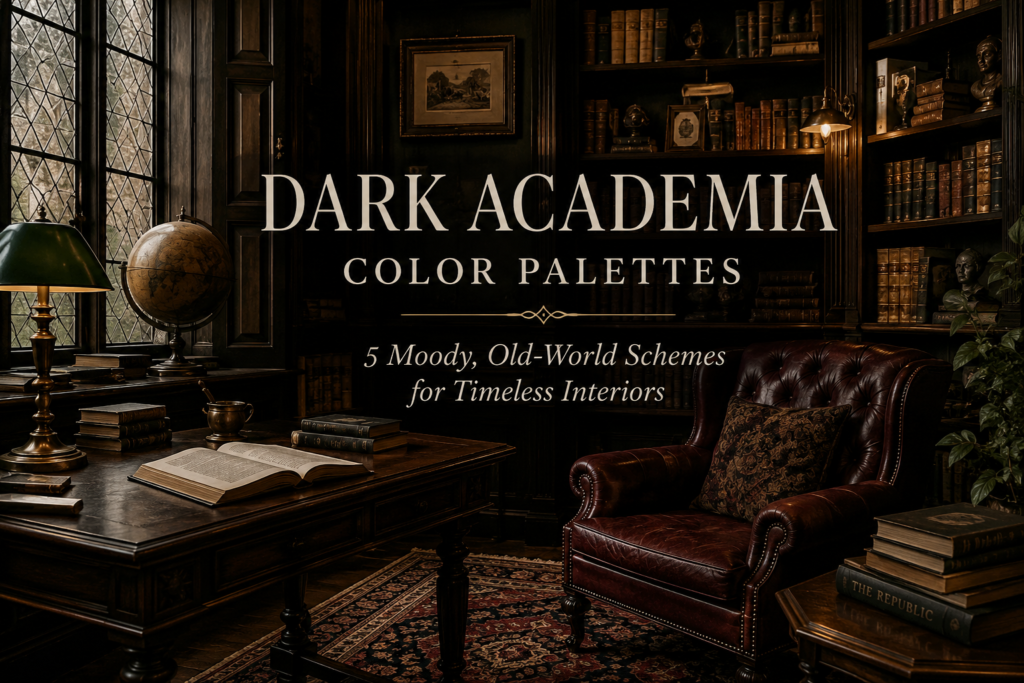
While so much modern decorating is about making rooms brighter, whiter and more minimal, Dark Academia heads in completely the opposite direction. It embraces shadow. It celebrates old things. It fills shelves instead of clearing them, hangs paintings on dark walls, piles books on tables and makes a room feel as though it has slowly evolved over generations.
Inspired by old European universities, private libraries, museums, historic townhouses and slightly mysterious reading rooms, the Dark Academia aesthetic combines deep colours with aged timber, worn leather, antique metals and objects that appear to have a story behind them.
But you don’t need to turn your home into a Victorian library to capture the feeling.
Sometimes, it begins with colour.
From oxblood and walnut to bottle green, parchment and antique gold, these five Dark Academia colour palettes offer different ways to bring that moody, intellectual, old-world atmosphere into your home.
1. The Old Library
Colour Palette: Oxblood • Walnut • Parchment • Antique Brass • Deep Forest Green
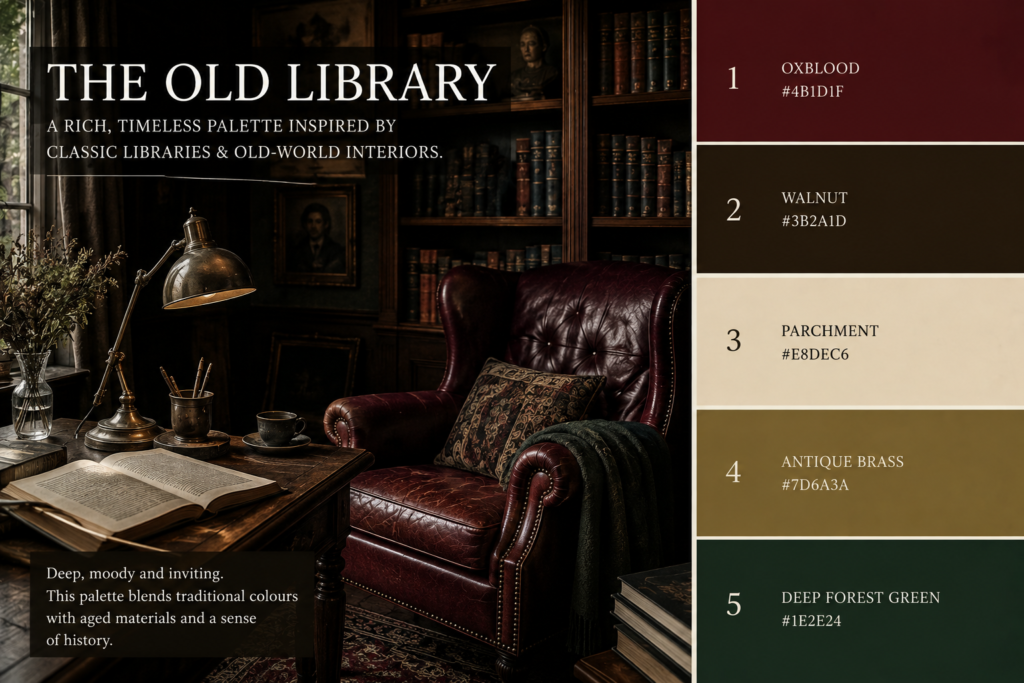
If there is one room that perfectly captures Dark Academia, it has to be the old library.
Imagine towering walnut bookcases filled with mismatched leather-bound books, a deep oxblood armchair tucked into a corner and the soft glow of a brass reading lamp falling across a worn Persian rug.
The colours here should feel rich rather than bright.
Deep forest green creates a beautiful backdrop for dark timber, while oxblood introduces that unmistakable old-world warmth. Walnut keeps everything grounded and substantial, and small touches of parchment and antique brass stop the darker colours from becoming too heavy.
The trick is allowing some imperfection into the room.
Books don’t need to be arranged perfectly. Timber can show scratches. Leather looks better once it has developed a patina. Old frames can be slightly tarnished and rugs can look as though generations of people have walked across them.
This isn’t a room designed yesterday.
At least, it shouldn’t feel like one.
Bring the Palette Home
Try deep green walls with walnut or mahogany furniture, then introduce oxblood through a leather chair, cushion or vintage rug.
Use parchment tones for lampshades, old prints and book pages, while antique brass works beautifully for picture lights, desk lamps and cabinet hardware.
And, of course, fill the shelves.
Dark Academia is one decorating style where owning far too many books is practically a requirement.
2. Oxford Study
Colour Palette: Tobacco Brown • Charcoal • Bottle Green • Warm Ivory • Aged Gold
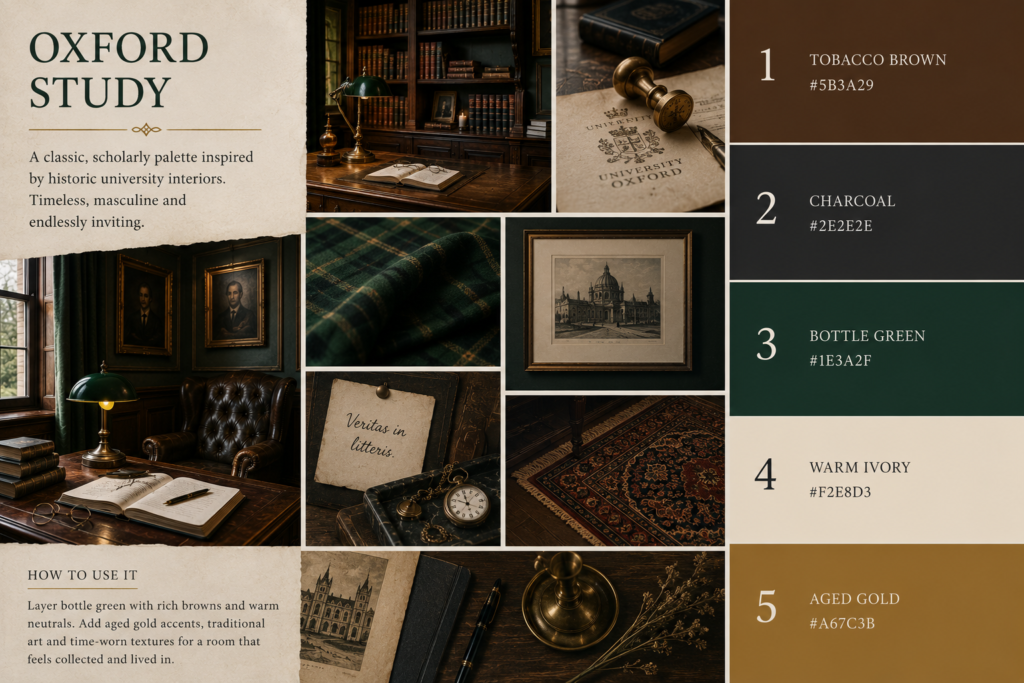
There’s a particular atmosphere to the old studies and common rooms of historic British universities.
Dark timber panelling. Heavy desks. Paintings collected over decades. Green-shaded lamps glowing against walls that seem to absorb the evening light.
The Oxford Study palette takes inspiration from those rooms.
Tobacco brown and bottle green form the heart of the scheme, creating a warm, cocooning base that works beautifully with dark oak furniture and traditional joinery.
Charcoal adds depth without the starkness of pure black, while warm ivory gives the eye somewhere to rest. Aged gold provides just enough decoration to make the room feel distinguished rather than gloomy.
This palette is particularly good if you love Dark Academia but don’t necessarily want your home to feel gothic.
It’s scholarly rather than theatrical.
Think professor’s study rather than haunted castle.
Bring the Palette Home
Bottle green is a brilliant wall colour for studies, bedrooms and smaller sitting rooms, particularly when paired with dark timber.
Look for tobacco-coloured leather, aged oak desks and traditional furniture with turned legs or carved details.
Warm ivory curtains or lampshades can soften the darkness, while old gold frames are perfect for displaying landscapes, portraits, sketches and botanical prints.
Don’t worry about matching every frame.
A slightly mismatched collection almost always looks more convincing.
3. Midnight Scholar
Colour Palette: Near Black • Burgundy • Espresso • Smoky Blue • Candlelight Cream
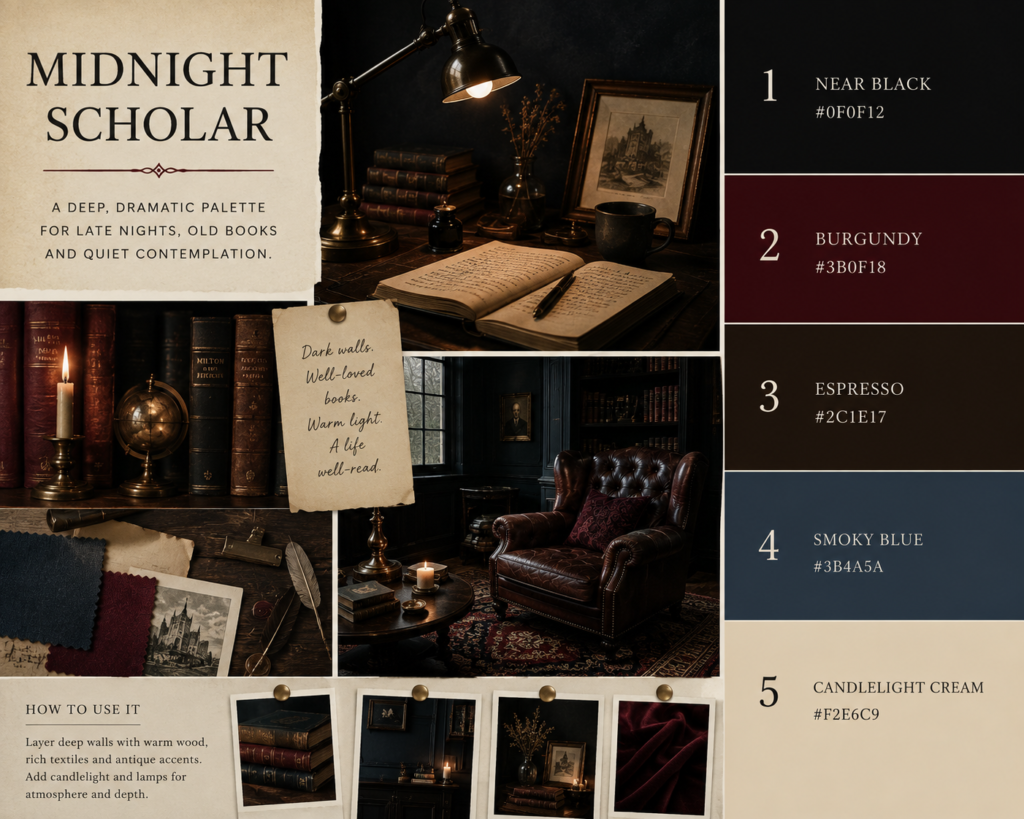
For those who want to embrace the darker side of Dark Academia, this is the palette.
Midnight Scholar takes the aesthetic into late-night territory: books scattered across a desk, rain against tall windows, a half-finished glass of wine and one small lamp illuminating the pages of an old novel.
Near-black walls create the drama, but the important thing is not to make everything black.
Espresso timber brings warmth, burgundy adds richness and smoky blue introduces an unexpected softness that works beautifully in shadowy rooms.
Then comes candlelight cream.
This pale, warm neutral is what makes the entire palette work. Used sparingly through lampshades, paper, linen or artwork, it creates little pools of light among the darker colours.
The result is intimate, dramatic and incredibly atmospheric.
Bring the Palette Home
You don’t necessarily need to paint an entire room near-black.
Try one dark wall behind a bookcase or bed, particularly if the room receives good natural light.
Layer espresso timber furniture against it, then introduce burgundy through velvet cushions, an upholstered chair or a traditional patterned rug.
Smoky blue can appear in artwork, textiles or faded vintage pieces, while cream should be kept warm and slightly aged rather than crisp white.
Lighting matters enormously with this palette.
Avoid relying entirely on bright ceiling lights. Table lamps, picture lights and wall sconces create the pools of warm light that make dark rooms feel inviting.
4. The Antiquarian
Colour Palette: Mahogany • Dusty Olive • Faded Parchment • Rust • Bronze
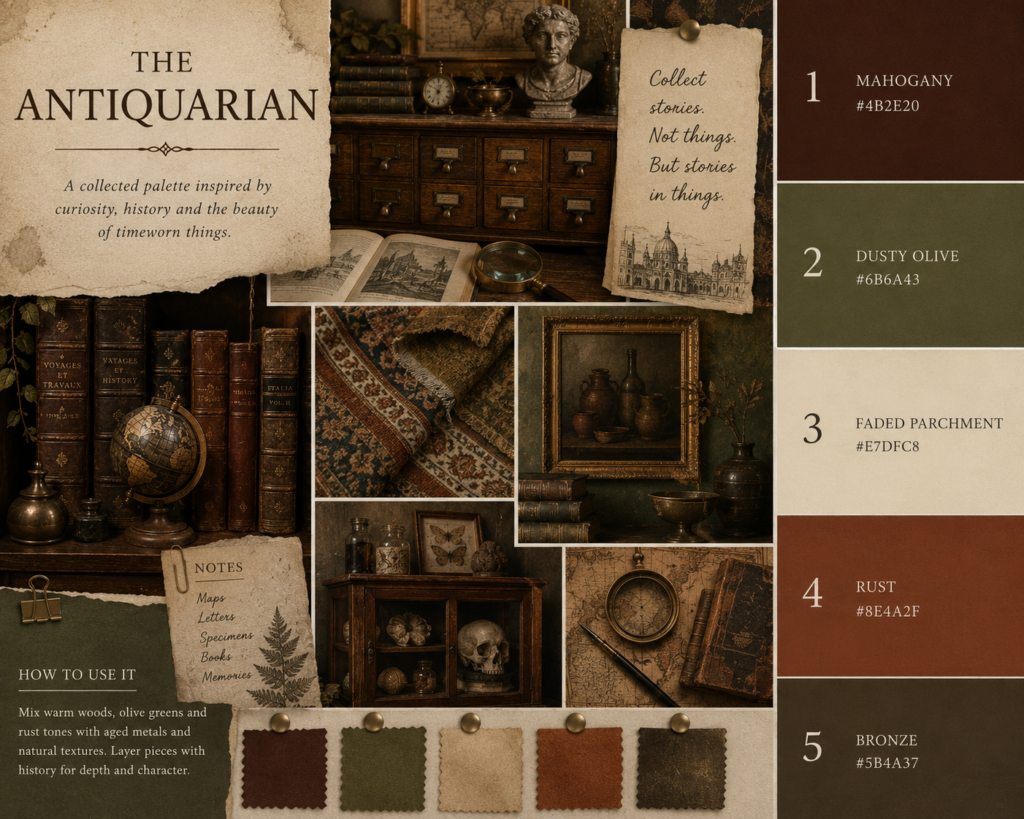
Not every Dark Academia interior needs to look like a library.
Some of the most interesting examples feel more like the home of an eccentric collector.
That’s the inspiration behind The Antiquarian.
Mahogany provides the traditional foundation, while dusty olive gives the palette its aged, slightly faded character. Rust introduces warmth and faded parchment keeps the scheme from becoming too dark.
Bronze is the finishing touch.
Rather than polished gold, look for metal that appears naturally aged: old candlesticks, cabinet handles, picture frames, lamps and small decorative objects.
The room itself should feel collected rather than decorated.
Old maps might hang beside botanical drawings. A plaster bust could sit on top of a stack of books. Framed sketches, archaeological prints, vintage photographs and curious objects can slowly fill shelves and tabletops.
The beauty is in the layering.
Bring the Palette Home
Start with warm neutral or dusty olive walls and introduce darker mahogany furniture.
Rust-coloured textiles work beautifully here, particularly velvet, wool and traditional patterned fabrics.
Then add the objects that give the room personality.
Old books, globes, maps, ceramic vessels, framed insects or botanical prints, vintage magnifying glasses and small sculptures all work well.
But resist buying everything at once.
The best collected interiors feel as though their objects were discovered gradually — at markets, antique shops and on travels — rather than ordered together to complete an aesthetic.
5. Gothic Reading Room
Colour Palette: Blackened Green • Dark Oak • Wine Red • Stone Grey • Antique Gold
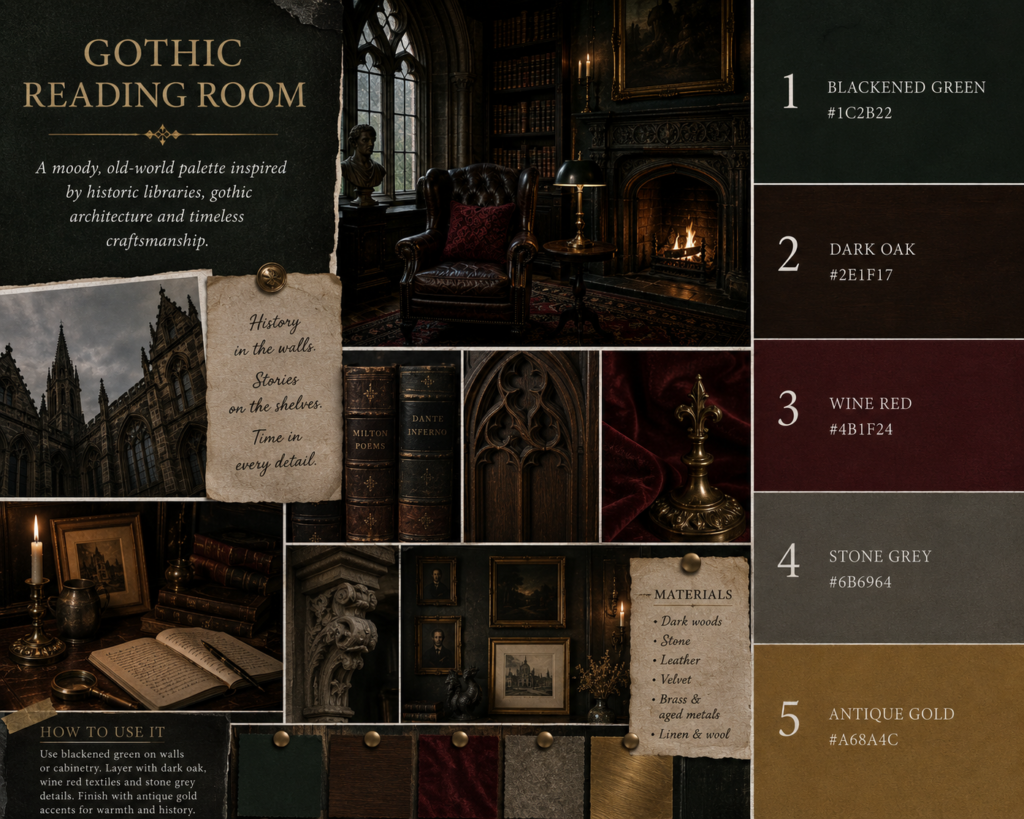
Dark Academia and Gothic architecture have always been natural companions.
Both are drawn to history, craftsmanship, shadow and spaces that feel slightly removed from the modern world.
The Gothic Reading Room palette takes those influences and turns the drama up just a little.
Blackened green creates a deep, almost architectural backdrop. Dark oak adds warmth and weight, while wine red brings richness without becoming overly bright.
Stone grey references old fireplaces, cathedral walls and weathered masonry, while antique gold catches the light in small details around the room.
Used together, these colours create a space that feels grand but intimate — somewhere between a private library and a forgotten room in an old European manor.
Bring the Palette Home
Architectural details make a huge difference with this palette.
Wall panelling, traditional cornices, built-in bookcases and even simple picture moulding can make dark colours feel intentional rather than oppressive.
Paint walls in a blackened green and pair them with dark timber furniture.
Wine red works beautifully in rugs, velvet upholstery and heavy curtains, while stone grey can appear through fireplaces, ceramics and natural materials.
Finish with antique gold frames, picture lights or mirrors.
And if you happen to have a Gothic arched window overlooking an ancient university courtyard, even better.
For the rest of us, good curtains will have to do.
How to Make Dark Academia Feel Authentic
The easiest mistake to make with Dark Academia is treating it like a theme.
A room filled with brand-new “vintage style” objects can quickly start to feel more like a movie set than somewhere someone actually lives.
Instead, focus on materials.
Real timber. Linen. Wool. Leather. Brass. Stone. Paper.
Then allow things to age.
A scratched wooden desk can be more beautiful than a perfect new one. Tarnished brass often looks better than polished brass. Old books with faded spines bring far more character than shelves of matching decorative books.
Most importantly, give the room time.
Buy the painting you genuinely love. Bring home the strange little brass object you found at a market. Keep the books you actually read. Frame the old map you discovered while travelling.
Eventually, the room begins telling your story rather than simply copying an aesthetic.
Choosing Your Dark Academia Palette
The beauty of Dark Academia is that there isn’t one definitive colour scheme.
If you love the classic library look, The Old Library combines forest green, oxblood and walnut for a rich traditional interior.
For something slightly more restrained, Oxford Study brings together bottle green, tobacco leather and aged gold.
If you want drama, Midnight Scholar embraces near-black walls, burgundy and espresso timber.
Collectors and antique lovers may prefer the faded olive, rust and mahogany tones of The Antiquarian, while Gothic Reading Room takes the aesthetic into darker, more architectural territory.
Whichever direction you choose, don’t be afraid of depth.
Modern decorating has spent years telling us that every room needs to be light, bright and uncluttered.
Dark Academia reminds us that sometimes the most inviting room in the house is the one with dark walls, an old chair, too many books and a lamp glowing quietly in the corner.
Britt & Tyler
We’re Britt and Tyler, the two Australians behind Cocktails & Cathedrals. We’re drawn to old buildings, beautiful rooms, bookshops and places that seem to hold a story. Our journal brings those interests together, with a fondness for slow afternoons and a well-made cocktail. We hope it helps you find places you’ll want to linger.
Travel slowly. Stay beautifully.
A little more about us →