11 Timeless European Courtyard Ideas You Can Bring Home
The world’s most beautiful courtyards aren’t necessarily the biggest. They simply know how to make you want to stay a little longer.
There is a moment that seems to happen almost every time we travel through Europe.
We’re walking through a narrow cobblestone street, admiring old doorways or peeking into shop windows, when an open gate catches our eye. Beyond it lies a quiet courtyard—hidden just enough to feel like a discovery.
Sometimes it’s no more than a rectangle of pale gravel framed by limestone walls. Sometimes there’s a weathered fountain trickling softly in the centre, surrounded by lavender and climbing roses. Other times it’s simply a pair of old wooden chairs sitting beneath a fig tree, waiting for the evening sun.
None of these spaces are extravagant.
Yet somehow they feel richer than many modern gardens costing hundreds of thousands of dollars.
We’ve often wondered why.
The answer, we think, is that European courtyards aren’t trying to impress anyone. They were created for living. For long lunches that slowly become dinners. For conversations that drift late into warm evenings. For reading books while church bells echo across the rooftops.
They’re designed around a feeling rather than a feature.
The wonderful thing is that this feeling isn’t reserved for centuries-old villas in Tuscany or hidden châteaux in the French countryside.
Many of the ideas that make these spaces so memorable can be borrowed almost anywhere. Whether you have a sprawling garden, a suburban backyard or a tiny townhouse patio, a few thoughtful choices can transform how your outdoor space feels.
Here are eleven timeless European courtyard ideas that continue to inspire us—and how you can bring a little of that old-world magic home.
1. Let Gravel Do the Talking
Modern landscaping often tries to fill every empty space.
Bright paving.
Perfect lawns.
Decorative edging.
Outdoor rugs.
European courtyards take almost the opposite approach.
They embrace simplicity.
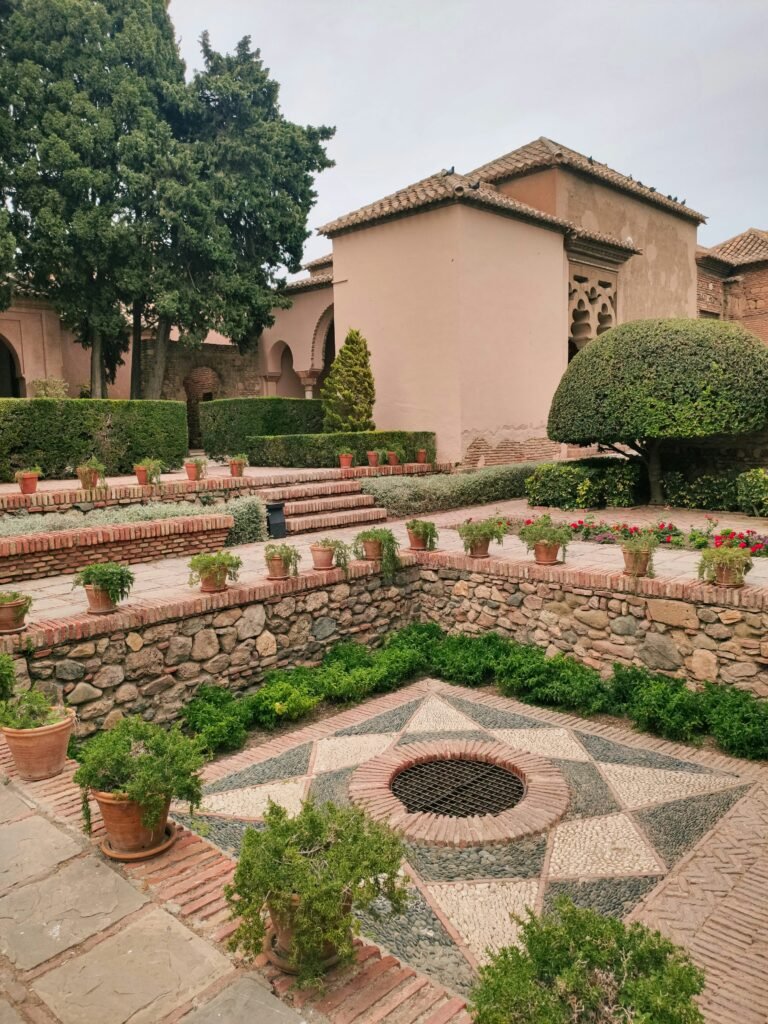
Walk through villages in Provence, Tuscany or Andalucía and you’ll find pale gravel stretching quietly between stone walls, olive trees and terracotta pots. It crunches gently beneath your feet, catches the afternoon light and creates an atmosphere that somehow feels both relaxed and elegant.
Gravel asks very little of the eye.
Because it stays in the background, everything else begins to matter more. The texture of old stone. The shadow cast by an olive tree. The colour of lavender against warm limestone.
It reminds us that luxury doesn’t always come from adding more.
Sometimes it comes from taking things away.
Bring It Home
If replacing an entire courtyard isn’t practical, start small. A gravel seating area bordered with reclaimed bricks or natural stone can completely change the feeling of a backyard. Choose warm, natural tones rather than bright white gravel, and let the surrounding plants provide the colour.
2. Embrace the Beauty of Weathered Terracotta
One of our favourite things about travelling through Europe is noticing the details that locals barely seem to notice anymore.
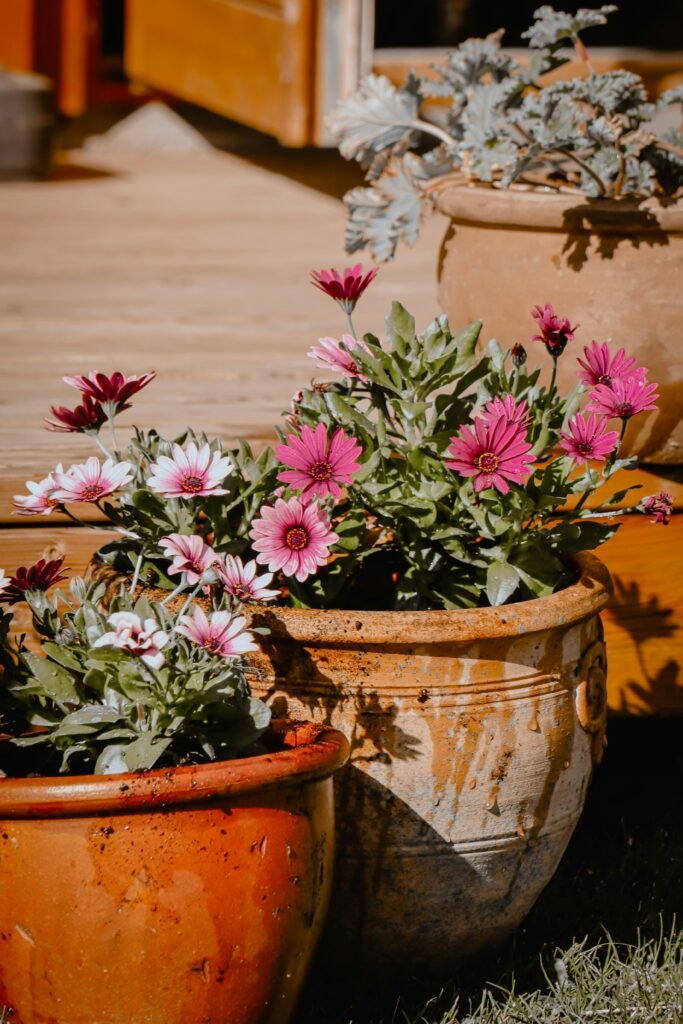
A cracked terracotta pot sitting outside a bakery.
An enormous clay urn beside an old wooden door.
Rows of rosemary growing from containers that have clearly survived decades of changing seasons.
These pots aren’t perfect.
In fact, that’s exactly why they’re beautiful.
Tiny chips. Faded colours. Moss around the base. White mineral stains from years of watering. Every mark tells a story.
Unlike fashionable planters that come and go, terracotta seems to become more attractive with every passing year.
It doesn’t fight against the surrounding architecture.
It belongs there.
Bring It Home
Instead of buying lots of small pots, choose one or two oversized terracotta planters and let them become permanent features of your garden. Fill them with lavender, rosemary, citrus or olive trees and allow them to age naturally. Resist the temptation to scrub away every mark—they’re part of the charm.
3. Let Plants Wander
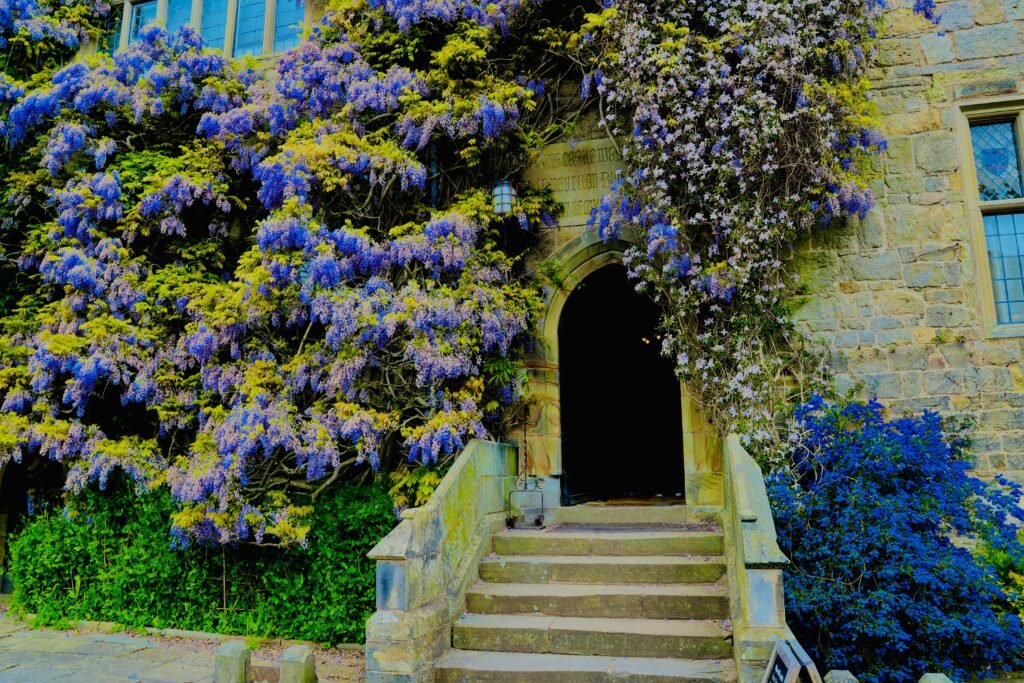
One thing Europe does remarkably well is resisting the urge to control nature too much.
Climbing roses spill over ancient walls.
Wisteria wraps itself around stone arches.
Jasmine escapes fences and reaches toward balconies.
Nothing feels overly manicured.
Instead, the buildings and gardens seem to have been growing together for generations.
There’s something deeply comforting about that relationship.
Rather than drawing hard lines between architecture and landscape, European courtyards allow the two to soften one another.
Stone becomes less imposing beneath climbing greenery.
Flowers appear almost accidental.
The result feels lived in rather than designed.
Ironically, that’s often far harder to achieve.
Bring It Home
Choose one climbing plant and give it somewhere beautiful to grow. A rose over a front gate. Wisteria along a pergola. Jasmine climbing an old fence. You don’t need dozens of flowering plants—sometimes one is enough to transform the entire space.
4. Celebrate Stone That Shows Its Age
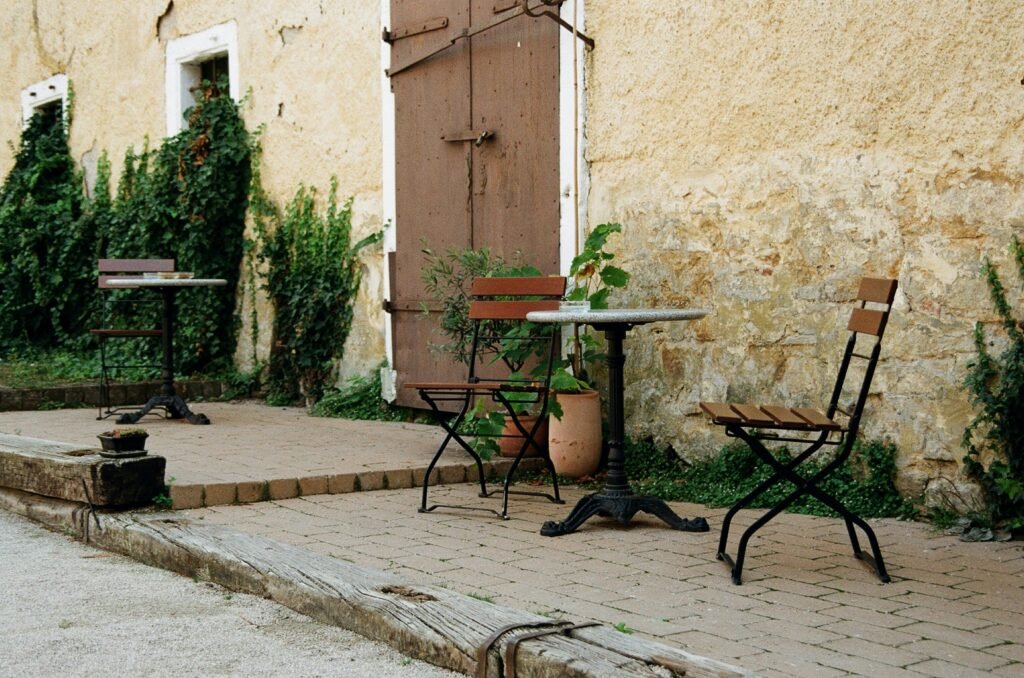
It’s easy to forget that many European courtyards weren’t built to become tourist attractions.
They were simply places where everyday life happened.
Generations walked across the same limestone.
Rain softened sharp edges.
Sunlight faded colours.
Time quietly left its fingerprints.
Today, those imperfections are exactly what make these spaces unforgettable.
The worn steps outside a monastery.
The uneven flagstones of a Tuscan farmhouse.
The smooth edge of a stone bench polished by thousands of visitors over hundreds of years.
None of it feels worn out.
It feels lived in.
There’s an important lesson here.
New doesn’t always feel luxurious.
Sometimes character is the greater luxury.
Bring It Home
When choosing outdoor materials, think about how they’ll look ten years from now—not just the day they’re installed. Natural stone, reclaimed bricks and timber often improve with age, developing textures and colours that manufactured materials struggle to imitate.
5. Add Water, Not Drama
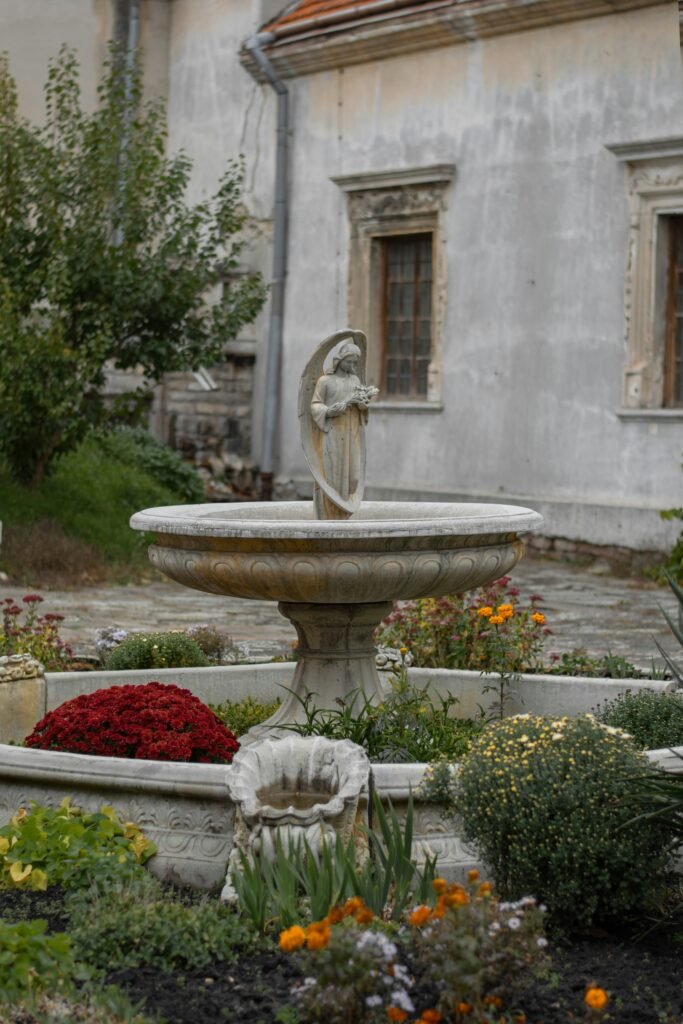
Some gardens rely on dramatic centrepieces.
European courtyards usually choose something quieter.
A simple wall fountain.
A weathered stone basin.
A trickle of water disappearing into an old trough.
The sound is almost more important than the feature itself.
It masks distant traffic.
It attracts birds.
It creates movement without demanding attention.
Sit beside one long enough and you’ll begin to understand why these courtyards feel so peaceful.
They’re not silent.
They’re gently alive.
Bring It Home
Even a modest water feature tucked into a quiet corner can completely change the atmosphere of a courtyard. Think subtle rather than spectacular. The goal isn’t to create a statement piece—it’s to create a place where you’d happily linger with a coffee, a book or a glass of wine.
6. Plant for Fragrance, Not Just Colour
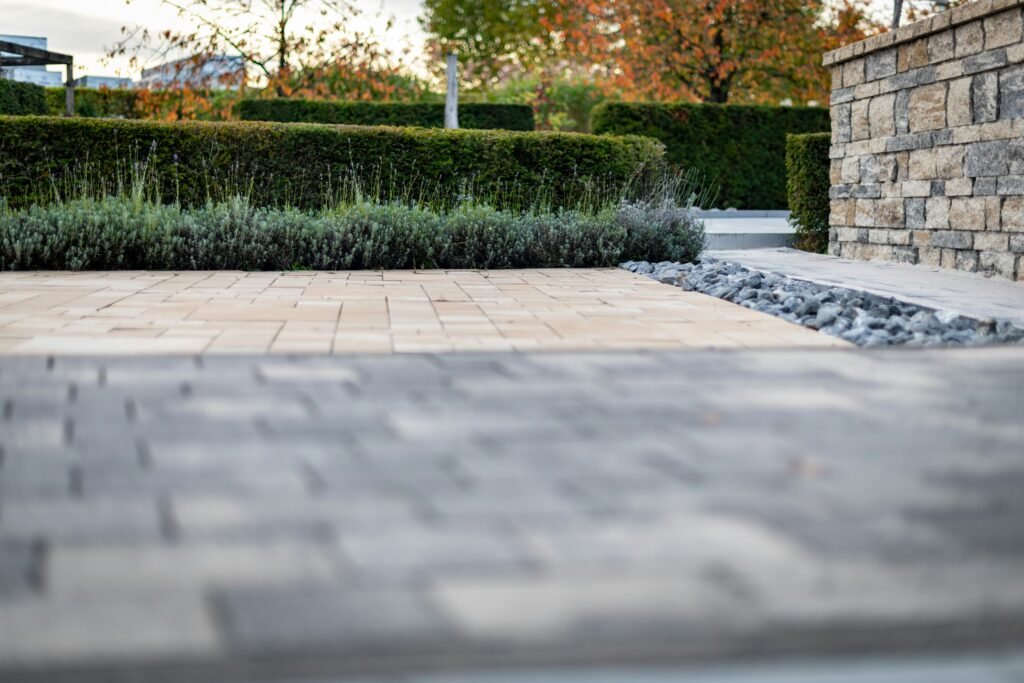
When we think back to the courtyards we’ve loved most across Europe, it’s rarely the colours we remember first.
It’s the scent.
Lavender warming beneath the afternoon sun.
Rosemary brushed by your hand as you squeeze past an old stone wall.
Jasmine drifting through an open window as church bells echo somewhere beyond the rooftops.
European gardens seem to understand something we’ve forgotten in many modern landscapes: a garden should be experienced with all of your senses.
That’s why these spaces feel so immersive.
You don’t simply look at them.
You hear the fountain.
You feel the warmth of old stone beneath your fingertips.
You smell the herbs carried on a light breeze.
The entire courtyard becomes a memory.
Bring It Home
Choose plants you’ll interact with, not just admire. Lavender beside a pathway, rosemary near your outdoor table or jasmine around a doorway can transform an ordinary afternoon into something quietly special.
7. Choose Furniture That Looks Better Every Year
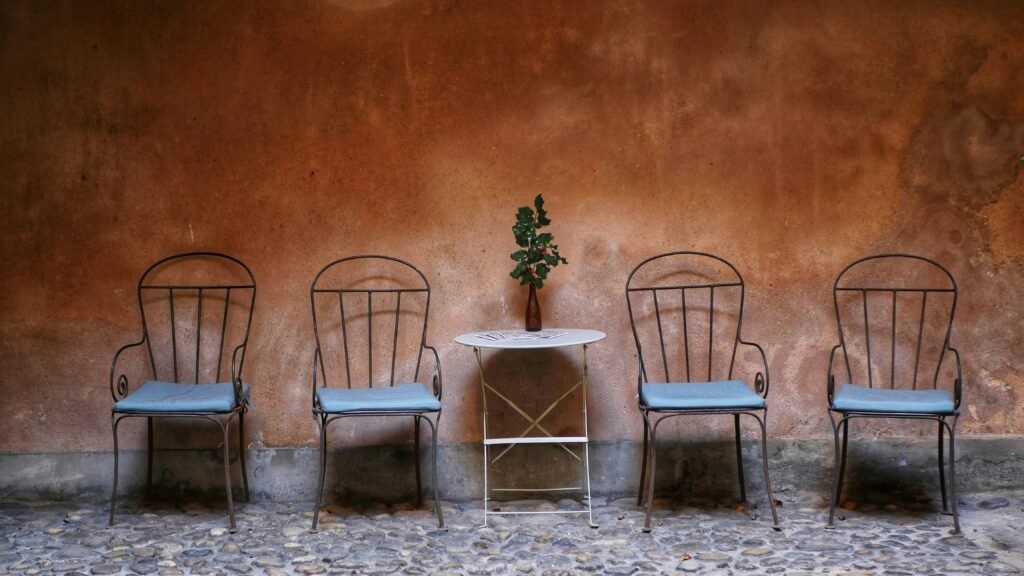
One thing you’ll notice in Europe’s oldest courtyards is that almost nothing appears brand new.
The café chairs have a little rust.
The timber table has softened to silver.
The wrought iron bench has developed a patina after decades outdoors.
Instead of replacing furniture every few years, these pieces become part of the architecture itself.
They belong.
It’s a refreshing contrast to the cycle of constantly updating outdoor spaces to match changing trends.
Timeless spaces aren’t assembled all at once.
They’re collected.
Lived with.
Allowed to age.
Bring It Home
Instead of buying an entire matching outdoor setting, begin with one beautiful piece. A wrought iron bench beneath a tree or a weathered timber table can become the heart of your courtyard for years to come.
8. Create Shade That Invites You to Stay
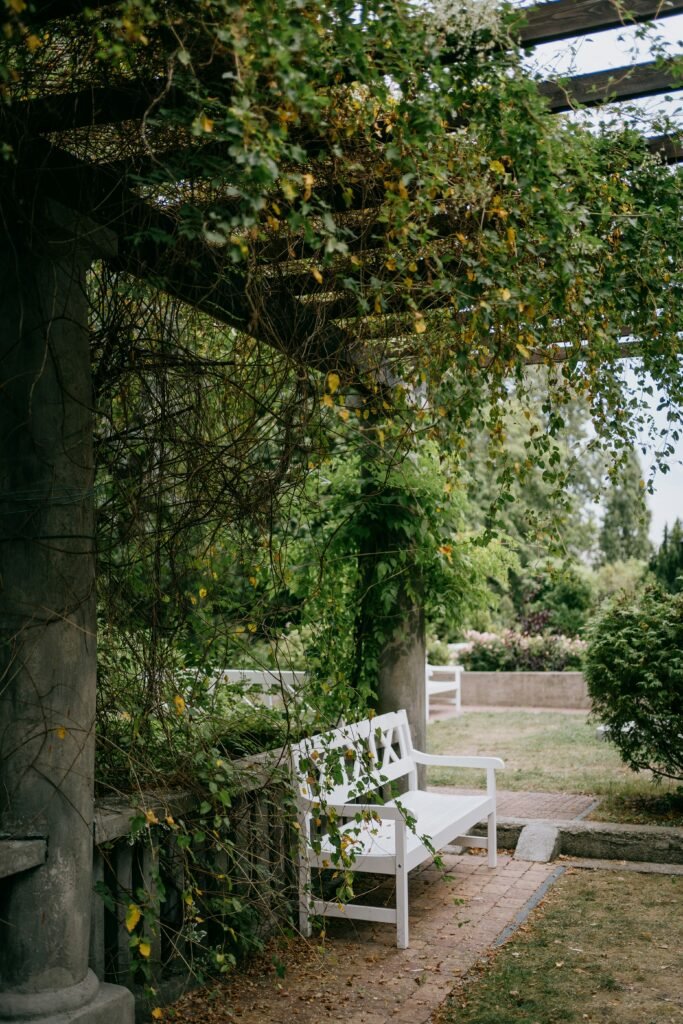
The Mediterranean sun has shaped European courtyards for centuries.
Because of it, these gardens have mastered something many modern landscapes overlook:
Comfort.
Pergolas draped with grapevines.
Canvas awnings stretched between old buildings.
Olive trees casting dappled shadows across gravel.
Instead of exposing every corner to the sun, these spaces create little pockets of relief.
They encourage lingering.
It’s easy to imagine reading another chapter.
Ordering one more glass of wine.
Watching the afternoon slowly drift towards evening.
Perhaps that’s why these courtyards never feel rushed.
They’re designed for staying, not simply passing through.
Bring It Home
You don’t need an elaborate pergola. Even a small deciduous tree, climbing vine or shade sail can create the feeling of an outdoor room rather than an exposed patio.
9. Symmetry Creates Calm
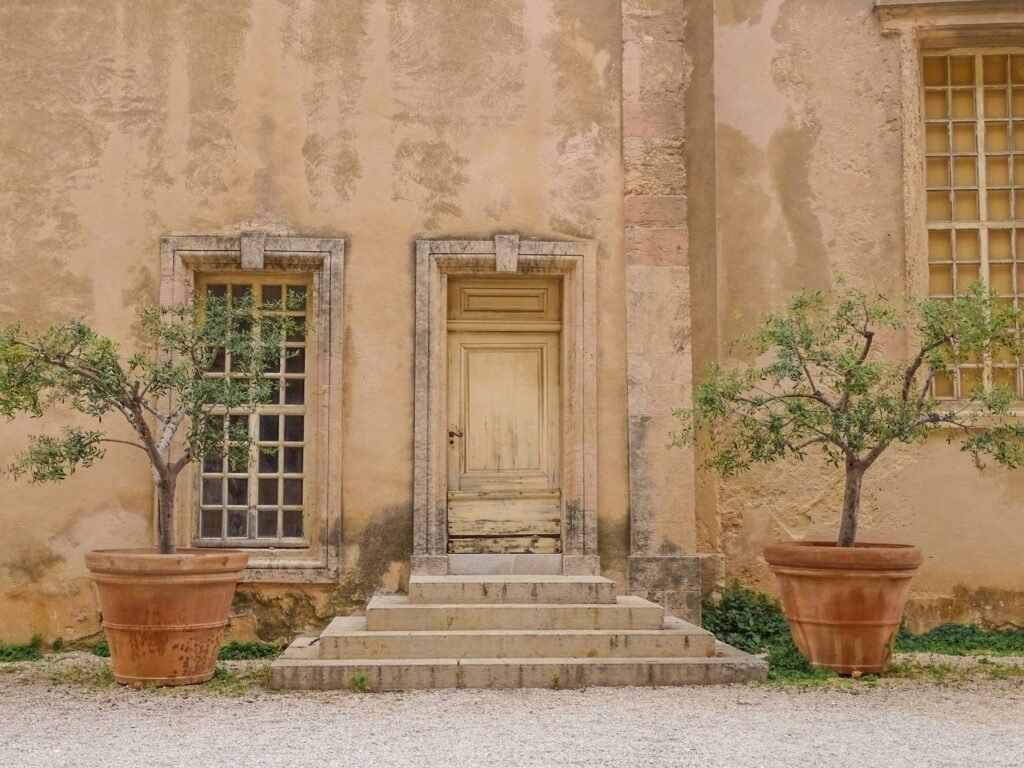
Many of Europe’s most beautiful courtyards aren’t perfectly symmetrical.
They simply feel balanced.
Two terracotta pots framing an entrance.
Matching olive trees beside a doorway.
A fountain quietly anchoring the centre of the space.
Without realising it, your eyes relax.
Symmetry creates order without demanding attention.
It’s one of those subtle design decisions you barely notice until it’s missing.
Bring It Home
Look for opportunities to repeat rather than decorate. Two matching planters often create more impact than six unrelated ornaments scattered throughout a garden.
10. Leave Space for Silence
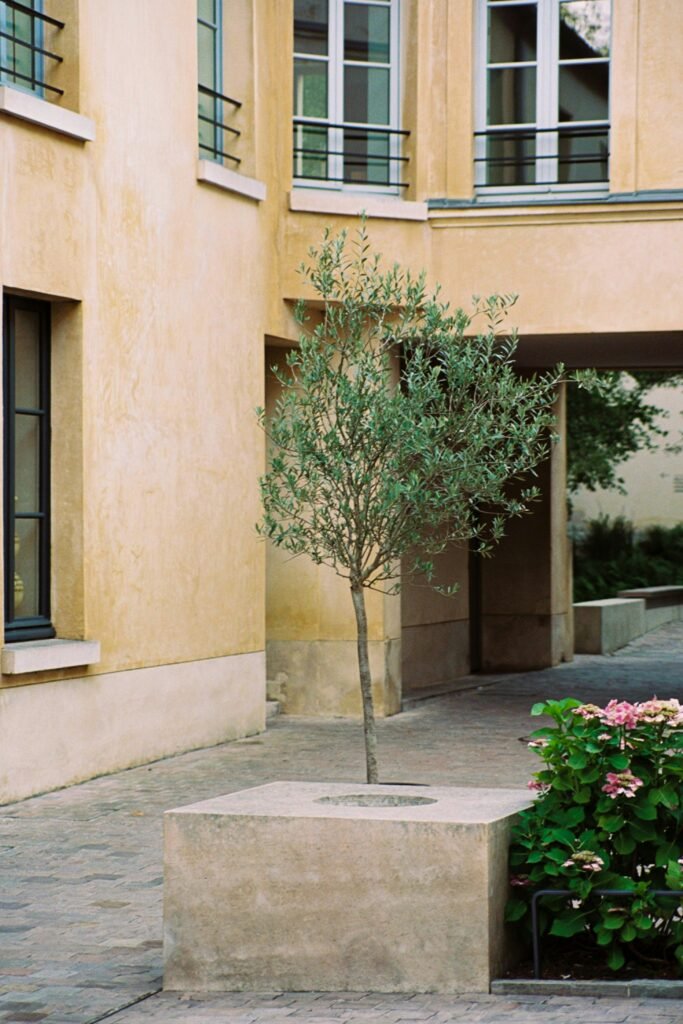
This might be the most overlooked design element of all.
Space.
European courtyards rarely try to fill every corner.
There are quiet walls.
Empty gravel.
Simple pathways leading nowhere in particular.
These pauses allow the beautiful details to breathe.
A single olive tree becomes a focal point because it isn’t competing with ten other features.
The fountain becomes memorable because it isn’t surrounded by unnecessary decoration.
Silence exists in gardens just as it does in music.
Without it, everything begins to feel noisy.
Bring It Home
The next time you’re tempted to add another ornament, another planter or another piece of furniture, pause first. Sometimes removing something creates more beauty than buying something new.
11. Design Around a Feeling, Not a Style
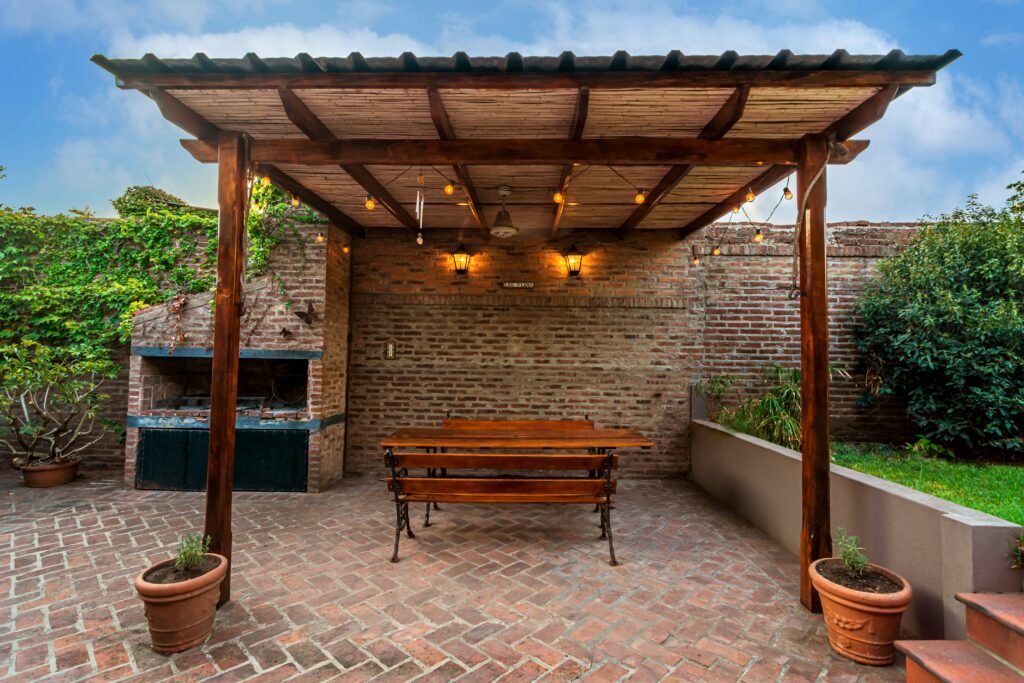
Perhaps this is the greatest lesson European courtyards have to offer.
They weren’t created to follow trends.
Nobody set out to design a “Tuscan-inspired outdoor entertaining area.”
These spaces evolved naturally over decades—sometimes centuries.
Families planted trees that offered shade.
Stone steps wore smooth beneath countless footsteps.
Roses climbed because someone tied them there years ago and simply kept looking after them.
Beauty arrived slowly.
That’s why these places still feel authentic.
When we try to recreate them at home, it’s easy to focus on copying the look.
But perhaps we should be asking a different question.
How do we want this space to feel?
Peaceful?
Relaxed?
Romantic?
Quiet enough to hear birds in the morning?
Comfortable enough that friends stay long after dinner has finished?
Those feelings matter far more than whether you’ve chosen the perfect paving stone or exactly the right outdoor chair.
The best European courtyards remind us that luxury isn’t measured by price.
It’s measured by how willingly people linger.
Final Thoughts
One of our favourite travel memories isn’t tied to a famous landmark.
It wasn’t inside a palace or standing before a cathedral.
It was sitting quietly in a tiny courtyard somewhere in southern France, watching late afternoon light creep across an old stone wall while the scent of lavender drifted through the warm air.
Nothing remarkable happened.
And perhaps that’s exactly why we remember it.
The world’s most beautiful courtyards aren’t built around spectacle.
They’re built around ordinary moments, experienced beautifully.
You don’t need centuries-old limestone, towering cypress trees or a villa in Tuscany to borrow that feeling.
Start with gravel beneath your feet.
Plant something fragrant near your favourite chair.
Choose one piece that will grow more beautiful with age instead of replacing it every few years.
Then leave enough empty space for the garden—and yourself—to breathe.
Sometimes the most timeless ideas are also the simplest.
And perhaps that’s the quiet magic Europe has been teaching us all along.
Britt & Tyler
We’re Britt and Tyler, the two Australians behind Cocktails & Cathedrals. We’re drawn to old buildings, beautiful rooms, bookshops and places that seem to hold a story. Our journal brings those interests together, with a fondness for slow afternoons and a well-made cocktail. We hope it helps you find places you’ll want to linger.
Travel slowly. Stay beautifully.
A little more about us →