Why Old European Kitchens Feel So Warm
Some rooms feed you. Others make you want to stay.
Have you ever noticed that old European kitchens seem to feel warm before a single meal has even been cooked?
It’s difficult to explain until you’ve stood in one.
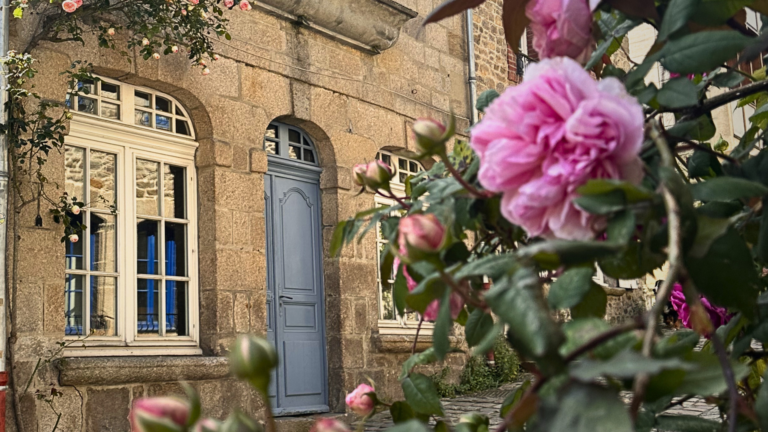
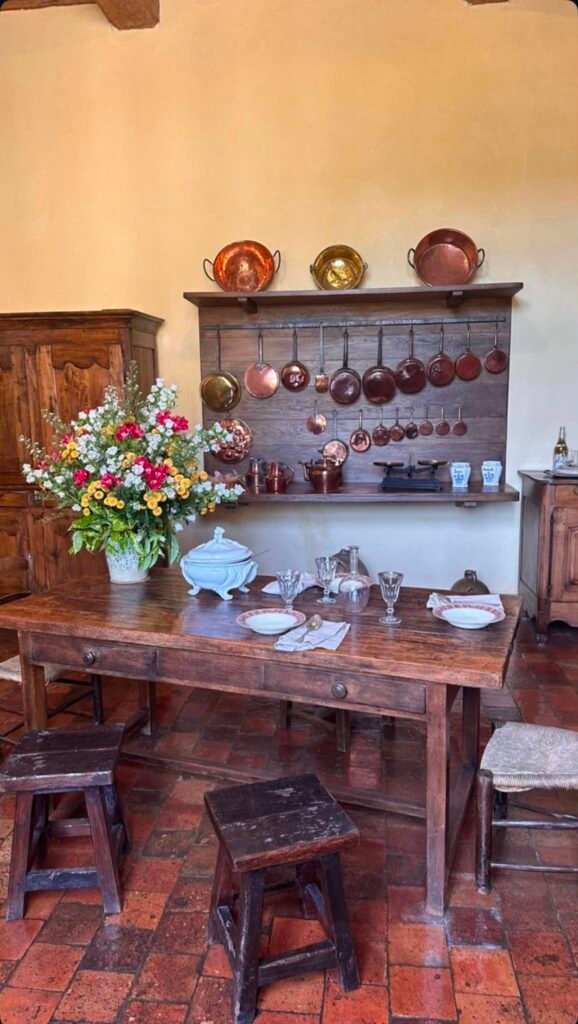
Perhaps it’s an old farmhouse in the French countryside where sunlight spills through tiny windows onto worn limestone floors. Or a centuries-old kitchen tucked inside an Italian villa, where copper pans hang above a wooden table that looks as though generations have gathered around it. Maybe it’s a quiet cottage somewhere in the English countryside, where fresh herbs sit on a windowsill and a kettle hums gently on an old range.
None of these kitchens feel extravagant.
In fact, many are surprisingly simple.
The cupboards aren’t glossy. The stone floors are uneven. The timber beams have darkened with age. Nothing feels brand new.
And yet, somehow, they feel richer than many of the designer kitchens we admire today.
We’ve often found ourselves lingering in kitchens like these while travelling through Europe. Sometimes they’ve belonged to historic homes open to visitors. Other times they’ve been part of small guesthouses, country inns or cafés where breakfast quietly stretches into mid-morning because nobody seems to be in a hurry.
The interesting thing is that the feeling isn’t created by expensive materials.
It’s created by time.
These rooms have been lived in.
They’ve welcomed muddy boots after walks through vineyards, loaves of bread still warm from the oven, noisy family lunches that somehow turned into dinner, and quiet cups of coffee enjoyed while the village slowly came to life outside.
You can almost sense those moments lingering in the walls.
Perhaps that’s why they feel so different.
Modern kitchens are often designed to impress.
Old European kitchens were designed to be used.
That difference changes everything.
The Heart of the Home Was Never the Island Bench
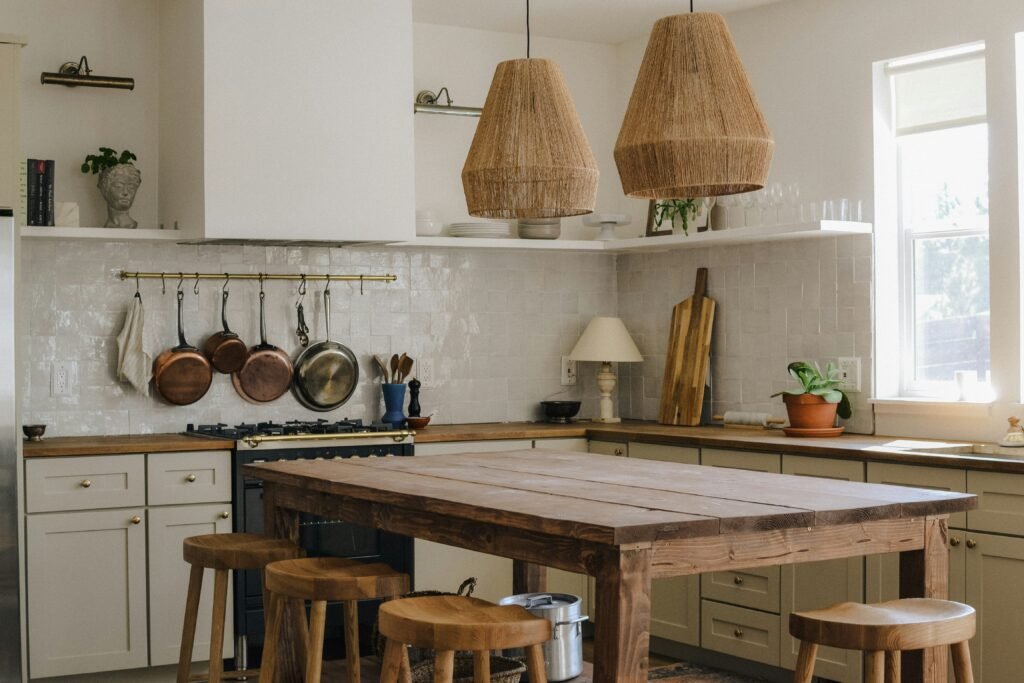
Walk into a modern display home and it’s usually obvious where you’re supposed to look.
The enormous island bench.
The waterfall stone.
The pendant lights perfectly centred above polished surfaces.
There’s nothing wrong with any of it.
But sometimes it feels more like a showroom than somewhere people genuinely live.
Old European kitchens tell a different story.
The first thing your eyes often settle on isn’t a spectacular feature at all.
It’s a table.
Usually timber.
Usually worn.
Sometimes slightly uneven.
Often marked with tiny scratches, faded stains and imperfections collected over decades.
And somehow, those marks make the room feel more beautiful.
Because they remind you that this table has lived a life.
It’s where vegetables were chopped straight from the garden.
Children learned to roll pastry.
Neighbours stayed for one more glass of wine.
Letters were written.
Conversations unfolded long after dinner plates had been cleared away.
The table wasn’t simply another piece of furniture.
It was the room’s quiet centre of gravity.
Even today, when we wander through old manor houses or historic farmhouses in Europe, it’s often those humble tables that stay with us more than grand dining rooms.
They’re not trying to impress anyone.
They’re inviting you to sit down.
Bring It Home
If there’s one lesson worth borrowing from old European kitchens, it’s this: make your dining table the hero, not just another place to eat.
A solid timber table, comfortable chairs and something simple in the centre—a bowl of lemons, a vase of fresh flowers or a loaf of bread—can completely change how a kitchen feels. Don’t worry about every mark or scratch. Those are the things that eventually give furniture its personality.
They Decorate With Everyday Life
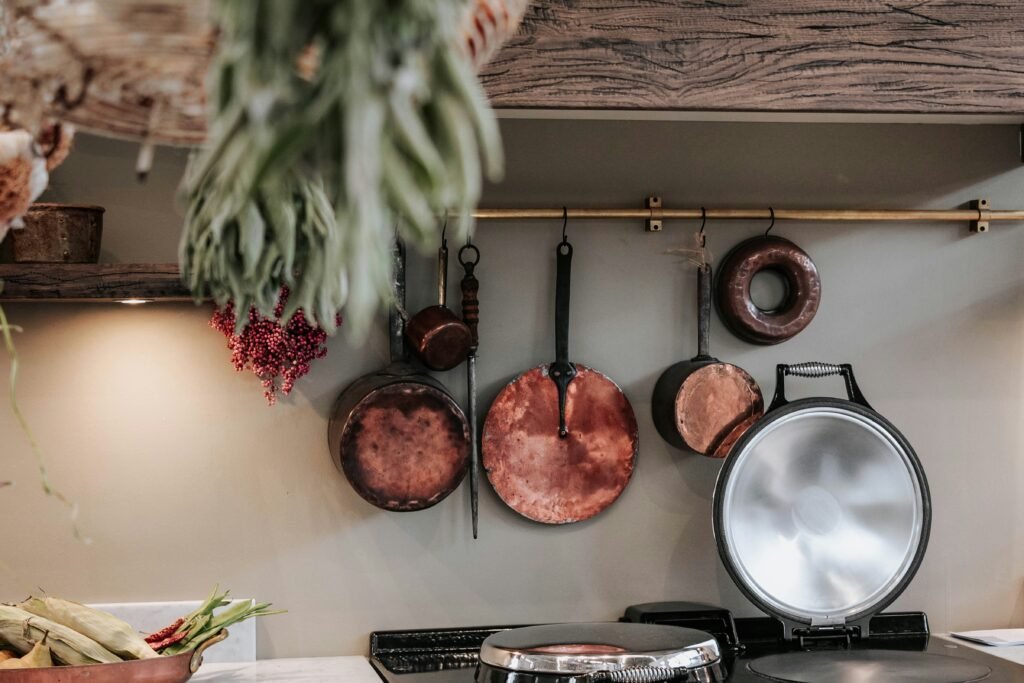
Have you ever noticed how little decoration there actually is in many old European kitchens?
There aren’t shelves filled with ornaments chosen purely because they match.
Instead, the beauty comes from ordinary things.
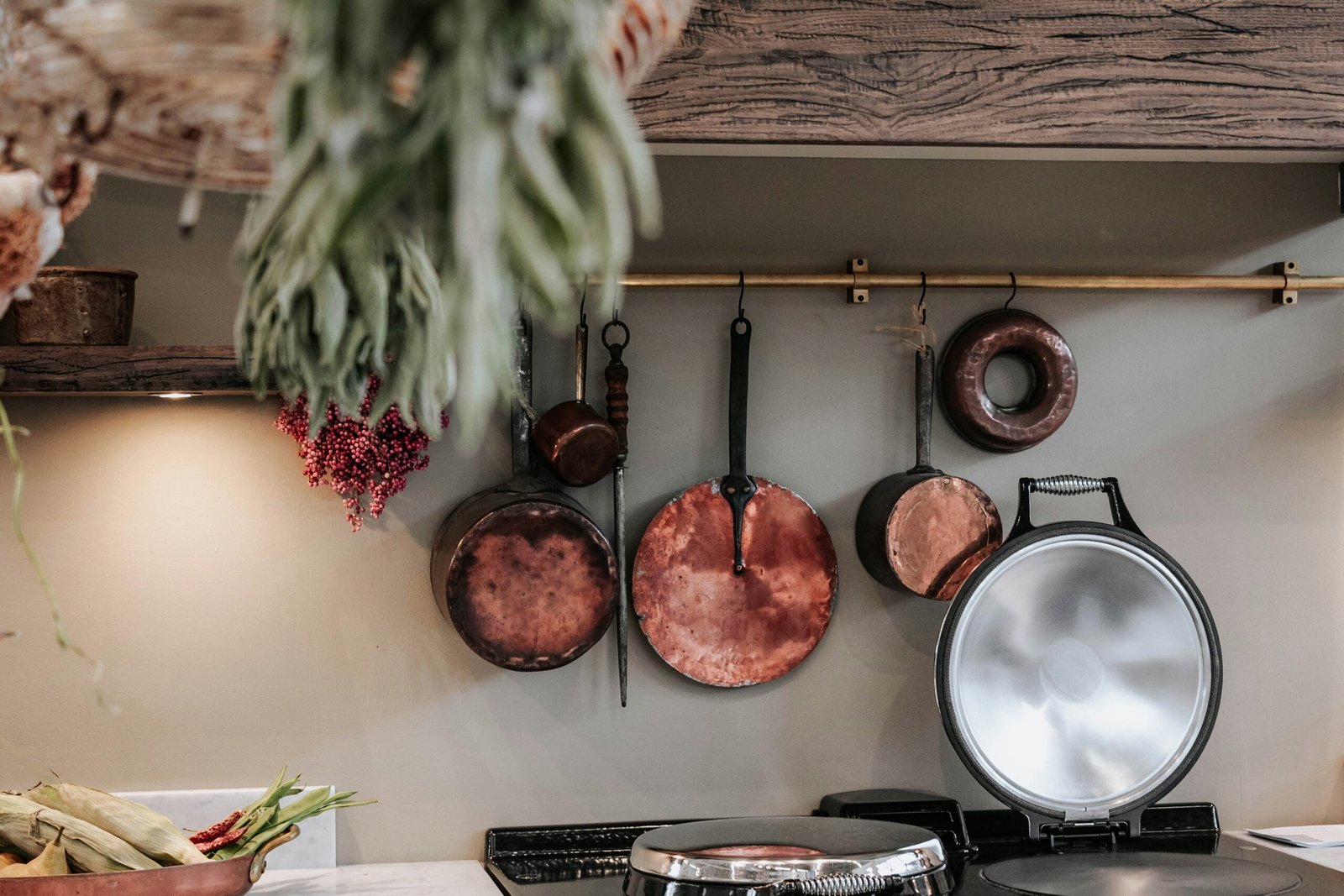
Copper pots hanging above the stove.
Well-used wooden chopping boards leaning against a wall.
Fresh herbs drying from ceiling beams.
Stoneware bowls stacked neatly on open shelves.
Glass jars filled with flour, lentils and pasta.
Nothing feels staged.
Everything has a purpose.
Perhaps that’s why these kitchens feel so calming.
The objects around you aren’t competing for attention.
They’re quietly getting on with their job.
And over time, the kitchen begins to tell the story of the people who use it.
That’s a very different kind of luxury.
It’s not bought all at once.
It’s collected, one useful object at a time.
Bring It Home
The next time you’re tempted to hide everything behind cupboard doors, choose one or two beautiful everyday items instead. A favourite chopping board, a copper pan or a handmade ceramic bowl can become part of the room rather than something to tidy away.
They Welcome the Morning
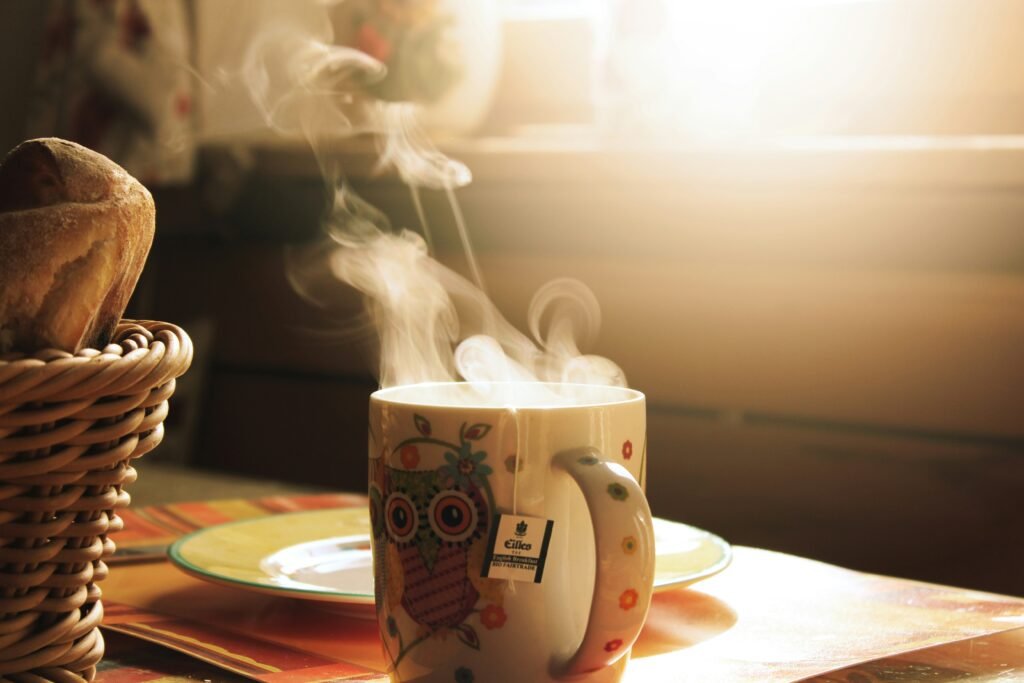
One of our favourite memories of travelling through Europe isn’t tied to a famous cathedral or an extraordinary meal.
It’s breakfast.
There is something wonderfully unhurried about mornings in Europe.
A kitchen window cracked open just enough to let cool air drift inside. Fresh bread collected from the bakery around the corner. Coffee slowly filling the room with its familiar aroma while sunlight begins to creep across old timber floors.
Nobody seems to be rushing anywhere.
Perhaps that’s why these kitchens feel so peaceful.
They aren’t simply rooms where breakfast happens.
They’re where the day begins.
You can almost imagine generations following the same morning rituals. Someone slicing bread at the old wooden table. Another opening shutters that have greeted the sunrise for centuries. A kettle beginning to whistle while the village outside slowly wakes.
Those small routines become part of the room itself.
Long after people have gone, you somehow sense that life has been lived there.
Bring It Home
Resist the temptation to rush through your kitchen each morning. Leave a favourite mug on display. Open a window while you make coffee. Buy fresh flowers every now and then. Sometimes atmosphere comes from rituals more than renovations.
Light Was Always More Important Than Lighting
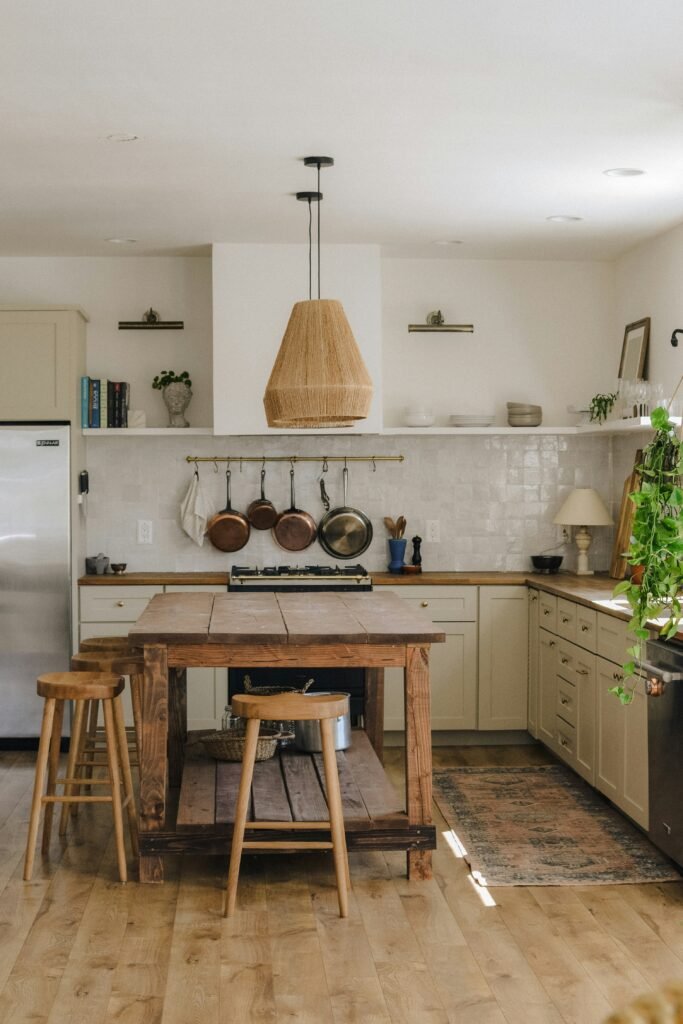
Modern kitchens often rely on layers of carefully designed lighting.
Pendant lights.
LED strips.
Feature lighting beneath cupboards.
Old European kitchens had something much simpler.
Windows.
Often they’re surprisingly small, yet they seem to fill the room with the softest light imaginable.
Instead of flooding every corner with brightness, they allow shadows to exist.
Morning light falls across stone walls.
Late afternoon catches the edge of a timber table.
Candlelight takes over as evening arrives.
It’s imperfect.
But perhaps that’s exactly why it feels so comforting.
The room changes throughout the day.
It feels alive.
We’ve noticed this again and again while wandering through old houses and country inns across Europe. The kitchens never seem to look exactly the same twice.
Morning has one personality.
Evening has another.
Bring It Home
Rather than trying to brighten every corner, think about how natural light moves through your kitchen. Linen curtains, warm bulbs and candles on the table often create a softer atmosphere than simply adding more light.
They Aren’t Afraid of Imperfection
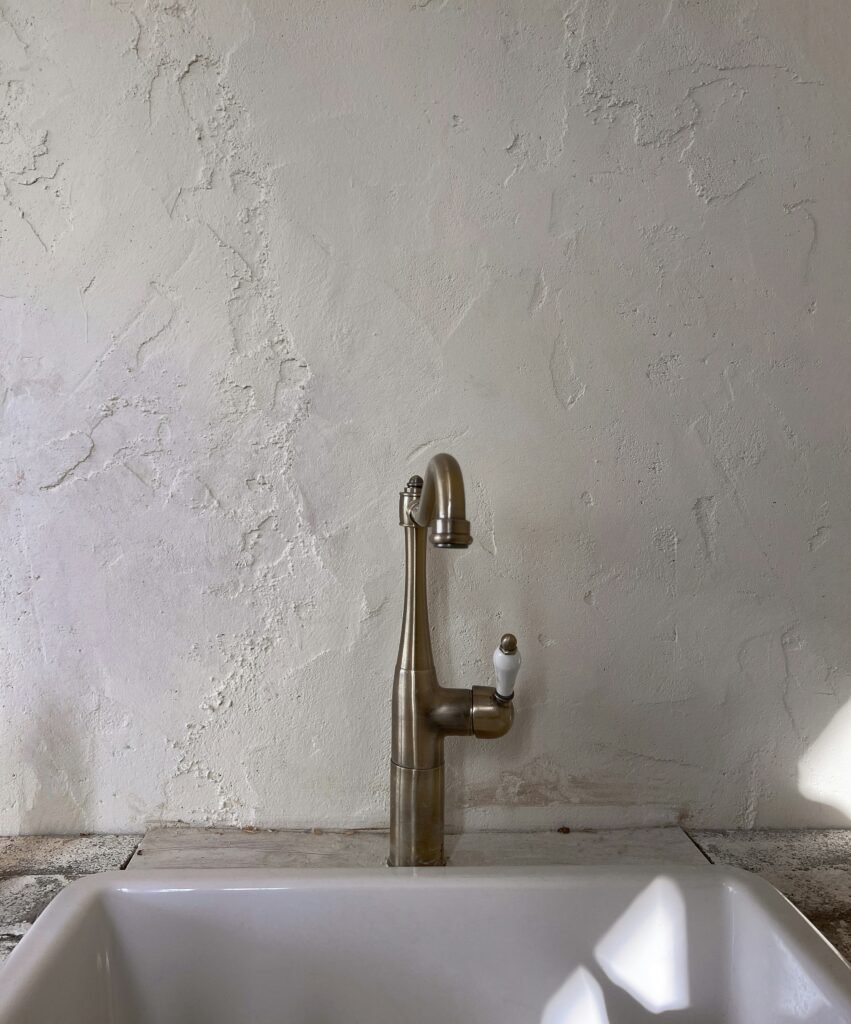
One thing Europe taught us is that beauty and perfection are rarely the same thing.
Kitchen cupboards don’t always close perfectly.
Stone floors have worn smooth beneath thousands of footsteps.
The timber table carries scratches from decades of family dinners.
Copper pans have lost their shine.
And yet…
Everything somehow feels more beautiful because of it.
These kitchens haven’t frozen themselves in time.
They’ve continued living.
There’s something reassuring about that.
In a world that constantly encourages us to replace, renovate and upgrade, old European kitchens quietly remind us that objects can become more meaningful as they age.
Perhaps homes are meant to tell our stories rather than hide them.
Bring It Home
The next mark on your dining table doesn’t have to be a disaster. Sometimes the things we worry about today become the details we’ll love most ten years from now.
The Best Decorations Are Things You’ll Actually Use
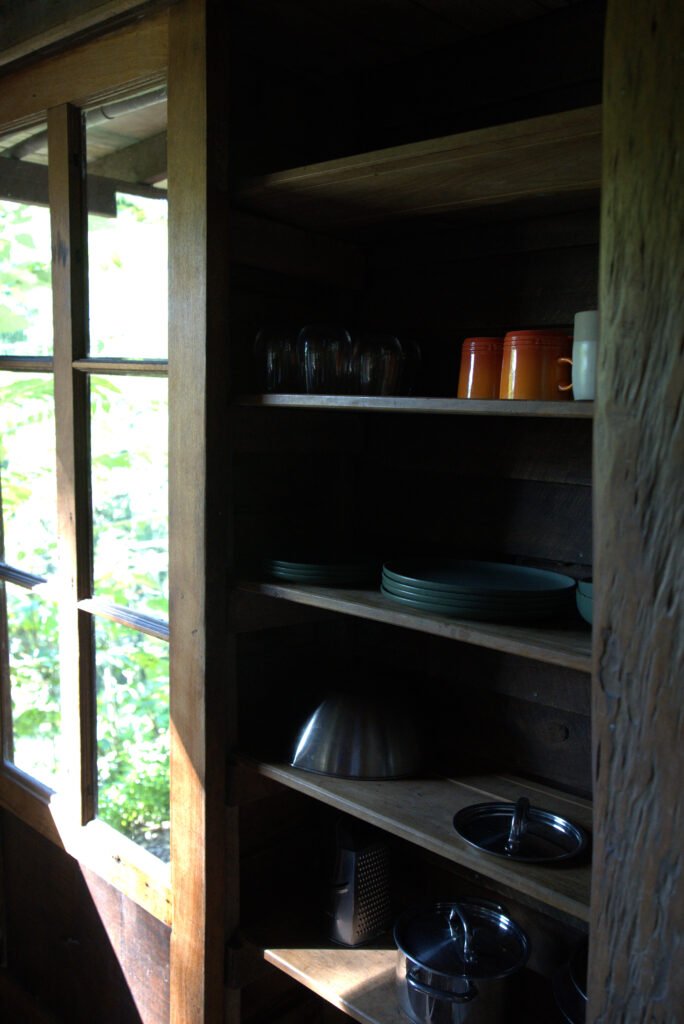
Walk into many old European kitchens and you’ll notice something curious.
Almost everything on display has a purpose.
The herbs hanging from a beam will become tonight’s dinner.
The wooden bowl holds fresh fruit.
The copper saucepan was probably used yesterday.
The earthenware jug might still contain milk.
Nothing feels staged for visitors.
It’s simply everyday life arranged beautifully.
That may be one of the easiest lessons to borrow.
Instead of filling shelves with ornaments chosen purely to decorate a room, European kitchens often celebrate useful things.
Beautiful crockery.
Handmade ceramics.
Well-used chopping boards.
A favourite teapot.
The room feels personal because it reflects how someone actually lives.
Bring It Home
Choose a few everyday objects that deserve to be seen. A stack of handmade bowls, a wooden pepper mill or your favourite coffee pot can bring far more character to a kitchen than decorations that never leave the shelf.
Rooms That Invite Conversation
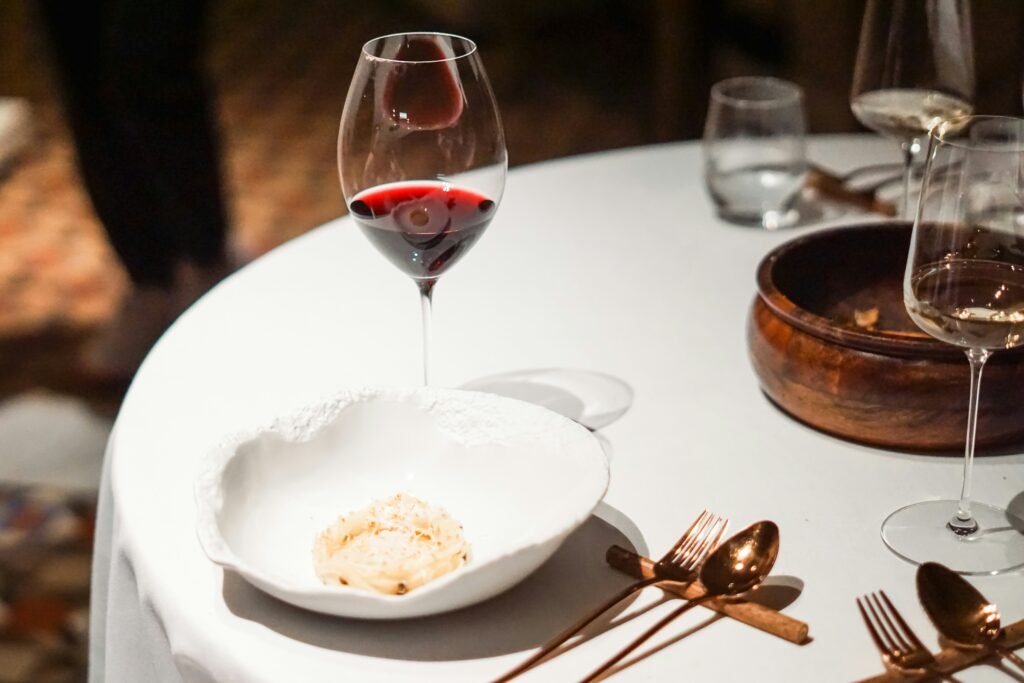
Perhaps the greatest difference between old European kitchens and many modern ones isn’t the furniture.
It’s the pace.
Nobody seems in a hurry to leave.
Meals stretch comfortably into conversations.
Neighbours drop by for coffee.
Friends stay long after dessert has disappeared.
The kitchen isn’t simply where food is prepared.
It’s where life quietly unfolds.
Looking back, that’s probably what we’ve fallen in love with most while travelling.
Not a particular style.
Not a specific country.
A feeling.
The sense that the kitchen exists for people rather than appearances.
And maybe that’s why those rooms stay with us long after we’ve returned home.
They Tell Stories Without Saying a Word
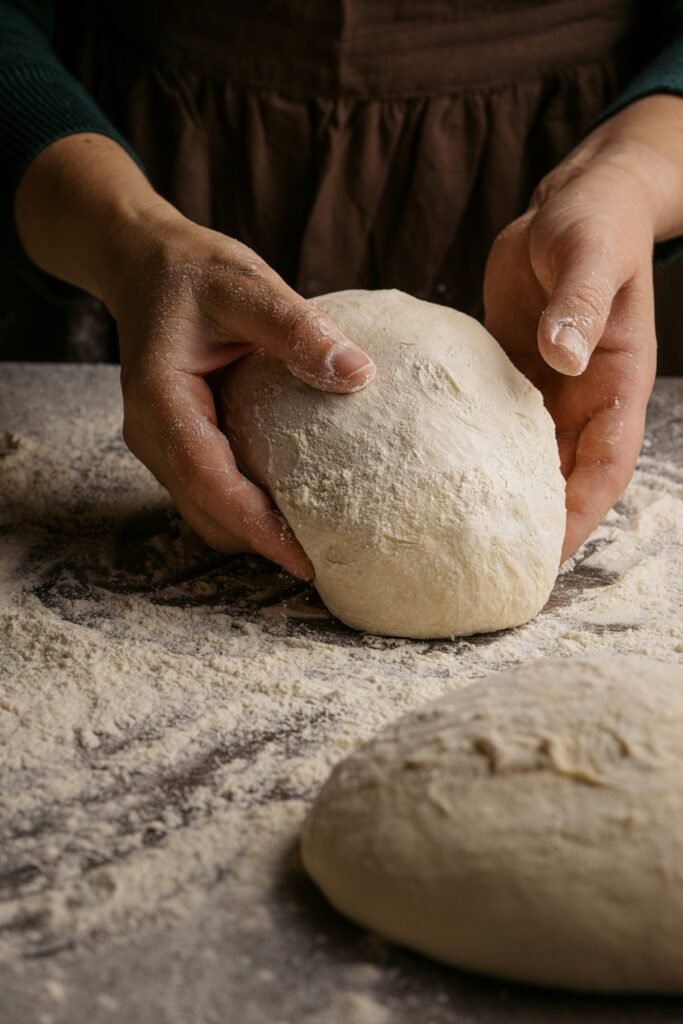
One of the things we love most about travelling through Europe is that history rarely hides behind museum glass.
It’s still being used.
You see it in the café that’s been serving coffee for generations.
The church where candles still burn quietly in the corner.
The old wooden door polished smooth by thousands of hands.
And nowhere feels more personal than the kitchen.
Unlike grand dining halls or ornate drawing rooms, kitchens have always been working rooms.
They’ve witnessed ordinary life.
Children learning family recipes.
Grandparents baking bread before sunrise.
Neighbours arriving unexpectedly and somehow staying until evening.
Birthdays.
Arguments.
Quiet mornings.
Christmas dinners.
A thousand ordinary moments that, over time, become extraordinary simply because they happened there.
Perhaps that’s why these rooms feel so alive.
Even when they’re empty.
The walls seem to remember.
Maybe Warmth Has Very Little to Do With Temperature
When we say an old European kitchen feels warm, we aren’t really talking about fireplaces or timber beams.
We’re talking about something much harder to describe.
It’s a room that makes you want to slow down.
To make another pot of coffee.
To slice one more piece of bread.
To stay for another conversation instead of checking the time.
Somehow, these kitchens remind us that the best parts of life rarely happen according to a schedule.
They happen while we’re lingering.
Perhaps modern life has become so efficient that we’ve accidentally designed away many of the moments we treasure most.
Old European kitchens seem to gently push back against that idea.
They’re wonderfully impractical.
Meals take time.
Coffee is savoured.
Fresh herbs are picked from the garden instead of poured from a jar.
Windows stay open because the weather is beautiful.
Friends arrive without needing an invitation weeks in advance.
The room quietly encourages life to unfold.
Maybe that’s the warmth we’ve been trying to describe all along.
Bringing a Little Europe Home
One of the nicest surprises we’ve discovered while travelling is that you don’t need to own a centuries-old farmhouse to borrow its atmosphere.
You don’t need exposed stone walls.
Or antique copper cookware.
Or a vineyard outside your kitchen window.
Often, it’s the smallest details that leave the biggest impression.
Fresh flowers picked on the way home.
A loaf of crusty bread left on the table.
A favourite ceramic bowl that gets used every day instead of saved for special occasions.
Opening the windows while dinner cooks.
Lighting a candle, even when there’s no particular reason.
Choosing materials that grow more beautiful with age instead of replacing them the moment they show a little wear.
Old European kitchens don’t feel warm because they’re old.
They feel warm because they invite people to live well within them.
That’s a feeling any home can borrow.
Final Thoughts
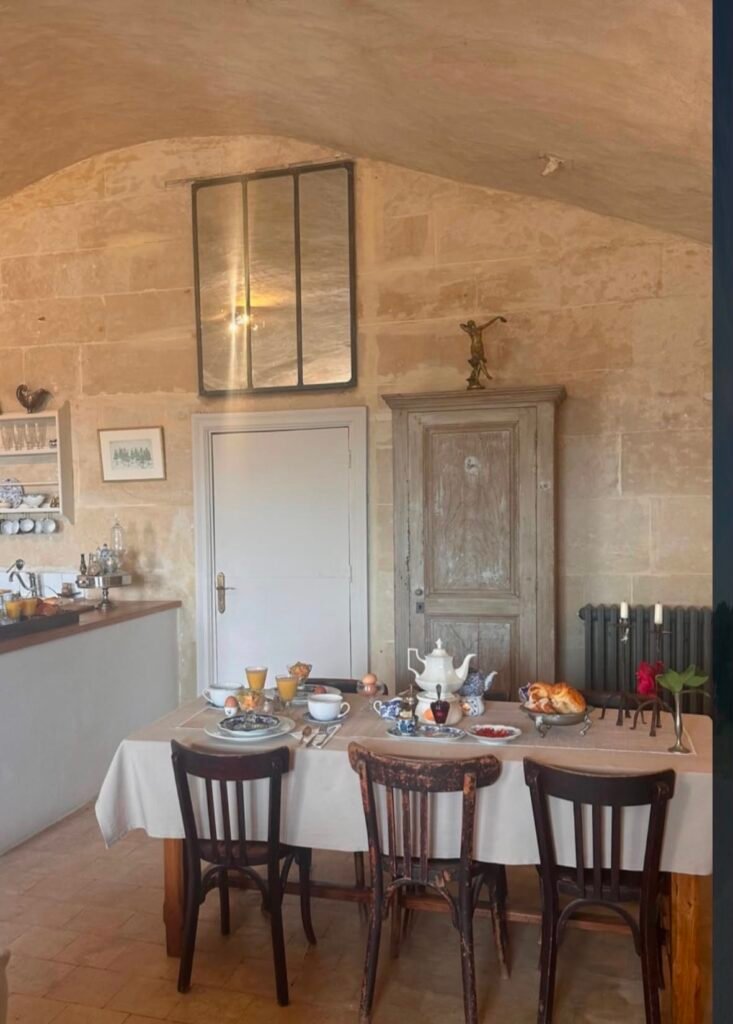
Looking back through our photographs from Europe, we’ve realised something surprising.
Some of our favourite memories weren’t taken in front of famous landmarks.
They weren’t the grand cathedrals or magnificent palaces we’d travelled thousands of kilometres to see.
Instead, they were the quiet moments in between.
A tiny guesthouse kitchen where breakfast stretched into conversation.
Fresh croissants still warm from the village bakery.
Morning light spilling across a weathered timber table.
The smell of coffee drifting through an open window while church bells echoed somewhere beyond the rooftops.
Those are the moments we find ourselves returning to.
Perhaps because they remind us that beauty doesn’t always announce itself.
Sometimes it’s simply waiting for us to slow down long enough to notice it.
Maybe that’s why old European kitchens continue to captivate us.
They’re not perfect.
They’re not fashionable.
They don’t chase trends.
Instead, they quietly celebrate things that never seem to go out of style:
Good food.
Good company.
Time shared around a table.
A room that welcomes people exactly as they are.
And perhaps that’s the most timeless design idea Europe has to offer.
Not how a kitchen should look.
But how it should make us feel.
Britt & Tyler
We’re Britt and Tyler, the two Australians behind Cocktails & Cathedrals. We’re drawn to old buildings, beautiful rooms, bookshops and places that seem to hold a story. Our journal brings those interests together, with a fondness for slow afternoons and a well-made cocktail. We hope it helps you find places you’ll want to linger.
Travel slowly. Stay beautifully.
A little more about us →