Is Kinsale Ireland’s Answer to the Riviera? A Slow Walking Guide Through Its Colourful Streets
There are parts of Ireland that fit neatly into the picture most of us already have in our heads.
Green hills. Grey skies. Stone cottages. Pubs where someone inevitably produces a fiddle.
Then there is Kinsale.
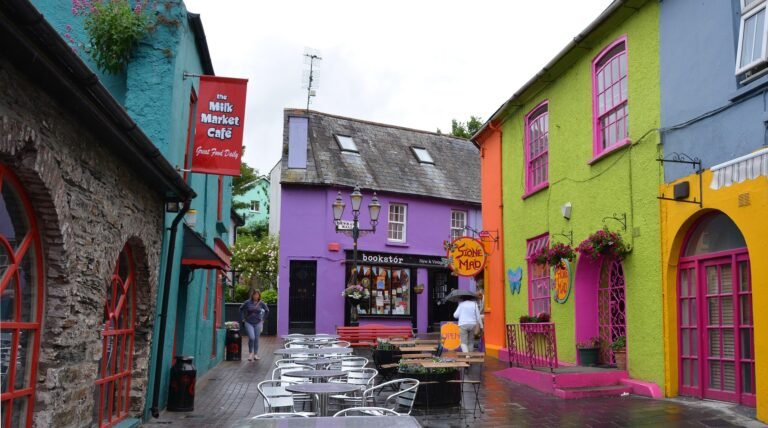
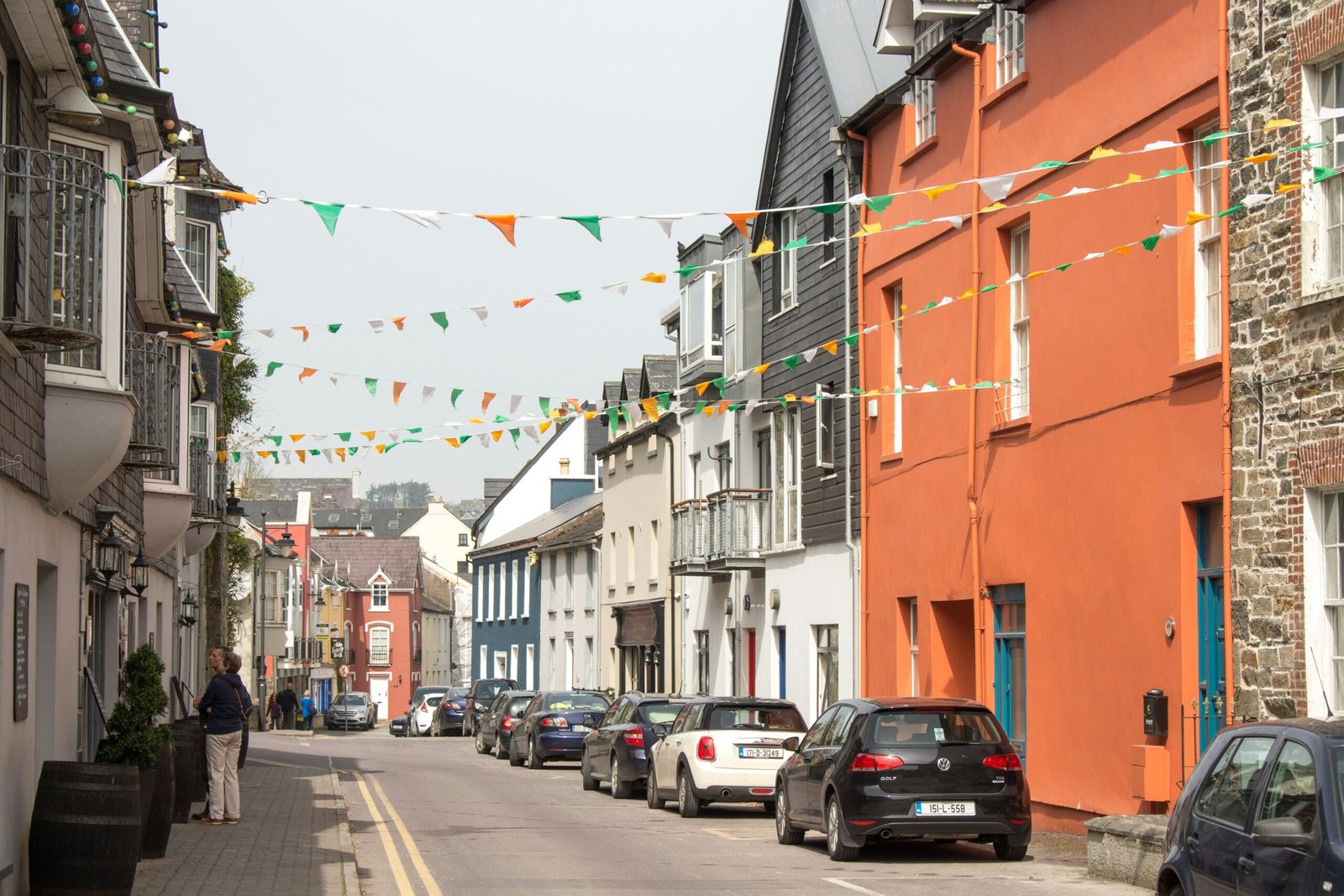
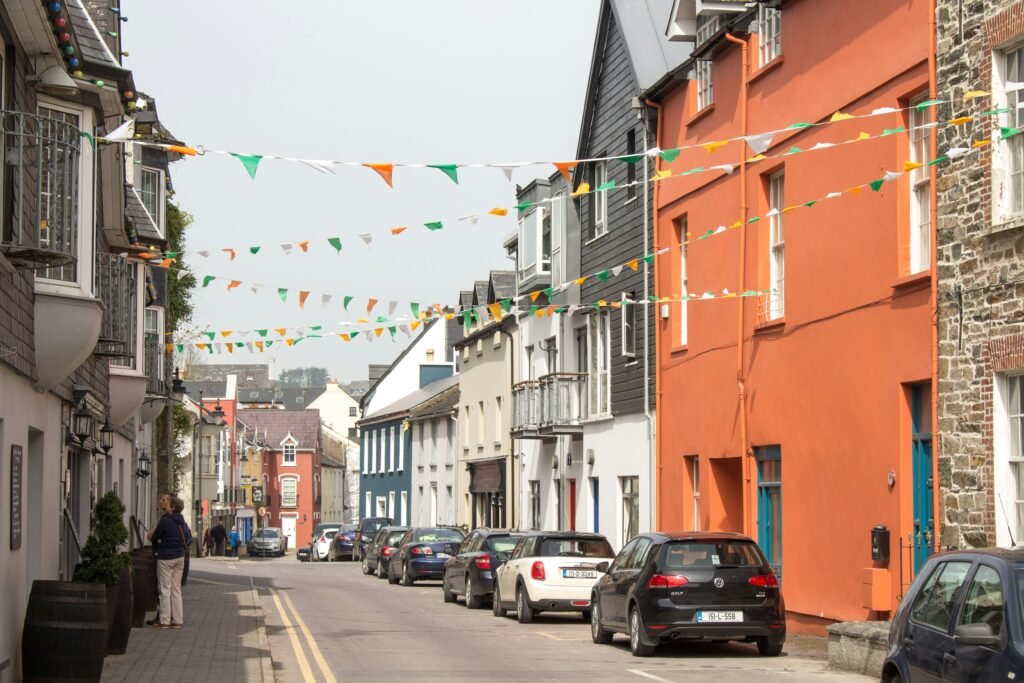
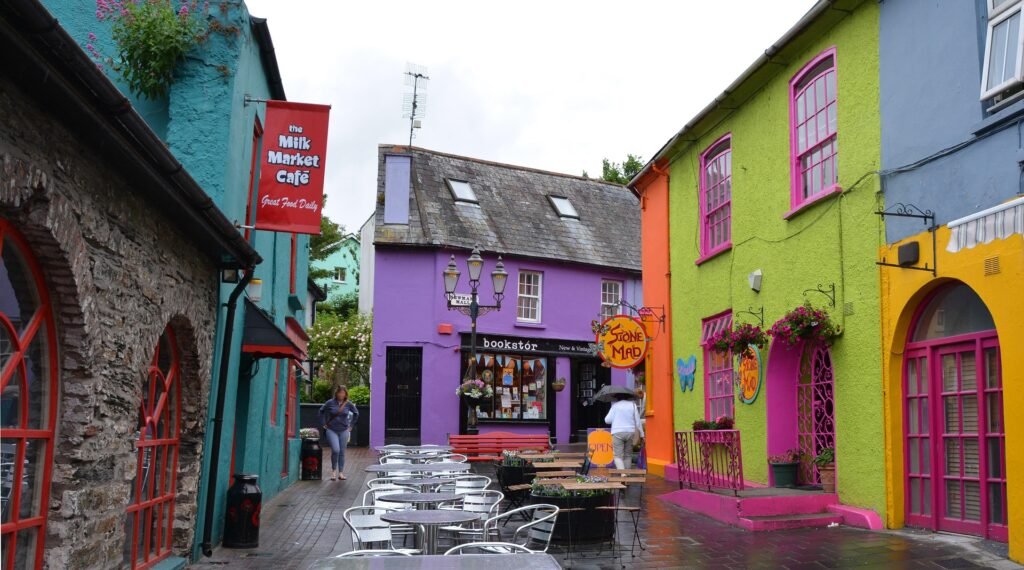
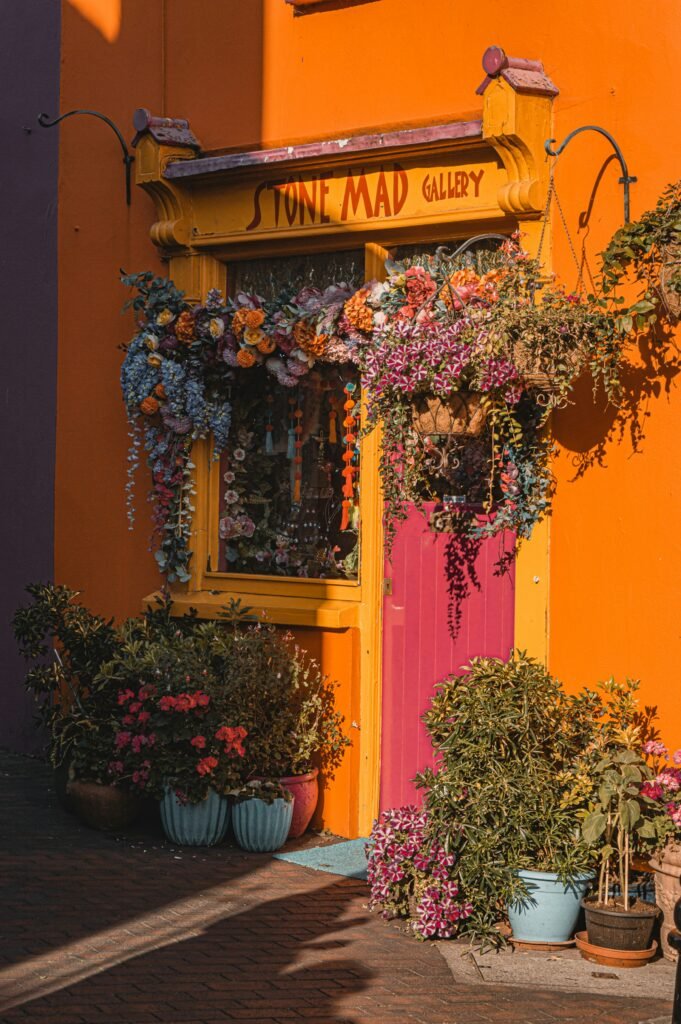
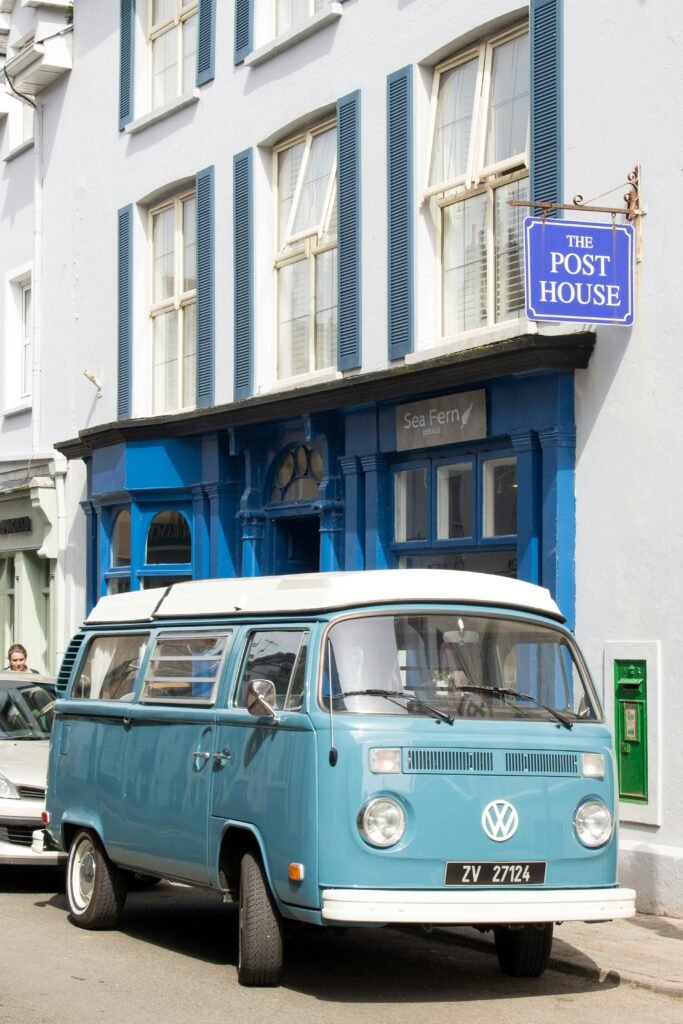
Tucked into the southern coast of County Cork, Kinsale looks as though somebody became slightly overenthusiastic with a paint chart. Shopfronts arrive in raspberry pink, turquoise, ochre and cobalt. Fishing boats bob in a sheltered harbour. Narrow lanes bend between independent galleries and restaurants. And above it all sits the unmistakable sense that nobody here is in much of a hurry.
Kinsale is often celebrated for its food, its harbour and its famously colourful streets, and it sits close to the beginning of Ireland’s Wild Atlantic Way.
But what makes it especially appealing is that you don’t really need an itinerary.
You need comfortable shoes.
And perhaps a loose understanding that lunch may take longer than anticipated.
Because Kinsale is best experienced slowly — wandering through the old town, following the harbour out towards the sea and finishing somewhere with a glass in your hand.
So, is it Ireland’s answer to the Riviera?
Possibly.
Just don’t expect palm trees.
Expect better pubs.
Morning: Start With No Particular Plan
One of Kinsale’s greatest luxuries is its scale.
You can arrive in the centre of town and simply begin walking.
There is no monumental attraction demanding that you queue outside it at 8:45am. Instead, the town itself is the attraction.
The streets climb and twist around one another, lined with brightly painted façades, tiny shops, cafés, restaurants and galleries. It feels much more Mediterranean than the Ireland of postcards, although the occasional burst of Atlantic wind will quickly remind you where you are.
Kinsale’s official tourism organisation actively encourages visitors to explore the town on foot; most central sights, cafés, shops and the harbour are only minutes apart.
This is exactly the sort of place where taking the wrong turn is usually an improvement.
Allow yourself to wander through the lanes around the centre without looking at Google Maps every thirty seconds.
Look up at old windows.
Notice crooked rooflines.
Peer into courtyards.
Spend twenty minutes in a shop you had absolutely no intention of entering.
Kinsale rewards nosiness.
Coffee First, Obviously
Before attempting anything resembling history, find coffee.
If you’re visiting on a Wednesday morning, the Kinsale Farmers Market runs from around 9:30am until 2:30pm, with local produce and hot food stalls.
Otherwise, simply pick whichever café appears to contain people who look suspiciously comfortable.
This isn’t the day for takeaway coffee consumed while power-walking.
Sit down.
You’re on Riviera time now.
Well, Irish Riviera time.
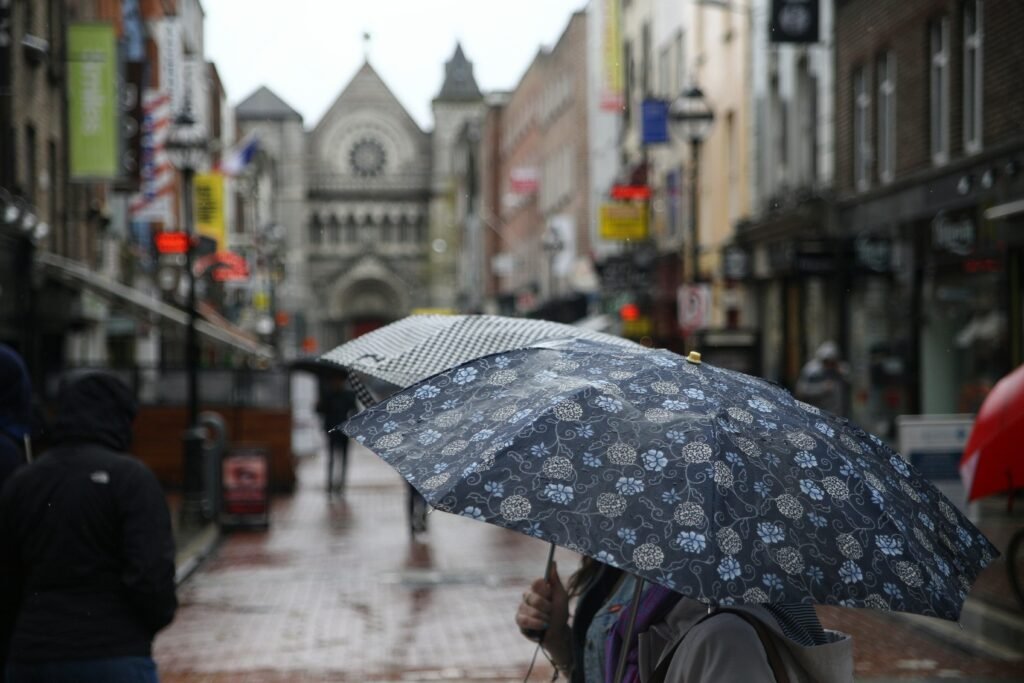
Which occasionally includes sideways rain.
If you enjoy a good walk why not check out our Literary Dublin Itinerary.
St Multose Church: Kinsale Before the Colour
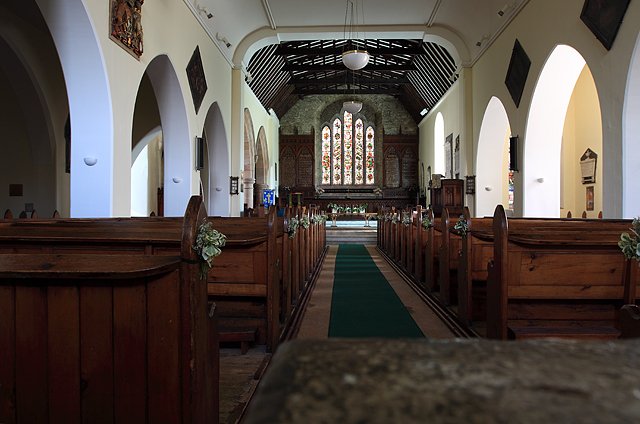
Eventually, make your way towards St Multose Church.
It provides a wonderfully severe contrast to the exuberant colour of the streets around it.
The church dates back to around 1190, and despite centuries of alterations, parts of the original Norman building remain. It has been used continuously as a place of worship for more than eight centuries.
This is where Kinsale suddenly reveals another layer.
The cheerful harbour town existed long before boutique hotels and seafood menus.
Its location made it strategically important for centuries, and Kinsale’s history includes medieval trade, military conflict and a succession of fortifications built around one of southern Ireland’s most important natural harbours.
St Multose is not a huge cathedral designed to overwhelm you.
That’s precisely why we like it.
It feels embedded into the town rather than sitting above it.
The graveyard is worth wandering too. Several victims of the Lusitania sinking were buried here after the ship was torpedoed off the Irish coast in 1915.
For a place that appears so playful on first glance, Kinsale carries an extraordinary amount of history beneath the paint.
Back Through Town — This Time More Slowly
From St Multose, drift back downhill.
This is where we’d resist the temptation to start ticking attractions off a list.
Kinsale isn’t particularly interested in being efficient.
Its appeal lies in details.
Brightly painted doors.
Restaurant menus handwritten outside.
Flowers spilling from window boxes.
Stone walls disappearing behind newer façades.
An alley that looks completely unimportant until you walk down it.
The colour can initially make Kinsale feel almost theatrical, but spend a little time here and it becomes obvious this isn’t a carefully constructed tourist village.
People actually live here.
Boats are working.
Shops open and close.
Locals walk dogs.
Delivery vans inconveniently block your photograph.
Which is exactly how we like our pretty places.
Down to Kinsale Harbour
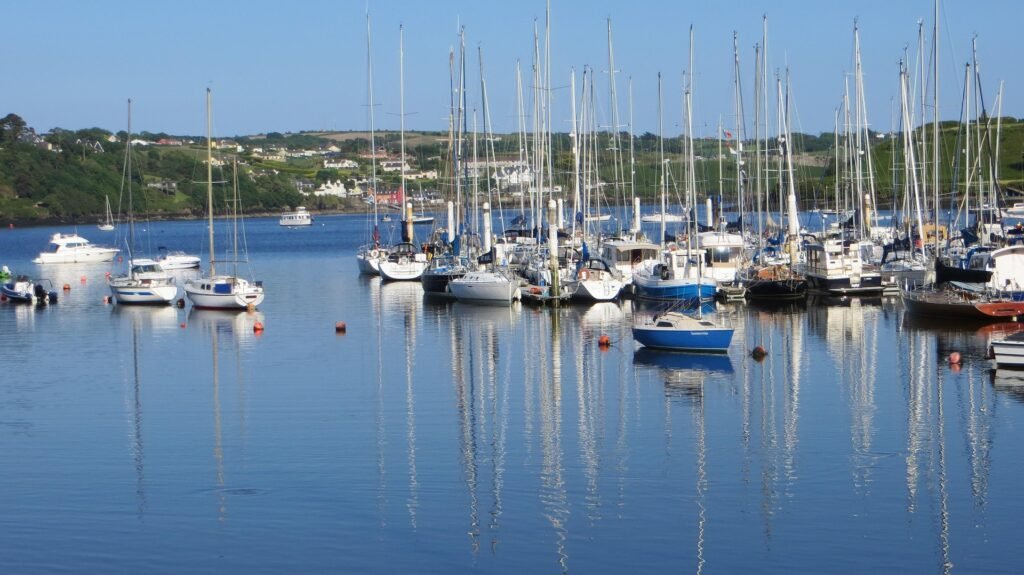
Eventually the streets spill towards the water.
The harbour changes the character of Kinsale completely.
Behind you is the compact jumble of town.
Ahead are yachts, fishing boats and low green hills wrapping around the water.
Kinsale’s protected harbour explains much of the town’s history. It developed as both a fishing and trading port before becoming the food-and-tourism destination it is today.
Walk along the waterfront for a while.
There is no particular point you’re trying to reach yet.
Watch boats coming and going.
Find a bench.
Contemplate whether owning a small yacht would improve your life despite all available financial evidence suggesting otherwise.
Then start thinking about lunch.
Lunch in Ireland’s Gourmet Capital
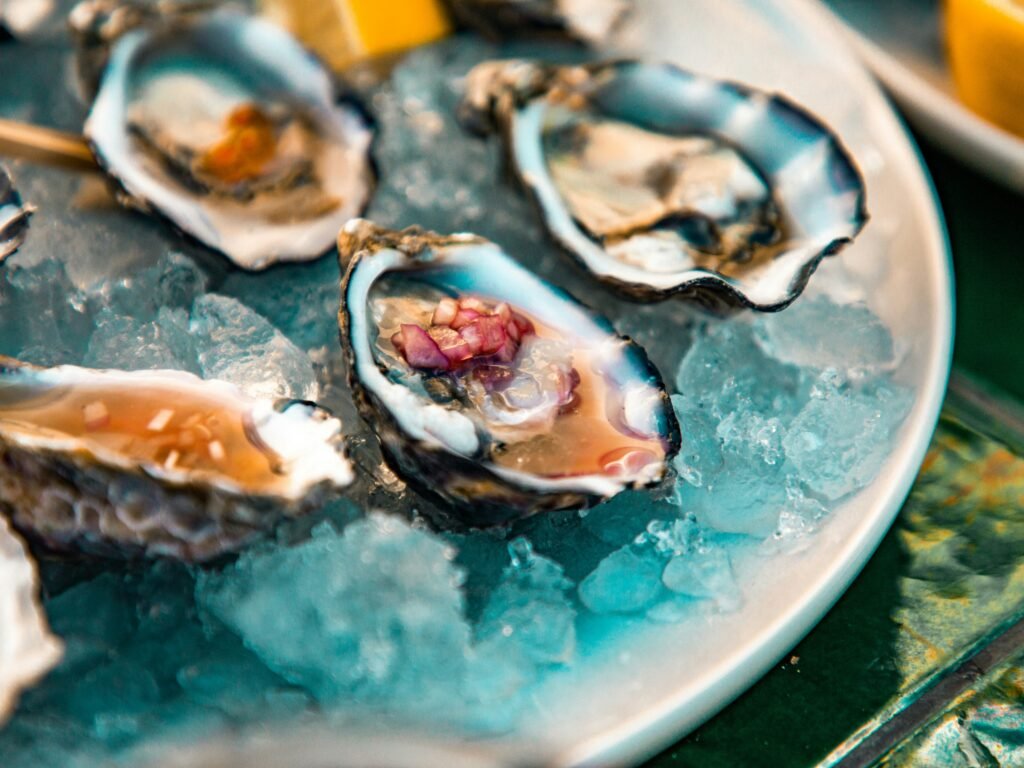
Kinsale has been calling itself — and being called — Ireland’s gourmet capital for decades.
For once, a tourism slogan doesn’t feel completely ridiculous.
The town has a disproportionately serious dining scene for somewhere this small, ranging from pubs and cafés to seafood restaurants and Michelin-recognised dining.
Seafood is the obvious direction.
You’re sitting beside an Atlantic harbour.
This isn’t the moment to order chicken schnitzel.
Fishy Fishy is perhaps Kinsale’s best-known seafood restaurant, while the town’s restaurant directory includes everything from relaxed pub food to more polished dining.
But we’d avoid becoming too prescriptive here.
The right Kinsale lunch is whichever restaurant makes you stop walking and look twice at the menu.
Order something local.
Have a glass of wine.
And don’t book your next activity for forty-five minutes later.
Because the best part of the day comes next.
The Scilly Walk
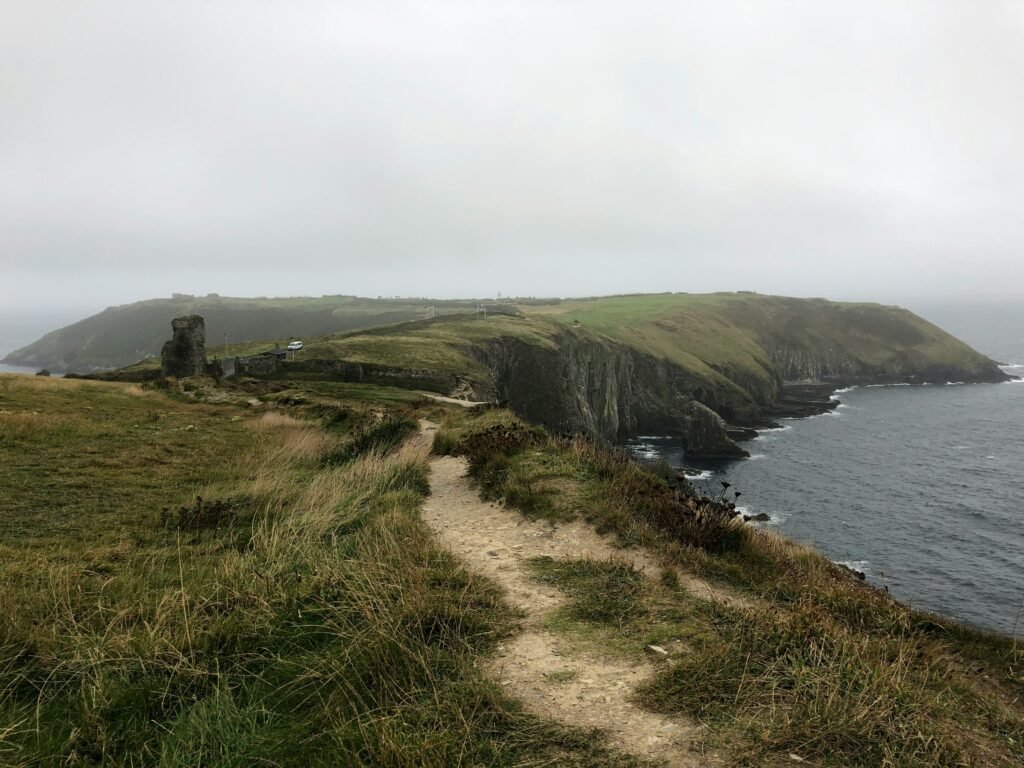
After lunch, head towards Scilly.
And yes, that’s actually what it’s called.
From here, a pedestrian trail follows the harbour towards Summercove and Charles Fort.
The Scilly Walk is predominantly flat and stays close to the water for much of the route, with views back across Kinsale, the marina and harbour. Towards Summercove there is a short steeper section before the path continues towards Charles Fort.
This is where Kinsale stops being merely pretty and becomes properly beautiful.
Trees hang over sections of the path.
The town slowly recedes behind you.
Sailboats sit scattered across the water.
Across the harbour you can see the opposite shoreline and the remnants of Kinsale’s defensive landscape.
There is something wonderfully civilised about this walk.
It isn’t a heroic hike.
Nobody needs trekking poles.
You are not conquering anything.
You’re simply walking beside the sea towards a pub and a 17th-century fortress.
Frankly, more hiking trails should be organised this way.
Allow around 30–40 minutes from central Kinsale to Charles Fort, although anyone carrying a camera will inevitably take longer.
Summercove and the Pint You Have Already Earned
Before reaching Charles Fort you’ll come into Summercove, a tiny waterfront village that feels considerably further from Kinsale than it actually is.
And here sits one of those establishments whose location seems almost unfair.
The Bulman stands beside the water, with views across the harbour towards Kinsale and the Atlantic only steps away.
You know what happens next.
A drink.
Possibly outside if Ireland has temporarily agreed to cooperate.
If not, inside beside a window.
This is Cocktails & Cathedrals territory, although admittedly today’s cathedral has been replaced with an eight-hundred-year-old Norman church and the cocktail may end up being a pint.
We can live with that.
Don’t stay too long, though.
There’s a fortress up the road.
Charles Fort: The Big Finish
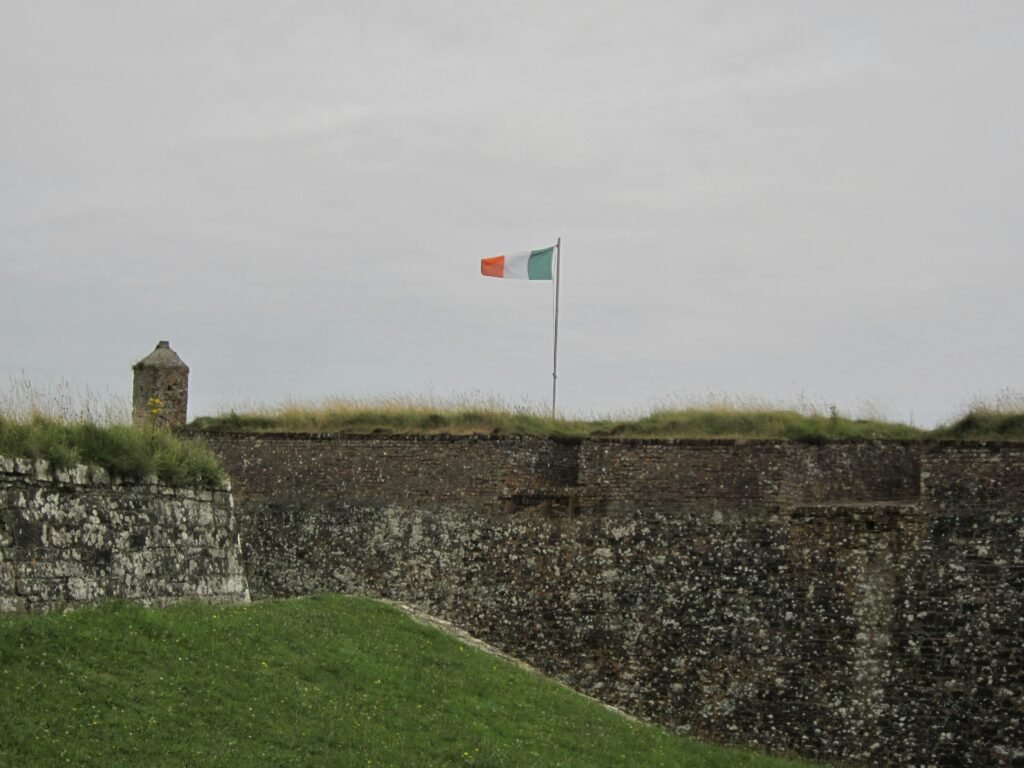
From Summercove, continue towards Charles Fort.
And suddenly the scale changes.
Where Kinsale is intimate and colourful, Charles Fort is enormous, geometric and military.
The star-shaped fortification was built during the 17th century to defend Kinsale Harbour and remains one of the town’s best-known historical landmarks.
Walk the ramparts and the whole geography of Kinsale starts making sense.
The harbour narrows towards the sea.
The town sits protected further inland.
Across the water lies James Fort, an earlier fortification dating from 1607.
It’s easy to look around from up here and understand why generations fought over control of this harbour.
It’s also spectacular.
Stone ramparts drop towards green slopes.
The Atlantic stretches beyond the harbour mouth.
And behind you, Kinsale’s brightly painted buildings have become tiny flecks of colour.
If the weather is dramatic — and in Ireland it probably will be at some point — even better.
This isn’t a place that needs blue skies.
Walk Back as the Light Changes
You can retrace the Scilly Walk into town.
Don’t rush it.
Places often look completely different when approached from the opposite direction, and the harbour becomes especially beautiful later in the day when the light softens.
By now you’ve walked enough to justify practically anything on a dinner menu.
Which is convenient.
Because you’re returning to one of Ireland’s best food towns.
Evening: Why You Should Stay Overnight in Kinsale
It would be easy to visit Kinsale as a day trip.
We wouldn’t.
Once the day visitors begin disappearing, the town settles into itself.
The shops quieten.
Restaurant windows glow.
People drift between pubs.
The bright façades that dominate photographs during the day become background scenery.
Kinsale’s own tourism organisation specifically recommends experiencing the town beyond a rushed day visit, highlighting the slower atmosphere that emerges once the daytime crowds thin.
Dinner can be as polished or as casual as you want.
Have seafood somewhere smart.
Find a small bistro.
Or disappear into a pub and abandon your carefully researched plans entirely.
A town this compact gives you that luxury.
Nothing is very far away.
And after walking back from Charles Fort, neither are you.
So, Is Kinsale Really the Irish Riviera?
Obviously we’re being slightly mischievous.
Kinsale isn’t Saint-Tropez.
Thank God.
There are no superyachts lined with people pretending not to look at one another.
No beach clubs charging €38 for a sun lounger.
And your Aperol Spritz may arrive beneath a cloud formation suggesting imminent biblical weather.
But the comparison isn’t completely absurd.
There is something distinctly continental about Kinsale.
The brightly coloured buildings.
The pleasure taken in food.
The harbour lifestyle.
The galleries and independent shops.
The feeling that sitting outside with a drink is an entirely legitimate afternoon activity.
Except underneath all of that is something unmistakably Irish.
Eight centuries of history.
Old stone churches.
Military forts.
Fishing boats.
Atlantic weather.
And pubs.
Always pubs.
So perhaps Kinsale isn’t Ireland trying to imitate the Riviera.
Perhaps it’s better than that.
It is simply a little Irish harbour town that discovered long ago that life looks considerably better painted turquoise.
And we’re very much on board.
A Simple Kinsale Walking Route
If you want to loosely follow the day we’ve described, keep it simple:
Kinsale town centre → St Multose Church → colourful streets and shops → harbour → lunch → Scilly Walk → Summercove → The Bulman → Charles Fort → Scilly Walk back to Kinsale → dinner and drinks.
The central town is extremely compact, while the walk from town to Charles Fort takes roughly 30–40 minutes each way at a normal pace.
Allow the better part of a day.
Not because the distances demand it.
Because Kinsale does.
When to Visit Kinsale
Summer gives you the longest days and the best chance of sitting outside, but it is also the busiest time.
Spring brings colour and generally lighter crowds, while autumn suits Kinsale particularly well — seafood, harbour walks and pubs all make considerably more sense once there’s a slight chill in the air.
Even winter has appeal if you’re coming primarily for food, history and atmosphere rather than sunshine. Kinsale tourism promotes the town as a year-round destination, with distinct seasonal personalities rather than a single short visitor season.
For us?
Late May, June or September.
Enough daylight to wander.
Enough life in town.
And hopefully just enough Irish weather to remind you where you are.
Final Thoughts
Some places need a spreadsheet.
Kinsale needs an afternoon.
Come here to wander streets painted colours that shouldn’t really work together but somehow do.
Step inside a church that’s been standing since the 12th century.
Eat something that came out of the Atlantic.
Walk beside the harbour.
Climb the ramparts of a centuries-old fort.
Then head back to town for dinner with slightly tired legs and absolutely no desire to leave.
Maybe that’s why Kinsale works so well.
It doesn’t give you one enormous reason to visit.
It gives you twenty small ones.
And most of them are within walking distance.
Britt & Tyler
We’re Britt and Tyler, the two Australians behind Cocktails & Cathedrals. We’re drawn to old buildings, beautiful rooms, bookshops and places that seem to hold a story. Our journal brings those interests together, with a fondness for slow afternoons and a well-made cocktail. We hope it helps you find places you’ll want to linger.
Travel slowly. Stay beautifully.
A little more about us →