A Literary Walking Tour of Bath: Jane Austen, Mary Shelley and the Stories Hidden in the Georgian Streets
Bath is the sort of city that can make you feel as though you’ve accidentally wandered into a novel.
There are crescents of honey-coloured stone, narrow passages disappearing behind grand façades, old assembly rooms, gardens made for promenading and streets that seem almost suspiciously well suited to chance encounters.
And writers noticed.
Jane Austen lived here. Mary Shelley wrote much of Frankenstein here. Charles Dickens later turned his eye on Bath society in The Pickwick Papers. Henry Fielding and Anna Sewell also have connections with the city. Bath’s literary history is not confined to a museum or a blue plaque; it is woven into the streets themselves.
This self-guided literary walking tour takes you through the Bath of drawing rooms, circulating gossip, Gothic imagination and Regency society.
You can walk the basic route in around two to three hours, but that would be missing the point. Give yourself half a day if you want to stop for coffee, visit the Jane Austen Centre or Mary Shelley’s House of Frankenstein, and spend some time simply wandering.
Stop 1: Begin at Abbey Churchyard
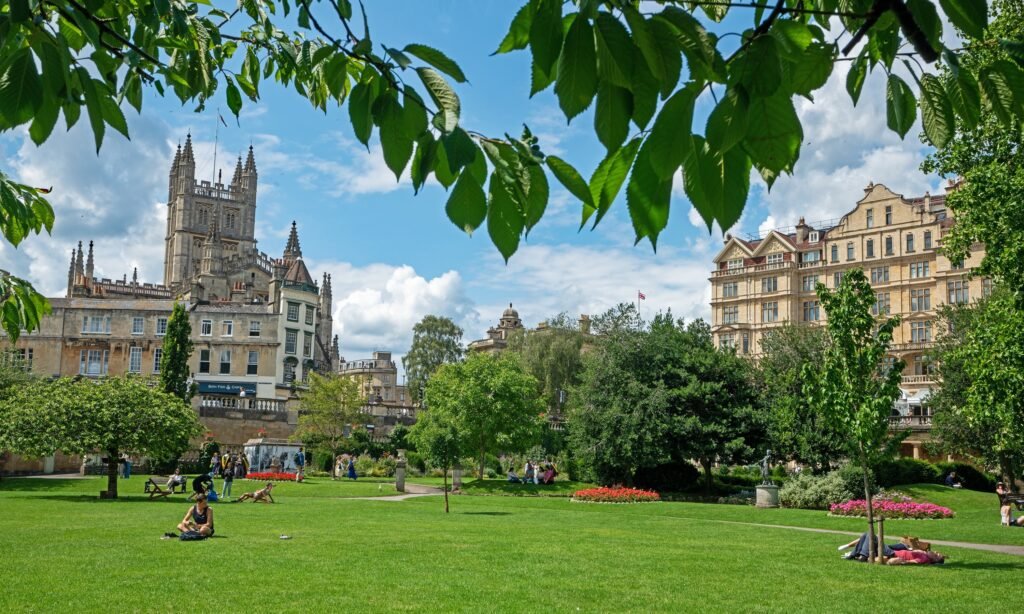
Start beside Bath Abbey, in the busy heart of the old city.
This is a good place to understand what Bath was in Jane Austen’s world. People didn’t simply come here to admire the architecture. Georgian Bath was a social machine.
Visitors came to take the mineral waters, attend dances, be seen in public rooms, gather information and — hopefully — make useful acquaintances.
For a novelist fascinated by manners, money, marriage and status, it was almost perfect material.
All six of Austen’s completed novels mention Bath, while Northanger Abbey and Persuasion make the city particularly important to their stories.
From Abbey Churchyard, look towards the Pump Room beside the Roman Baths.
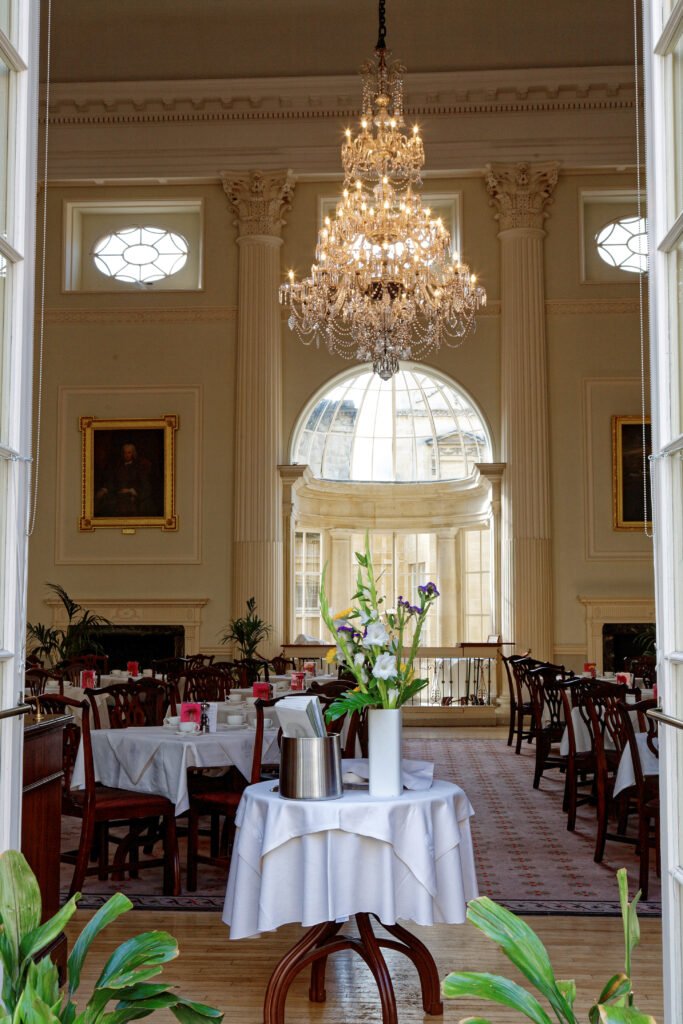
The Pump Room was one of Georgian Bath’s great social stages. This was where fashionable visitors gathered during the morning, drank the spa water and observed one another.
In Northanger Abbey, Catherine Morland enters a world in which promenades, dances and introductions can change the direction of a person’s life.
Walking around Bath makes Austen’s obsession with these tiny social interactions suddenly make sense.
The city itself was designed for them.
Stop 2: Find Mary Shelley at 5 Abbey Churchyard
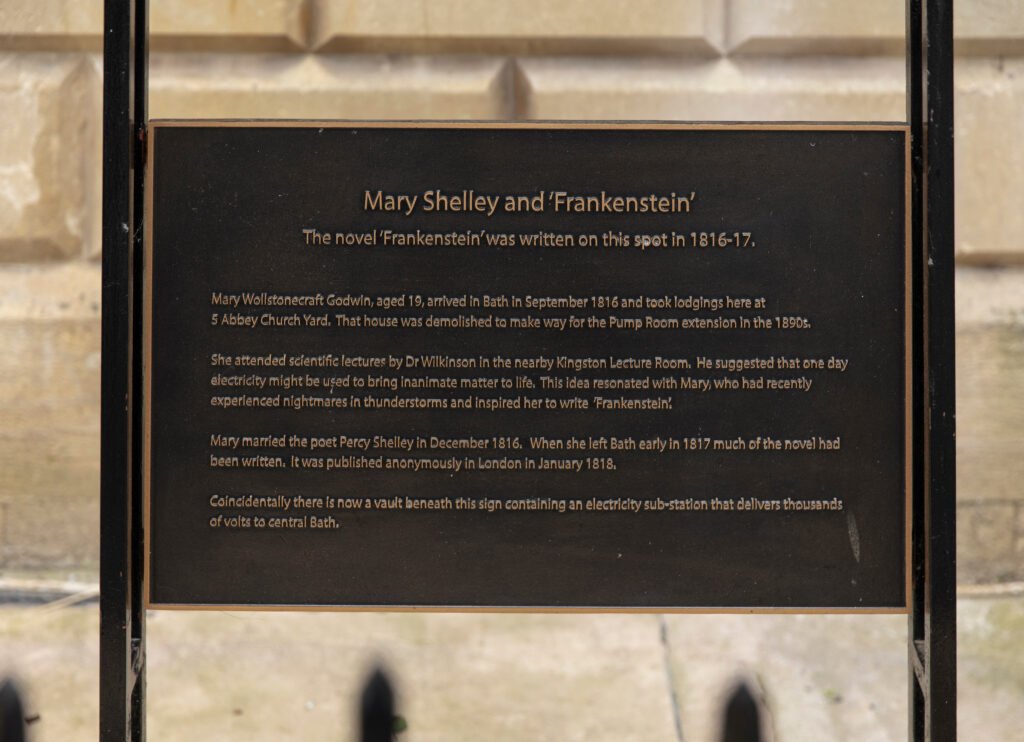
Before leaving the square, there is another literary story hiding almost in plain sight.
In 1816, Mary Wollstonecraft Godwin — soon to become Mary Shelley — was living at 5 Abbey Churchyard.
She was just nineteen.
And she was writing Frankenstein.
Shelley and her companions arrived in Bath in September 1816. During the autumn and winter that followed, she worked intensely on the novel, and surviving correspondence from Bath records her progress on individual chapters. Her former lodgings no longer survive intact, but the location is commemorated close to the Pump Room.
It creates a wonderful contrast with the Jane Austen version of Bath.
Austen gives us dances, drawing rooms, awkward introductions and romantic misunderstandings.
Only a few years later, Mary Shelley was working nearby on corpses, scientific ambition and a creature assembled from the dead.
Same elegant Georgian city.
Very different book.
If you want to explore this side of Bath further, Mary Shelley’s House of Frankenstein is now on Gay Street. It is a modern immersive attraction rather than Shelley’s actual home, but it explores her life and the cultural afterlife of the novel.
For now, though, continue walking east.
Stop 3: Cross Pulteney Bridge and Walk Great Pulteney Street
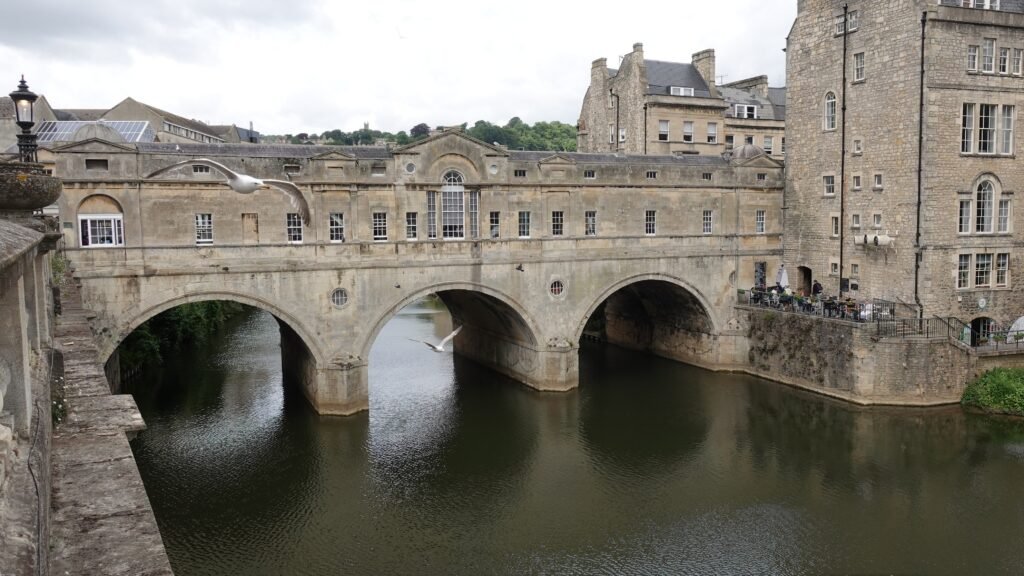
Head towards Pulteney Bridge and cross the River Avon.
The view here is one of Bath’s most recognisable, but the important part of our literary walk comes immediately afterwards.
Continue along Great Pulteney Street.
This wide, symmetrical Georgian avenue is Bath doing what Bath does best: turning architecture into theatre.
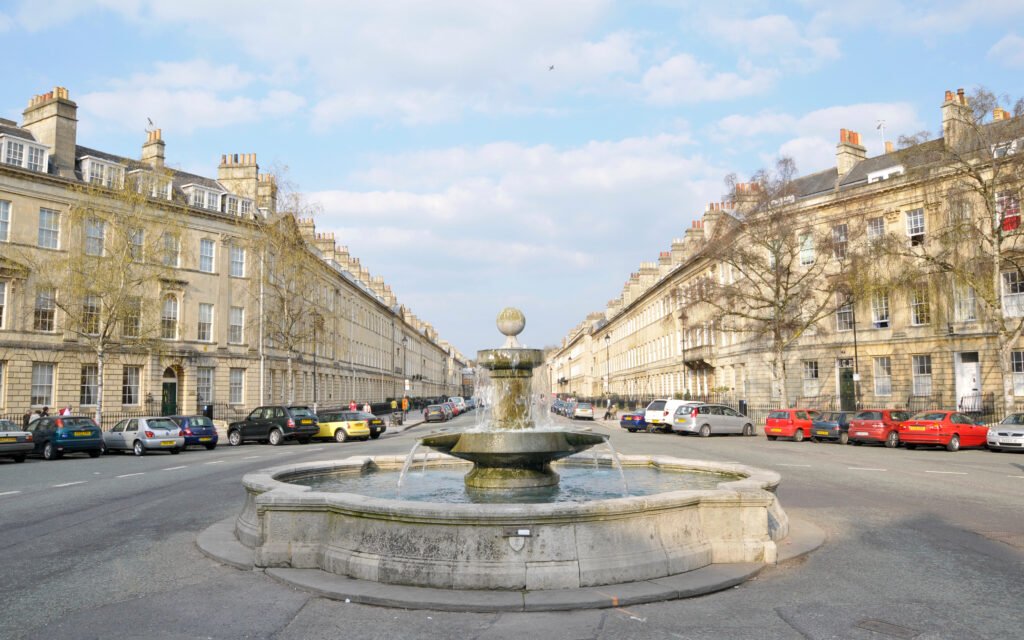
In Austen’s time, where you stayed in Bath mattered. Where you walked mattered. Who you happened to encounter while walking mattered even more.
Great Pulteney Street gives you an excellent sense of the world her characters occupied — apparently leisurely, but governed by an astonishing number of social rules.
Keep going until you reach Sydney Place.
Stop 4: Jane Austen’s Home at 4 Sydney Place
Jane Austen moved to Bath with her parents in 1801, when her father retired from the clergy.
One of the family’s earliest Bath addresses was 4 Sydney Place, opposite Sydney Gardens.
You cannot wander through the house as an Austen museum, so this is a quieter stop.
And that’s partly why I like it.
Stand across the street for a moment rather than simply photographing the plaque and moving on.
This was not Jane Austen visiting somewhere picturesque.
This was home.
Bath was where she bought things, visited people, attended entertainments, walked through the streets and experienced exactly the kind of intensely observed society she later placed into her novels.
Her relationship with Bath appears to have been complicated, and the Austen family’s circumstances became increasingly unsettled after the death of Jane’s father in 1805. They eventually left Bath in 1806.
That knowledge makes the city in Persuasion especially interesting.
Bath can be beautiful without necessarily being comfortable.
Stop 5: Walk Through Sydney Gardens
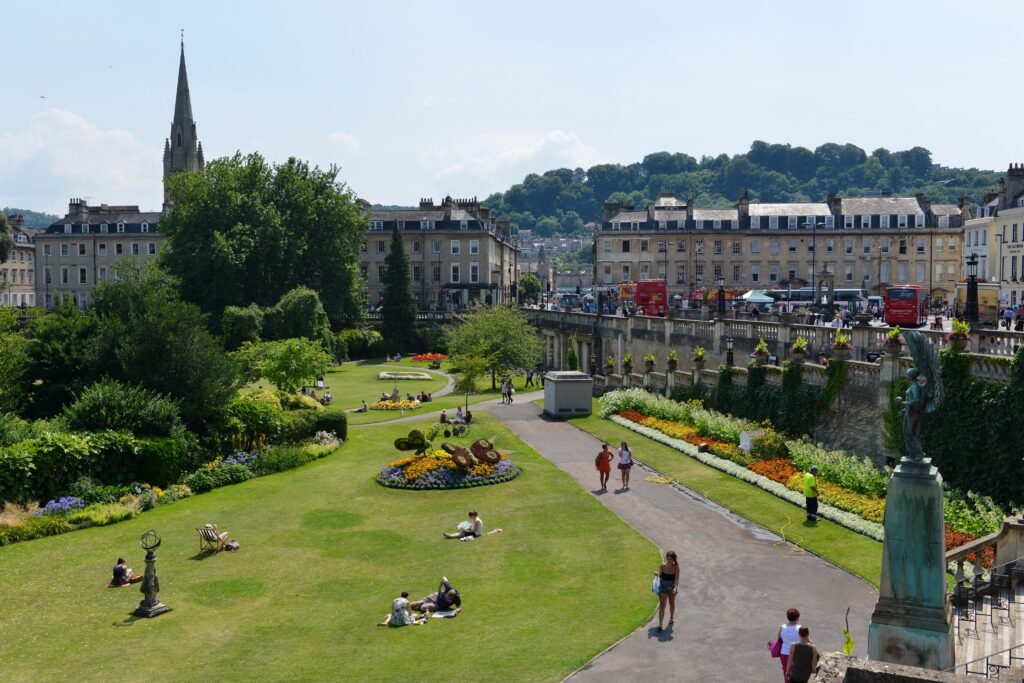
Across from Sydney Place you’ll find Sydney Gardens.
These were pleasure gardens rather than simply a modern public park. People came here to walk, listen to music and participate in Bath’s social life.
Austen knew the gardens while living opposite them, and today there is a self-guided Jane Austen trail through the area.
It is worth wandering rather than rushing back towards town.
Much of literary travel consists of visiting houses where somebody once lived.
Gardens are different.
Walking gives you a physical sense of distance and pace. You begin to understand how a city worked before cars, when walking itself was part transport, part entertainment and part social ritual.
And in Austen’s novels, walking is rarely just walking.
People meet.
People overhear things.
People discover things.
Occasionally, people finally say what they should have said several chapters earlier.
Stop 6: Return to Gay Street and the Jane Austen Centre
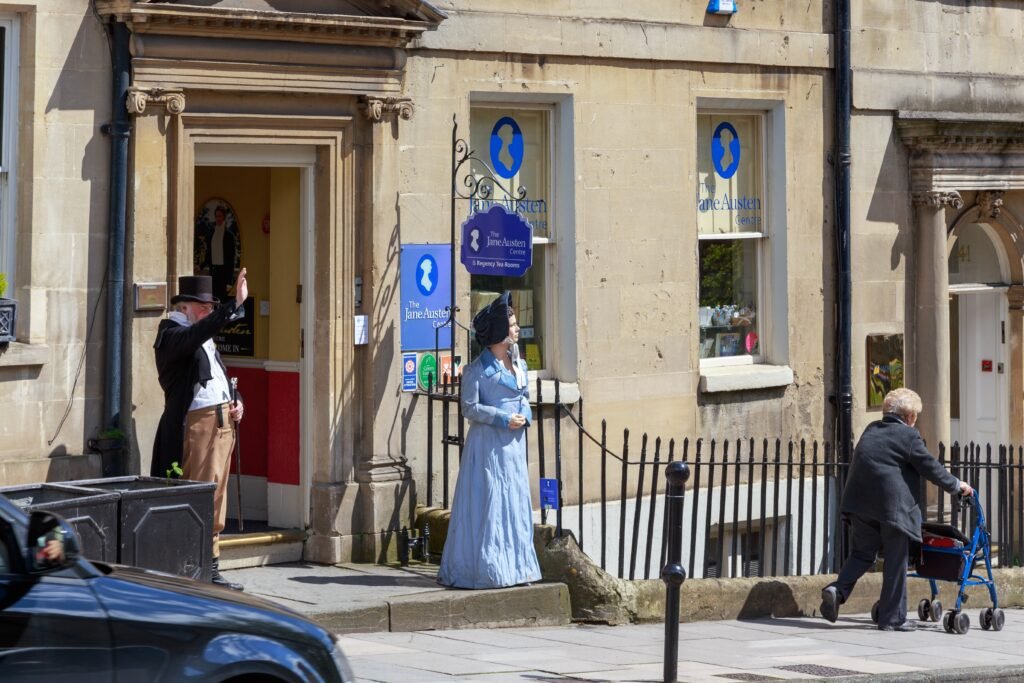
Walk back towards central Bath and make your way to Gay Street.
Austen herself lived for a time on Gay Street after her father’s death, although the Jane Austen Centre at No. 40 is not her former house. It is a museum devoted to Austen’s life, work and relationship with Bath.
That distinction is worth making because it is surprisingly easy to leave Bath believing Austen lived inside the museum.
She didn’t.
But it is still the best dedicated introduction to Austen in the city, particularly if you want more context before continuing through the streets she wrote about.
This is also where literary Bath becomes slightly stranger again.
Just down Gay Street is Mary Shelley’s House of Frankenstein, meaning two of England’s most famous female novelists now effectively share the same street in Bath’s literary tourism landscape.
Austen and Shelley were separated by generation, temperament and genre.
Yet both found extraordinary material in this small Georgian city.
Stop 7: The Assembly Rooms
From Gay Street, continue uphill to the Bath Assembly Rooms.
If you’re trying to imagine Austen’s Bath, this is one of the most important stops.
These rooms were built for public entertainment: dancing, conversation, cards, concerts and the endless rituals of fashionable society.
Austen’s characters attend assemblies and dances because these were places where relationships could actually begin.
There was no dating app.
You went to a ball.
The Assembly Rooms therefore function almost like a stage set for Austen’s fiction: carefully arranged social spaces in which everyone is simultaneously participating and watching.
Visit Bath notes that Austen’s characters in Northanger Abbey and Persuasion inhabit precisely this culture of Bath entertainments, while the modern Assembly Rooms remain one of the city’s key Austen-related sites.
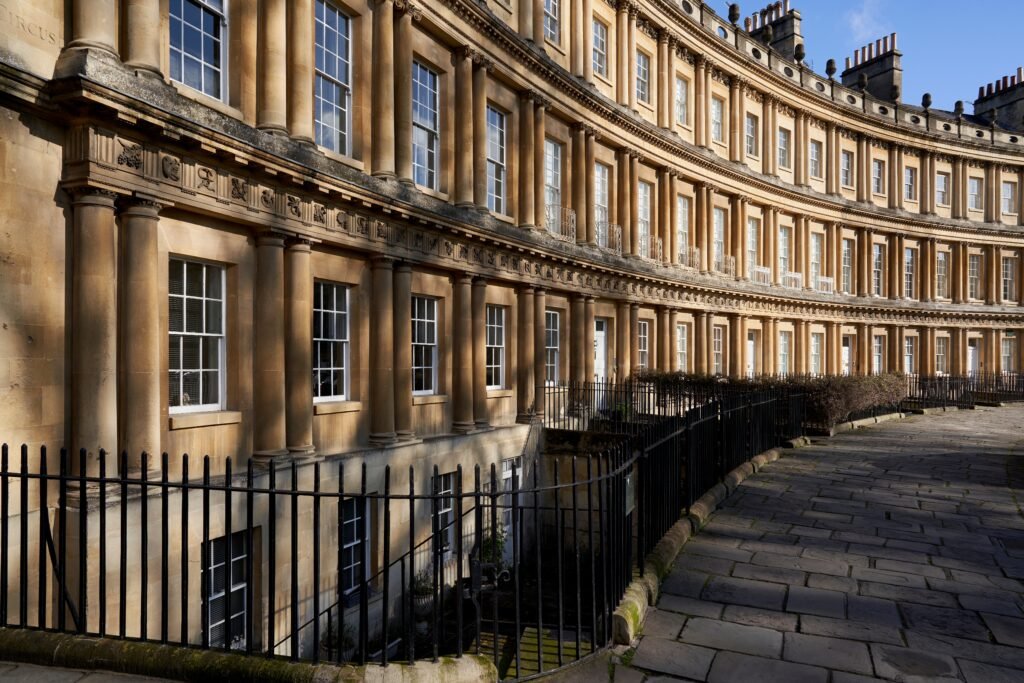
Stop 8: The Circus and Royal Crescent
From the Assembly Rooms, walk towards The Circus, then continue to the Royal Crescent.
Even if you’ve seen these buildings a hundred times in photographs, walking between them changes the experience.
The scale becomes apparent.
So does the choreography of the streets.
Bath’s great Georgian developments weren’t simply collections of individual houses. Whole streets were designed as architectural compositions.
That sense of performance fits beautifully with Austen’s Bath, where appearances constantly reveal — or conceal — social position.
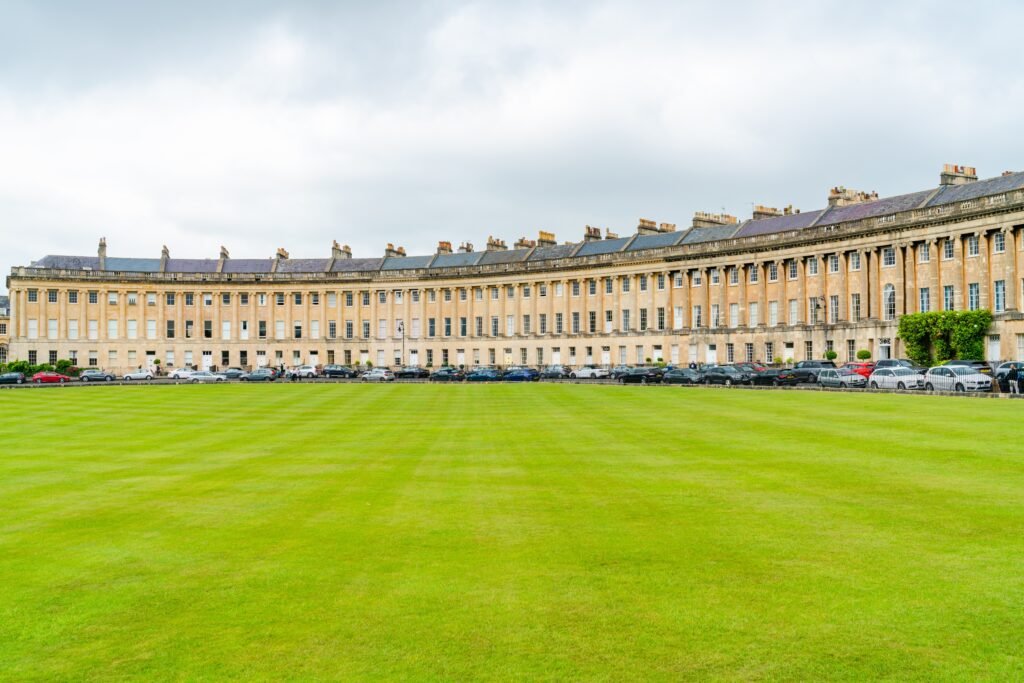
The Royal Crescent had already been completed by the time Austen lived in the city, and she is known to have walked in this part of Bath. Visit Bath’s current Austen guide specifically suggests following the Gravel Walk to the Royal Crescent, noting that Austen often walked here on Sundays after church.
Stand on the lawn and look back.
This is perhaps the point on the walk where Bath feels least like a modern British city and most like the setting of a novel.
Stop 9: Walk the Gravel Walk — Persuasion Territory
Now find Gravel Walk, running behind the Royal Crescent area.
For Austen readers, this may be the most satisfying part of the entire route.
The Gravel Walk is closely associated with the romantic climax of Persuasion, the novel in which Anne Elliot and Captain Wentworth are given another chance at the relationship they lost years earlier.
Visit Bath describes it as the “Lover’s Lane” of Austen’s day and identifies it with one of the crucial romantic scenes in Persuasion.
But even without knowing the book intimately, walk it.
It is quieter than the monumental spaces you’ve just left behind.
And that is exactly why it works.
Austen’s biggest emotional moments often happen in comparatively ordinary spaces: during walks, conversations or meetings where characters briefly escape the crowded rooms in which everybody else is watching.
For a city so famous for grand façades, one of Bath’s best literary experiences is a relatively modest path behind them.
One More Literary Bath Detour: Charles Dickens
If you still have energy after the main walk, Bath’s literary history doesn’t end with Austen and Shelley.
Charles Dickens visited the city repeatedly.
He stayed at the Saracens Head while working as a young reporter, later visited friends in St James’s Square and eventually sent Mr Pickwick to Bath in The Pickwick Papers. Dickens used the city’s fashionable rituals rather differently from Austen, turning them towards comic exaggeration and satire.
By the Victorian period, Bath’s great Georgian social age was already slipping into history.
Dickens could look at it with enough distance to make fun of it.
Which makes him a nice final voice for the walk.
Jane Austen observed Bath from within its fashionable world.
Mary Shelley quietly wrote something monstrous beside it.
Dickens came along afterwards and laughed at it.
Where to Stop for Coffee on a Literary Walk Through Bath
There is a strong temptation to turn a literary trip into a race between plaques.
Don’t.
Bath is particularly good at rewarding wasted time.
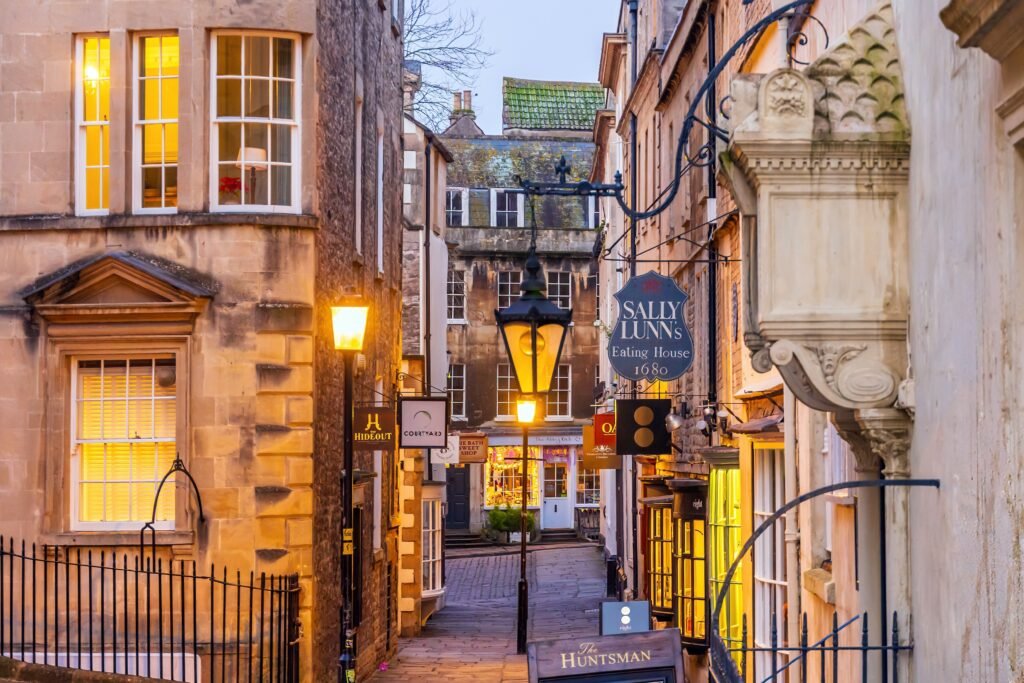
Find somewhere around Abbey Churchyard for coffee, sit somewhere along Great Pulteney Street, browse a bookshop or stop for tea after the Assembly Rooms.
The Pump Room is the obvious historically appropriate choice if you want the full Austen atmosphere. Austen herself wrote about the Pump Room as one of the central gathering places of Bath society, and it remains open for morning coffee and afternoon tea.
But you don’t need to make every stop historic.
Part of the pleasure of literary travel is allowing the old city and the modern one to overlap.
Books to Read Before Your Literary Weekend in Bath
If you’re only taking one book, make it Persuasion.
It is quieter and more melancholic than Pride and Prejudice, and Bath becomes part of its emotional landscape rather than simply a picturesque setting.
Northanger Abbey is the more playful Bath novel: young Catherine Morland arrives in the city excited by balls, society, romance and Gothic stories.
Then bring Frankenstein.
Not because the monster stomps around Bath — he doesn’t — but because knowing that nineteen-year-old Mary Shelley was developing the book here completely changes the atmosphere of the streets around Abbey Churchyard.
And if you have room for one more, try Dickens’s The Pickwick Papers for a very different view of Bath society.
The Bath That Writers Saw
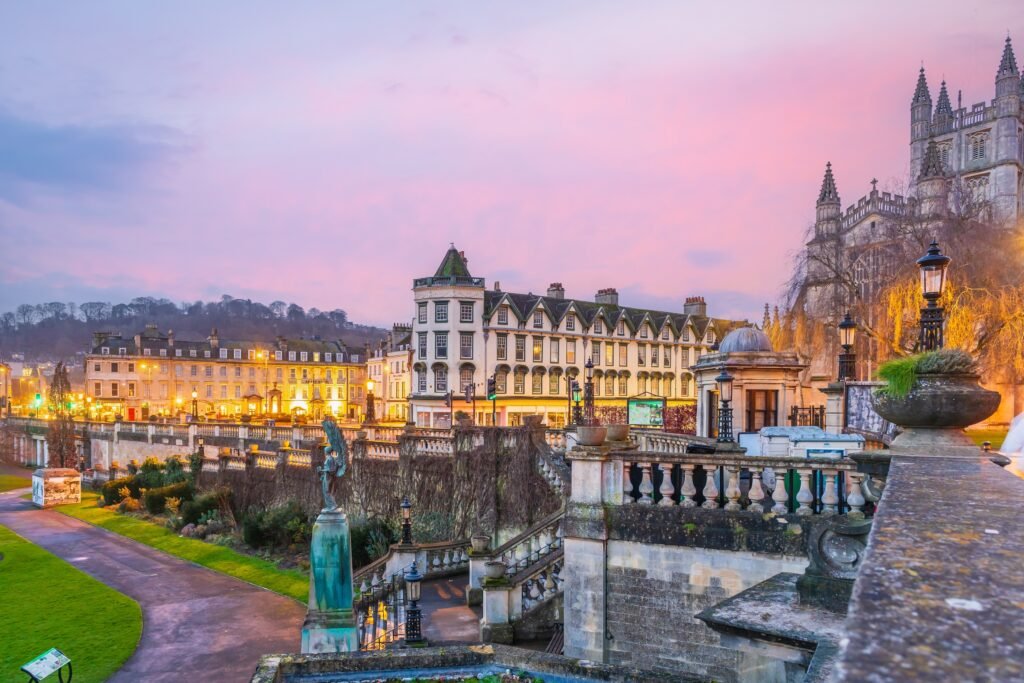
Bath can initially seem almost too beautiful.
Everything matches.
The stone is golden. The terraces curve obediently around green lawns. The Georgian houses appear to have agreed upon a dress code sometime around 1770 and never reconsidered it.
But the writers connected to Bath saw what existed behind the façade.
Jane Austen saw a society obsessed with rank, marriage and appearances.
Mary Shelley found enough quiet here to work on one of literature’s darkest examinations of creation and responsibility.
Dickens saw material for satire.
That’s why Bath works so well as a literary city.
You aren’t simply visiting places where famous authors once stood.
You’re walking through the kind of environment that gave them something to write about.
And more than two hundred years later, remarkably much of it is still here.
A simple version of the route
Bath Abbey & Pump Room → Mary Shelley’s former Abbey Churchyard home → Pulteney Bridge → Great Pulteney Street → 4 Sydney Place → Sydney Gardens → Gay Street & Jane Austen Centre → Assembly Rooms → The Circus → Royal Crescent → Gravel Walk.
Britt & Tyler
We’re Britt and Tyler, the two Australians behind Cocktails & Cathedrals. We’re drawn to old buildings, beautiful rooms, bookshops and places that seem to hold a story. Our journal brings those interests together, with a fondness for slow afternoons and a well-made cocktail. We hope it helps you find places you’ll want to linger.
Travel slowly. Stay beautifully.
A little more about us →