A Literary Weekend in Vienna: Coffeehouses, Bookshops and the Streets That Inspired Writers
There are cities where literature is something you go looking for.
And then there is Vienna.
Here, it is difficult to walk very far without stumbling across a place where someone wrote, argued, read, drank too much coffee, fell in love, developed a theory about the human mind or decided that civilisation was probably doomed.
For centuries, Vienna attracted writers, journalists, philosophers, composers and artists from across the sprawling Habsburg Empire. By the turn of the twentieth century, people like Stefan Zweig, Arthur Schnitzler, Peter Altenberg and Sigmund Freud were moving through the same streets and sitting in many of the same coffeehouses.
Some of those rooms barely seem to have changed.
That is what makes Vienna such a wonderful city for a literary weekend. You don’t need to spend two days moving between museums with an audio guide pressed to your ear.
You can read in a café.
Browse a tiny bookshop hidden down an old lane.
Walk beneath the enormous buildings of the Ringstrasse.
Stand beneath the painted dome of one of the world’s most beautiful libraries.
And spend far too long over a slice of cake because, frankly, that is what Vienna seems to expect of you.
This is our perfect literary weekend in Vienna.
Friday Evening: Enter Vienna Slowly
Do not begin Vienna with a checklist.
Begin by walking.
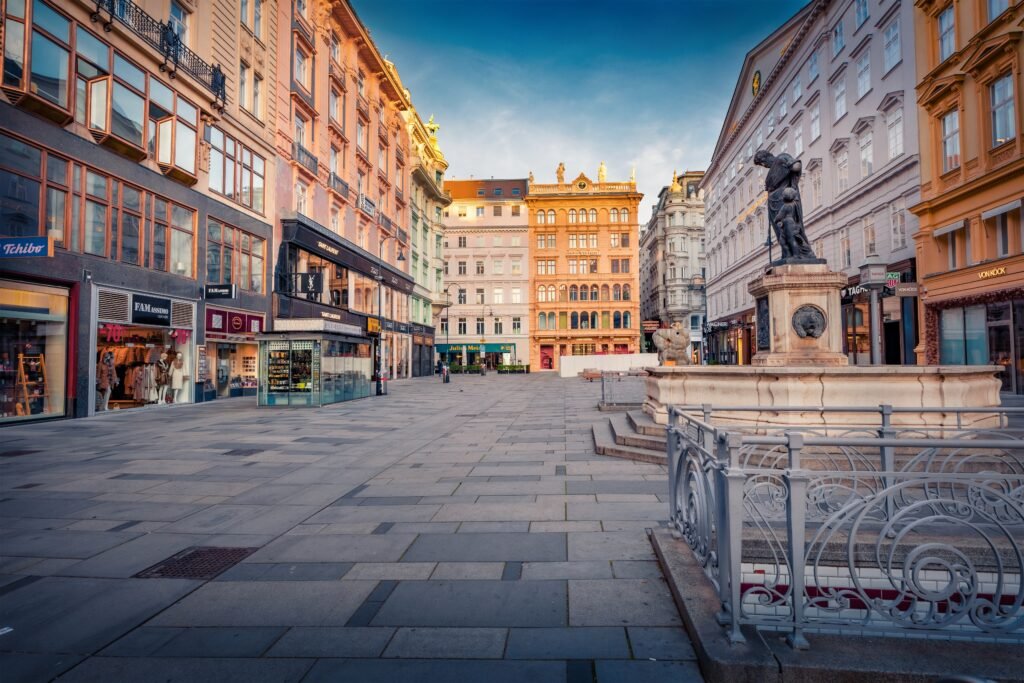
If you are staying somewhere around the Innere Stadt, leave your hotel in the late afternoon and simply head towards the old centre.
Vienna is especially good at this hour.
The pale façades begin turning gold. Shop windows light up. Church towers appear unexpectedly at the ends of narrow streets, and every few minutes the city seems to open into another elaborate square.
Eventually, make your way into the old Ruprechtsviertel.
Hidden at Sterngasse 2 is Shakespeare & Company, an independent English-language bookshop that has been selling English books in Vienna since 1982. Its shelves include literature, poetry, history, philosophy, art and Austrian writers in translation. Shakespeare Booksellers
It is exactly the sort of bookshop we hope to find when travelling: small enough to feel personal, slightly tucked away and surrounded by streets that invite you to keep wandering.
Buy something here.
Not because you need another book.
Because every good literary trip should involve returning home with at least one book carrying the name of the city inside its cover.
Then go for coffee — but don’t hurry
From here, wander back through the centre towards Stallburggasse.
Your destination is Café Bräunerhof.
Café Bräunerhof doesn’t have the theatrical grandeur of some of Vienna’s more famous coffeehouses.
That may be exactly why you should go.
The Austrian writer Thomas Bernhard was a regular here, and the café still feels pleasingly resistant to the idea that it ought to reinvent itself for visitors. Vienna’s tourism authority describes it as his former favourite café. vienna.info
Order a coffee.
Read the first few pages of the book you just bought.
Watch the room.
There is something wonderfully civilised about a city where sitting alone at a marble table with a newspaper or book does not look lonely.
It looks correct.
Saturday Morning: Books, Baroque and the Old Vienna
Start Saturday with one of Vienna’s great showstoppers.
The Austrian National Library
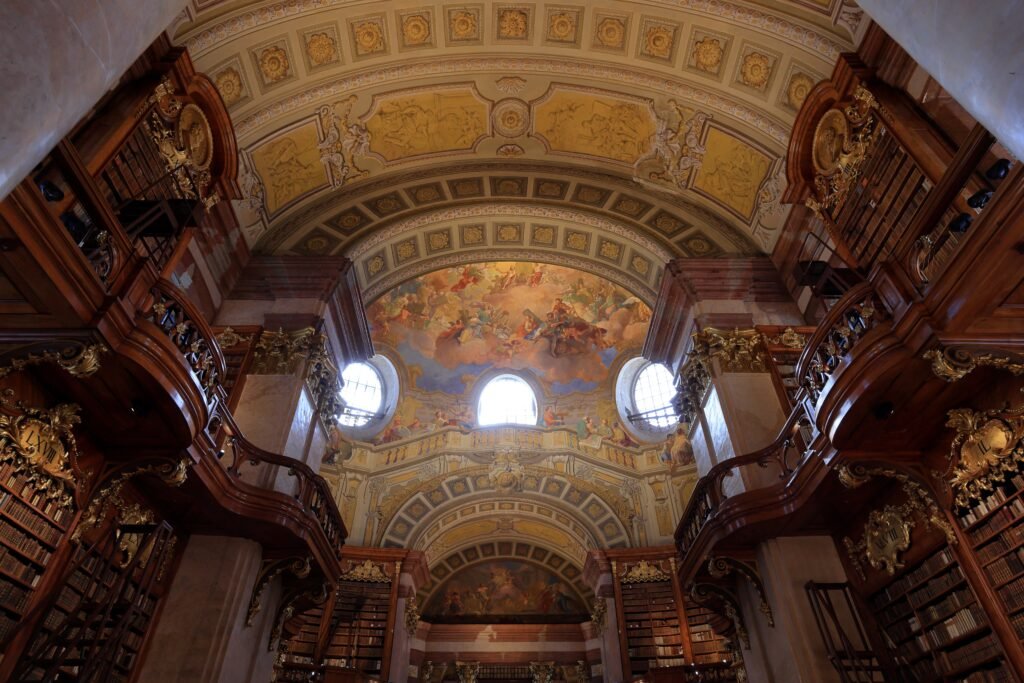
Even people who are not particularly interested in libraries tend to stop talking when they walk into the State Hall of the Austrian National Library.
And with good reason.
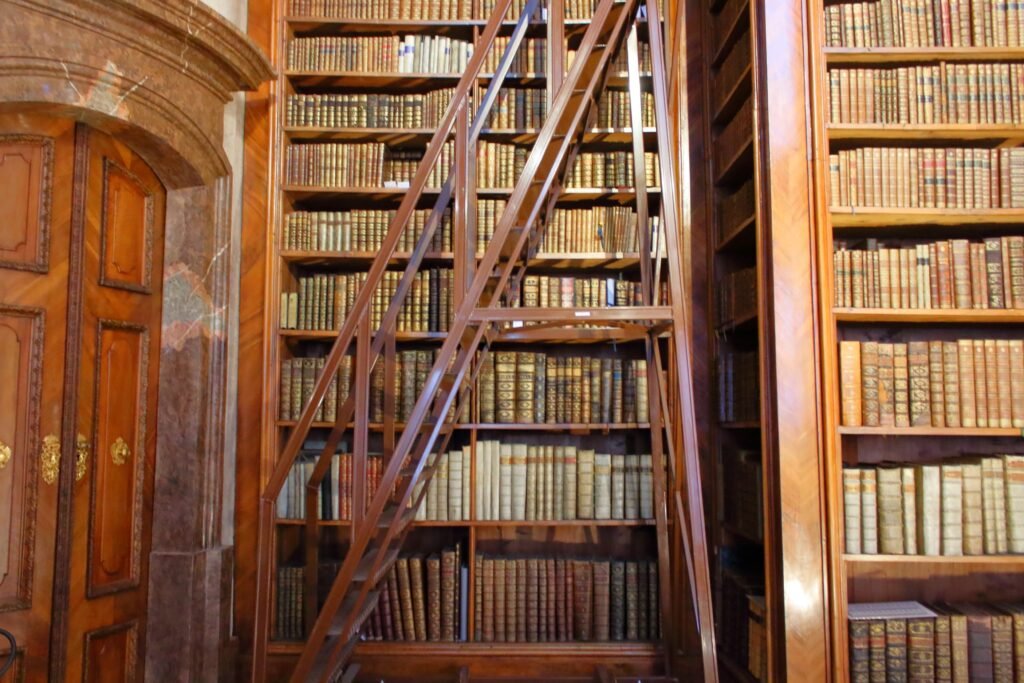
The Prunksaal, or State Hall, was built in the eighteenth century as part of the former Imperial Court Library. The enormous Baroque room stretches almost 80 metres and contains around 200,000 historic books, beneath frescoes, statues, dark timber bookcases and a vast painted dome. | Österreichische Nationalbibliothek
This is not minimalist Scandinavian shelving.
This is what happens when an empire builds a room for books.
Look up.
Then look up again.
The oval dome rises roughly 30 metres overhead, while four enormous Venetian globes sit among the collections. Prince Eugene of Savoy’s library alone accounts for around 15,000 volumes. | Österreichische Nationalbibliothek
It is unapologetically excessive.
Which is precisely why we love it.
Austrian National Library State Hall
Josefsplatz 1, 1010 Vienna
From here, walk.
Do not take transport unless the weather is terrible. One of the joys of central Vienna is the transition between these places — imperial buildings, quiet courtyards, narrow streets and unexpected cafés are part of the weekend.
Saturday Late Morning: Vienna’s Literature Museum
Next, head to Johannesgasse.
The Literature Museum of the Austrian National Library is one of those places that makes much more sense after you have already begun walking around Vienna.
The museum tells the story of Austrian literature from the late eighteenth century to the present, with writers including Arthur Schnitzler, Franz Kafka, Ingeborg Bachmann and Thomas Bernhard represented through original documents and multimedia exhibits. vienna.info
But there is another wonderful detail.
The museum occupies the former Imperial and Royal Court Chamber Archive, and the Austrian playwright Franz Grillparzer actually worked here as director of the archive.
His office survives.
Suddenly literary Vienna stops feeling quite so abstract.
These writers weren’t sitting in some distant world of sepia photographs.
They worked in these buildings.
They walked these streets.
They complained about their jobs.
They stopped for coffee.
Much like everybody else.
Give the museum around an hour or two. You could spend longer, but this is a literary weekend rather than a postgraduate degree in Austrian literature.
There is coffee waiting.
Saturday Afternoon: The Great Viennese Coffeehouse
And now we arrive at one of the reasons Vienna belongs on every book lover’s travel list.
The coffeehouse.
Around 1900, Vienna’s cafés became informal offices, reading rooms, debating chambers and living rooms.
Writers could read newspapers, write letters, meet publishers, argue about politics and remain at a table long after the coffee itself had disappeared.
And perhaps the most famous literary coffeehouse of them all is Café Central.
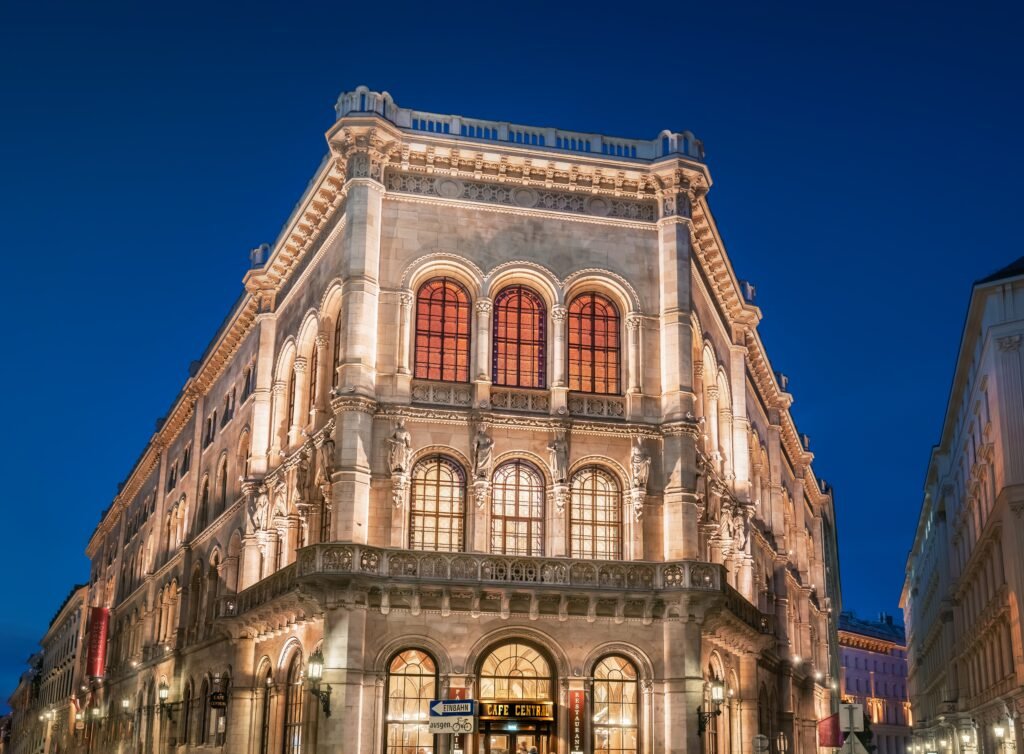
Opened in 1876, Café Central became associated with writers and thinkers including Peter Altenberg and Arthur Schnitzler, while Sigmund Freud and architect Adolf Loos were also among its famous visitors. vienna.info
The room itself is magnificent — vaulted ceilings, columns, chandeliers and pastries arranged with the seriousness usually reserved for jewellery.
A quick 2026 note
At the time of writing in October 2026, Café Central is temporarily closed for renovation. Vienna Tourism says it is due to reopen after its 2026 refurbishment; meanwhile its temporary sister café, Decentral, is operating at Palais Harrach on Freyung. vienna.info
Once Central reopens, put it back into this itinerary.
Yes, it is famous.
Yes, there can be queues.
No, that doesn’t automatically make it a tourist trap.
Sometimes famous places are famous because they are genuinely extraordinary.
Saturday Afternoon: Walk Vienna’s Intellectual City
After coffee, resist the urge to immediately enter another museum.
Walk instead.
Head towards the Hofburg and then allow yourself to drift towards the Ringstrasse.
Vienna can feel almost absurdly grand here.
Parliament.
The university.
The museums.
The Burgtheater.
The Rathaus.
The scale tells you something important about the city the writers of fin-de-siècle Vienna inhabited.
This was the capital of an enormous multinational empire, but underneath the confidence of the architecture was a society changing remarkably quickly.
Old hierarchies were weakening.
Nationalism was growing.
New ideas about art, sexuality, politics, psychology and identity were appearing.
Writers like Arthur Schnitzler explored desire and hypocrisy.
Stefan Zweig later wrote nostalgically about the world that vanished with the First World War.
Sigmund Freud was developing ideas about the unconscious that would completely alter the way the twentieth century thought about the mind.
Vienna was beautiful.
But it was not particularly calm.
Perhaps that tension is part of what makes its literature so interesting.
Late Saturday Afternoon: Café Sperl
Now walk towards Mariahilf.
Your reward is Café Sperl.
If Café Central is Vienna putting on its best suit, Café Sperl feels more like discovering the suit hanging in the wardrobe exactly where someone left it a century ago.
Founded in 1880, the café still has the atmosphere of nineteenth-century Vienna, with marble tables, dark timber, parquet flooring, chandeliers, upholstered seating, newspapers and billiard tables. vienna.info
This is the one where we would linger.
Get a window table if you can.
Order a Melange.
Add something involving pastry.
Then do almost nothing.
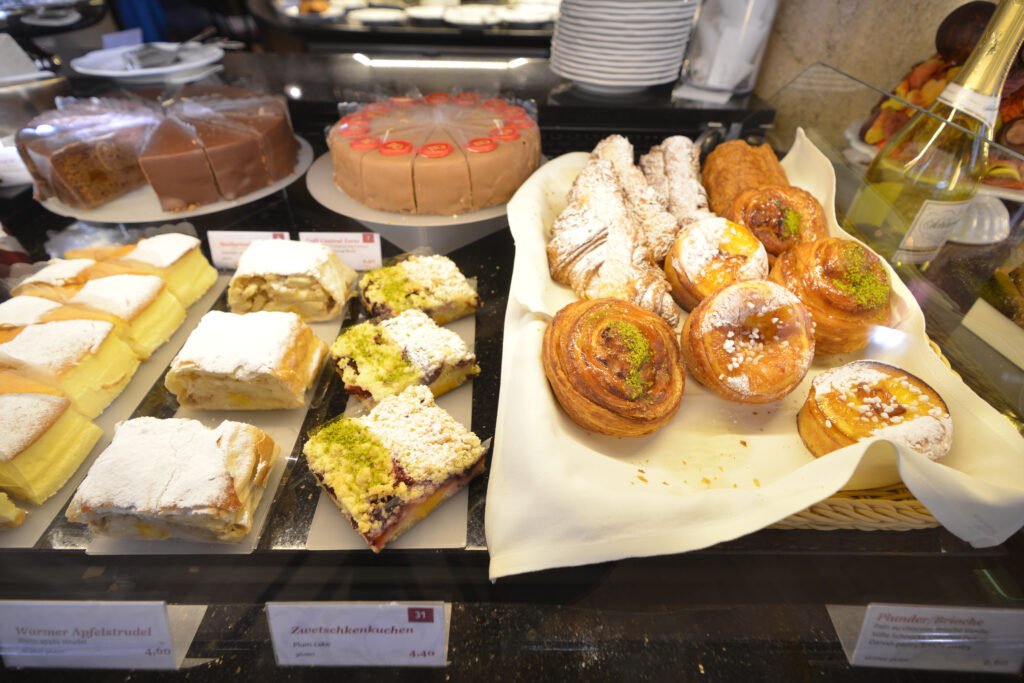
One of the great mistakes we make when travelling is believing that every hour must contain an attraction.
But some cities are best experienced through inactivity.
Vienna is one of them.
Sit for an hour.
Read.
Talk.
Watch people come and go.
Imagine what your house would look like with those dark wood walls.
Then begin planning a Vienna colour palette article in your head.
Or maybe that’s just us.
Saturday Evening: Dress Slightly Better Than Necessary
Vienna makes you want to put on a jacket.
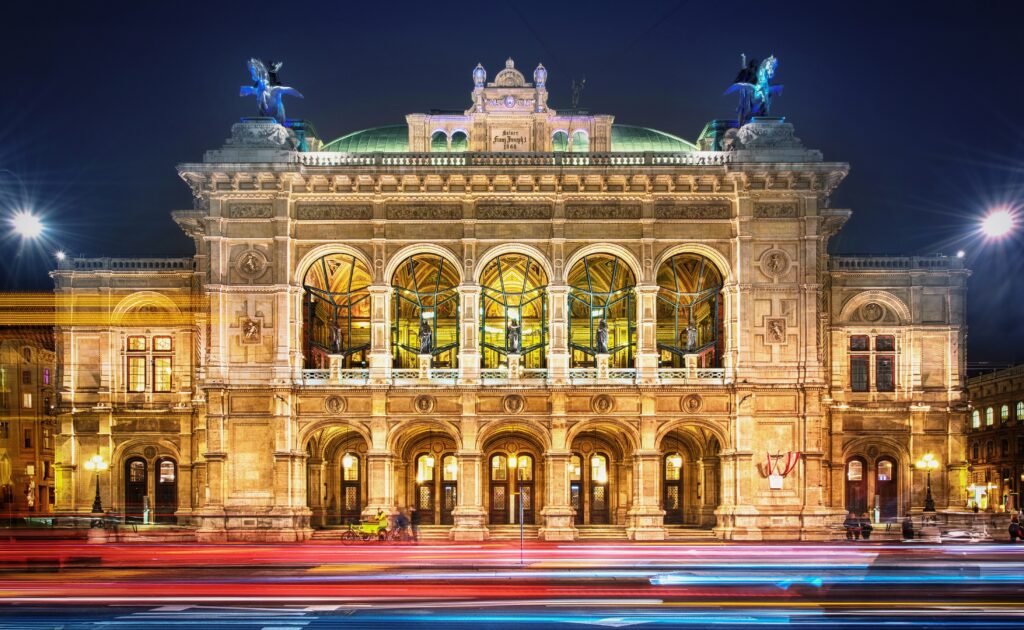
We don’t make the rules.
After returning to your hotel, go out again without creating too much of a plan.
Walk the illuminated centre.
Have dinner somewhere with white tablecloths, dark timber and waiters who appear to have worked there since the Habsburg Empire.
Then perhaps go to a concert, the opera or the theatre.
Or don’t.
A glass of wine followed by another evening coffee can feel equally Viennese.
The important thing is not to rush back to the hotel.
European cities often feel most beautiful after the shops have closed and the day’s sightseeing has ended.
Vienna particularly so.
Sunday Morning: Freud’s Vienna
Sunday belongs to Sigmund Freud.
Walk north from the centre into Vienna’s ninth district towards Berggasse.
At number 19 you will find the Sigmund Freud Museum.
Freud lived and worked here for 47 years, from 1891 until 1938, when the Nazi annexation of Austria forced his family to flee Vienna. The museum now occupies the family’s former private rooms as well as the practices of Sigmund and Anna Freud. Freud Museum
It is one of those museums that works because the address matters.
Berggasse 19 was not somewhere Freud visited.
It was home.
Patients climbed these stairs.
Ideas were developed here.
Books were written here.
The famous original psychoanalytic couch itself eventually travelled with Freud to London, but the Vienna museum tells the much larger story of his life, his work, his family and the intellectual world surrounding psychoanalysis.
Allow at least an hour.
And then walk outside.
Walk Through Freud’s Neighbourhood
This is another moment when you should resist opening Google Maps immediately.
Walk down Berggasse.
Continue towards the university and Schottenring.
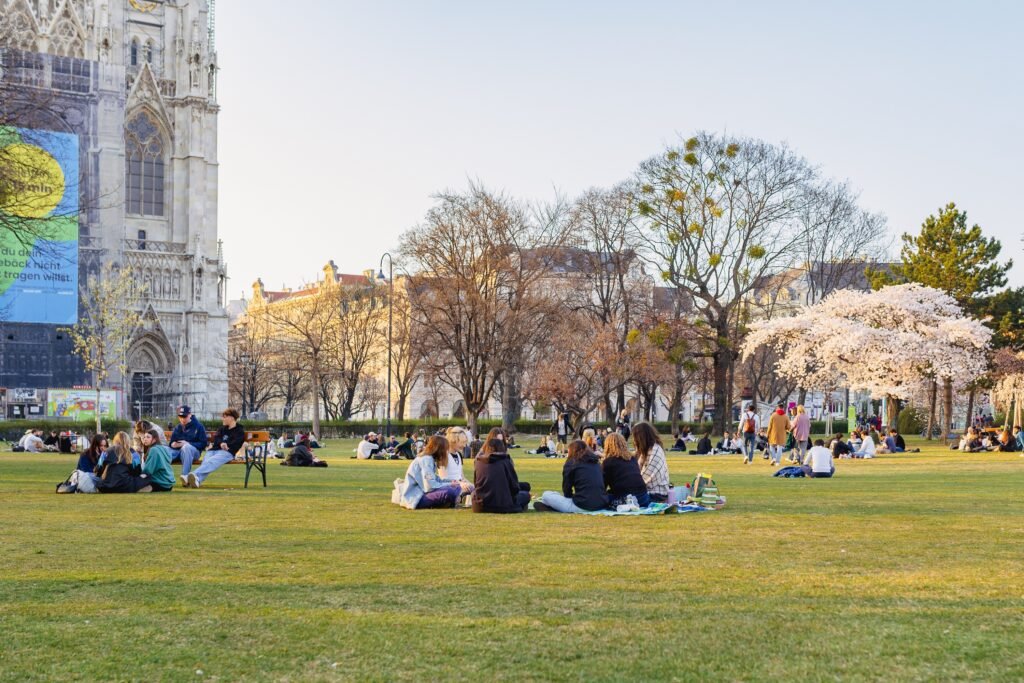
Freud spent decades moving around this part of Vienna between his home, medical institutions, antiquarian shops and coffeehouses. The Freud Museum itself now offers walks tracing the places that formed part of his everyday Vienna. Freud Museum
It helps explain something about the city.
Vienna’s intellectual history didn’t occur inside isolated monuments.
It occurred between them.
In apartments.
On pavements.
Over coffee.
During walks.
The city itself was part of the conversation.
Sunday Afternoon: One Last Coffee
By now you may have consumed enough caffeine to begin your own psychoanalytic movement.
Have one more anyway.
Return towards the old city and choose whichever café has appealed to you most during the weekend.
You don’t need another landmark.
Get a table.
Order coffee and cake.
Take out the book you bought on Friday.
And stay longer than seems economically reasonable.
Vienna understands.
What to Read Before a Literary Weekend in Vienna
You certainly don’t need to do homework before coming here.
But reading even one Viennese book before arriving makes the city feel different.
The World of Yesterday — Stefan Zweig
If you read only one, make it this.
Zweig’s memoir is an extraordinary portrait of the cultured European world into which he was born and the catastrophic events that destroyed it.
Read it before Vienna and suddenly the façades, cafés and concert halls have another layer.
Dream Story — Arthur Schnitzler
Short, strange and psychologically charged, Schnitzler’s novella wanders through a dreamlike Vienna of desire, secrecy and respectable society.
Stanley Kubrick later adapted it — very loosely — into Eyes Wide Shut.
Old Masters — Thomas Bernhard
Bernhard could find something irritating about almost anything, which is part of the pleasure.
The novel centres on repeated visits to Vienna’s Kunsthistorisches Museum and is simultaneously funny, bitter and oddly affectionate.
The Radetzky March — Joseph Roth
For the bigger picture, Roth’s novel captures the decline of the Austro-Hungarian Empire and the strange melancholy surrounding a world approaching its end.
You begin to understand why so much Viennese beauty feels slightly haunted.
Where to Stay for a Literary Weekend in Vienna
For this particular weekend, we would choose one of three areas.
Innere Stadt — 1st District
Best if this is your first trip. You’ll be able to walk to the National Library, Literature Museum, historic cafés and much of central Vienna.
It is the most expensive option, but for a short weekend there is something lovely about walking out of your hotel straight into old Vienna.
Josefstadt — 8th District
Quieter and more residential but still close enough to walk into the centre.
This would be our choice if you want Vienna to feel slightly more like somewhere you are living rather than simply visiting.
Neubau — 7th District
A little younger and more creative, with independent shops, cafés and restaurants.
Stay here if you want your nineteenth-century Vienna with a little twenty-first-century Vienna mixed in.
The Vienna You Remember
The funny thing about a literary weekend in Vienna is that the books may not be what you remember most.
It might be the sound of cups hitting saucers in a café.
A waiter placing a tiny glass of water beside your coffee.
The smell of old books.
A narrow street at dusk.
The unbelievable ceiling of the National Library.
A marble table beside a window.
A book bought on Friday that you are halfway through by Sunday.
Vienna does grand monuments extraordinarily well.
But the version of the city we love happens in the spaces between them.
The coffeehouses.
The bookshops.
The apartments.
The streets people have been walking for centuries.
And perhaps that is why Vienna remains such a literary city.
Because here, reading still somehow feels like part of the place rather than an escape from it.
Britt & Tyler
We’re Britt and Tyler, the two Australians behind Cocktails & Cathedrals. We’re drawn to old buildings, beautiful rooms, bookshops and places that seem to hold a story. Our journal brings those interests together, with a fondness for slow afternoons and a well-made cocktail. We hope it helps you find places you’ll want to linger.
Travel slowly. Stay beautifully.
A little more about us →
2 Comments