A Literary Walking Tour of Prague: Kafka, Grand Cafés & the City That Wouldn’t Let Him Go
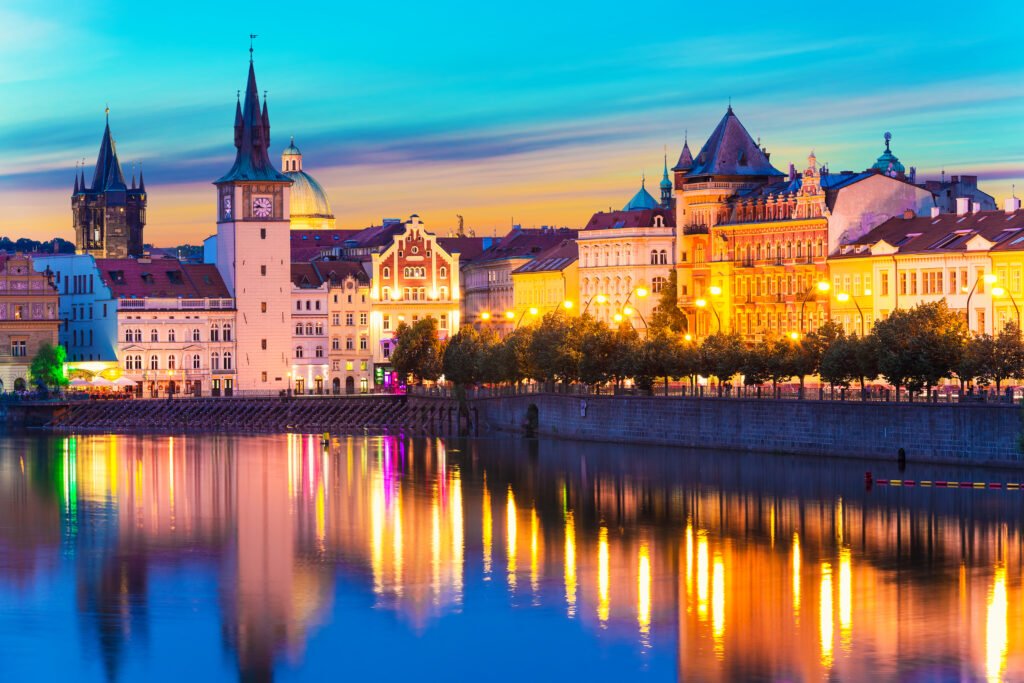
Prague has the kind of atmosphere that feels literary before you know anything about its writers.
Narrow passages disappear between Gothic towers. Dark doorways sit beneath elaborate façades. Old cafés still feel like places where someone might spend an afternoon filling a notebook. Then there is the Vltava, the castle above it, and a city centre that seems to shift constantly between beauty and unease.
It is difficult to imagine Franz Kafka coming from anywhere else.
Kafka was born in Prague in 1883 and spent most of his life here. He wrote in German, grew up within Prague’s Jewish community and wandered many of the same streets that now make up the historic centre. Prague City Tourism still describes his story as being written into the lanes of the Old Town and Jewish Quarter.
But this walk is not simply a checklist of Kafka landmarks.
It is a way of seeing literary Prague: the cafés where writers argued, the neighbourhood that shaped Kafka’s imagination, the remnants of the old Jewish city, and finally the tiny house above Prague where he once went to write.
Allow around half a day if you want to wander slowly, stop for coffee and visit the Kafka Museum. Without museum visits, the walking itself can comfortably be done in a few hours.
The Literary Prague Walking Route
Stop 1: Begin with Coffee at Café Louvre
Národní 22
There are more dramatic places to begin a Prague walking tour, but few are more appropriate.
Café Louvre opened in 1902, when Prague still belonged to the Austro-Hungarian Empire. Its rooms became meeting places for philosophers, artists and writers, including Franz Kafka and his close friend Max Brod.
Kafka initially attended meetings of a German philosophical circle here while still a student. When Brod was later excluded from the group, Kafka reportedly left in solidarity with him, although the pair continued visiting the café and eventually used a separate club room with friends.
Other visitors included Czech writer Karel Čapek and Albert Einstein during his time in Prague.
The café still operates today and deliberately retains the atmosphere of a traditional Central European grand café.
Order coffee and something small for breakfast if you are starting early.
More importantly, look around.
The high ceilings, mirrors, bentwood chairs and slightly formal atmosphere belong to the lost café culture that once stretched from Vienna through Prague and Budapest.
For Kafka and the writers around him, cafés were effectively extensions of the study. They were places to read newspapers, exchange manuscripts, argue about philosophy and avoid going home.
It is a good setting in which to begin understanding the Prague Kafka knew.
Walk Towards the Old Town
From Café Louvre, head towards the historic centre.
Prague becomes progressively older around you.
Broad nineteenth-century streets begin giving way to passages and irregular lanes. Church towers appear between buildings. Tram noise fades beneath footsteps on stone.
Eventually you emerge into Old Town Square.
And suddenly Prague becomes theatrical.
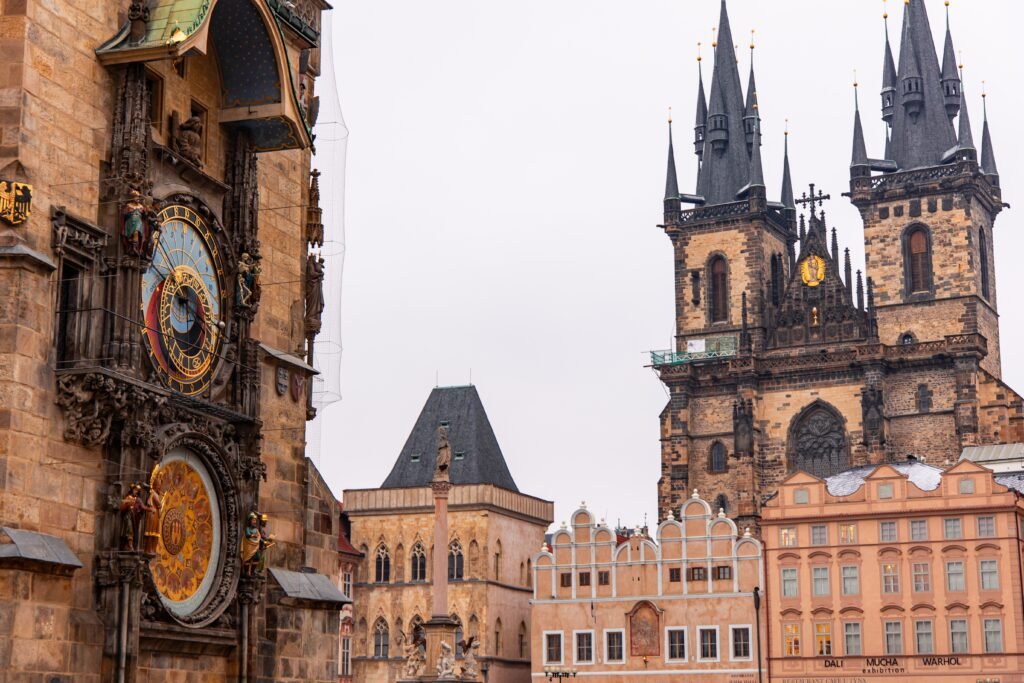
Stop 2: Old Town Square — The Prague of Kafka’s Childhood
Old Town Square is one of those places that can initially feel almost too famous.
There is the astronomical clock, the Gothic towers of the Church of Our Lady before Týn, Baroque façades and streams of visitors moving through the square.
But try to mentally remove the souvenir shops and crowds.
Kafka knew this area intimately.
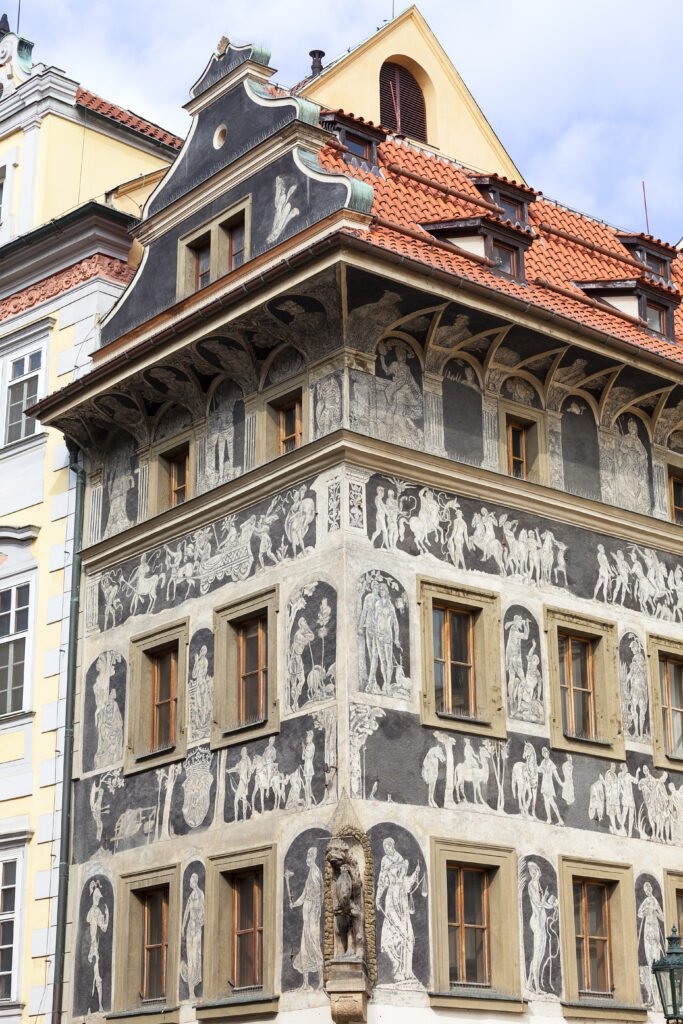
One particularly important building is House at the Minute, immediately beside the Old Town Hall. Kafka lived here with his parents between 1889 and 1896. Its extraordinary black-and-white Renaissance sgraffito façade makes it one of the easiest Kafka-related buildings to recognise.
Another building around the square, the house known as At the White Unicorn, hosted the intellectual salon of Berta Fanta. Kafka, Max Brod and Franz Werfel were among those associated with the gatherings held there.
This is one of the pleasures of literary Prague.
The landmarks are not isolated museums.
Kafka’s life unfolded within the ordinary fabric of the city.
Stop 3: Franz Kafka Square and His Birthplace
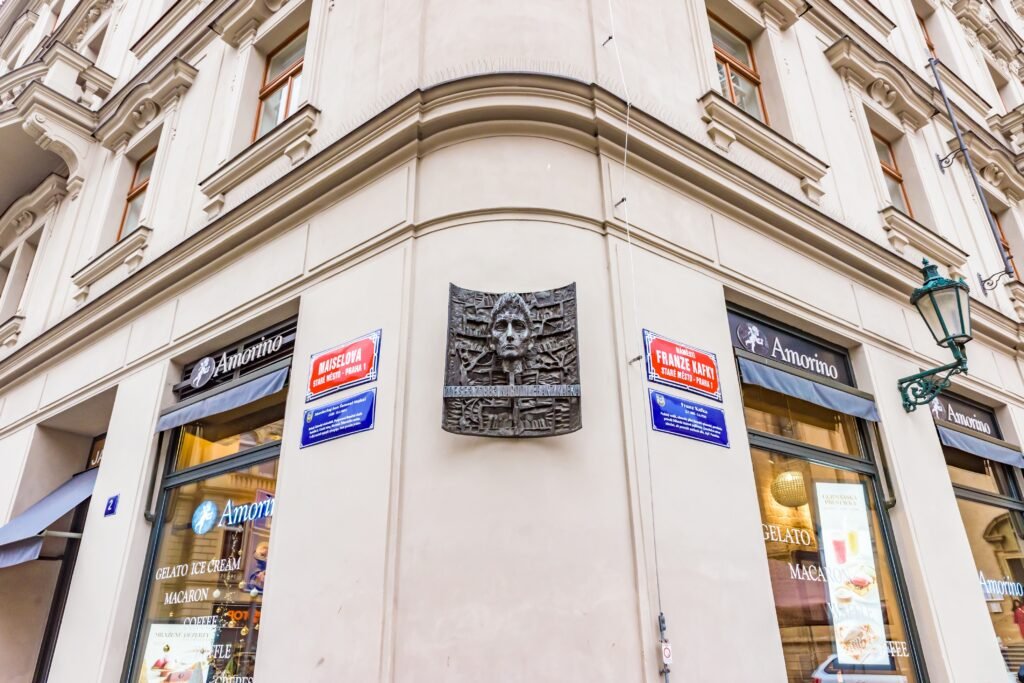
Walk around the corner from Old Town Square and you reach the much smaller Franz Kafka Square.
Kafka was born close to this spot on 3 July 1883.
The original house, known as U věže, was demolished during redevelopment of the area in 1897. Part of its Baroque portal survived and was incorporated into the Neo-Baroque building that replaced it. A plaque and bronze bust now commemorate Kafka’s birthplace.
The square itself was renamed for Kafka in 2000.
It is worth lingering here because the contrast with Old Town Square is striking.
One minute you are amongst astronomical clocks and Gothic churches; a few steps later you are standing in a quiet corner associated with one of the twentieth century’s most influential writers.
Kafka spent only his first two years in the original house, but he never really escaped the surrounding neighbourhood.
Nor, in his imagination, did Prague ever quite release him.
In a 1902 letter to his friend Oskar Pollak, Kafka famously described Prague as a mother with “claws.”
Walking these streets makes the metaphor easier to understand.
Stop 4: Enter Josefov — Prague’s Old Jewish Quarter
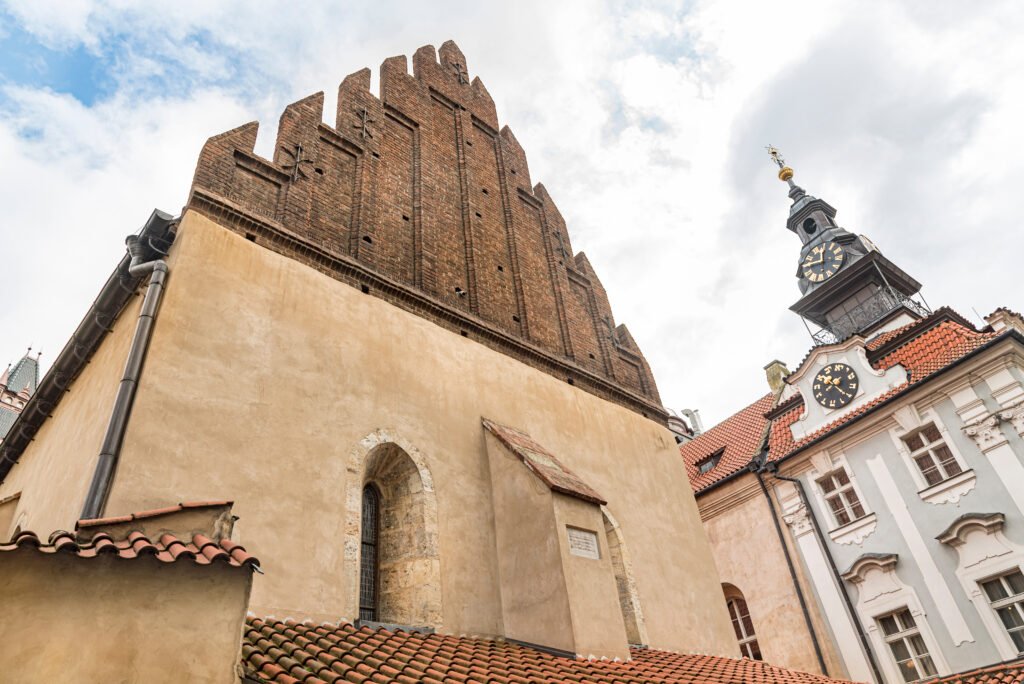
From Franz Kafka Square, continue north into Josefov, Prague’s historic Jewish Quarter.
The neighbourhood today looks considerably different from the place Kafka knew as a child.
Large parts of the former Jewish ghetto were demolished during major redevelopment around the turn of the twentieth century. Narrow streets and cramped buildings were replaced by broad boulevards and elaborate apartment houses.
Yet some extraordinary fragments survived.
The Old-New Synagogue, Jewish Town Hall, several historic synagogues and the Old Jewish Cemetery remain embedded inside the rebuilt district.
This was the cultural landscape in which Kafka grew up: Jewish, German-speaking and Czech at the same time, belonging completely to none of those worlds.
That tension between belonging and alienation would eventually become one of the defining qualities associated with his writing.
A Brief Detour into the Prague of the Golem
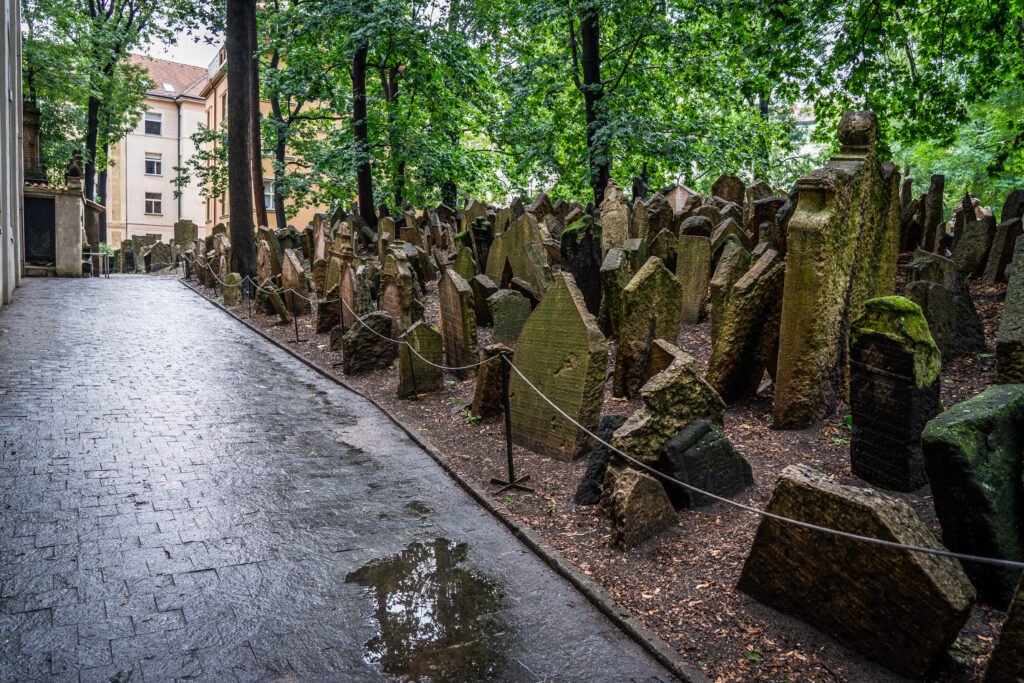
Even if Kafka were removed from this route entirely, Josefov would remain one of Europe’s great literary neighbourhoods.
This is also the Prague of the Golem.
According to the famous legend, Rabbi Judah Loew created an artificial man from clay to defend Prague’s Jewish community. Later versions of the story placed the Golem’s remains in the attic of the Old-New Synagogue.
The legend was repeatedly reimagined by writers, most famously in Gustav Meyrink’s 1915 novel The Golem. Prague’s tourism authority notes that writers including Kafka, Egon Erwin Kisch and Elie Wiesel also engaged with the legend.
Whether or not you normally seek out Jewish history while travelling, this is worth slowing down for.
Literary Prague is inseparable from it.
Stop 5: The Franz Kafka Monument
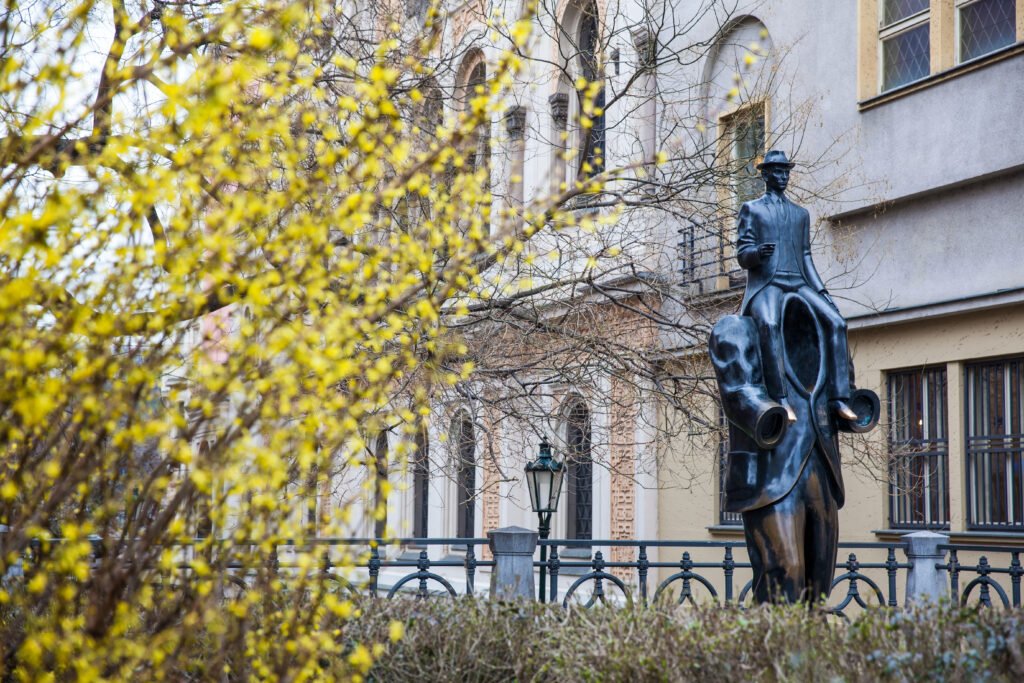
Continue towards Dušní Street, beside the Spanish Synagogue.
Here you will find one of Prague’s strangest Kafka memorials.
Created by Czech sculptor Jaroslav Róna, the bronze monument depicts Kafka sitting on the shoulders of an enormous empty suit.
It looks bizarre until you know the literary reference.
The sculpture was inspired by Kafka’s early story Description of a Struggle, and was unveiled in 2003.
This is a much better Kafka monument than a conventional statue would have been.
There is something slightly impossible about it.
A human figure rides something that looks human but is empty inside.
Exactly what it means is left unresolved.
Which feels appropriate.
Stop 6: Browse the Franz Kafka Bookshop
A few minutes away on Široká Street is the Franz Kafka Bookshop.
This is not an enormous shop, but it is worth visiting if you want a literary souvenir that isn’t another refrigerator magnet.
The shop specialises in editions of Kafka in numerous languages along with other Czech writers and books relating to Jewish culture.
If you have never actually read Kafka, this might be the moment to pick something up.
You do not necessarily need to begin with The Trial.
The Metamorphosis is short, strange and probably the easiest entry point.
Then step back outside.
You are about to leave Kafka’s Old Town behind.
Cross the River
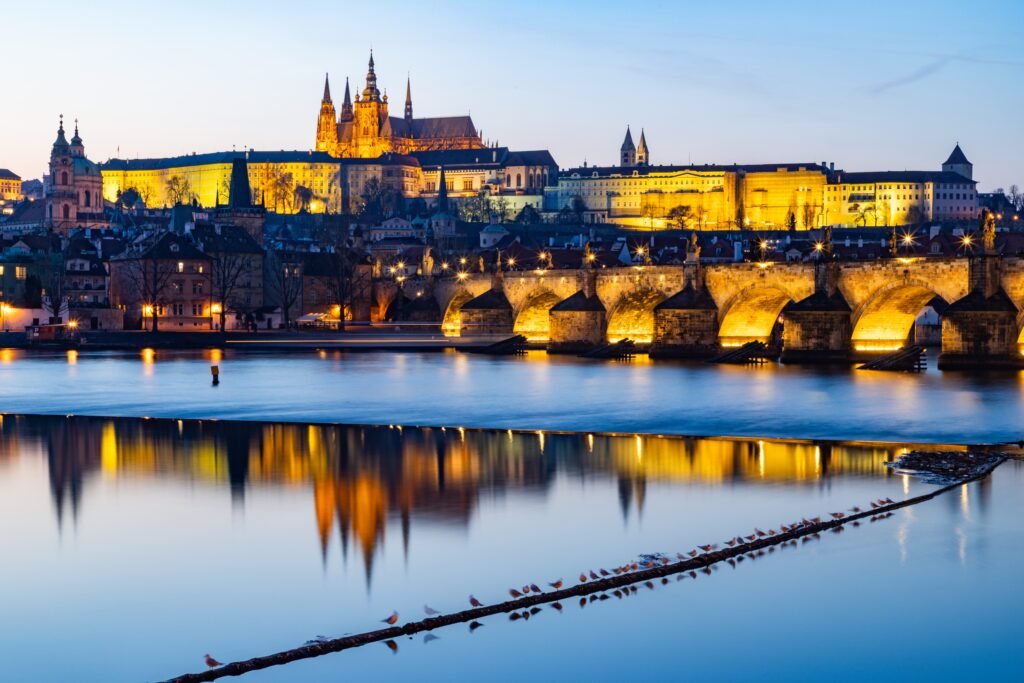
Walk towards the Vltava and cross into Malá Strana — the Lesser Town.
You can use Charles Bridge if you want the classic Prague experience, although the nearby Mánes Bridge can be considerably calmer and gives superb views towards Prague Castle.
Either way, pause somewhere over the river.
This is where the geography of Prague suddenly makes sense.
Old Town sits behind you.
Prague Castle rises ahead.
The Vltava divides them.
Domes, towers and steep red roofs seem to pile one behind another up the hillside.
Prague can sometimes feel claustrophobic at street level.
From the river, it becomes almost impossibly beautiful.
Stop 7: The Franz Kafka Museum
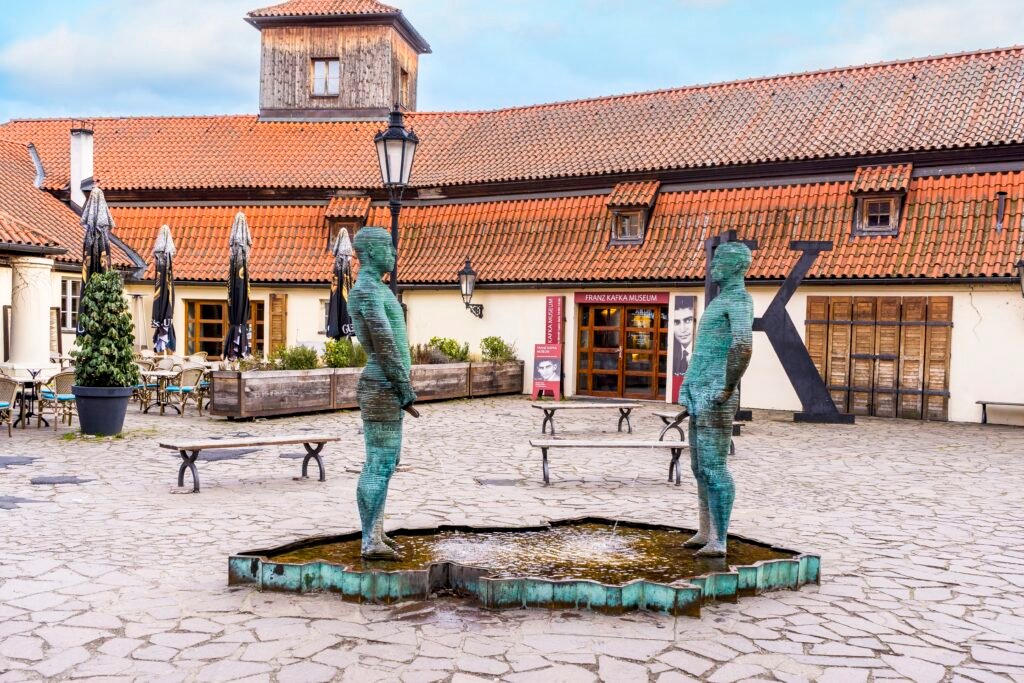
On the Lesser Town bank of the Vltava, you will find the Franz Kafka Museum inside the former Herget Brickworks.
If Kafka is the main reason you are doing this walk, it is worth going inside.
The permanent exhibition explores Kafka’s relationship with Prague through manuscripts, diaries, photographs, letters and audiovisual installations. The museum deliberately uses a dark, unsettling presentation rather than treating his life like a conventional biography.
That approach works because Prague itself functions almost like another character in Kafka’s writing.
There are corridors, offices, staircases, inaccessible authorities and characters constantly trying to understand systems whose rules seem to shift around them.
You start noticing echoes of that world everywhere once you begin looking.
The museum currently operates daily, although it is worth checking its website before travelling because opening arrangements and admission prices can change.
Afterwards, step back outside.
The final section of the walk heads uphill.
Quite considerably uphill.
Walk Up Towards Prague Castle
From Malá Strana, begin climbing through the streets towards Prague Castle.
Take your time.
The route gets steeper, but the buildings become quieter and the views increasingly impressive as you rise above the river.
This part of the walk also provides a useful transition.
You are leaving the crowded commercial centre of Prague and moving towards the final, unexpectedly intimate piece of Kafka’s story.
Stop 8: Golden Lane — Kafka’s Tiny Writing Refuge
Inside the Prague Castle complex lies Golden Lane, a row of tiny colourful houses built against the old castle fortifications.
At number 22 is a small blue house.
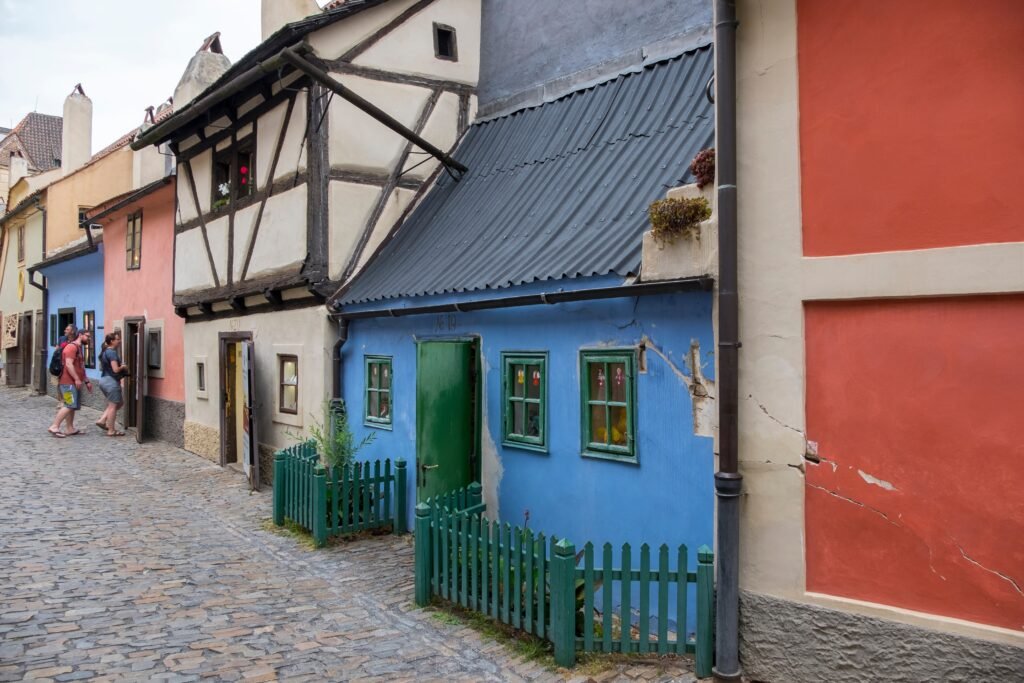
Franz Kafka worked here during the First World War.
His sister Ottla rented the property, and Kafka used it as a quiet place in which to write during 1916 and 1917. Prague Castle records that he worked on stories including A Country Doctor and A Report to an Academy here.
The scale of the place is what makes it memorable.
Forget the idea of writers requiring enormous libraries and elaborate studies.
Kafka was working inside a tiny room in a miniature house wedged against the walls of a medieval castle.
Outside were towers, guards, churches and centuries of bureaucracy.
It is almost too perfect.
This is where I would finish the literary walk.
Not at a giant monument.
Not beneath Kafka’s rotating modern head sculpture.
But at a tiny blue door.
Prague Beyond Kafka
It would be easy to make literary Prague entirely about Franz Kafka.
That would also be a mistake.
Prague’s literary history includes Rainer Maria Rilke, Franz Werfel, Max Brod, Jaroslav Seifert, Bohumil Hrabal, Václav Havel, Milan Kundera and many others.
Prague City Tourism now actively promotes the city through its broader literary history, linking writers, cafés, libraries and neighbourhoods beyond the Kafka story.
If you have another day, one particularly worthwhile addition is the New Jewish Cemetery in Žižkov, where Kafka is buried with his parents.
His grave is marked by a distinctive stone monument, while a memorial to Max Brod stands nearby.
It is too far from the historic centre to include naturally in this walking route, but serious Kafka readers may want to make the journey.
Where to Finish: One Last Prague Café
If your legs still have something left after Prague Castle, descend towards the city and finish with another café.
One option is to return to Café Louvre.
Another is Café Slavia, opposite the National Theatre.
Slavia became a meeting place for artists and intellectuals and was associated with writers including Kafka, Rilke and later Václav Havel.
Find a table, order something unnecessarily European and watch Prague go past the windows.
After several hours tracing Kafka through the city, the cafés start to make more sense.
So does Prague.
The Best Way to Experience Literary Prague
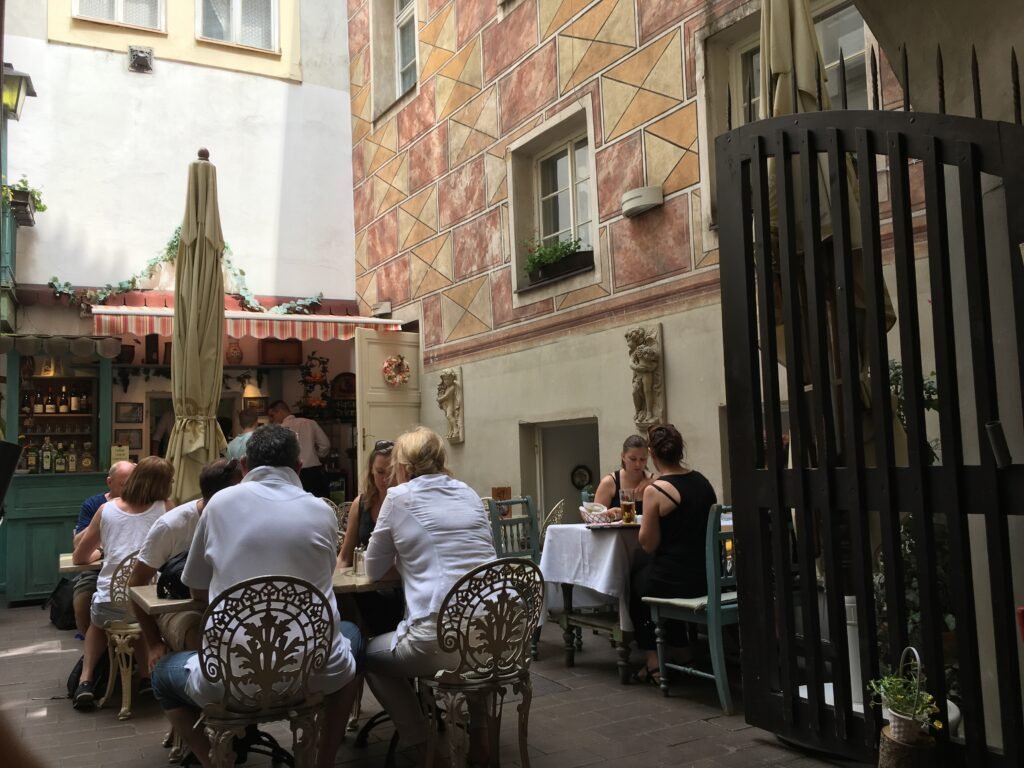
Do not rush this walk.
Prague rewards people who occasionally stop looking at the major monuments.
Look into courtyards.
Notice old house signs.
Take narrow streets even when Google Maps suggests a wider one.
Spend twenty minutes longer than necessary over coffee.
And occasionally look upwards.
Much of Prague’s personality exists above shopfront level: painted façades, Gothic details, small sculptures, balconies and windows stacked irregularly above medieval streets.
That atmosphere is the real purpose of this walk.
You are not trying to locate the precise inspiration for The Trial or identify some alley that supposedly produced The Metamorphosis.
There probably isn’t one.
Instead, you are walking through the city that surrounded Kafka for most of his life.
A city of languages, empires, bureaucracy, religion, grand architecture and narrow streets.
Beautiful, complicated and occasionally unsettling.
More than a century later, Prague still seems to have claws.
Practical Details
Start: Café Louvre, Národní 22
Finish: Golden Lane, Prague Castle
Walking distance: roughly 5 km, depending on detours
Allow: around 3–4 hours without long museum visits; closer to half a day if you stop for breakfast, visit the Jewish Quarter properly and enter the Kafka Museum
Best time: morning, before Old Town and Prague Castle become busiest
Best for: Kafka readers, book lovers, architecture lovers and anyone who prefers exploring cities slowly
Britt & Tyler
We’re Britt and Tyler, the two Australians behind Cocktails & Cathedrals. We’re drawn to old buildings, beautiful rooms, bookshops and places that seem to hold a story. Our journal brings those interests together, with a fondness for slow afternoons and a well-made cocktail. We hope it helps you find places you’ll want to linger.
Travel slowly. Stay beautifully.
A little more about us →