A Literary Weekend in Budapest: Historic Cafés, Bookshops and the Streets That Inspired Writers
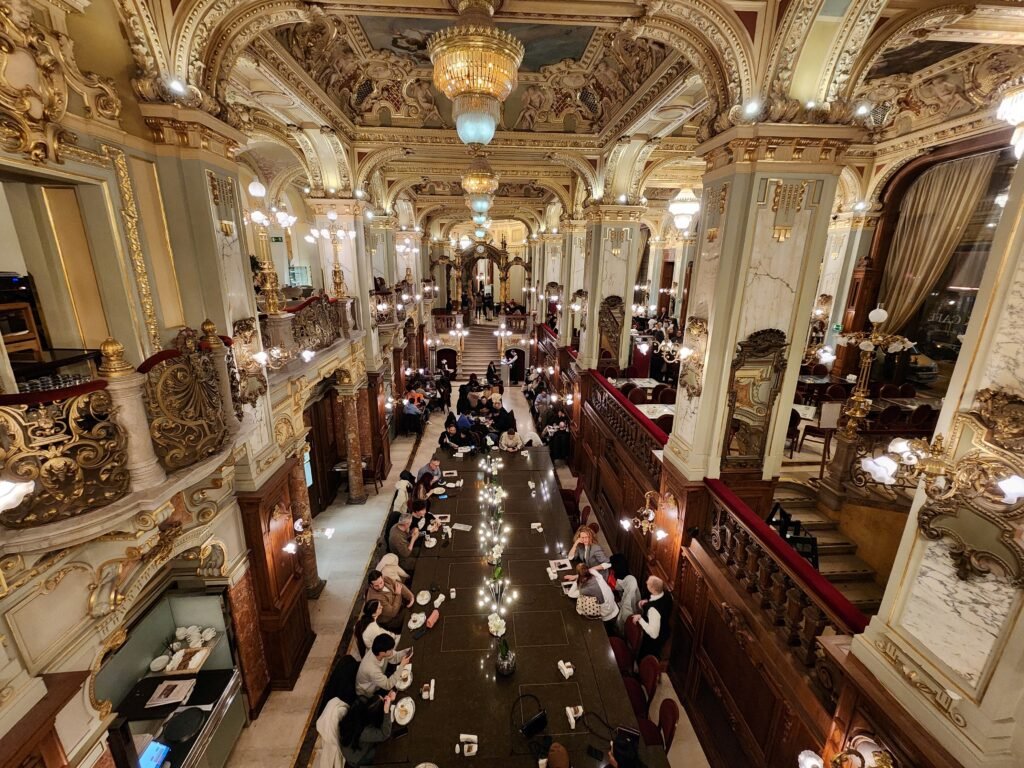
Budapest is the sort of city that makes reading feel like an activity rather than a way to kill time.
You can sit beneath gilded ceilings in a café once crowded with poets and newspaper editors, browse a bookshop occupying the site of another famous literary café, then cross the Danube and drink coffee in a neighbourhood where some of Hungary’s best-known writers once treated the local coffeehouse almost like a second living room.
For anyone who travels partly for books, Budapest offers something increasingly rare: a literary history that is still visible in the everyday city.
The cafés survived. The bookshops are still here. Writers’ names appear on buildings and statues. And many of the streets where Budapest’s early-20th-century literary culture developed remain remarkably atmospheric.
Budapest’s coffeehouses were particularly important. They functioned as meeting rooms, offices and informal salons for journalists, poets, publishers and artists. Centrál Café became associated with the influential literary journal Nyugat, while places including the New York Café and Hadik were frequented by generations of Hungarian writers. Budapest Info
If you have a weekend in Budapest, this route combines those old literary institutions with bookshops, museums and enough wandering to understand the city that surrounded them.
Day One: Grand Cafés and Literary Pest
Start on the Pest side of the Danube, where much of Budapest’s grand coffeehouse culture developed during the late 19th and early 20th centuries.
This first day is deliberately walkable.
Don’t rush it.
Budapest is a city where looking up at the buildings is almost as important as arriving at the destination.
Morning: Start at the New York Café
Erzsébet körút 9–11
There is nothing understated about the New York Café.
Gold detailing spreads across arches and balconies. Marble columns divide the room. Painted ceilings, carved wood and chandeliers make an ordinary morning coffee feel suspiciously like you’ve wandered into an opera house.
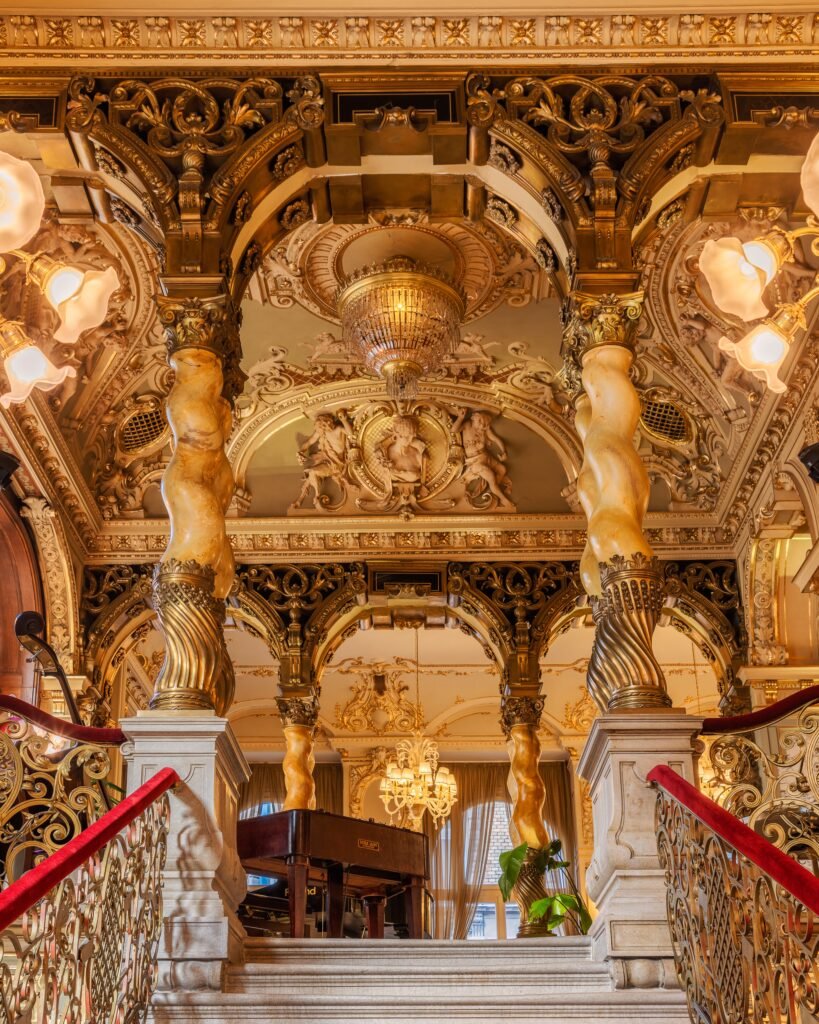
And yet this astonishing room once served a surprisingly practical purpose.
Writers worked here.
Opened in 1894 as part of the New York Palace, the café became closely connected with Budapest’s literary and journalistic community. Hungarian writers including Frigyes Karinthy, Dezső Kosztolányi and Sándor Márai are among the figures associated with it. NewYork Café kávéház
For young writers without comfortable offices or heated apartments, Budapest’s cafés could provide a table, warmth, company and — importantly — somewhere to write.
That makes the extravagant New York Café strangely appropriate as the beginning of a literary weekend.
Come for the room rather than expecting a quiet neighbourhood coffee shop. It is now one of Budapest’s best-known attractions, and the experience can be busy.
Order coffee, look around, and imagine the tables covered not in phones and cameras but in manuscripts, newspapers and ink.
A small literary detail
Hungarian novelist Sándor Márai, himself associated with the café, famously described the relationship between Budapest’s writers and coffeehouses with the sentiment that there could be no literature without cafés. The New York Café still makes that connection part of its identity today. NewYork Café kávéház
Walk Into the Jewish Quarter
From the New York Café, move slowly towards Budapest’s old Jewish Quarter.
This section of the city feels very different from the monumental boulevards nearby.
Courtyards appear behind heavy doors. Apartment buildings carry layers of architectural detail. Small bars and cafés sit beneath weathered façades.
And tucked among them is one of the nicest places in Budapest to actually sit down with a book.
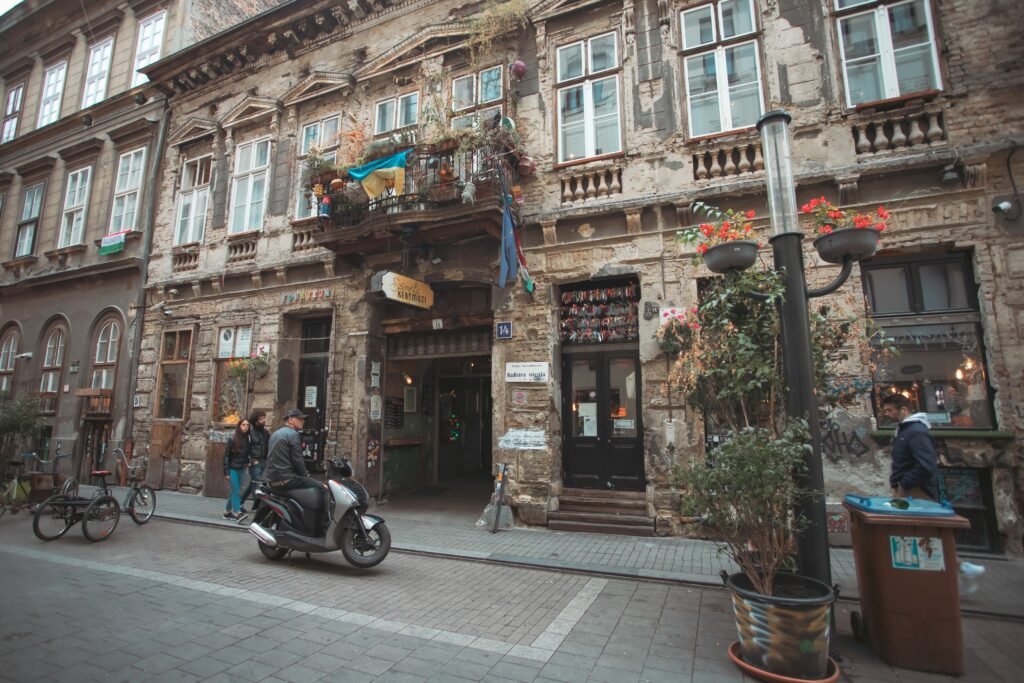
Massolit Books & Café
Nagy Diófa utca 30
Massolit feels almost like the opposite of the New York Café.
There is no marble.
No gilding.
No enormous chandeliers.
Instead there are crowded bookshelves, mismatched spaces, coffee and a quiet garden hidden behind the shop.
Massolit specialises particularly in English-language books, including new and second-hand fiction, humanities, art and social-science titles. The café also hosts readings and other literary events. Budapest Pride
For an English-speaking traveller, this is one of the easiest places on the itinerary to leave with something to read.
And that is exactly what I’d do.
Buy a Hungarian novel in translation, order another coffee and spend half an hour reading before continuing through the city.
What to look for
If you want a Budapest connection, try:
The Paul Street Boys — Ferenc Molnár
Originally published in the early 20th century, this classic Hungarian novel is deeply tied to Budapest.
Or look for:
The Door — Magda Szabó
A much darker and more psychologically complex introduction to Hungarian literature.
And if you’re attracted to the melancholy, old-European atmosphere of Budapest itself:
Embers — Sándor Márai
Not every great Hungarian novel is literally about Budapest, but reading Hungarian literature while walking these streets adds another layer to the city.
Wander Towards Károlyi Palace
Leave the Jewish Quarter behind and continue towards the older streets around Károlyi Garden.
The density begins to change here.
The streets feel quieter, the façades more aristocratic.
Your next two literary stops are conveniently close together.
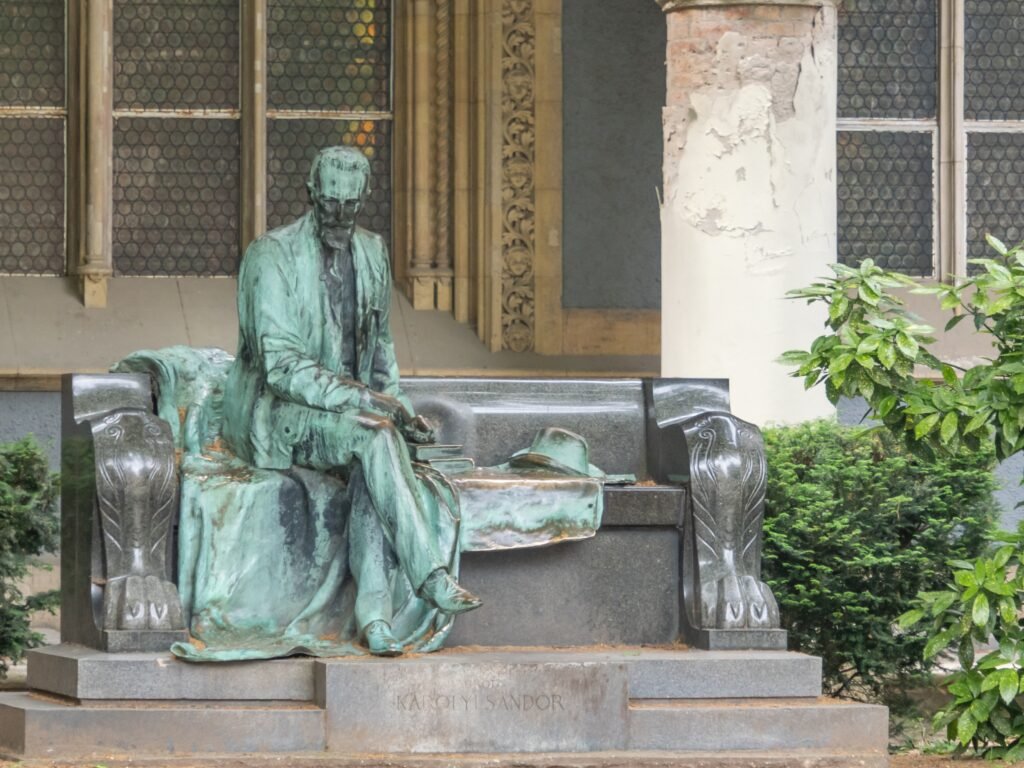
Petőfi Literary Museum
The Petőfi Literary Museum occupies Károlyi Palace and is one of Hungary’s major institutions devoted to literature.
Its collections and exhibitions explore Hungarian writers and literary culture, with a permanent exhibition devoted to poet Sándor Petőfi among its core displays. Petőfi Irodalmi Múzeum
For international visitors unfamiliar with Hungarian literature, this stop provides useful context.
Hungary’s literary tradition can be slightly intimidating because many of its greatest writers are household names locally but much less familiar in the English-speaking world.
You don’t necessarily need hours here.
Think of it as the bridge between enjoying Budapest’s beautiful literary cafés and understanding why literature became such an important part of the city’s cultural identity.
Then walk a few minutes to somewhere that once sat at the centre of it.
Afternoon: Centrál Grand Café
Károlyi utca 9
If the New York Café represents Budapest’s most extravagant version of café culture, Centrál feels closer to its intellectual heart.
Opened in 1887, Centrál became a gathering place for writers, journalists and academics.
Its strongest literary connection came through Nyugat — meaning West — one of the most influential Hungarian literary journals of the early 20th century. Budapest’s official tourism organisation describes Centrál as the place where Nyugat was born in 1908. Budapest Info
Writers associated with the café included figures such as Endre Ady and Dezső Kosztolányi.
This is where Budapest’s coffeehouse culture becomes particularly interesting.
These weren’t simply fashionable places writers happened to visit.
The café was part of the machinery of literary life.
People met editors here.
They argued about manuscripts.
Newspapers circulated between tables.
Ideas moved through the room.
Writing was not hidden away from the city.
It happened in the middle of it.
Order something slowly.
This is one café where lingering feels historically appropriate.
Evening: Walk Through Central Pest
From Centrál, don’t immediately chase another attraction.
Walk.
Head through central Pest towards the Danube.
Pass old apartment buildings, stone façades and narrow streets before eventually emerging near the river.
One of Budapest’s great pleasures is the contrast between these enclosed streets and the sudden openness of the Danube.
Across the water, Buda rises towards Castle Hill.
Behind you sits Pest: dense, urban and full of the cafés, newspapers, theatres and apartments that formed much of Budapest’s modern cultural life.
That contrast becomes important tomorrow.
Because Day Two crosses the river.
Day Two: Writers, Bookshops and Literary Buda
Start the second morning around Andrássy Avenue.
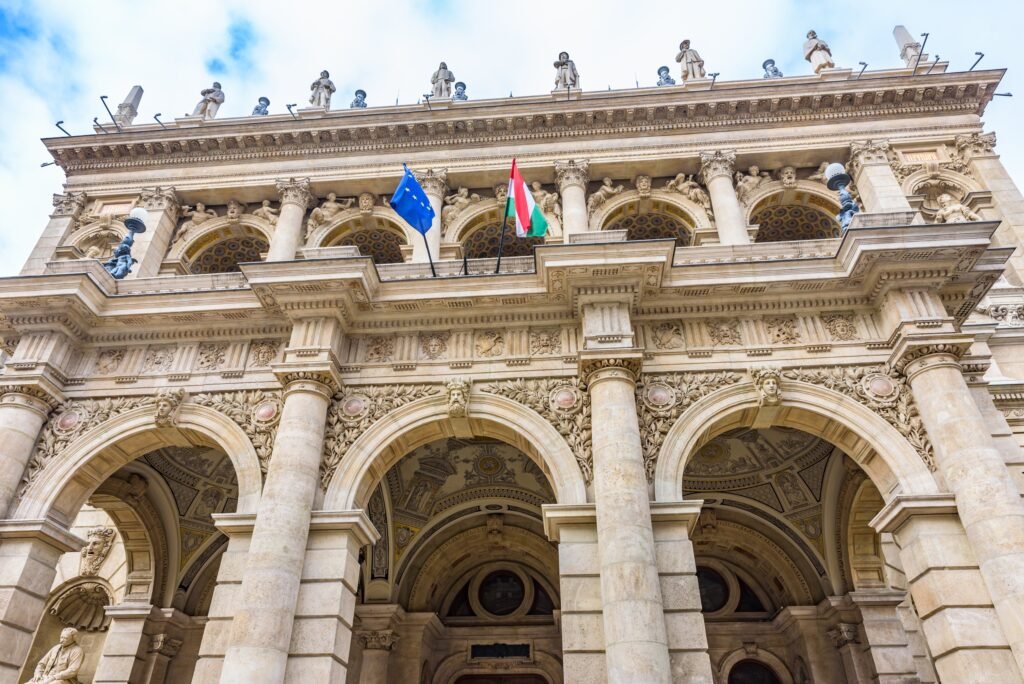
This UNESCO-listed boulevard is one of Budapest’s grandest streets, lined with 19th-century buildings and cultural institutions.
But we’re here for a bookshop.
Írók Boltja — The Writers’ Bookshop
Andrássy út 45
Írók Boltja translates roughly as Writers’ Bookshop, which already makes it difficult to leave off a literary Budapest itinerary.
But the story becomes better once you know what used to occupy this address.
The shop stands on the site of the old Japán Kávéház — Japanese Café, another meeting place associated with writers and artists.
Írók Boltja has operated here since the 1950s and today specialises heavily in Hungarian literature alongside foreign-language literature, philosophy, literary studies and the arts. It also regularly hosts book launches, author events and literary evenings. Írok Boltja
Even if you don’t read Hungarian, browse.
The physical presence of books matters here.
Because Budapest’s literary culture didn’t disappear when the great coffeehouses declined.
It simply changed form.
Optional Coffee: Művész Kávéház
A short distance along Andrássy Avenue is Művész Kávéház, another surviving historic Budapest coffeehouse.
Founded in 1898, it developed particularly strong associations with Budapest’s theatre and artistic communities — connections helped by its location beside the city’s theatre district and Hungarian State Opera. Budapest Info
You probably don’t need another elaborate breakfast.
But coffee?
Always.
Especially on this itinerary.
Cross the Danube
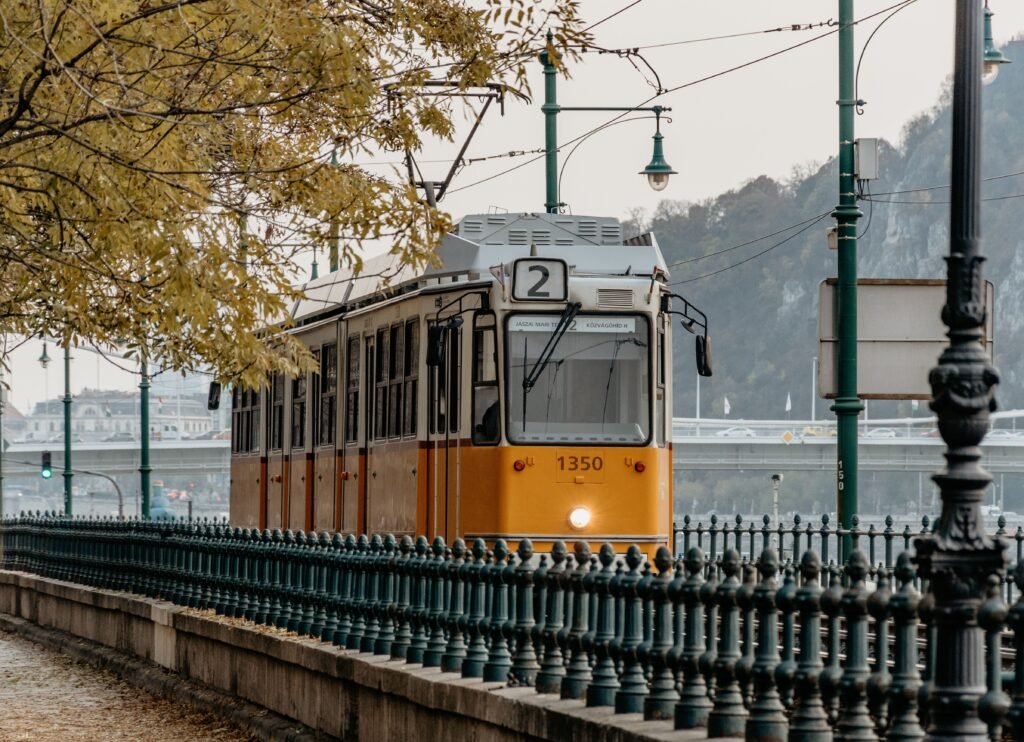
Now take the tram, metro or a long walk towards Bartók Béla Boulevard on the Buda side.
The mood changes considerably once you leave the centre of Pest.
This isn’t Budapest at its most monumental.
It feels more residential.
More local.
And that is precisely why one of the city’s best literary cafés makes such a good final major stop.
Hadik Kávéház
Bartók Béla út 36
Hadik is probably the café I’d most want to linger in on this entire itinerary.
The café’s own history records writers including Frigyes Karinthy, Dezső Kosztolányi and Zsigmond Móricz among its famous regulars. Its literary heyday came during the early decades of the 20th century, and after being closed for many years it reopened in 2010. Hadik
Compared with the New York Café, Hadik feels less like stepping inside a monument.
That’s part of its appeal.
You can more easily imagine this as somewhere writers genuinely returned to again and again.
A local café.
A regular table.
Someone arriving late.
Someone else arguing about a story.
Another person writing while pretending not to listen.
The café continues to host literary evenings, discussions, performances and exhibitions, so the relationship with the arts isn’t purely historical. Hadik
If you choose just one historic café in Budapest to actually spend time rather than simply photograph, make Hadik a serious contender.
Finish With an Aimless Walk Through Buda
After Hadik, resist the urge to squeeze in another museum.
Walk instead.
Head towards the Danube through the surrounding neighbourhood.
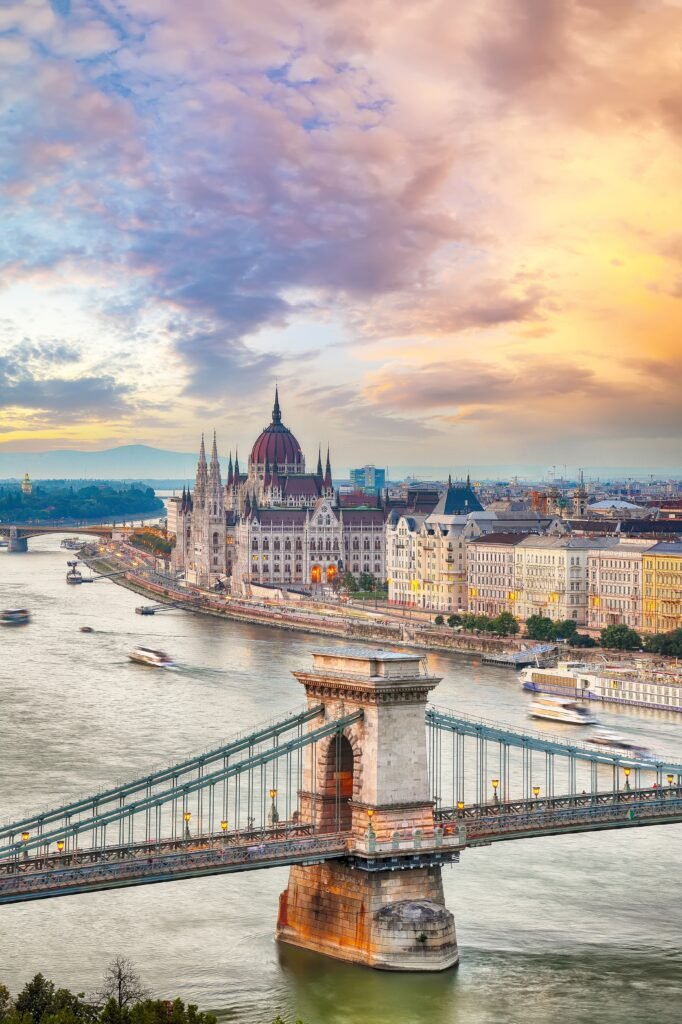
Budapest often gets reduced to a handful of spectacular images:
Parliament glowing across the river.
Fisherman’s Bastion.
The Chain Bridge.
Thermal baths.
Ruin bars.
They deserve the attention.
But a literary weekend reveals a quieter version of the city.
The Budapest of neighbourhood cafés and slightly worn apartment buildings.
Of newspapers spread across tables.
Of editors meeting writers over coffee.
Of enormous ideas developing in surprisingly ordinary rooms.
If You Have More Time: Three Extra Literary Stops
Café Astoria
Opened in 1914 inside the Hotel Astoria, its café became another meeting place associated with literary and cultural life. Budapest Info
Its central location also makes it an easy addition if you’re staying around Pest.
Gerbeaud Café
Gerbeaud is better known for confectionery than literature, so I wouldn’t make it a core stop on a literary itinerary.
But it is an excellent example of Budapest’s historic café culture.
The establishment dates to 1858, and its grand location on Vörösmarty Square makes it an easy place to understand how deeply the café became embedded in Budapest’s social life. Budapest Info
Párisi Passage
Again, this isn’t primarily a literary pilgrimage.
Go for atmosphere.
Párisi Udvar combines Gothic, Moorish and other decorative influences into one of Budapest’s more extraordinary interiors, and the café inside makes an atmospheric place to end a rainy afternoon with a book. Budapest Info
The Perfect Literary Weekend in Budapest
If I were planning this purely for atmosphere, I’d keep it simple.
Saturday:
New York Café → Jewish Quarter → Massolit Books → Petőfi Literary Museum → Centrál Café → evening walk to the Danube.
Sunday:
Írók Boltja → Andrássy Avenue → optional Művész Café → cross to Buda → Hadik Café → wander Bartók Béla Boulevard and the river.
Don’t try to photograph every café and immediately move on.
That rather defeats the point.
Buy a book.
Take it with you.
Sit somewhere for forty minutes.
Budapest makes far more sense when you allow yourself to linger.
Why Budapest’s Literary Cafés Matter
There are historic cafés all over Europe.
What makes Budapest particularly interesting is how closely its coffeehouse culture became intertwined with writing itself.
Around the turn of the 20th century, the city was rapidly expanding. Newspapers, theatres, publishing houses and artistic movements flourished alongside that growth.
The cafés became shared rooms for this increasingly creative city.
Writers who might otherwise have worked alone suddenly found editors, critics, journalists and other writers sitting several tables away.
Ideas travelled quickly.
Literature became social.
And although the Budapest of that period disappeared long ago, enough of its physical spaces survived that you can still trace the outline of it today.
That is what makes a literary weekend here different from simply visiting places where famous writers once lived.
You’re walking through the remains of an entire literary ecosystem.
And remarkably, in several places, you can still order coffee inside it.
Before You Go
Budapest’s historic cafés are working businesses rather than museums, and opening times, reservation systems and menus change. Check individual venues shortly before visiting, particularly the New York Café, Centrál and Hadik.
The most famous cafés can also become busy during peak travel periods. Visiting earlier in the day — or treating the quieter bookshops and neighbourhood stops as equally important parts of the route — makes the weekend feel far less like a checklist.
Britt & Tyler
We’re Britt and Tyler, the two Australians behind Cocktails & Cathedrals. We’re drawn to old buildings, beautiful rooms, bookshops and places that seem to hold a story. Our journal brings those interests together, with a fondness for slow afternoons and a well-made cocktail. We hope it helps you find places you’ll want to linger.
Travel slowly. Stay beautifully.
A little more about us →
3 Comments