9 Old-World Bathroom Ideas Inspired by Europe’s Historic Hotels
From elegant Parisian boutique hotels to the charming bathrooms of Italian villas and English country houses, discover nine ways to bring old-world European character, warmth and timeless elegance into your bathroom.
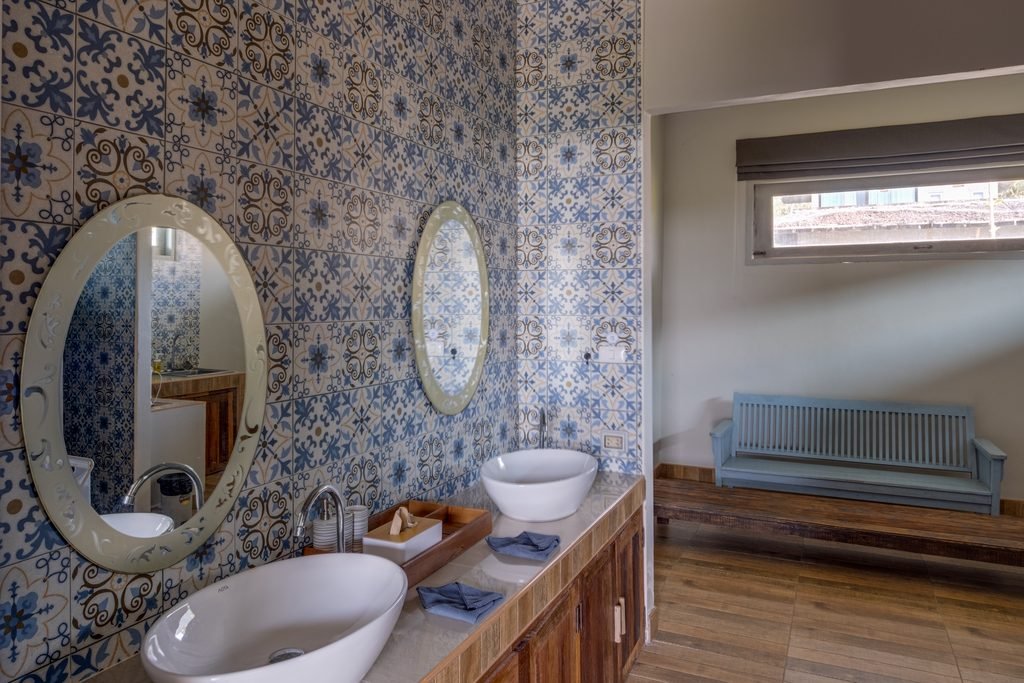
There is something rather wonderful about stepping into the bathroom of a beautiful old European hotel.
Perhaps it is a little Parisian hotel, where an ornate mirror hangs above a marble basin and warm light falls across polished brass taps. Or a country house in England, where a deep freestanding bath sits beneath a sash window, with patterned tiles underfoot and fluffy white towels waiting nearby.
These are bathrooms that seem to belong to another era.
They are not necessarily enormous or particularly luxurious. Some are quite small, with slightly imperfect walls, old-fashioned fittings and architectural details that have been there for generations.
Yet they have something that many modern bathrooms lack.
Character.
The appeal of an old-world European bathroom is not simply its beautiful fixtures or traditional materials. It is the feeling of stepping into somewhere personal, comfortable and quietly elegant.
And the lovely thing is that you do not need a historic townhouse, an expensive marble renovation or a clawfoot bathtub to capture a little of that atmosphere.
Sometimes, all it takes is a beautiful mirror, warmer lighting or a few carefully chosen details.
Here are nine old-world bathroom ideas inspired by Europe’s historic hotels, elegant townhouses and charming country retreats.
1. Hang an Antique-Style Mirror Above the Basin
One of the simplest ways to give a bathroom an old-world European feeling is to replace an ordinary mirror with something that has a little history and personality.
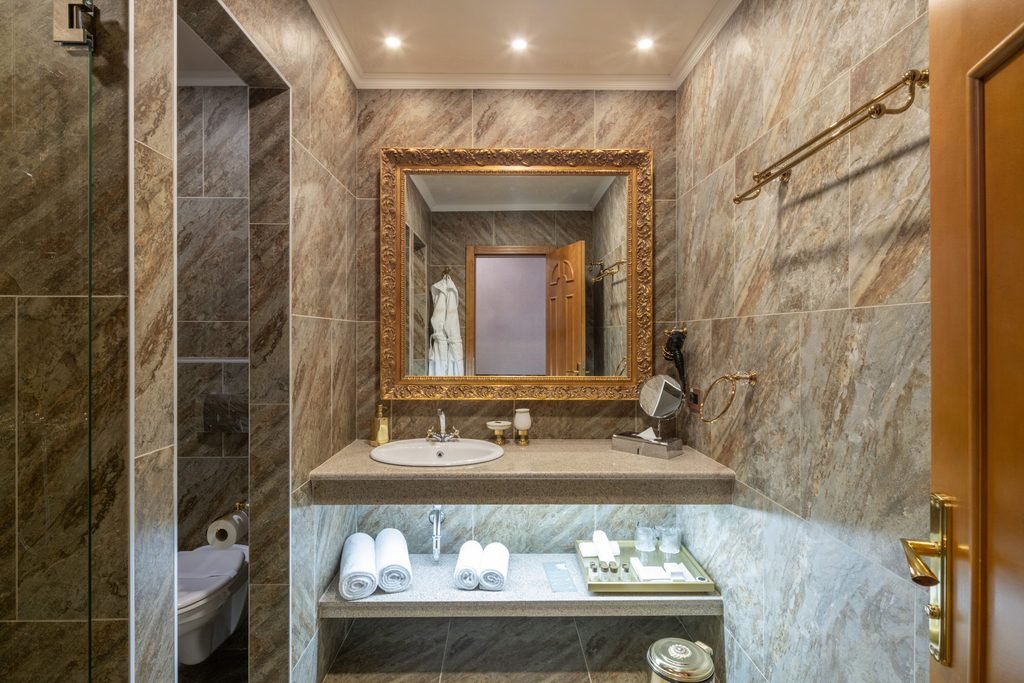
In Parisian boutique hotels, mirrors are often treated as decorative pieces rather than purely practical objects. Ornate gilt frames, softly aged glass and elegant curved shapes introduce a sense of character that a plain rectangular mirror rarely achieves.
An antique-style mirror can completely change the atmosphere of a bathroom, even when everything else remains relatively simple.
Look for:
- Gilt or aged-brass frames with delicate detailing
- Vintage oval mirrors with curved edges
- Dark timber frames with a little patina
- French-inspired mirrors with decorative crests
- Simple antique mirrors with beautifully worn finishes
A particularly lovely combination is an ornate gold mirror above a white porcelain basin, paired with traditional brass taps and softly coloured walls.
The contrast between the decorative frame and clean porcelain creates the understated elegance found in so many historic European interiors.
Old-world detail: Avoid making everything perfectly matched. An antique mirror can look even more beautiful beside contemporary fittings, particularly when the colours and materials complement one another.
2. Choose Brass or Polished Nickel Bathroom Fittings
Modern bathrooms often favour sleek chrome or matte-black fittings, but traditional European interiors tend to feel warmer and more inviting when the metalwork has a little softness.
Brass and polished nickel are especially beautiful choices.

Aged brass brings a golden warmth that works wonderfully with marble, timber, cream tiles and darker wall colours. Polished nickel offers a slightly cooler, silvery appearance that feels particularly at home in elegant English bathrooms and traditional Parisian apartments.
Consider introducing these finishes through:
- Basin taps and traditional crosshead handles
- Exposed shower fittings
- Towel rails and bathroom hooks
- Cabinet handles
- Wall-mounted soap holders
- Decorative bath accessories
If you are renovating, traditional bridge taps or crosshead handles can make a beautiful statement.
But even without replacing major plumbing fixtures, smaller details such as a brass towel rail, vintage-style cabinet handles or an elegant soap dish can introduce that same old-world atmosphere.
The key is to choose finishes that feel timeless rather than overly fashionable.
Old-world detail: Brass looks particularly lovely against antique cream, olive green and deep burgundy. These combinations feel rich and inviting without needing an elaborate bathroom design.
3. Bring Character Underfoot with Traditional Tiles
There is something immediately charming about a bathroom with a beautiful old-fashioned tiled floor.
Across Europe, traditional bathrooms often feature patterned encaustic-style tiles, small mosaics, geometric designs or classic checkerboard floors.
These surfaces have a decorative quality that gives even the smallest room a sense of history.
For a closer look at historic patterns, the V&A’s tile collection is a lovely source of inspiration.
A black-and-white checkerboard floor can evoke the elegance of a Parisian hotel, while muted terracotta and cream tiles bring to mind a rustic Italian villa.
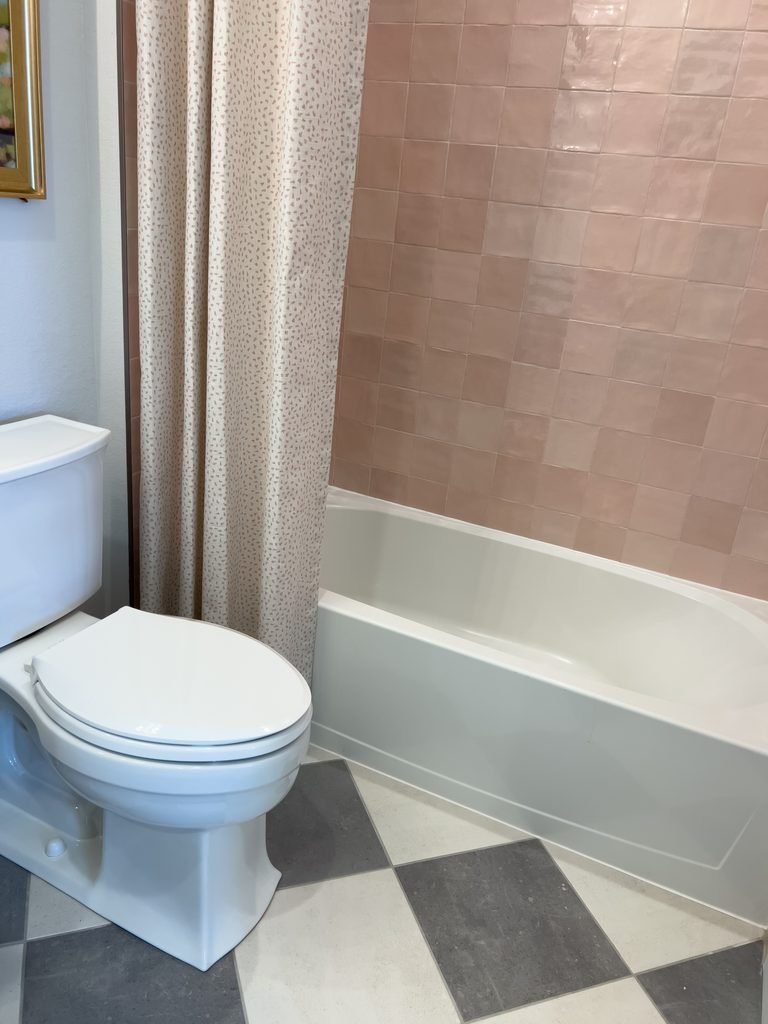
For a more English country-house feeling, consider delicate geometric patterns or small hexagonal tiles.
Some particularly beautiful options include:
- Black-and-white checkerboard tiles
- Burgundy and cream geometric patterns
- Small marble mosaic tiles
- Traditional Victorian-style patterned floors
- Warm terracotta tiles with an aged finish
- Soft grey-and-white stone-look tiles
If you are planning a renovation, a decorative tiled floor can become one of the bathroom’s most memorable features.
And because the floor carries much of the visual interest, the rest of the bathroom can remain beautifully simple.
For renters or anyone avoiding major changes, a patterned bathroom rug in a suitable dry area can introduce a similar decorative feeling without replacing the tiles.
Old-world detail: Slightly muted colours often feel more authentic than stark contrasts. Think warm ivory instead of brilliant white, or charcoal instead of jet black.
4. Replace Harsh Lighting with Warm Wall Lights
Lighting has an extraordinary effect on the atmosphere of a room.
A bathroom filled with bright, cool overhead lighting might be practical, but it rarely feels like the inviting bathroom of a beautiful European hotel.
Historic interiors tend to rely on softer pools of light, decorative fittings and a warmer overall glow.
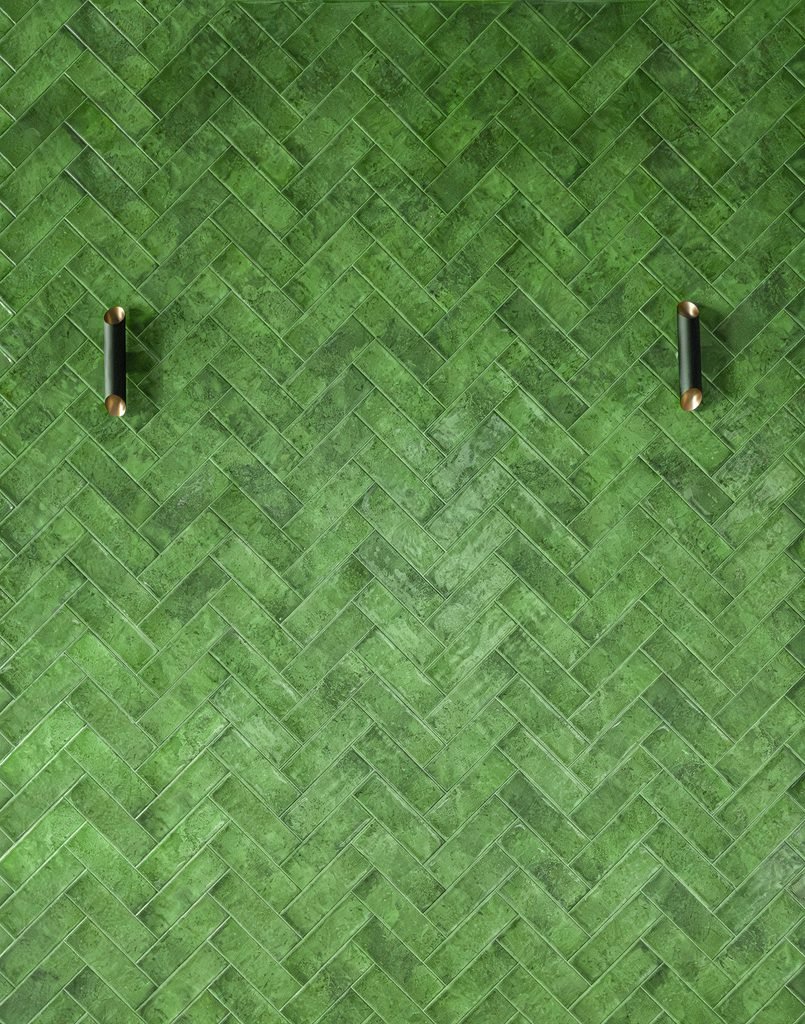
One of the loveliest ways to achieve this is with wall lights positioned on either side of the bathroom mirror.
Traditional sconces with opal glass shades, antique-brass fittings or simple fabric-inspired glass designs can make an otherwise ordinary bathroom feel wonderfully elegant.
Look for lighting that offers:
- Warm, flattering illumination
- Decorative brass or nickel finishes
- Frosted or opal glass shades
- Classic curved arms or simple traditional shapes
- Balanced lighting around the mirror
Wall lights can also create a sense of symmetry, especially when paired with a beautiful antique-style mirror.
For a particularly atmospheric bathroom, combine decorative wall lighting with subtle ceiling lighting that can be dimmed.
You still want enough brightness for everyday tasks, but the room should also feel comfortable and welcoming during a relaxing evening bath.
Old-world detail: Choose bathroom-rated fittings suitable for their location, and have electrical work completed by a licensed electrician. Warm lighting should never come at the expense of safety or practicality.
5. Introduce Antique Cream, Olive Green or Deep Burgundy
One of the most appealing things about old European interiors is their use of colour.
Rather than relying entirely on bright white, historic hotels and townhouses often embrace shades that feel softened by time.
Antique cream, muted olive, dusty rose, warm taupe and deep burgundy can give a bathroom depth and personality without overwhelming the space.
These colours also work beautifully with traditional materials such as timber, marble, brass and patterned tiles.
For a light and elegant Parisian-inspired bathroom, consider antique cream walls, white porcelain and warm brass fittings.
For something more atmospheric, muted olive green can create a lovely contrast with a white basin, dark timber cabinet and aged metalwork.
And if you prefer a richer, more dramatic interior, burgundy can be stunning when used thoughtfully.
You do not necessarily need to paint the entire room.
A burgundy vanity, an olive-painted cabinet or a collection of deep-coloured towels can introduce a beautiful old-world colour palette without making the bathroom feel dark.
Some combinations worth considering are:
- Antique cream and aged brass: Soft, elegant and unmistakably Parisian
- Muted olive and dark timber: Relaxed, earthy and reminiscent of an Italian country house
- Burgundy and warm ivory: Rich, romantic and slightly dramatic
- Dusty rose and polished nickel: Delicate, refined and quietly traditional
The secret is to avoid colours that feel too new or overly saturated.
A slightly muted palette tends to create the sense of history and warmth that makes these interiors so appealing.
For more ideas on pairing these shades, explore our Art Nouveau colour palettes inspired by European interiors.
6. Add a Timber Vanity or Vintage Storage Cabinet
Modern bathroom storage is often designed to disappear.
Smooth white cabinets, concealed handles and glossy finishes can be wonderfully practical, but they sometimes leave a room feeling a little impersonal.
In an old-world European bathroom, furniture is an opportunity to introduce warmth and character.

A timber vanity with traditional doors, an antique chest adapted to hold a basin or a small vintage cabinet can make the space feel more like a beautifully furnished room.
This approach works particularly well in bathrooms inspired by English country houses, French townhouses and rustic Italian villas.
Consider:
- A dark timber vanity with traditional brass handles
- A painted cabinet in olive green or antique cream
- A vintage washstand with a marble top
- A narrow wooden cupboard for folded towels
- A small antique-style wall cabinet for toiletries
A beautiful piece of furniture can also provide a welcome contrast to the harder surfaces usually found in bathrooms.
White porcelain, stone tiles and glass shower screens all feel warmer when balanced with the natural texture of timber.
If you already have a perfectly functional vanity, replacing the handles or refinishing suitable cabinet surfaces may be enough to give it a more traditional appearance.
Old-world detail: For genuinely antique furniture, moisture protection is essential. A bathroom vanity needs appropriately sealed surfaces and construction suitable for a humid environment.
7. Make a Freestanding Bath the Centrepiece
Few bathroom features capture the romance of an old European hotel quite like a freestanding bathtub.
Imagine a deep white bath positioned beneath a beautiful window, with traditional taps, softly patterned flooring and a small wooden stool nearby.
It is the sort of scene that makes an ordinary evening feel like a stay in a charming country hotel.

Traditional roll-top baths and clawfoot designs are particularly evocative of historic English bathrooms, while a simple oval freestanding bath can feel equally elegant in a more restrained Parisian-inspired space.
The beauty of this approach is that the bathtub becomes part of the room’s decoration.
Instead of hiding it behind a built-in surround, the bath itself creates a graceful focal point.
To complement it, consider:
- Traditional floor-mounted or wall-mounted taps
- Marble or patterned tiles
- A small timber stool for a book or folded towel
- An antique-style mirror nearby
- Warm wall lighting
- Simple, beautifully made bath linens
Of course, not every bathroom has enough space for a freestanding bath, and not every home needs one.
A traditional-looking built-in bath can be just as charming when paired with beautiful tiles, elegant tapware and thoughtful accessories.
The aim is not to recreate a luxury hotel suite at any cost.
It is to make bathing feel a little more special.
Old-world detail: Before installing a freestanding bath, consider the space needed for cleaning, waterproofing, plumbing access and the weight of the filled bathtub.
8. Style the Bathroom with Beautiful Everyday Essentials
Some of the most charming details in historic European hotel bathrooms are also the simplest.
A stack of beautifully folded towels. A traditional soap dish. A little glass jar filled with cotton pads. A ceramic vessel beside the basin.

These are ordinary objects, but when chosen thoughtfully, they can make a bathroom feel personal and inviting.
Instead of filling every surface with products and packaging, consider displaying a smaller collection of beautiful, useful items.
A few lovely choices include:
- Thick white or antique-cream cotton towels
- A traditional ceramic or marble soap dish
- Clear glass jars with simple lids
- A small silver or brass tray
- An old-fashioned shaving mirror
- A woven basket for spare towels
- A beautiful glass bottle for hand soap
There is a certain quiet luxury in everyday objects that are both practical and attractive.
A simple ceramic soap dish beside a porcelain basin can feel much more elegant than a collection of brightly coloured plastic bottles.
Likewise, fresh white towels folded neatly on a timber shelf can evoke the atmosphere of a charming boutique hotel without requiring any renovation at all.
Try to leave a little breathing room between objects.
The best European-inspired bathrooms often feel collected and comfortable rather than heavily styled.
Old-world detail: Choose a small number of useful accessories with lovely materials and interesting shapes. The aim is a bathroom that feels lived in, not a room arranged purely for photographs.
9. Finish with Framed Artwork and a Vintage Stool
The final touch is one that is surprisingly easy to overlook.
Treat your bathroom as an actual room.
In beautiful old European hotels, bathrooms sometimes contain details more commonly associated with living rooms or bedrooms: framed artwork, antique furniture, decorative mirrors and carefully chosen accessories.

These touches create warmth and help the space feel connected to the rest of the home.
A small framed architectural print might hang above a towel rail. A vintage wooden stool could sit beside the bath. A narrow shelf might hold a few beautifully bound books in a suitably dry area.
Even one carefully chosen piece can make a bathroom feel more personal.
For artwork, consider:
- Vintage European architectural sketches
- Botanical illustrations in muted colours
- Small antique-style landscapes
- Black-and-white photographs of Paris or Venice
- Traditional etchings in simple timber frames
A little vintage stool is another particularly useful addition.
It can hold folded towels, provide somewhere to place clothes or simply introduce the warmth of aged timber into a room dominated by tile and porcelain.
There is no need to fill every available corner.
In fact, a single antique-style print and a well-chosen wooden stool may be all that is needed.
Old-world detail: Keep framed pieces away from direct splashes and excessive moisture. Choose materials and locations that will cope with the bathroom environment.
How to Create an Old-World European Bathroom Without Renovating
It is easy to assume that a beautiful traditional bathroom requires an enormous budget.
But much of the atmosphere found in Europe’s charming historic hotels comes from the details rather than the size or expense of the room.
A plain bathroom with white tiles and a simple vanity can still become a lovely European-inspired retreat.
Start by looking at what you already have.
Perhaps the tiles are perfectly good, but the mirror feels uninspiring. Maybe the vanity is functional, yet the room needs warmer colours and a few traditional accessories.
Rather than changing everything, consider one or two thoughtful improvements.
An ornate mirror might create an entirely new focal point. Beautiful towels and a ceramic soap dish can soften a modern basin. A small framed print or timber stool can add the personality that the room has been missing.
For a bigger project, traditional tiles, elegant tapware and a timber vanity can build on those details to create a more complete old-world look.
The most important thing is to choose materials and objects that feel comfortable, enduring and personal.
A bathroom should still be easy to clean, practical to use and suited to everyday life.
After all, the charm of a beautiful European hotel bathroom lies partly in the fact that it feels effortless.
A Little European Hotel Charm at Home
Perhaps the most appealing thing about Europe’s historic hotel bathrooms is that they rarely feel completely perfect.
There might be a slightly worn timber cabinet, an ornate mirror that has seen better days or an old tiled floor with a little character.
But together, these details create something far more memorable than a room filled entirely with brand-new finishes.
They remind us that beautiful interiors do not always need to follow the latest trends.
Sometimes, warmth, history and a little individuality are enough.
Whether you introduce an antique-style mirror, choose a richer colour palette or finally create the beautiful bathroom you have been imagining, the aim is the same.
To make an everyday space feel like somewhere you would happily linger.
And perhaps, for a few quiet moments, somewhere that feels a little like a charming old hotel in Paris, Florence or the English countryside.
To carry the same atmosphere through the rest of your home, explore our boutique hotel bedroom ideas, old-world hallway ideas and European-inspired reading nooks.
Britt & Tyler
We’re Britt and Tyler, the two Australians behind Cocktails & Cathedrals. We’re drawn to old buildings, beautiful rooms, bookshops and places that seem to hold a story. Our journal brings those interests together, with a fondness for slow afternoons and a well-made cocktail. We hope it helps you find places you’ll want to linger.
Travel slowly. Stay beautifully.
A little more about us →