The Historic Cafés of Budapest: Where Writers, Artists and Revolutionaries Met
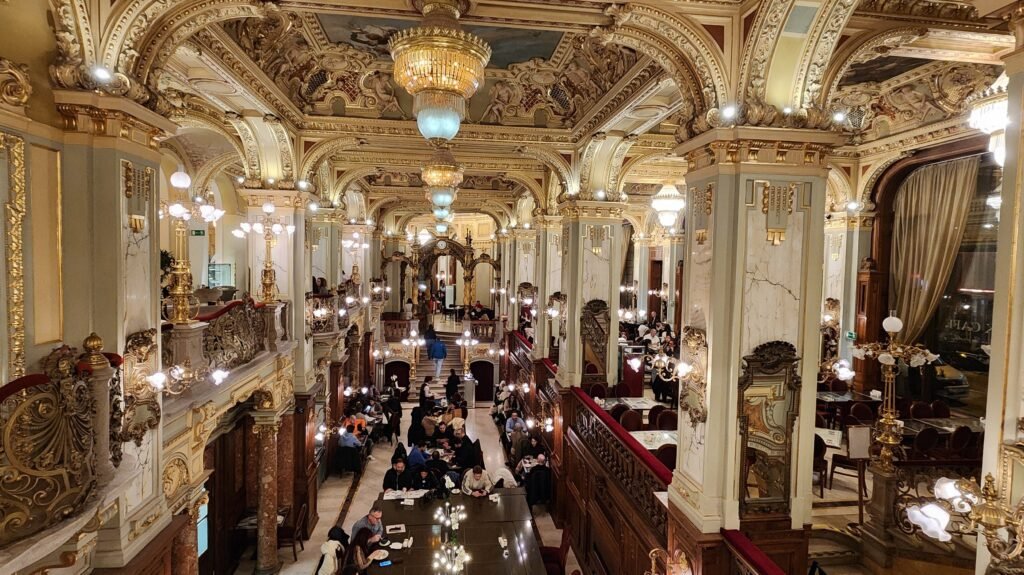
There are cities where coffee is something you drink.
And there are cities where the café became part of the architecture of public life.
Budapest belonged firmly to the second kind.
At the beginning of the 20th century, the Hungarian capital had close to 500 cafés. They were scattered along the boulevards and around the great squares of Pest, filled with marble-topped tables, newspapers, cigarette smoke, waiters who knew their regulars and writers who sometimes appeared to spend more time there than they did at home. Hungarian Conservative
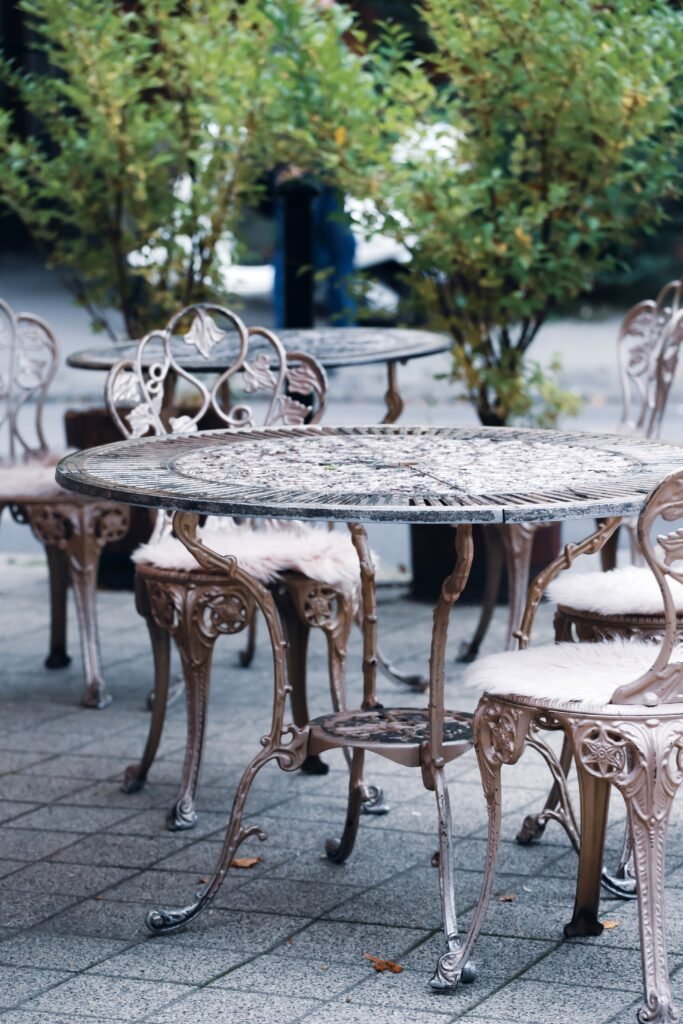
These were not simply places to order coffee and cake.
They were informal offices.
Editorial rooms.
Political debating chambers.
Meeting places for painters, journalists, professors, actors and poets.
A writer could arrive with little more than the price of a coffee and spend hours surrounded by newspapers, warmth, light and other people with ideas. Articles were edited at café tables. Literary movements formed around particular corners of particular rooms. Arguments continued long after cups had gone cold.
And occasionally, history itself began over coffee.
The most famous example was the now-lost Pilvax Café, where Sándor Petőfi and the young radicals of Pest gathered before the Hungarian Revolution of 1848 spilled into the streets. Hungarian Conservative
That café is gone.
But Budapest’s coffeehouse culture never disappeared completely.
Several of its great cafés survived, were restored or returned after decades of closure. Today you can still sit beneath gilded ceilings, order a slice of cake and occupy — at least for an hour — some of the same spaces where Budapest once talked, wrote and dreamed.
These are six of the historic cafés worth seeking out.
1. New York Café: Budapest at Its Most Theatrical
Erzsébet körút 9–11
There is almost no way to enter the New York Café quietly.
The room doesn’t allow it.
Gilded columns rise towards painted ceilings. Marble catches the light. Chandeliers hang above sweeping staircases and ornate galleries. Nearly every surface appears to have been embellished by someone who was told that restraint was optional.
It feels closer to a palace ballroom than somewhere designed for an espresso.
And perhaps that is exactly the point.
The New York Café opened in 1894, inside the New York Palace, and by the early decades of the 20th century it had become one of Budapest’s great literary meeting places. Writers, editors and journalists gathered here, and influential newspapers were worked on in the building’s gallery. New York Café
It was part café, part newsroom and part club.
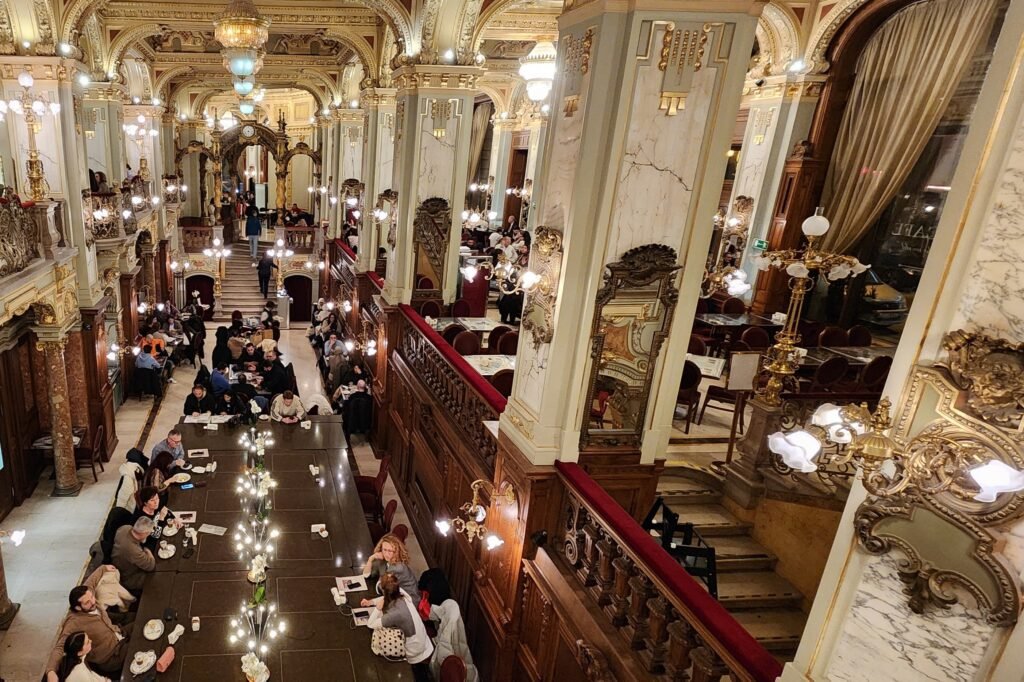
There are wonderful stories surrounding Budapest’s literary coffeehouse culture: writers being given paper by sympathetic waiters, manuscripts being passed across tables, editors conducting business without ever really having an office.
The New York was one of the places where that culture reached its extravagant peak.
After the Second World War, the café’s fortunes changed dramatically. The building deteriorated and the space was used for other purposes before the café eventually returned. Its major restoration was completed in 2006. New York Café
Today, the secret is very much out.
The New York Café is famous, photographed relentlessly and often busy.
But dismissing it simply because tourists discovered it would be a mistake.
Sometimes a room really is worth seeing.
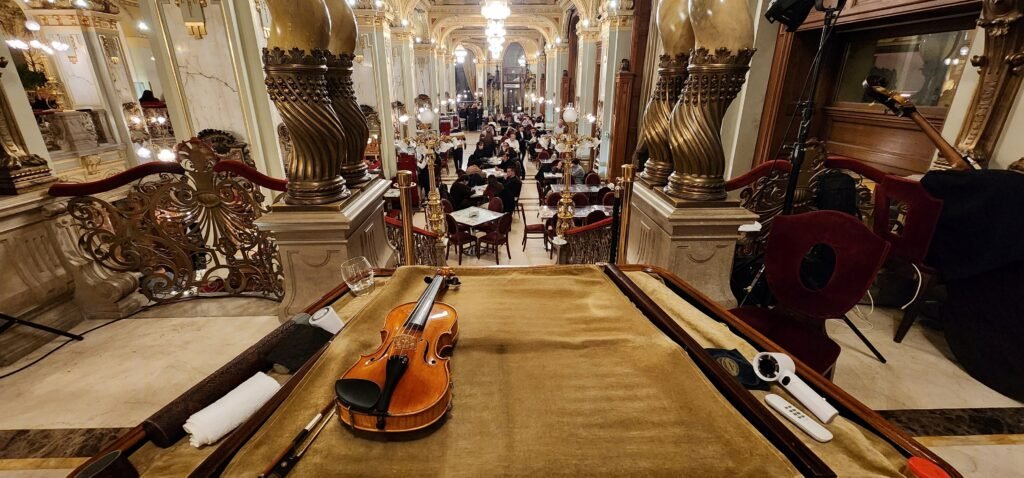
Go here for: sheer spectacle.
Look for: the galleries above you. It becomes easier to imagine the café as a working literary world once you stop looking only at the chandeliers.
Cocktails & Cathedrals verdict: Yes, it is excessive. That’s why you should go.
2. Centrál Grand Café: The One for Literary Budapest
Károlyi utca 9
If the New York Café provides the theatre, Centrál gives you the literature.
Centrál opened in 1887 and became one of the great intellectual meeting places of Pest. Its tables attracted writers, journalists, academics, artists and editors, with names including Endre Ady, Dezső Kosztolányi, Frigyes Karinthy, Zsigmond Móricz and Mihály Babits appearing in its history. Centrál Kávéház
Most importantly, Centrál became closely associated with Nyugat — West — the enormously influential Hungarian literary journal founded in 1908.
Its writers gathered here so regularly that certain tables effectively became theirs.
Think about that for a moment.
Not an occasional literary event.
Not a plaque installed decades later to manufacture some atmosphere.
An actual café table where a group of writers repeatedly met, argued, edited, exchanged ideas and helped shape modern Hungarian literature.
Centrál’s own history describes the café as something akin to a “free university”, a place where Budapest’s intellectual elite naturally collected. Centrál Kávéház
And this is perhaps the most interesting thing about the old Budapest coffeehouse.
Nobody had to announce that networking was taking place.
Nobody booked a co-working desk.
You simply knew which café your people used.
Writers had cafés.
Artists had cafés.
Political groups had cafés.
Sometimes individual movements practically had their own table.
Centrál still operates today, and while you are obviously no longer walking into Budapest in 1910, its literary history gives the room an atmosphere that is difficult to manufacture.
Go here for: the strongest connection to Budapest’s literary golden age.
Look for: somewhere to sit long enough to actually read. Rushing through Centrál rather defeats the purpose.
Cocktails & Cathedrals verdict: If you only visit one café because you love books rather than chandeliers, make it this one.
3. Hadik Kávéház: The Writers’ Café Across the River
Bartók Béla út 36
Cross the Danube into Buda and the mood changes.
Hadik sits on Bartók Béla Boulevard, away from the most obvious concentration of grand cafés in central Pest.
And perhaps because of that, it has always felt slightly different.
Hadik emerged as a famous literary haunt in the early 20th century, becoming particularly associated with writers including Frigyes Karinthy, Dezső Kosztolányi and Zsigmond Móricz. The café later closed for decades before being revived in 2010. Hadik
Its appeal wasn’t necessarily that it possessed the most magnificent coffee in Budapest.
It had the right people.
Which was arguably more important.
Writers followed one another around the city. A successful café attracted a few prominent regulars; those regulars attracted friends, editors and admirers; gradually the café acquired an identity.
Hadik became one of those places.
Today Bartók Béla Boulevard once again has a creative character, with cafés, galleries and cultural spaces lining this part of Buda.
That makes Hadik particularly interesting.
It doesn’t feel merely like a preserved relic of café culture.
It sits in a neighbourhood where the idea of writers and artists drifting between cafés still makes sense.
Go here for: a café that feels connected to a living neighbourhood rather than simply historic Budapest.
Look for: the relationship between Hadik and the surrounding Bartók Béla district. Have the coffee, then keep walking.
Cocktails & Cathedrals verdict: Probably the one where we would most like to lose an afternoon.
4. Gerbeaud: Coffee, Cake and Budapest Society
Vörösmarty tér 7–8
Not every historic Budapest café was primarily about tortured poets scribbling into notebooks.
Some were about cake.
And society.
And being seen eating cake by society.
Gerbeaud began with confectioner Henrik Kugler in 1858. The business later moved to today’s Vörösmarty Square, and Swiss-born confectioner Émile Gerbeaud became involved during the 1880s, transforming the establishment into one of Budapest’s great confectionery institutions. Gerbeaud
Its location matters.
Vörösmarty Square sits in the centre of Pest, close to the Danube and within the elegant commercial heart of the city.
Gerbeaud wasn’t simply somewhere to obtain sugar.
Going there became part of urban life.
And this reveals another side of historic café culture.
The cafés of Budapest were democratic in one sense — a relatively inexpensive drink could buy you a seat in a heated, illuminated public room — but some establishments were also places of considerable elegance.
Here, coffee came with confectionery, polished interiors and a certain degree of ceremony.
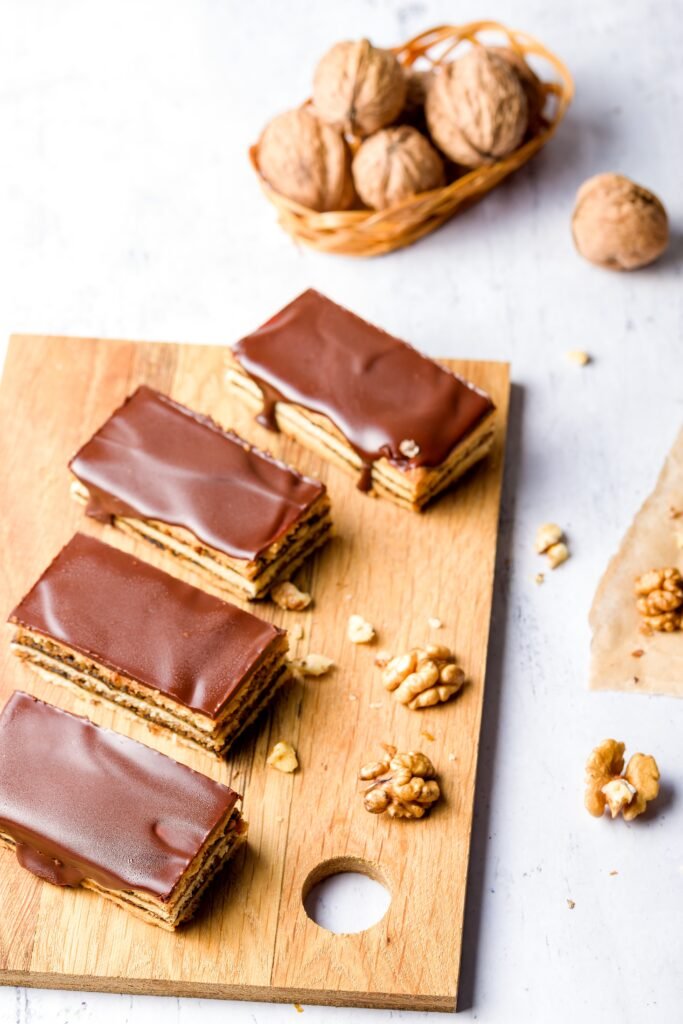
Try something properly Hungarian rather than ordering the most familiar thing on the menu. Budapest Info recommends the zserbó, the famous layered pastry combining walnut, apricot and chocolate. Budapest Info
Better still, don’t treat dessert as something you must justify because you’ve eaten lunch.
In Central Europe, cake and coffee are perfectly capable of being the event.
Go here for: Budapest’s grand confectionery tradition.
Look for: the ritual rather than just the dessert.
Cocktails & Cathedrals verdict: Dress a little better than necessary and order cake at an irresponsible hour.
5. Café Astoria: Old Budapest Without Quite So Much Theatre
Kossuth Lajos utca 19
There are historic cafés that immediately demand your attention.
Astoria is more subtle.
Located inside the Hotel Astoria, the café dates to 1914 and became a meeting place associated with the political, literary and cultural life of the city. Budapest Info
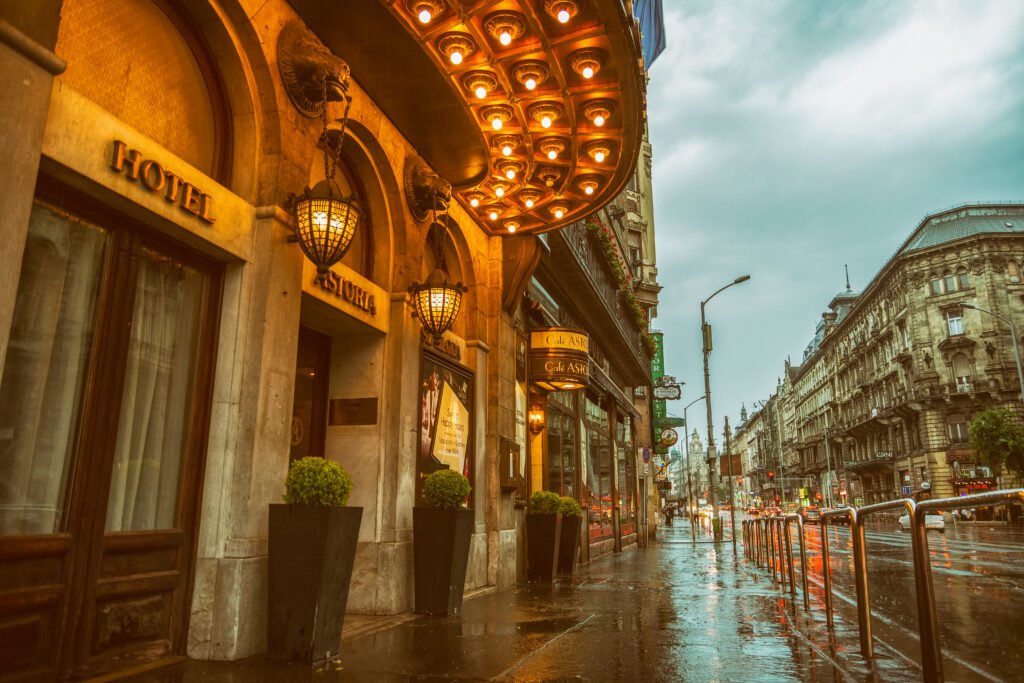
It has that particular Central European hotel-café quality: dark wood, polished surfaces, elegant service and the sense that conversations should probably take place in slightly lower voices.
This is important because historic Budapest wasn’t made entirely of enormous gilded coffee palaces.
There was also another kind of café culture — hotels, restaurants and meeting rooms where journalists talked politics, businessmen negotiated and people lingered because public life happened in public rooms.
The Astoria intersection itself has long been one of Pest’s great crossroads.
Sit here and you begin to understand the geography of the old city: the National Museum nearby, the boulevards radiating outwards, the inner streets of Pest within walking distance.
This is less “look at this ceiling” Budapest.
More “imagine who might have been having a conversation at the next table” Budapest.
And sometimes that is more interesting.
Go here for: old-world atmosphere without making the room itself the entire event.
Look for: details. The charm is in the overall mood.
Cocktails & Cathedrals verdict: Order coffee, put your phone away and pretend you have an appointment with an editor at four.
6. Párisi Passage: The Café as Architecture
Ferenciek tere 10
Then Budapest decides to show off again.
Párisi Passage occupies the extraordinary Párisi Udvar, a former shopping arcade whose design layers Moorish, Arabic and Gothic influences into one of the strangest and most beautiful commercial interiors in the city. Párisi Udvar Hotel
Look upwards.
That is the rule here.
Glass, arches, patterned surfaces and elaborate decoration transform the passage into something almost ecclesiastical.
A shopping arcade should not need to be this beautiful.
Budapest built one anyway.
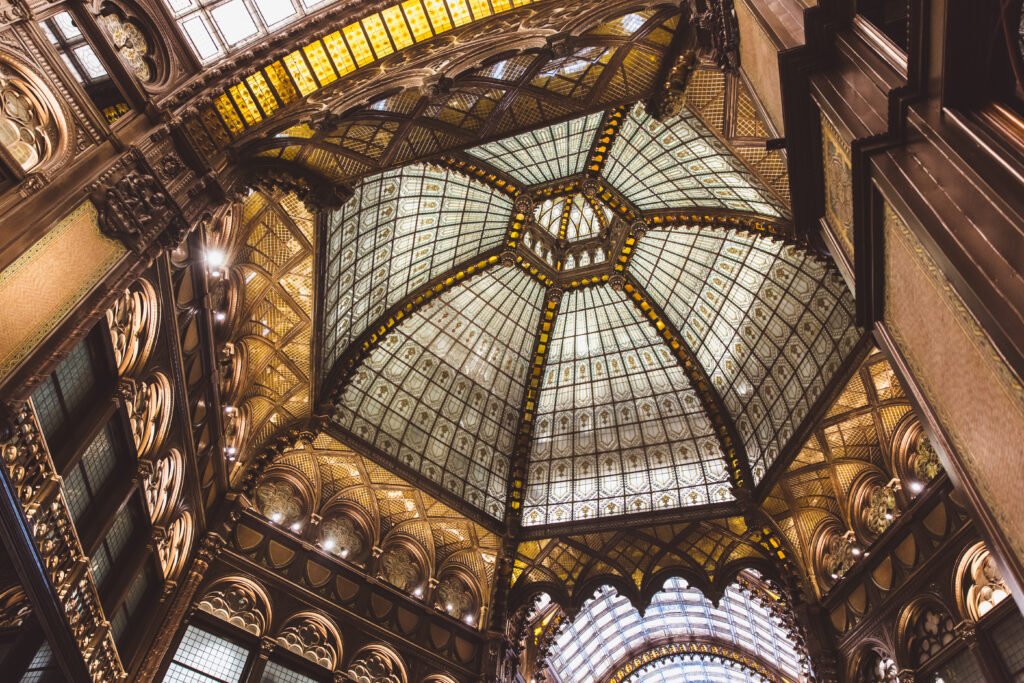
Today’s Párisi Passage Café occupies this restored historic space, allowing you to sit beneath the architecture rather than simply passing through it.
And while its connection to Budapest’s literary café culture isn’t as significant as Centrál or Hadik, it belongs here for another reason.
It demonstrates just how seriously Budapest once took the spaces in which ordinary urban life occurred.
Banks looked like palaces.
Bath houses looked like temples.
Apartment buildings came with sculpture.
And even places designed for shopping, drinking coffee or eating cake could be architectural events.
That instinct is one of the things that makes Budapest so intoxicating.
Beauty wasn’t reserved exclusively for monuments.
Sometimes it surrounded people while they did completely ordinary things.
Go here for: architecture.
Look for: everything above eye level.
Cocktails & Cathedrals verdict: Proof that “I’ll just stop for a coffee” can accidentally become an architecture tour.
The Café That Started a Revolution
There is one important absence from this list.
Pilvax.
You cannot sit in the original café today.
But no article about the political mythology of Budapest’s coffeehouses feels complete without it.
In March 1848, young Hungarian intellectuals including poet Sándor Petőfi gathered at the Pilvax before heading into the streets of Pest. The group was connected with the Twelve Points demanding political reforms, and Petőfi’s National Song became one of the defining texts of the Hungarian Revolution. Hungarian Conservative
The original building eventually disappeared.
But its story explains why cafés occupy such a peculiar place in Hungarian imagination.
They weren’t merely where people talked about history.
Sometimes they were where people decided to make it.
Why Budapest’s Coffeehouses Mattered So Much
The temptation is to romanticise all of this.
And perhaps we should — a little.
But there were practical reasons cafés became so important.
Homes could be cramped, cold and poorly lit. Heating and lighting cost money. A café offered warmth, light, newspapers, food, company and somewhere to work for the price of a drink.
By the beginning of the 20th century, Budapest had hundreds of them. Centrál Kávéház
The coffee was almost secondary.
What you were really purchasing was time in a room.
That is a surprisingly beautiful idea.
For a journalist, the café was an office.
For a writer, a study.
For a lonely person, company.
For a political group, a meeting room.
For somebody new to the city, it was somewhere to watch Budapest happen.
The best cafés became ecosystems.
Certain people sat at certain tables. Newspapers arrived every day. News travelled quickly. Introductions were made. Arguments began. Work was found. Poems were written.
It sounds remarkably like the internet.
Except everybody wore better coats.
If You Only Have Time for Three
Trying to choose the “best” historic café in Budapest slightly misses the point because they offer completely different experiences.
For literary history, choose Centrál.
For architecture and spectacle, choose the New York Café.
And for a café that feels most connected to a contemporary creative neighbourhood, cross into Buda for Hadik.
If beautiful interiors are your weakness, substitute Párisi Passage for any of them without regret.
Gerbeaud deserves its own category entirely.
That category is cake.
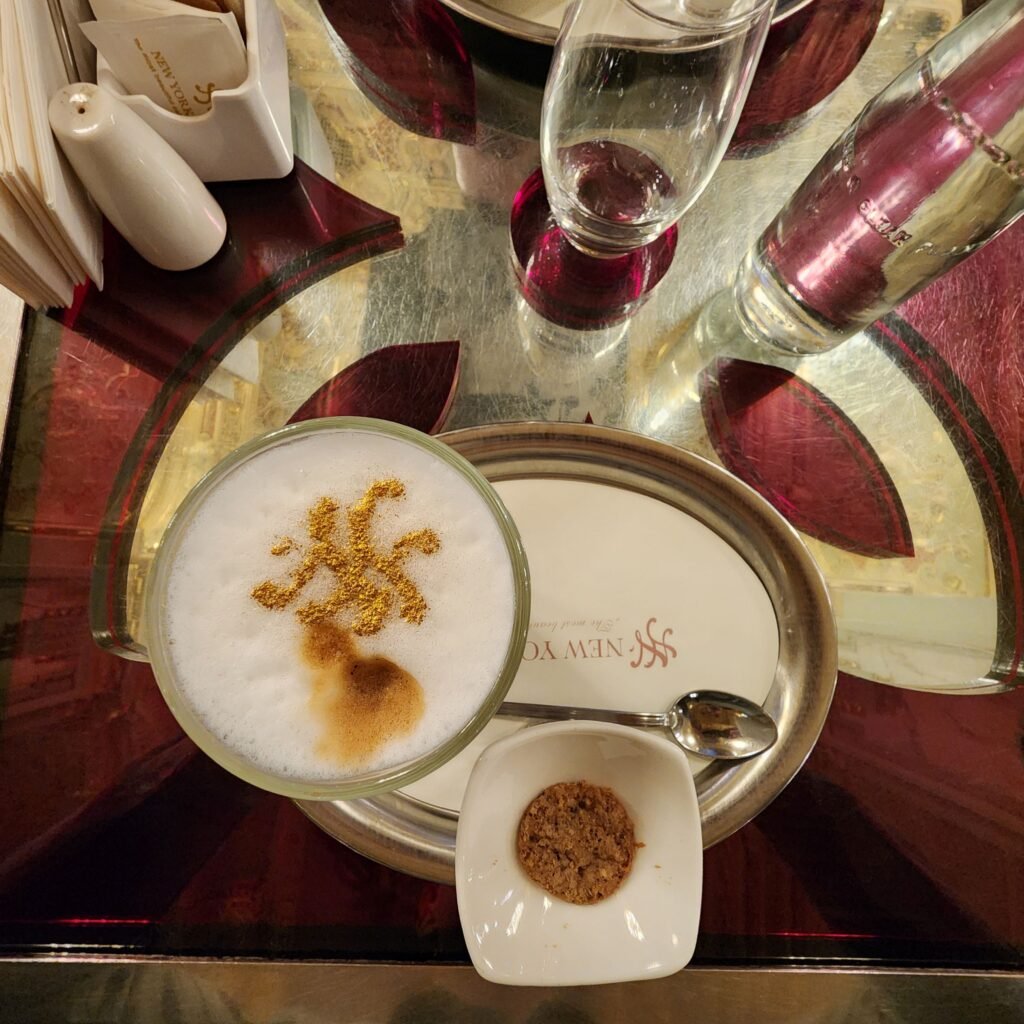
A Beautiful Way to Spend an Afternoon in Budapest
Several of these cafés sit within central Pest and can easily become part of a slow afternoon rather than a checklist.
Start around Vörösmarty Square with Gerbeaud.
Walk deeper into the old centre towards Párisi Udvar, stopping to look inside the passage even if you aren’t ready for another coffee.
From there, Centrál is close enough to continue the literary theme.
Continue towards the Astoria, then finish farther up the Pest side at the New York Café when you are ready for Budapest to abandon all remaining restraint.
Save Hadik for another day.
Cross the Liberty Bridge into Buda, wander Bartók Béla Boulevard and give yourself an afternoon there instead.
If you enjoyed exploring Budapest’s historic cafés, there’s plenty more of the city to discover. Wander through its literary side with our Literary Weekend in Budapest, explore the grand buildings that shape the city in The Architecture of Budapest, or bring some of its atmosphere home with our guides to Budapest Colour Palettes and Budapest-Inspired Interior Design. And if you love the decorative details of the city, don’t miss our guide to Art Nouveau in Budapest.
What Budapest’s Cafés Can Still Teach Us
Perhaps the most appealing thing about Budapest’s café culture isn’t actually the chandeliers.
It is the lingering.
The old coffeehouse was based on an assumption that feels increasingly unfamiliar: that sitting somewhere without achieving very much could still be worthwhile.
You could read.
Talk.
Argue.
Watch the room.
Order another coffee.
Write half a page and abandon it.
Meet somebody you weren’t expecting.
Stay longer than planned.
The great cafés of Budapest remind us that cities are not only made from streets and buildings.
They are made from rooms where people choose to spend time together.
Some of those people eventually became famous.
Some wrote books.
Some edited magazines.
Some plotted revolutions.
Most probably just drank coffee.
And perhaps that is why these cafés still matter.
You don’t need to pretend it is 1908.
You simply need to sit down.
Order something.
And stay awhile.
Britt & Tyler
We’re Britt and Tyler, the two Australians behind Cocktails & Cathedrals. We’re drawn to old buildings, beautiful rooms, bookshops and places that seem to hold a story. Our journal brings those interests together, with a fondness for slow afternoons and a well-made cocktail. We hope it helps you find places you’ll want to linger.
Travel slowly. Stay beautifully.
A little more about us →
One Comment