The Architecture of Budapest: Why the City Looks So Grand
There are cities that feel old, and there are cities that seem to have been deliberately designed to impress you.
Budapest is very much the second kind.
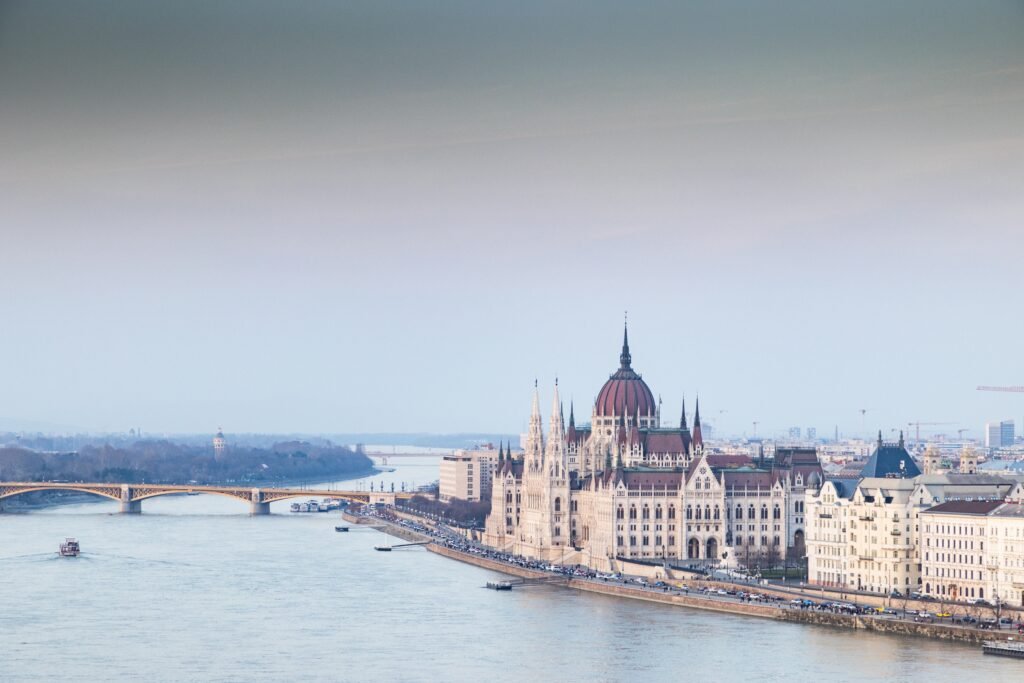
Walk beside the Danube and you are confronted by the spires of the Hungarian Parliament Building. Turn onto Andrássy Avenue and enormous stone façades stretch towards Heroes’ Square. Elsewhere, tiled roofs, gilded details, domes, balconies and elaborate doorways appear on buildings that might simply have been apartment blocks.
For a city with such a complicated history, Budapest possesses an extraordinary amount of architectural confidence.
And much of what we now think of as “classic Budapest” was created during a surprisingly short period.
The Budapest we recognise today is largely the product of an extraordinary building boom in the late 19th and early 20th centuries, when the city was transforming itself into one of the great capitals of Europe.
Neo-Renaissance palaces appeared beside Neo-Gothic landmarks. Architects borrowed freely from Baroque, Romanesque and Renaissance architecture before a younger generation began creating something distinctly Hungarian through the swirling forms of Art Nouveau and the Hungarian Secession.
The result is a city that rarely seems interested in architectural restraint.
And that is exactly why Budapest looks so grand.
Budapest Was Building a Capital
To understand Budapest’s architecture, it helps to understand just how quickly the modern city arrived.
For centuries, Buda and Pest developed separately on opposite sides of the Danube, with Óbuda forming another settlement further north. They were formally unified as Budapest in 1873.
What followed was an astonishing period of urban development.
The second half of the 19th century saw Budapest expanding economically and politically within the Austro-Hungarian Empire. Broad avenues were constructed. Railway stations appeared. Bridges crossed the Danube. Government buildings, museums, theatres and apartment houses rose across Pest.
Budapest was no longer simply growing.
It was presenting itself as a European capital.
UNESCO describes the historic centre as an exceptional example of Central European urban development, particularly highlighting the contrast between the older, more Baroque character of Buda and the historicist and Art Nouveau architecture that came to define Pest. UNESCO World Heritage Centre
That difference is still visible today.
Buda climbs dramatically into hills, crowned by churches, castle walls and terraces.
Pest spreads outward across flatter ground in a far more deliberate pattern of avenues and boulevards.
And nowhere is that ambition clearer than Andrássy Avenue.
Andrássy Avenue: Budapest’s Grandest Street
If you wanted to understand Budapest architecture through a single walk, Andrássy Avenue would be a very good place to start.
Created during the great transformation of Pest in the 1870s and 1880s, the avenue runs from the historic centre towards Heroes’ Square and City Park.
The architecture changes subtly as you travel along it.
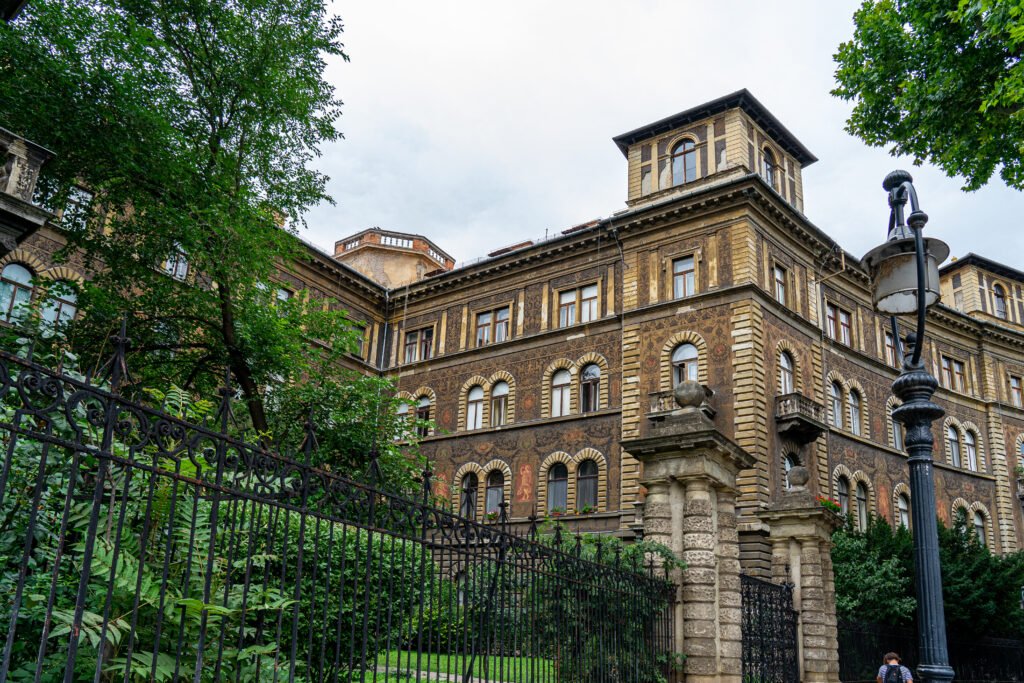
Closer to the centre, buildings stand shoulder to shoulder: monumental apartment houses and commercial palaces filled with columns, carved stonework and elaborate cornices.
Further along, the street widens and elegant villas appear behind trees and gardens.
The dominant architectural language is historicism, particularly Neo-Renaissance and eclectic architecture.
Rather than inventing completely new architectural styles, 19th-century architects frequently looked backwards, taking elements from Renaissance, Gothic, Baroque and Classical architecture and reassembling them for modern buildings.
Along Andrássy Avenue, this produced something remarkably cohesive.
UNESCO specifically notes the avenue’s architectural integrity and its concentration of eclectic and Neo-Renaissance buildings. UNESCO World Heritage Centre
It is architecture intended to make ordinary city life feel ceremonial.
Even an apartment building can look like a palace.
And then, roughly halfway along the lower section of the avenue, Budapest decided it needed an actual palace for music.
Hungarian State Opera House: Neo-Renaissance at Full Volume
The Hungarian State Opera House is one of the clearest examples of Budapest’s love affair with the Neo-Renaissance.
Designed by Hungarian architect Miklós Ybl, the building opened in 1884.
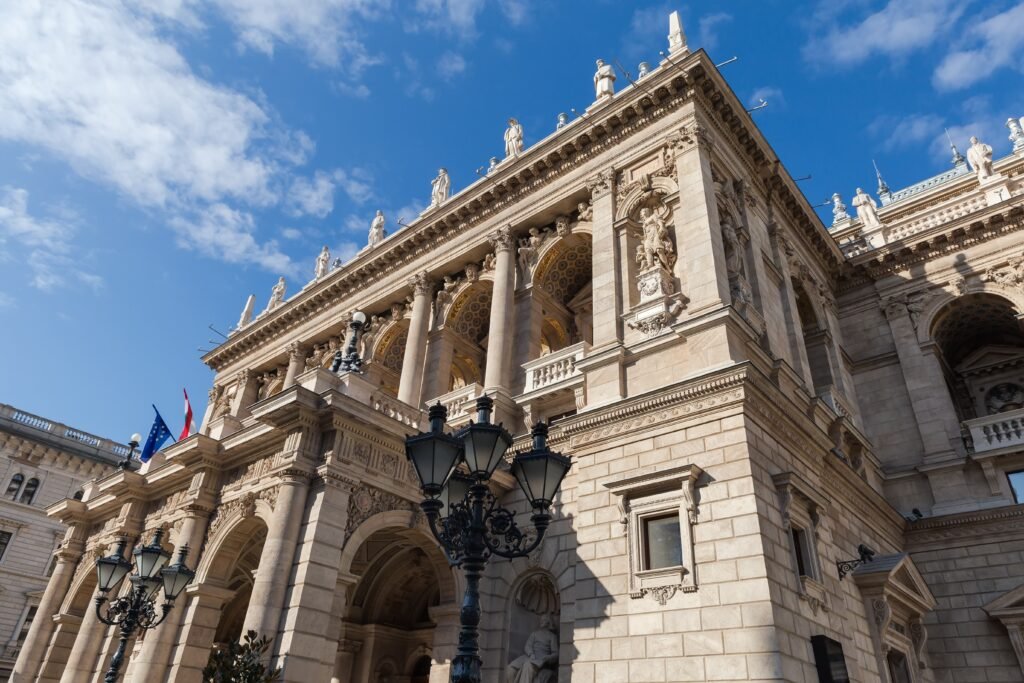
From the outside, it is stately rather than enormous: symmetrical windows, arches, sculptures and columns give the façade the appearance of an Italian Renaissance palace transplanted onto a Budapest boulevard.
Inside, restraint disappears.
Grand staircases sweep upwards beneath marble columns. Gilded ornament covers walls and ceilings. Frescoes, red velvet and gold detailing transform the auditorium into precisely the kind of place where simply arriving for the evening was meant to feel like an event.
The Hungarian State Opera itself describes Ybl’s building as a Neo-Renaissance palace, created as Andrássy Avenue was establishing the new cityscape of Pest. Opera
This was one of the recurring ideas behind Budapest’s great 19th-century buildings.
Function mattered.
But spectacle mattered too.
The Hungarian Parliament: Gothic Drama on the Danube
If the Opera House represents Budapest’s Renaissance revival, the Hungarian Parliament Building demonstrates what happened when the city’s architects turned towards the Gothic.
And then turned the volume all the way up.
Stretching along the Pest bank of the Danube, Parliament is an extraordinary composition of pinnacles, towers, arched windows, statues and stone tracery surrounding a vast central dome.
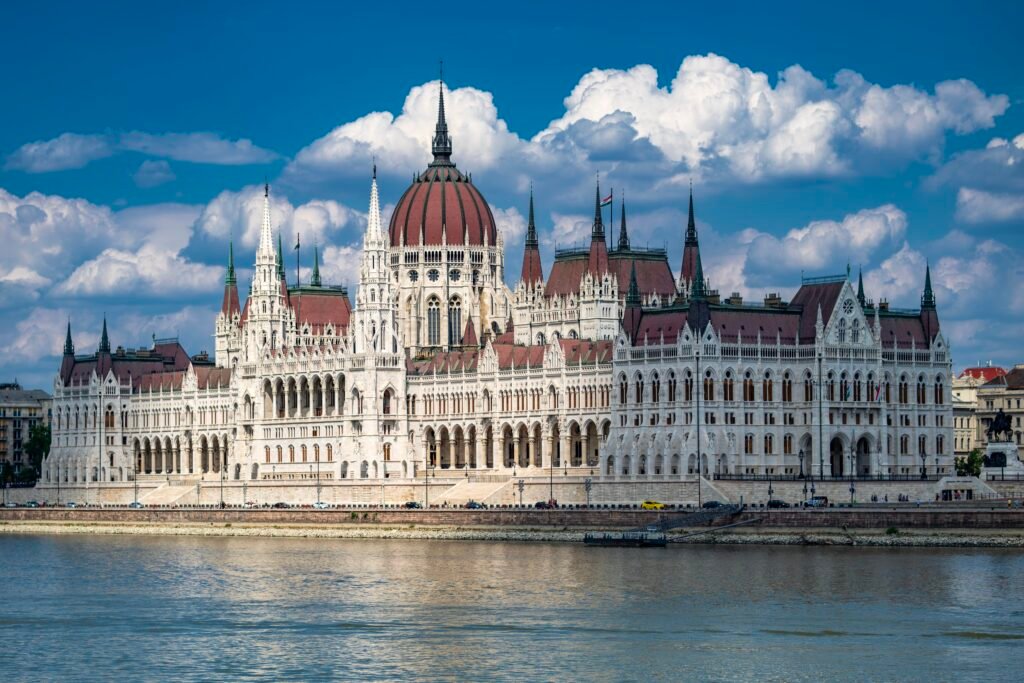
Architect Imre Steindl won the competition to design the building with a Neo-Gothic proposal. Construction began during the 1880s and the enormous project was completed around the beginning of the 20th century. Parlament
Look closely, however, and Parliament isn’t simply Gothic.
The pointed arches, vertical emphasis and intricate stone ornament certainly reference medieval Gothic architecture, but the symmetrical plan and great central dome introduce other historic influences.
That mixture is important.
Budapest’s grand architecture is often described using individual labels — Neo-Gothic, Neo-Renaissance, Neo-Baroque — but many of its greatest buildings are more complicated than that.
Architects were happy to borrow.
The goal was not always historical purity.
The goal was effect.
And from across the Danube, Parliament certainly achieves it.
Fisherman’s Bastion and Budapest’s Beautiful Historical Illusions
Budapest also contains buildings that appear much older than they actually are.
Few demonstrate this better than Fisherman’s Bastion.
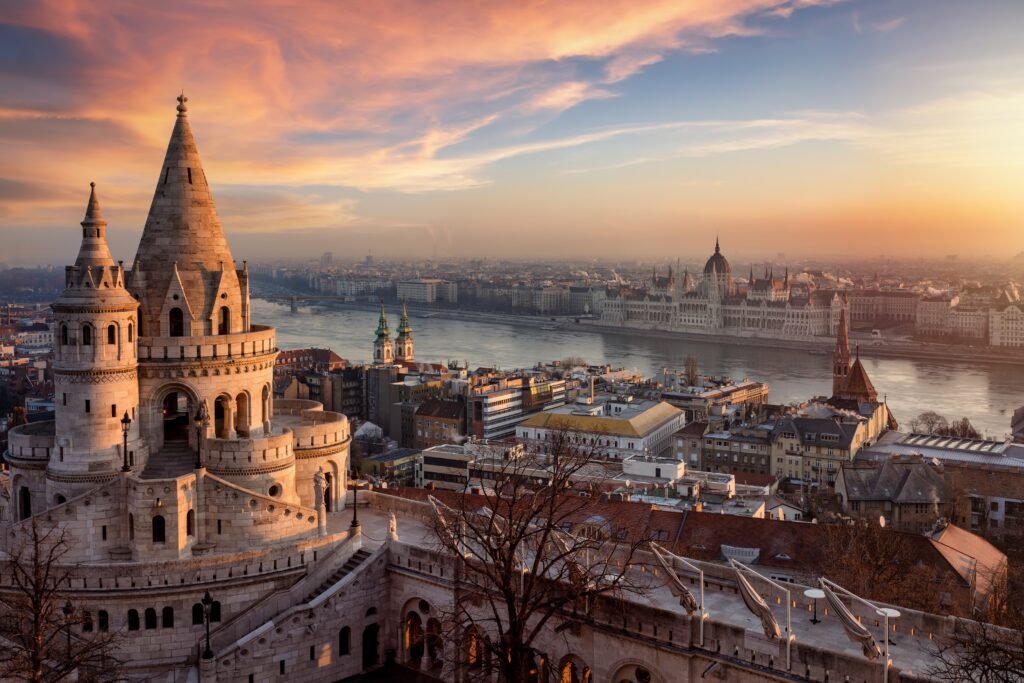
With its pale stone towers, staircases, arches and panoramic terraces above the Danube, it feels like the surviving fragment of some medieval Hungarian kingdom.
Except much of what you see today isn’t medieval at all.
The present Fisherman’s Bastion was largely constructed between 1895 and 1902, designed by architect Frigyes Schulek in a Romanesque Revival — or Neo-Romanesque — style. MNB
It was created as a monumental terrace rather than a serious defensive fortification.
That makes Fisherman’s Bastion an excellent example of something Budapest does repeatedly: using architecture to tell stories about its own past.
Late 19th-century Budapest wasn’t simply building for the future.
It was simultaneously constructing an idealised version of history.
Eclecticism: Why Budapest Seems to Borrow From Everywhere
This is where the word eclectic becomes useful.
Architectural eclecticism was extremely common during the 19th century. Instead of following one historical style perfectly, architects combined elements from several.
A façade might have Renaissance proportions, Classical columns, Baroque sculpture and a roofline borrowing from somewhere else entirely.
Budapest embraced this approach enthusiastically.
Partly because the city was developing so rapidly.
New theatres, ministries, railway stations, apartment houses, museums and financial institutions all required architecture appropriate to their status.
Historic architectural styles provided an enormous vocabulary to draw from.
And rather than making Budapest feel inconsistent, the repeated use of stone façades, similar building heights, courtyards, balconies and elaborate ornament often ties everything together.
You may not know whether you’re looking at Neo-Baroque or Neo-Renaissance.
You simply know it looks unmistakably like Budapest.
Neo-Baroque: Because Apparently Budapest Wasn’t Grand Enough
If Neo-Renaissance architecture brought order and dignity to Budapest, Neo-Baroque architecture brought theatre.
Baroque-inspired architecture favours movement, curves, domes, dramatic entrances and decoration.
One of the city’s most enjoyable expressions of this taste can be found somewhere considerably more relaxed than a palace or parliament building:
Széchenyi Thermal Bath.
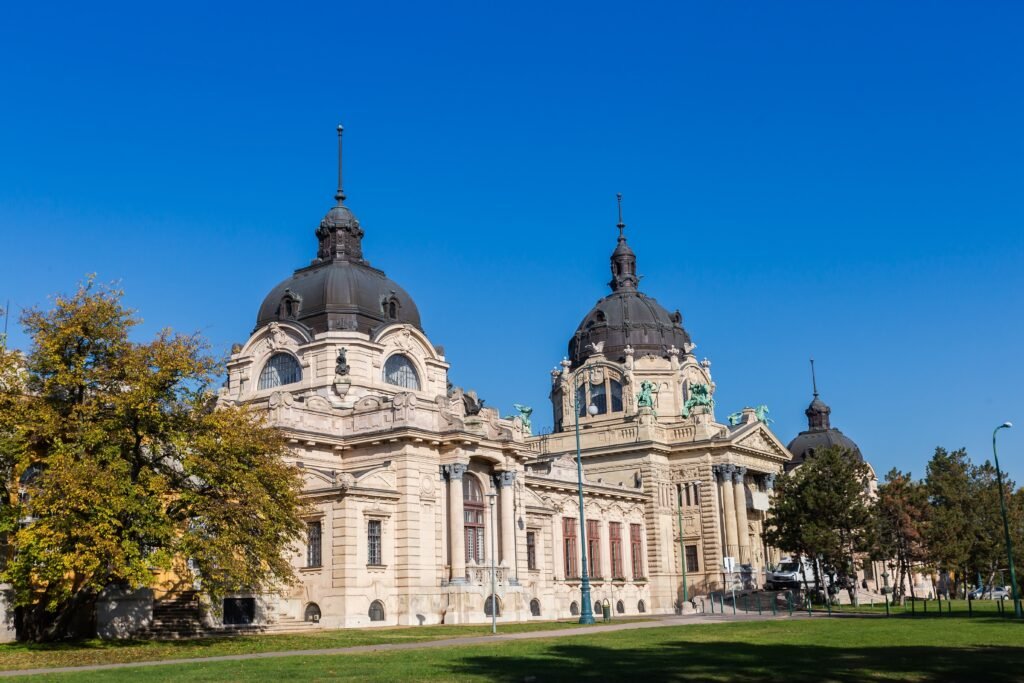
The original bath complex opened in 1913 from designs by architect Győző Czigler, with later expansion creating the sprawling complex visitors know today. Historical accounts describe the original central portion as Neo-Baroque, while later additions introduced Neo-Renaissance elements. Pestbuda
Its famous yellow façades, curved wings, columns and domed pavilions frame outdoor pools where people now float around playing chess.
It is wonderfully Budapest.
A civic bathing facility built with the visual language of a palace.
Then Budapest Architecture Became Strange
By the end of the 19th century, some Hungarian architects were becoming dissatisfied with endlessly recycling historical European styles.
They wanted something different.
Something modern.
And, importantly, something that could feel specifically Hungarian.
This movement became part of the broader European phenomenon we generally call Art Nouveau, although in Austria-Hungary the term Secession or Szecesszió is also widely used.
And Budapest produced some spectacular examples.
Hungarian Art Nouveau Wasn’t Quite Like Anyone Else’s
European Art Nouveau often draws on nature.
Lines curve like vines. Flowers appear in ironwork. Windows become more fluid. Decorative arts merge into architecture.
Hungarian architects absorbed those ideas but developed a particularly distinctive interpretation.
The key figure was Ödön Lechner.
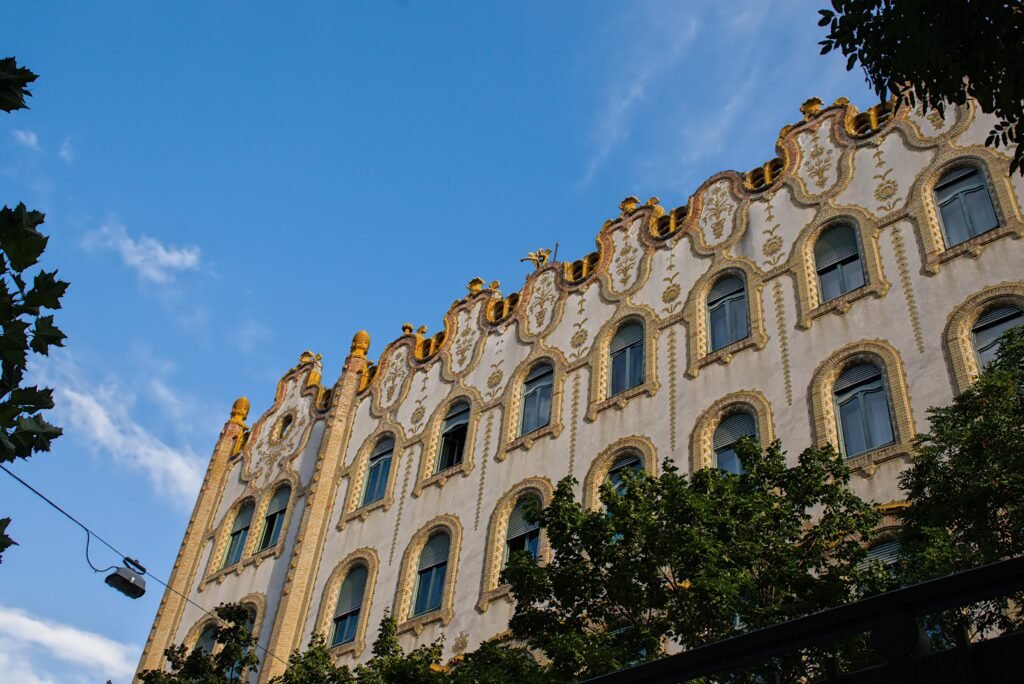
Rather than simply copying the Art Nouveau appearing in Paris, Brussels or Vienna, Lechner sought to create a uniquely Hungarian architectural language.
His buildings mixed modern construction with brightly coloured ceramics and decorative motifs influenced by Hungarian folk art alongside Eastern and historical sources.
Zsolnay ceramics became particularly important to his work, giving buildings extraordinary patterned roofs and colourful architectural details that could survive Budapest’s climate. The Museum of Applied Arts describes Lechner as a leading creator of the period’s new style and notes his deliberate attempt to develop a Hungarian architectural language. Immigration Museum Collections
Once you begin recognising his work, another version of Budapest suddenly appears.
Less grey stone.
More colour.
The Museum of Applied Arts: One of Budapest’s Wildest Buildings
The Museum of Applied Arts is one of the most striking expressions of Lechner’s ideas.
Designed by Ödön Lechner and Gyula Pártos and completed during the 1890s, the building refuses to fit neatly into one historical category.
There are Gothic references.
Renaissance influences.
Moorish and Eastern-inspired forms.
Hungarian decorative motifs.
And above everything sits its extraordinary ceramic decoration and colourful roof.
The museum’s own architectural history notes that the original design was deliberately not confined to a rigid historic style. Instead, it combined different influences with Hungarian ceramics to create something more individual. Immigration Museum Collections
It feels like Budapest beginning to escape the architectural rulebook.
And that would become one of the most interesting chapters in the city’s design history.
Look Up: Budapest’s Roofs Are Half the Story
One of the easiest mistakes to make in Budapest is spending too much time looking straight ahead.
Look upwards instead.
Roofs are everywhere.
Glazed ceramic tiles create flashes of turquoise, green and gold. Dormer windows punctuate steep rooflines. Domes appear above street corners. Sculptures lean over cornices.
These details are part of what makes Budapest feel so visually rich.
A relatively ordinary street can suddenly produce an extraordinary building simply because an architect decided that the fifth floor required statues, mosaics and a patterned ceramic roof.
This is also why Budapest works so beautifully as a walking city.
You don’t necessarily need to enter a museum to experience its architecture.
Sometimes you simply need to slow down.
Why Does Budapest Feel Grander Than Many Wealthier Cities?
Part of the answer is timing.
Many of Budapest’s most important streets and buildings were created during a period when architecture was being used to communicate confidence, identity and civic ambition.
The city’s great expansion coincided with an era when enormous public buildings were considered essential symbols of a modern capital.
Banks looked monumental.
Railway stations looked monumental.
Baths looked monumental.
Apartment buildings occasionally looked monumental.
Even infrastructure was given ceremony.
Budapest’s architecture was also unusually concentrated.
The Neo-Renaissance Opera House, Neo-Gothic Parliament, historicist apartment blocks, Neo-Romanesque Fisherman’s Bastion and Hungarian Secession buildings appeared within only a few decades of one another.
Different styles accumulated without completely replacing what came before.
The result is architectural layering.
Roman ruins.
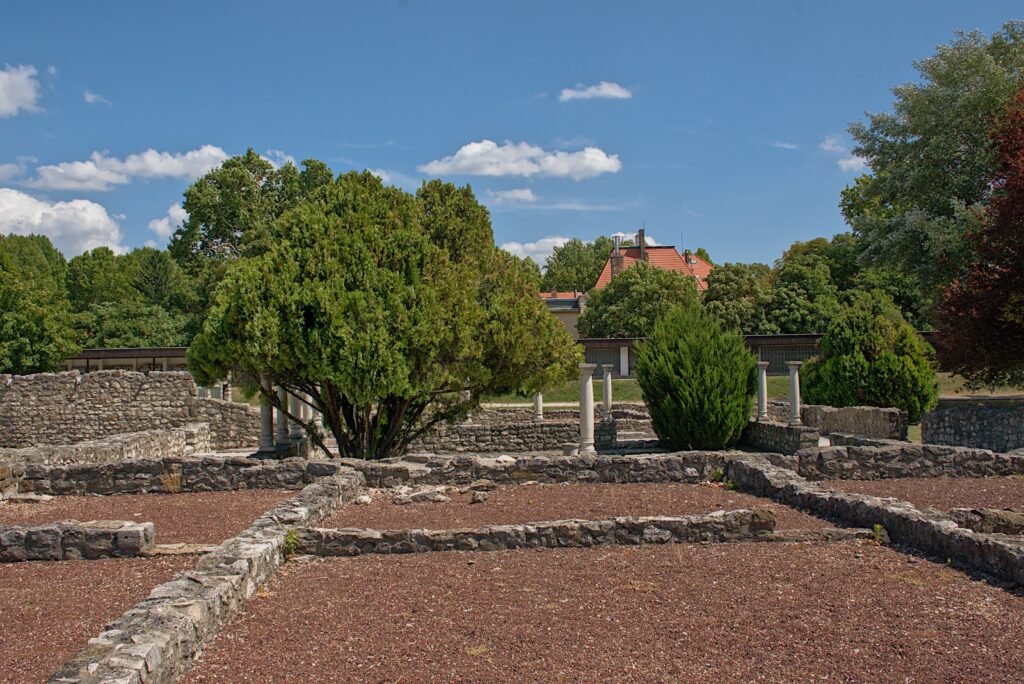
Medieval fragments.
Baroque Buda.
19th-century historicism.
Art Nouveau.
Modernism.
Communist-era architecture.
Contemporary Budapest.
They sit beside one another.
And somehow, the city absorbs them all.
The Danube Makes Everything Look More Dramatic
There is another element architects had nothing to do with.
The landscape.
The Danube divides Budapest into two dramatically different halves.
On the Buda side, hills lift the Castle District, Fisherman’s Bastion and Matthias Church above the river.
On the Pest side, the land is flatter, allowing Parliament and the long riverfront façades to stretch horizontally beside the water.
Bridges connect them across a huge open corridor of river and sky.
This means Budapest’s architecture is constantly being viewed from a distance.
Buildings don’t simply stand on streets.
They become part of enormous compositions.
Parliament reflects in the Danube.
Buda Castle rises above the Chain Bridge.
Fisherman’s Bastion looks across the river towards Pest.
At night, the illuminated riverfront almost seems designed as a theatrical set.
Which, in a way, it is.
UNESCO’s World Heritage listing specifically recognises this relationship between Budapest’s architecture, the Danube and the surrounding landscape as one of the qualities that makes the city exceptional. UNESCO World Heritage Centre
How to Start Noticing Budapest Architecture
You don’t need to know the difference between a Corinthian column and a Gothic buttress to enjoy any of this.
Instead, start looking for patterns.
On Andrássy Avenue, notice symmetry, Classical details and the palace-like façades of the Neo-Renaissance.
At the Hungarian Parliament Building, look for pointed arches, pinnacles and the vertical drama associated with the Gothic Revival.
Around Fisherman’s Bastion, notice how 19th-century architects recreated an imagined medieval world.
At Széchenyi Baths, look for the curves, domes and theatrical scale inherited from Baroque architecture.
And whenever you encounter Budapest’s Art Nouveau buildings, look for colour.
Ceramic tiles.
Flowers.
Curving ironwork.
Unusual window shapes.
Decorative patterns that suddenly break away from everything around them.
After a day or two, the city begins to make more sense.
And then you start noticing architectural details everywhere.
Budapest Never Really Learned to Be Understated
That may ultimately be the simplest explanation for why Budapest looks the way it does.
Its greatest period of architectural development happened at a moment when restraint wasn’t particularly fashionable.
This was a city trying to establish itself as a major European capital.
So it built avenues.
Opera houses.
Palaces.
Baths.
Museums.
Government buildings.
Apartment blocks covered in stone carving.
Then, just as all that historical revivalism threatened to become predictable, architects such as Ödön Lechner began covering buildings in colourful Hungarian ceramics and inventing an entirely new decorative language.
The result shouldn’t necessarily work.
Neo-Gothic sits beside Neo-Renaissance.
Baroque references collide with Art Nouveau.
Medieval-looking towers were built during the age of railways.
Yet Budapest somehow turns all of it into a coherent identity.
Perhaps that is the secret to the city’s grandeur.
Budapest doesn’t look impressive because it follows one architectural style.
It looks impressive because generation after generation kept trying to outdo the one before it.
And for anyone willing to look above street level, the competition is still visible on almost every block.
Britt & Tyler
We’re Britt and Tyler, the two Australians behind Cocktails & Cathedrals. We’re drawn to old buildings, beautiful rooms, bookshops and places that seem to hold a story. Our journal brings those interests together, with a fondness for slow afternoons and a well-made cocktail. We hope it helps you find places you’ll want to linger.
Travel slowly. Stay beautifully.
A little more about us →
3 Comments