Prague Interior Design: How to Bring Old-World Czech Style Into a Modern Home
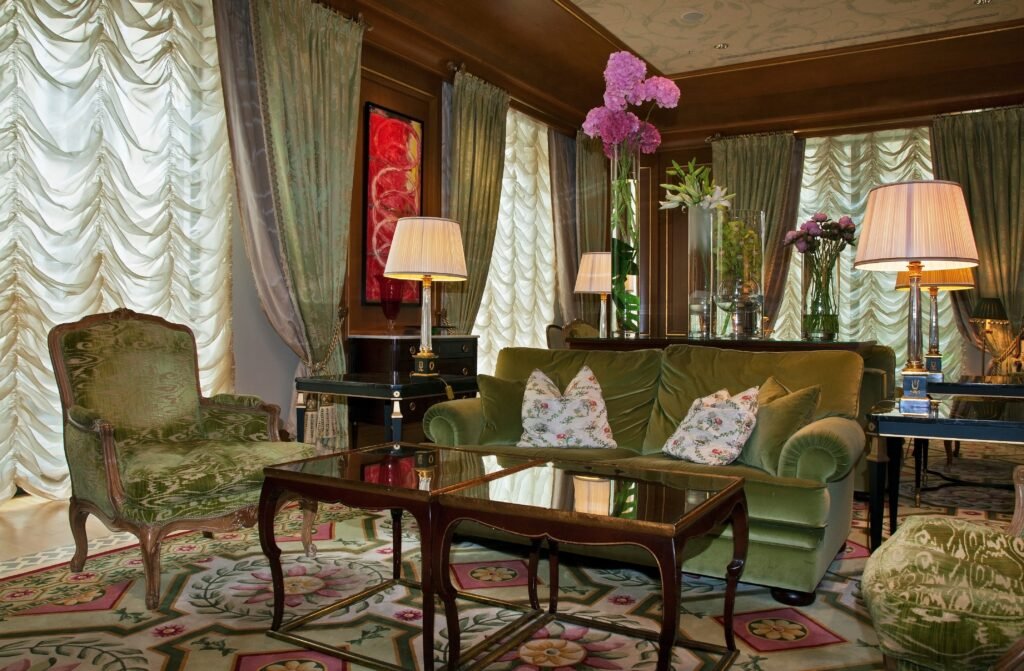
Prague has a way of making almost everything feel slightly more atmospheric than it needs to be.
A café is rarely just a café. It might have dark timber panelling, bentwood chairs, brass details and ceilings that seem far too elaborate for somewhere serving coffee.
An apartment might pair parquet floors and ornate plasterwork with a remarkably simple contemporary sofa. A doorway can be centuries old while the furniture beside it feels unmistakably modern.
And that is perhaps the secret to Prague interior design.
There isn’t really one Prague style.
Instead, the city’s interiors have been built in layers: Baroque ornament, Art Nouveau craftsmanship, geometric Czech Cubism, early 20th-century modernism and the quieter elegance of old Central European apartments.
The result feels historic without necessarily feeling old-fashioned.
And you don’t need a palace overlooking the Vltava to borrow from it.
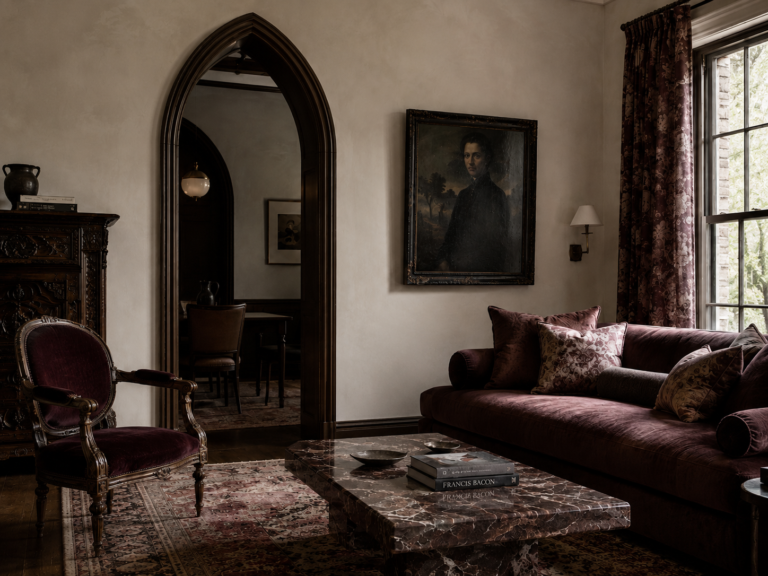
The most interesting Prague-inspired interiors are often the restrained ones: warm plaster walls, dark timber, aged brass, beautiful flooring, a little burgundy or muted blue, books, artwork and perhaps one slightly unusual piece of furniture.
Here is what makes Prague interiors so distinctive — and how to bring some of that character into a modern home.
Prague Style Is About Layers, Not a Theme
The first mistake when trying to create a Prague-inspired room is making it look too “European.”
Heavy curtains appear.
An enormous chandelier gets installed.
Everything becomes dark wood and gold.
Suddenly, rather than a sophisticated Prague apartment, you’ve created the lobby of a vaguely medieval hotel.
Real Prague is much more interesting than that.
Walk through the city and you’ll encounter Gothic churches, Renaissance houses, Baroque palaces, Art Nouveau cafés, Cubist buildings and restrained modernist homes within remarkably small distances of one another.
That same layering is what makes Prague interiors work.
The trick isn’t to recreate one historic period perfectly.
It’s to take a few of the materials, colours and ideas that repeatedly appear across Prague and combine them with a simpler modern base.
Start With the Quiet Elegance of an Old Prague Apartment
Before worrying about decorative styles, start with the bones of the room.
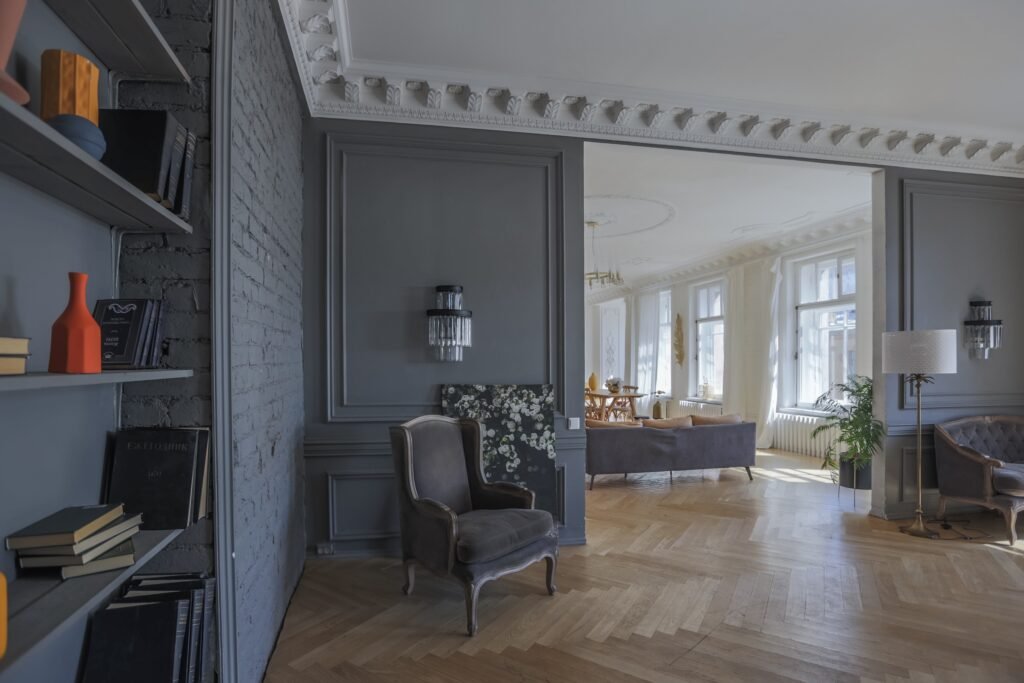
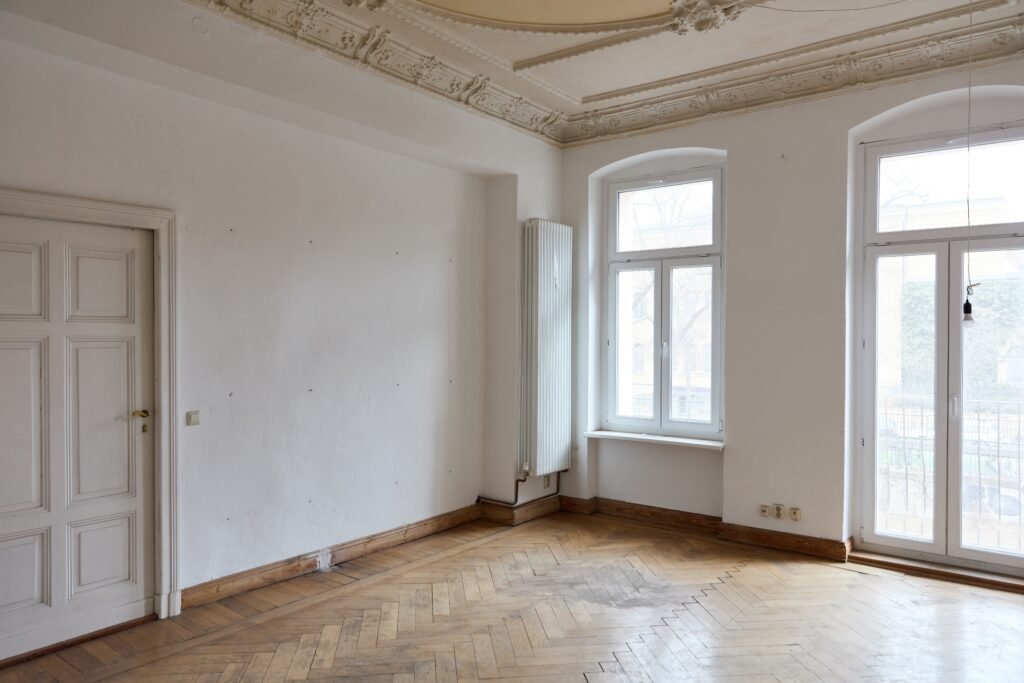
Many of the most appealing Central European interiors rely on architectural elements rather than excessive decoration: warm walls, generous doors, timber floors, high skirting boards and subtle mouldings.
For a modern Prague-inspired room, think:
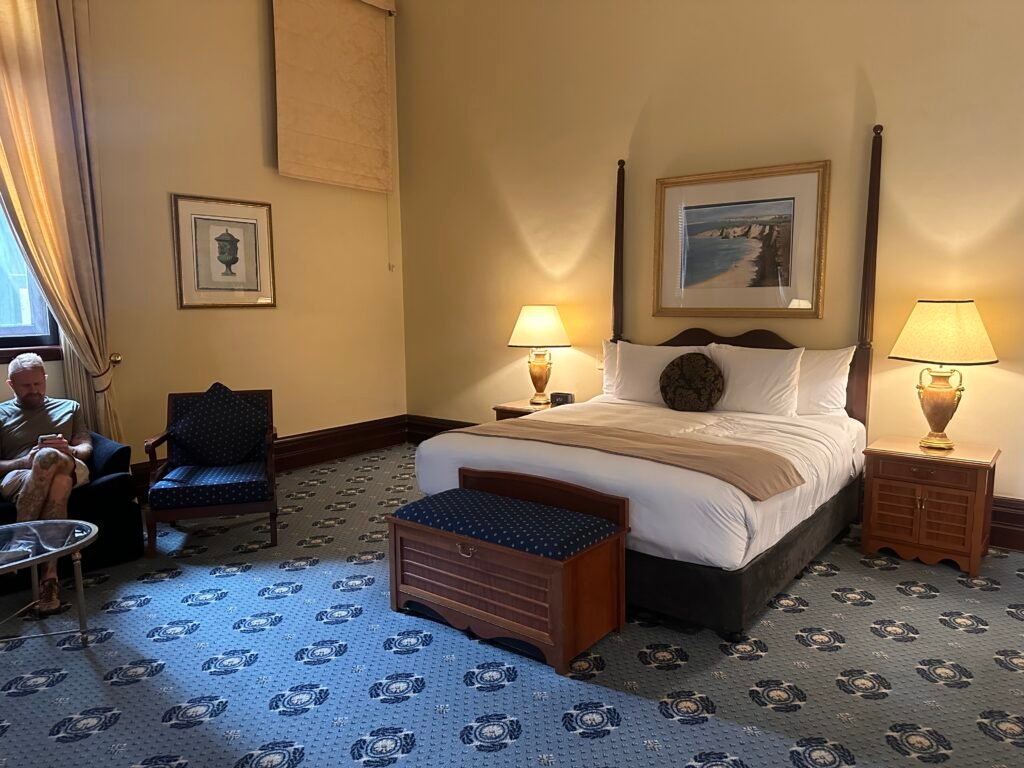
warm cream rather than brilliant white,
walnut or medium-to-dark oak rather than pale Scandinavian timber,
simple wall mouldings rather than elaborate plasterwork,
parquet or natural timber flooring,
and substantial curtains in linen, wool or velvet rather than lightweight synthetic fabrics.
You don’t need all of these elements.
In fact, using only two or three tends to look more convincing.
If you’re working with an ordinary modern Australian home, adding modest picture-frame moulding to a warm cream wall and pairing it with walnut furniture can create much of the effect without attempting to imitate a historic apartment.
The aim is architectural warmth, not theatrical grandeur.
Borrow the Drama of Prague Baroque — Carefully
Prague’s Baroque interiors can be spectacular.
Historic palaces such as the Clam-Gallas Palace demonstrate the richness of High Baroque Prague through monumental staircases, sculpture, stucco and painted decoration.
Beautiful to visit?
Absolutely.
A sensible blueprint for your living room?
Probably not.
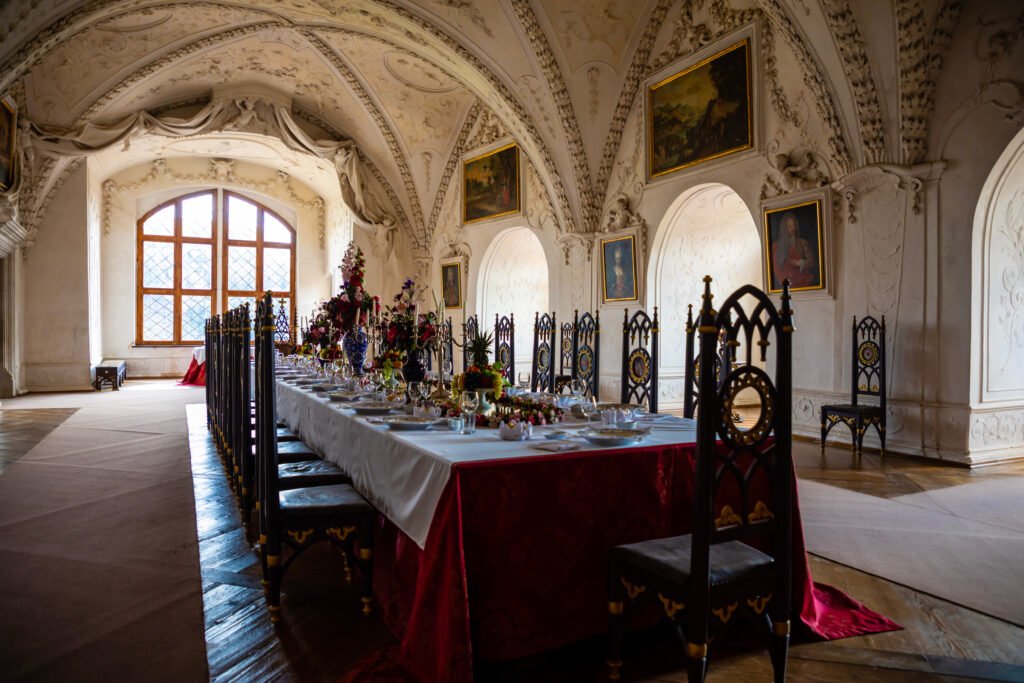
The useful lesson from Prague Baroque isn’t to reproduce all the ornament. It is to understand contrast and proportion.
Take one traditionally luxurious element and let it stand against a quieter room.
That might be an antique-style gilt mirror on an otherwise simple plaster wall.
It could be an oversized oil painting over a clean-lined walnut console.
Perhaps it’s a sculptural side table, a piece of old brass or a single decorative ceiling rose.
Deep colours also work beautifully in small amounts. Burgundy, oxblood, forest green and tobacco brown can all introduce some of that Prague richness without overwhelming a room.
One dramatic element usually looks more sophisticated than ten.
Art Nouveau Gives Prague Its Softer Side
If Baroque Prague is theatrical, Prague Art Nouveau is more fluid and decorative.
One of the best places to understand it is the Municipal House, built between 1905 and 1911. Its interiors bring together decorative metalwork, organic forms and contributions from major Czech artists, including Alfons Mucha.
This is where Prague interiors become less severe.
Instead of copying Art Nouveau literally, look at the language it uses.
Curves.
Botanical forms.
Coloured or textured glass.
Warm metals.
Beautifully crafted timber.
Decorative details that feel integrated into the room rather than added afterwards.
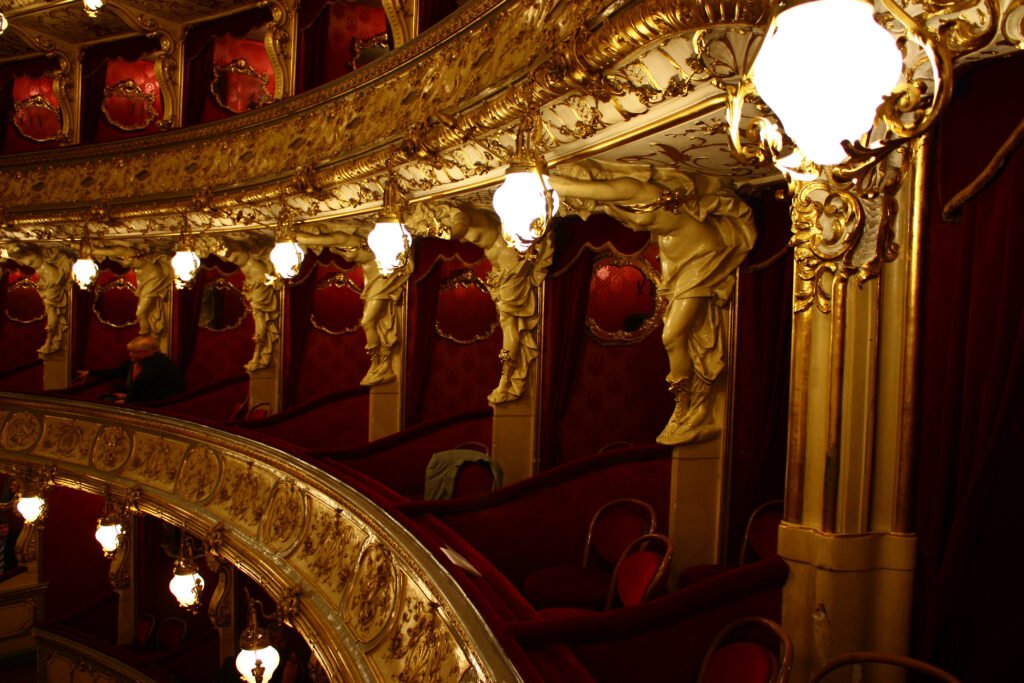
At home, that might translate into a curved occasional chair, an opal-glass lamp, a floral artwork or a piece of furniture with softened edges.
Aged brass works particularly well here.
Choose brass that looks as though it has been touched for twenty years rather than something bright and mirror-polished.
And again, restraint matters.
You don’t need Art Nouveau wallpaper, floral lamps, carved furniture and stained glass in the same room.
One or two references are enough.
Czech Cubism Is the Detail That Makes Prague Different
This is where Prague gets really interesting.
Most people associate Cubism with painting. In the Czech lands, designers took Cubist ideas much further, applying them to architecture, furniture, ceramics, metalwork and complete interiors.
Prague’s Museum of Decorative Arts describes Czech Cubism as extending across fine art, applied art and architecture, with designers including Josef Gočár, Pavel Janák, Josef Chochol and Vlastislav Hofman creating furniture and household objects as well as buildings.
The House at the Black Madonna, designed by Josef Gočár and built in 1911–1912, is perhaps the city’s best-known example. Gočár even designed the original café interior, incorporating dark-stained oak, built-in furniture and strongly geometric details.
This gives Prague-inspired interior design something you won’t get from simply creating a generic “European” room.
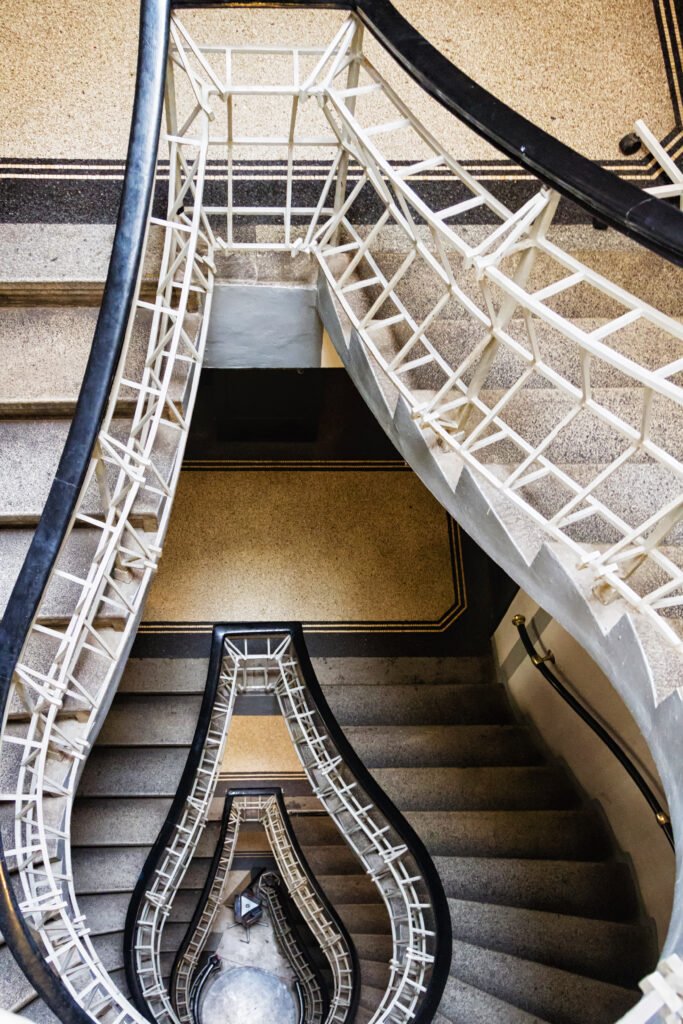
Look for angular forms.
Faceted ceramics.
Diamond patterns.
Furniture that changes direction unexpectedly.
Sculptural objects with sharp planes.
You don’t need an entire Cubist furniture suite.
In a contemporary home, a single angular chair, geometric vase, unusual side table or framed Cubist print can provide exactly the right amount of tension against softer, more traditional surroundings.
It’s one of the easiest ways to make the room feel specifically Prague-inspired rather than just old-world.
The Prague Café Is Worth Stealing From
Some of the best inspiration in Prague isn’t found in houses at all.
It’s found in cafés.
Historic Central European café culture has created an interior vocabulary that translates remarkably well into residential design.
Think dark timber.
Marble.
Bentwood chairs.
Small round tables.
Mirrors.
Brass.
Burgundy upholstery.
Cream walls.
Books and newspapers.
Soft pools of light.
There is something intimate about these spaces. They’re decorative, but they aren’t generally cluttered.
That makes the Prague café look particularly useful for dining rooms, breakfast nooks, studies and reading corners.
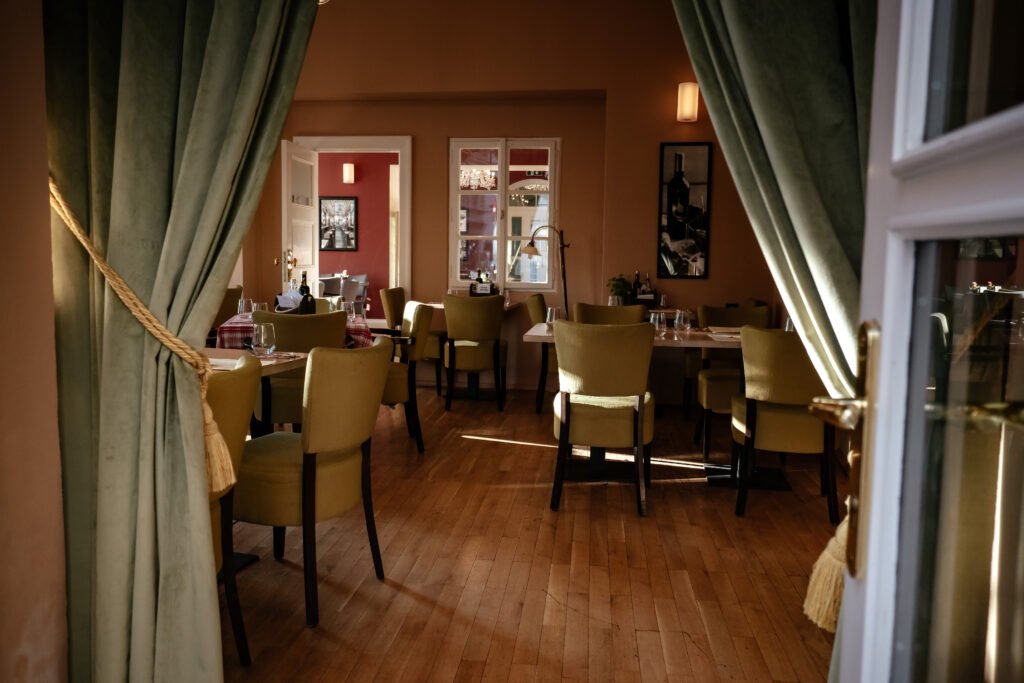
Try pairing a walnut or dark-stained table with simple bentwood chairs.
Add one aged-brass lamp.
Use burgundy or deep green in the upholstery.
Hang artwork closely rather than spreading tiny pieces across an enormous wall.
Put actual books somewhere visible.
The room should feel as though someone might sit there for two hours with coffee and a novel.
Not as though it was created for a furniture catalogue.
Don’t Forget Prague’s Modernist Side
One of the reasons Prague interiors are so useful as inspiration is that the city’s design history didn’t stop with decorative historicism.
By the early 20th century, Czech designers were also experimenting with increasingly modern ways of living.
A fascinating example is Prague’s Müller Villa, designed by Adolf Loos with Karel Lhota between 1928 and 1930. Its restrained exterior conceals Loos’s famous Raumplan approach, in which interconnected rooms sit at different levels according to their function and importance.
You don’t need a multi-level modernist villa to borrow the underlying idea.
It reminds us that Prague design isn’t only about ornament.
It can also be remarkably disciplined.
This is why contemporary furniture actually works so well in a Prague-inspired room.
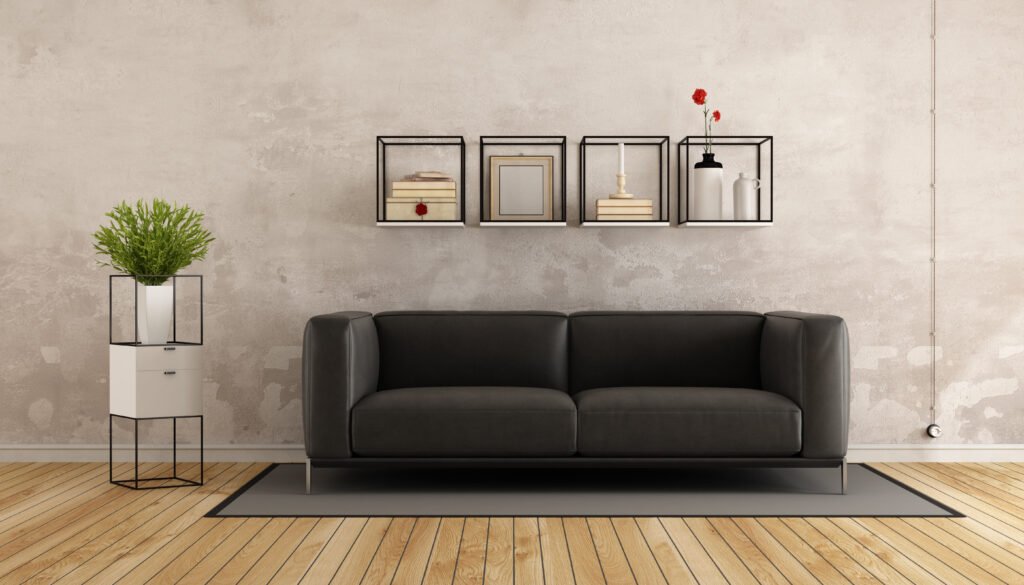
A simple linen sofa can sit beside an ornate wall.
A modern coffee table can work over parquet flooring.
A very plain kitchen can look beautiful beside old mouldings and timber doors.
That tension between historic architecture and restrained furniture is arguably more authentically Prague than filling a room entirely with antiques.
The Prague Colour Palette
Colour is where the entire look begins to come together.
Rather than decorating with lots of saturated shades, start with a warm architectural base.
Cream.
Limestone.
Soft plaster.
Muted stone.
Then introduce richer colours in smaller quantities.
Burgundy works beautifully against walnut.
Muted blue softens warm cream.
Verdigris adds an aged, slightly architectural green.
Terracotta brings warmth without looking overly rustic.
Espresso brown grounds the entire scheme.
And aged brass provides warmth without needing another colour at all.
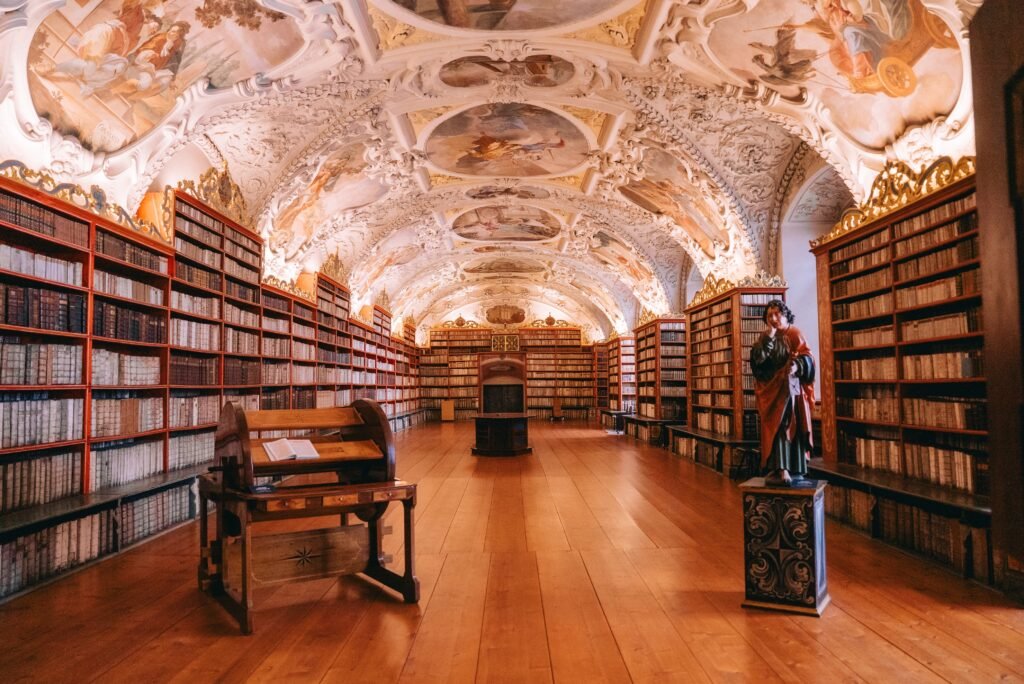
If you’d like to build the scheme colour by colour, our Prague colour palette guide explores these combinations in much more detail.
One important rule: don’t make everything dark.
Prague can certainly be moody, but many of its beautiful buildings also use pale stone, cream façades and generous daylight.
A room with warm cream walls, walnut furniture and only a handful of burgundy or brass accents will usually feel more sophisticated than one painted entirely in dark colours.
Materials Matter More Than Decoration
If you want the Prague look without filling your home with themed décor, concentrate on materials.
Use real timber where you can.
Choose stone, ceramic, linen, wool and metal.
Allow brass to patinate.
Choose furniture with visible grain.
Mix smooth materials with slightly aged ones.
A modern room instantly develops more depth when everything isn’t perfectly shiny and new.
This doesn’t mean deliberately distressing every surface.
Prague doesn’t need faux-aged signs or artificially battered furniture.
It’s better to choose materials that will improve naturally with time.
A walnut table.
A wool rug.
A leather chair.
A brass lamp.
A ceramic vase.
Those things create atmosphere quietly.
How to Bring the Prague Look Into a Normal Modern Home
You do not need high ceilings, giant windows or a 19th-century apartment.
Start with the room you actually have.
Keep most of it simple.
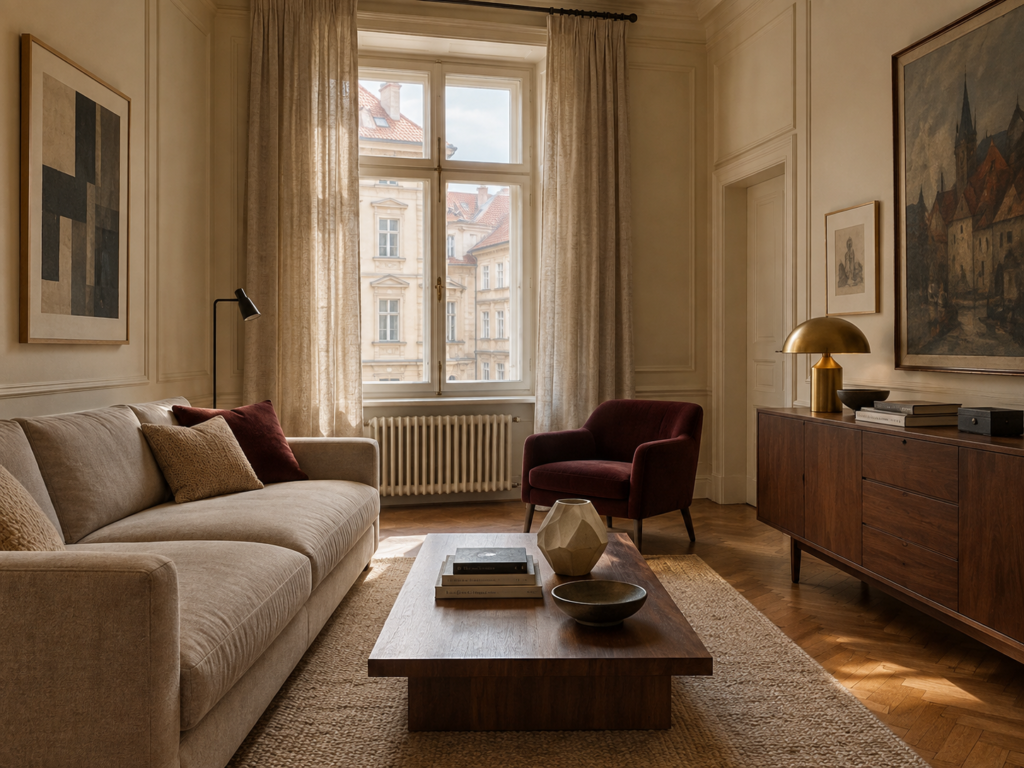
Paint the walls warm cream, muted limestone or a soft off-white rather than cold brilliant white.
Choose one substantial timber element — perhaps a dining table, sideboard or shelving.
Add a little architectural detail if the room can take it. Simple moulding is usually enough.
Then bring in one richer colour. Burgundy, muted blue or deep green are particularly good choices.
Use aged brass sparingly.
Add books and artwork that actually mean something to you.
Then introduce one unexpected shape: perhaps a faceted ceramic piece, angular occasional table or Cubist-inspired print.
Stop before you think you’re finished.
That last step is surprisingly important.
The most convincing old-world interiors don’t look as though every surface has been deliberately styled.
What to Avoid
The Prague look falls apart quickly when it becomes costume.
Avoid filling a room with ornate reproduction furniture simply because it looks “European.”
Be wary of fake distressed finishes.
Don’t cover every wall in mouldings.
Don’t combine Gothic arches, Baroque furniture, Art Nouveau lamps and Art Deco wallpaper just because Prague contains all of those influences somewhere.
And don’t make the room unnecessarily gloomy.
Perhaps most importantly, avoid creating the vaguely fictional European interior that exists mainly on Pinterest: enormous chandelier, stone fireplace, candles everywhere, velvet on every surface and a mysterious amount of fog outside the window.
Prague has plenty of drama already.
You don’t need to manufacture it.
A Simple Prague-Inspired Room Formula
Imagine an ordinary-sized living room.
The walls are a warm limestone cream.
The floor is timber.
There is a straightforward contemporary sofa in oatmeal or warm grey.
Opposite it sits a low walnut cabinet.
An aged-brass table lamp adds warmth.
One armchair introduces muted burgundy.
A slightly angular ceramic object provides a subtle reference to Czech Cubism.
There are several books on the cabinet and a large framed artwork above it.
The curtains are natural linen.
Nothing is overtly “Prague.”
Yet the combination of warm plaster tones, walnut, brass, burgundy, art and slightly unusual geometry gives the room the layered character we’re after.
That is a much better way to interpret a city than trying to reproduce it literally.
Why Prague Interior Design Still Feels Relevant
Prague’s greatest design lesson may be that old and new do not need to match.
A decorative room can contain contemporary furniture.
A historic material can sit beside a modern shape.
Something highly ornate becomes more interesting when surrounded by simplicity.
And a room doesn’t need to be perfect to feel beautiful.
Prague has accumulated its character over centuries. Gothic, Baroque, Art Nouveau, Cubism and Modernism haven’t replaced one another neatly. They overlap.
That is exactly what gives the city its visual richness.
The same principle works at home.
Start with a calm foundation.
Use beautiful, tactile materials.
Introduce history through a few carefully chosen details.
Add one thing that feels slightly unexpected.
And leave enough breathing room for all of it to be noticed.
The goal isn’t to make your house look like Prague.
It’s to borrow the things Prague does particularly well: warmth, craftsmanship, atmosphere and the confidence to let different eras live together.
And if all of this has you wanting to see those interiors for yourself, pair it with our literary weekend in Prague and spend some time lingering in the city’s cafés, bookshops and historic streets.
Because Prague may be one of those cities best understood slowly — preferably from a café table, with nowhere particularly urgent to be.
Prague Interior Design FAQs
What is Prague interior design style?
There is no single official Prague interior design style. The city’s interiors reflect centuries of overlapping influences, including Baroque, Art Nouveau, Czech Cubism and 20th-century Modernism. A contemporary Prague-inspired interior usually combines warm architectural colours, timber, traditional details and restrained modern furniture.
What colours work in a Prague-inspired interior?
Warm cream, limestone, walnut brown and soft stone make good base colours. Burgundy, muted blue, verdigris green, terracotta and aged brass can then be used as accents.
How can I make my home look Prague-inspired without making it old-fashioned?
Use historic influences selectively. Combine warm walls and natural timber with contemporary furniture, then introduce one or two older-looking elements such as brass lighting, modest mouldings, artwork or a Cubist-inspired object. The contrast between old and new is an important part of the look.
Britt & Tyler
We’re Britt and Tyler, the two Australians behind Cocktails & Cathedrals. We’re drawn to old buildings, beautiful rooms, bookshops and places that seem to hold a story. Our journal brings those interests together, with a fondness for slow afternoons and a well-made cocktail. We hope it helps you find places you’ll want to linger.
Travel slowly. Stay beautifully.
A little more about us →