Viennese Interior Design: 7 Timeless Styles to Bring Old-World Elegance Home
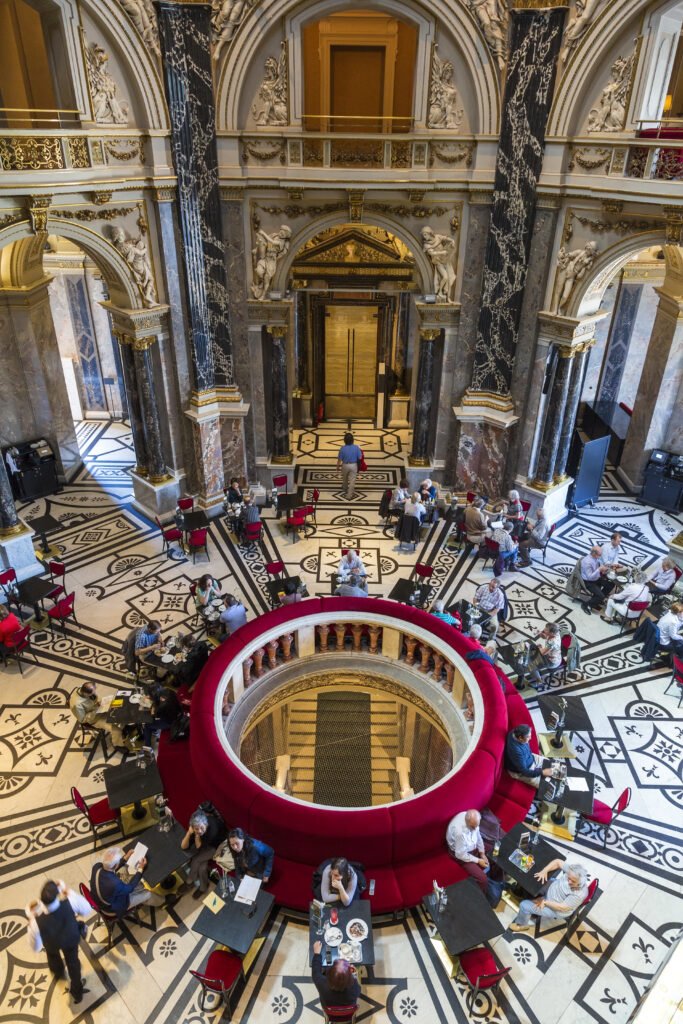
There is something wonderfully contradictory about Vienna.
It is a city of enormous imperial palaces, gilded ballrooms and extraordinary displays of wealth. Yet some of its most beautiful interiors are surprisingly restrained.
A simple bentwood chair beside a marble café table. A polished walnut writing desk. A beautifully proportioned room with pale walls, parquet floors and just enough decoration to give it character.
Vienna has always understood something that modern interior design occasionally forgets.
Elegance does not necessarily require excess.
For centuries, the Austrian capital has been a meeting place for artists, architects, musicians, writers and designers. Its interiors reflect that extraordinary cultural history, from the opulence of the Habsburg court to the quiet domestic comfort of Biedermeier furniture and the revolutionary ideas of the Vienna Secession.
And although these styles developed in very different periods, they share certain qualities.
Beautiful materials. Thoughtful proportions. Respect for craftsmanship. And an appreciation for rooms that are genuinely enjoyable to spend time in.
Here are seven distinctive styles and influences from Viennese interior design, along with ideas for bringing a little of that old-world elegance into a modern home.
1. Imperial Vienna: Baroque and Rococo Elegance
Ornate plasterwork, gilded details, soft colours and carefully balanced grandeur.
If you want to understand Vienna’s more extravagant side, begin with its imperial palaces.
Schönbrunn Palace, the former summer residence of the Habsburg rulers, contains some of Europe’s most remarkable Rococo interiors.
Decorative wall panels, elaborate mirrors, painted ceilings, fine furniture and gilded ornamentation transform the rooms into theatrical displays of imperial taste.
Yet look beyond the decoration and something interesting emerges.
Many of the rooms rely on surprisingly delicate colours.
Soft ivory. Pale green. Powder blue. Muted rose. Warm cream.
The colours provide a quiet backdrop for the elaborate plasterwork, gilded furniture and intricate details.
This balance between softness and grandeur is what makes the style so appealing.
It is luxurious, certainly, but not necessarily dark or overwhelming.
Bring the Style Home
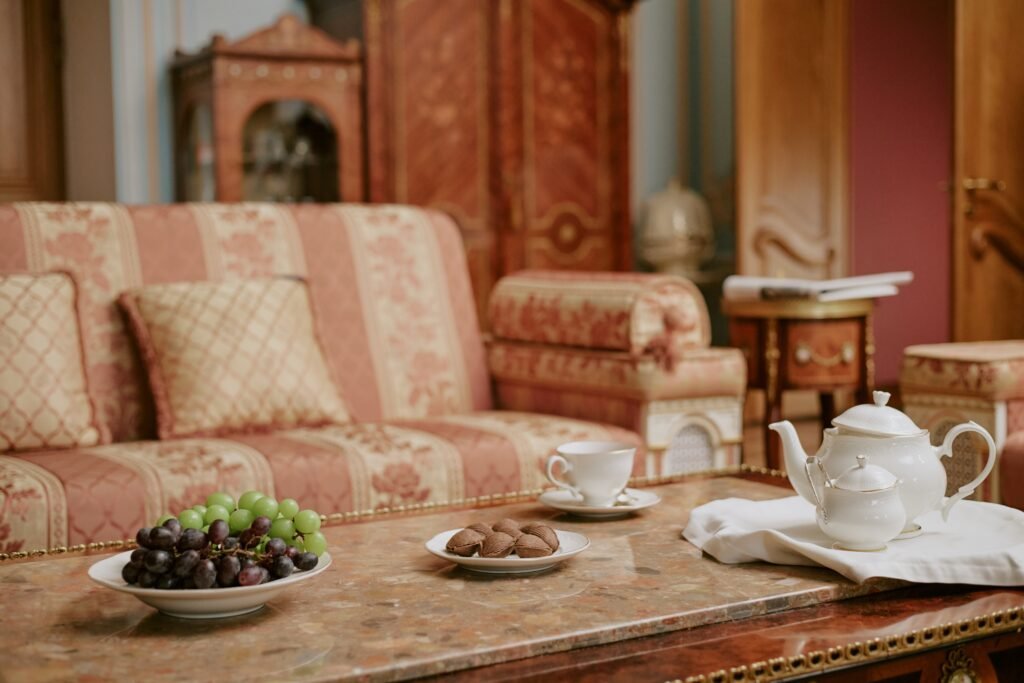
You do not need a ballroom to introduce a little Viennese imperial elegance.
Begin with warm ivory walls and introduce traditional architectural details such as simple wall mouldings or a decorative ceiling rose.
Choose one beautiful statement piece: perhaps an antique gilt mirror, an elegant upholstered chair or a traditional chandelier.
Soft blue, dusty green and muted pink work beautifully alongside cream and antique gold.
The important thing is restraint.
One decorative mirror against a simple wall often makes a stronger impression than an entire room filled with elaborate furniture.
Think imperial Vienna, interpreted for a house where somebody actually has to do the vacuuming.
2. Biedermeier: The Quiet Beauty of Domestic Life
Warm timber, graceful furniture and comfortable rooms designed for everyday living.
Of all Vienna’s historic interior styles, Biedermeier may be the easiest to live with today.
Emerging in Central Europe during the early nineteenth century, the Biedermeier movement shifted attention away from aristocratic extravagance towards the comfort and practical needs of domestic life.
Instead of designing rooms primarily to demonstrate wealth, furniture makers increasingly focused on proportion, simplicity and usefulness.
The results were remarkably beautiful.
Elegant writing desks. Gracefully curved chairs. Small sofas. Carefully crafted cabinets with polished timber veneers.
Walnut, cherry and other warm-toned woods brought richness without requiring elaborate decoration.
Biedermeier rooms could also be surprisingly colourful, with upholstered furniture introducing shades of green, yellow, pink and red.
But the shapes remained comparatively simple.
There is something distinctly modern about that approach.
A beautiful timber table does not need elaborate carving to feel special. A comfortable chair does not need to be enormous. A room can feel sophisticated without being filled with expensive objects.
Bring the Style Home
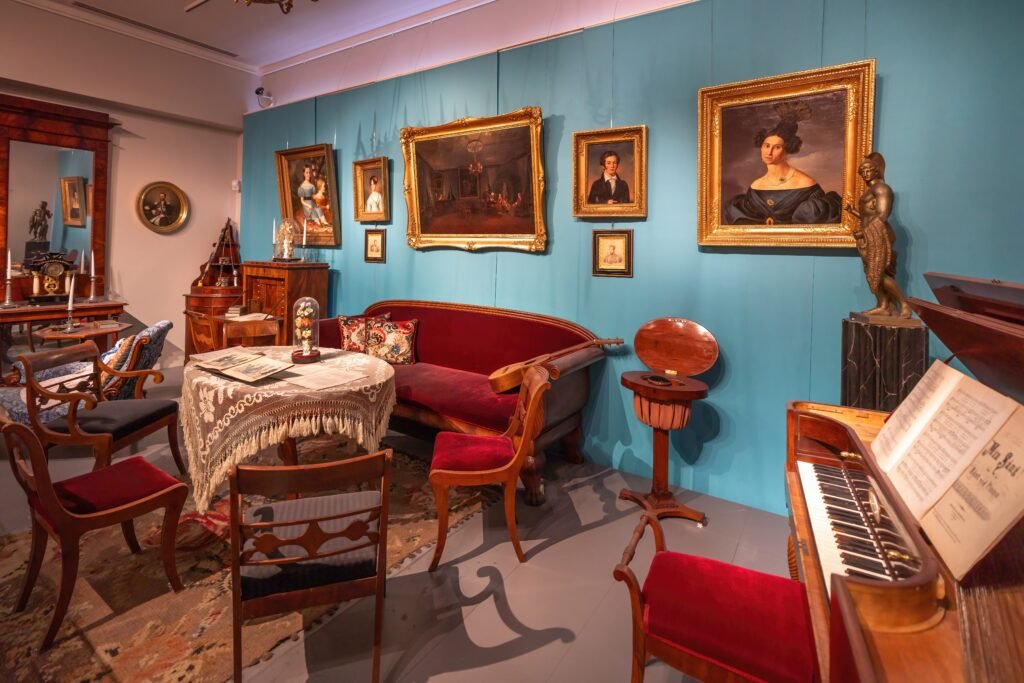
Start with a piece of warm timber furniture.
A vintage walnut sideboard, an antique writing desk or a beautifully made dining table makes an excellent foundation.
Pair it with soft cream walls, a patterned wool rug and comfortable upholstered seating.
Consider introducing muted sage green, dusty rose or tobacco brown through textiles.
Avoid buying a complete matching furniture suite.
Biedermeier furniture looks particularly good when combined with simple contemporary pieces.
An antique desk beside a modern upholstered chair can feel far more natural than a room designed to replicate an early nineteenth-century drawing room.
The goal is warmth, craftsmanship and comfort.
Not a museum.
3. The Grand Viennese Apartment: Ringstrasse Elegance
High ceilings, parquet floors, ornate mouldings and a sense of effortless sophistication.
Walk through Vienna’s historic central districts and you will encounter extraordinary nineteenth-century apartment buildings.
Many belong to the great period of expansion that followed the creation of the Ringstrasse, Vienna’s monumental boulevard.
As the city grew, wealthy residents commissioned elaborate apartments and townhouses that reflected their social position.
High ceilings, large windows, decorative plasterwork, polished parquet floors and handsome double doors became characteristic features of many grand urban residences.
The interiors often combined historical influences rather than following one strict decorative style.
Renaissance-inspired furniture might sit beneath elaborate ceiling mouldings. Rich rugs softened timber floors. Mirrors and paintings brought depth to tall rooms.
Today, these architectural details provide some of the most appealing inspiration for contemporary European interiors.
But the real secret is not the ornamentation.
It is the proportions.
Generous windows allow daylight into the room. High ceilings create breathing space. Beautiful doors, floors and wall details give the interior character before a single piece of furniture is added.
Bring the Style Home
Focus on the architecture first.
If your home lacks original period features, subtle wall mouldings, substantial skirting boards or a traditional cornice can help create a similar feeling.
Choose warm whites rather than stark, brilliant white paint.
Introduce natural timber flooring or a large traditional rug.
Then furnish the room with a mixture of old and new.
A contemporary linen sofa might sit opposite an antique armchair. A traditional landscape painting could hang above a simple modern console.
Avoid filling every corner.
Viennese apartment elegance works best when the furniture has room to breathe.
And if your ceilings are a perfectly ordinary height, that is fine too.
Good proportions matter more than grand dimensions.
4. Vienna Secession: Art Nouveau with a Modern Edge
Geometric patterns, stylised botanical details, elegant metals and artistic individuality.
By the late nineteenth century, some of Vienna’s most influential artists and designers had grown tired of looking backwards.
The city was full of buildings imitating earlier architectural periods.
Gothic, Renaissance and Baroque influences appeared everywhere.
But a new generation wanted something different.
In 1897, artists including Gustav Klimt, Koloman Moser and Josef Hoffmann helped establish the Vienna Secession.
Their ideas would become central to the development of Austrian modernism.
The movement was closely associated with Vienna’s distinctive interpretation of Art Nouveau, known as Jugendstil.
Unlike some of the more flowing, highly organic Art Nouveau designs found elsewhere in Europe, Viennese examples often embraced geometry, symmetry and disciplined ornament.
Squares, repeated patterns, stylised flowers and elegant metallic details became important elements.
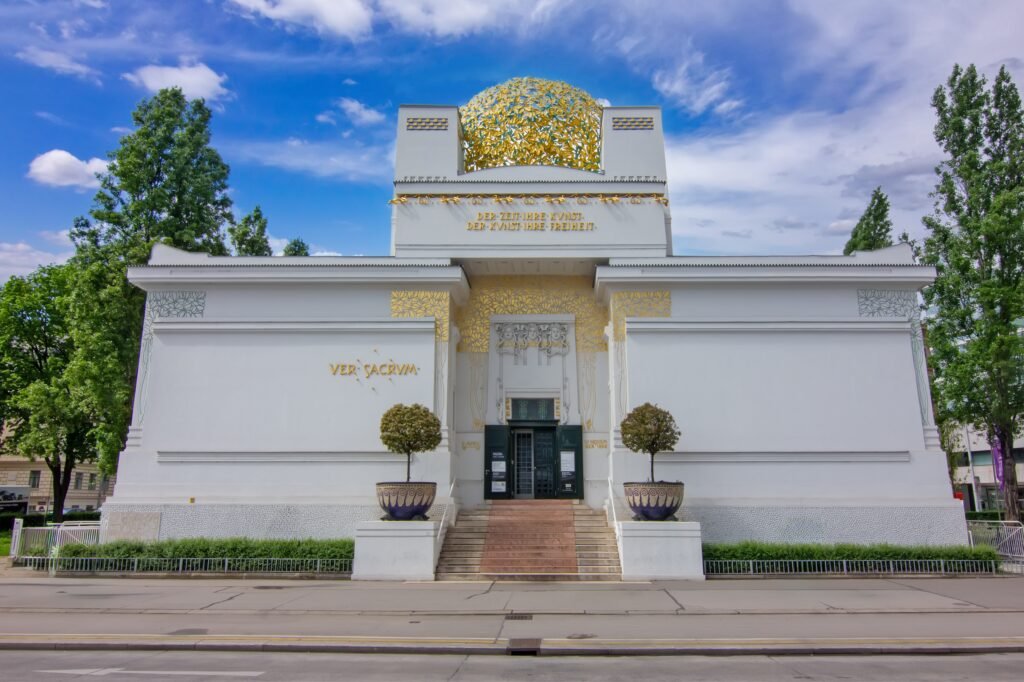
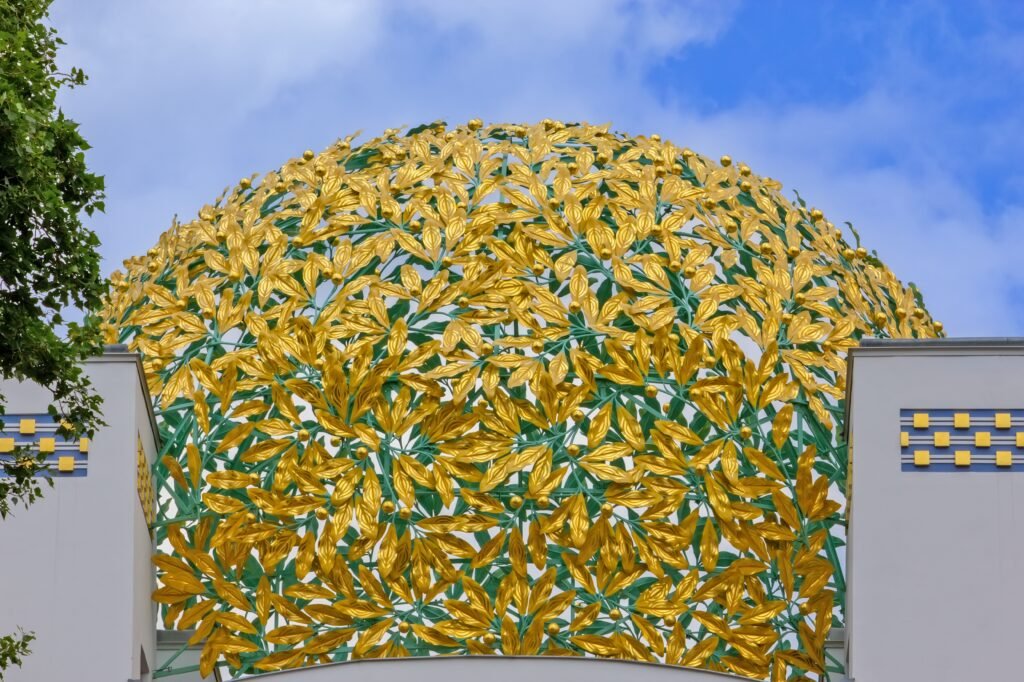
The extraordinary Secession Building, designed by Joseph Maria Olbrich, remains one of the clearest expressions of the movement.
Its relatively restrained white exterior contrasts with an elaborate golden dome formed from laurel leaves.
That contrast captures much of the appeal of Viennese Jugendstil.
Decoration was welcome.
But it needed purpose.
Bring the Style Home
Introduce a few carefully chosen geometric details.
A patterned rug, an elegant brass table lamp or a decorative print inspired by Vienna around 1900 can create the feeling without overwhelming the room.
Consider colours such as muted olive, warm ivory, soft black, antique brass and dusty gold.
Dark timber and simple upholstered furniture provide an excellent foundation.
Look for clean lines accompanied by small, beautiful decorative elements.
A single geometric stained-glass panel, for example, can become an extraordinary feature in an otherwise understated room.
The aim is not to recreate a historic Art Nouveau interior.
It is to borrow its appreciation for pattern, craftsmanship and artistic individuality.
5. Wiener Werkstätte: When Everyday Objects Became Art
Beautiful craftsmanship, striking geometry and objects designed with intention.
The Vienna Secession helped create the conditions for another remarkable design movement.
In 1903, architect Josef Hoffmann, artist Koloman Moser and patron Fritz Waerndorfer established the Wiener Werkstätte, or Vienna Workshops.
Their philosophy was ambitious.
They believed beautiful design should extend into the objects people used every day.
Furniture, lighting, textiles, glassware, tableware and even small household accessories deserved the same artistic consideration as paintings or sculpture.
The designers placed enormous importance on craftsmanship and the relationship between materials and form.
Many of their creations featured strong geometry.
Squares, grids, repeated lines and carefully balanced patterns gave even modest household objects a distinctive visual identity.
The work could be luxurious, but it was rarely careless or excessive.
Every detail mattered.
Bring the Style Home
This is one of the easiest Viennese design influences to introduce gradually.
Choose fewer objects, but choose them carefully.
A beautifully proportioned ceramic bowl. A simple glass carafe. A well-designed table lamp. A piece of furniture with interesting joinery.
Look for natural materials and thoughtful shapes.
Black-and-white geometric patterns can provide an effective contrast against warm timber and pale walls.
A simple square side table beside a comfortable upholstered chair can create a more convincing modern interpretation than filling the room with decorative antiques.
The Wiener Werkstätte offers an especially useful lesson for contemporary homes.
Beauty is not limited to the things we display.
It can exist in the things we use every day.
6. The Viennese Coffeehouse: A Room Designed for Lingering
Marble tables, bentwood chairs, dark timber and an atmosphere that encourages you to stay.
It is difficult to imagine Vienna without its historic coffeehouses.
For generations, these establishments have provided meeting places for writers, artists, intellectuals and ordinary people seeking somewhere comfortable to spend an afternoon.
And the interiors are a large part of their appeal.
Take Café Sperl, which opened in 1880.
Its traditional interior features bentwood seating, marble tables and decorative lighting, creating an atmosphere that feels wonderfully removed from the pace of modern life.
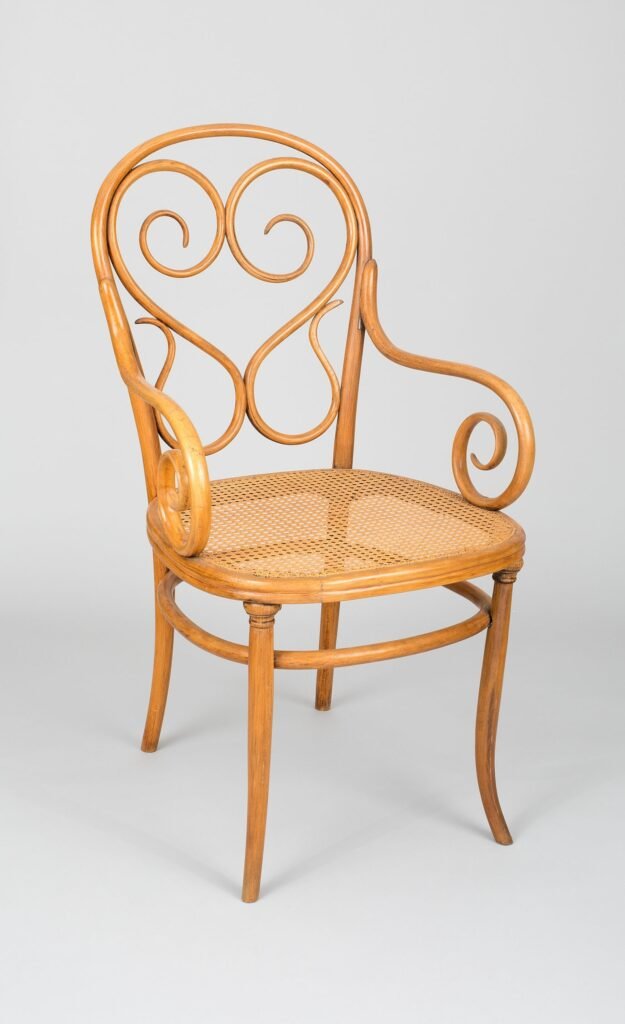
The classic Viennese coffeehouse chair, developed by Thonet, is one of the most recognisable furniture designs associated with the city.
Its elegant curved timber frame is remarkably simple.
Lightweight, practical and beautiful.
Combined with small marble tables, upholstered banquettes, large mirrors and warm lighting, these chairs helped establish an interior style that remains instantly recognisable.
But there is another reason the Viennese coffeehouse works so well.
The space is designed to be occupied.
Not merely admired.
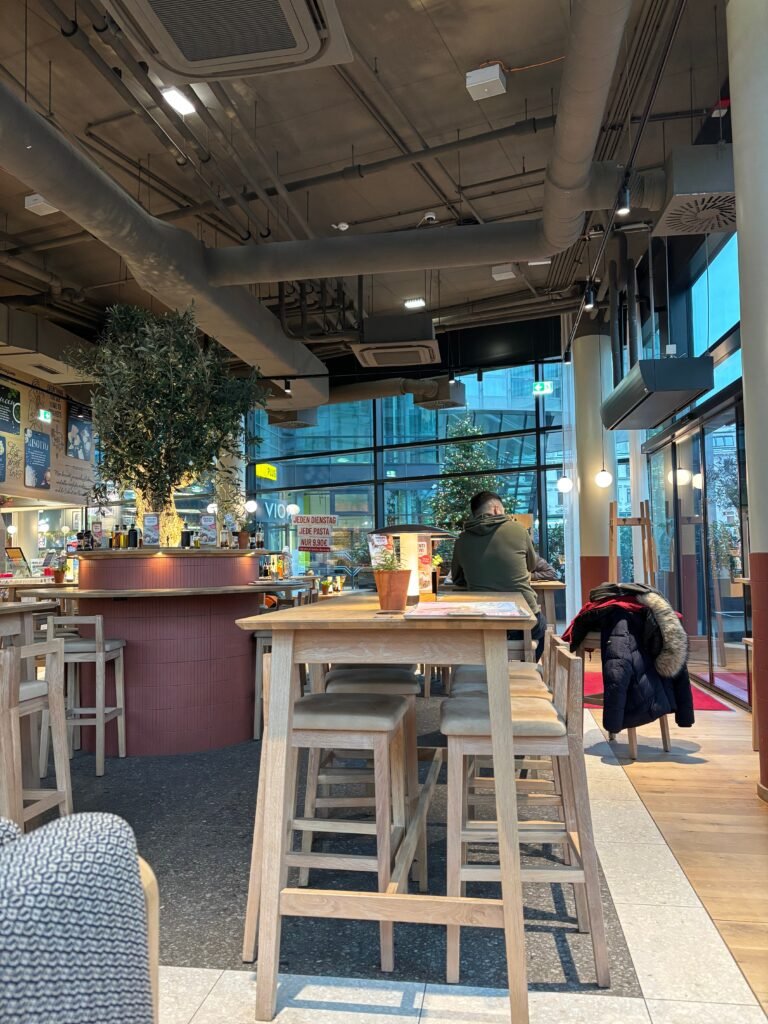
People sit for long conversations. They read newspapers. They write, think and watch the world through enormous windows.
A room feels more beautiful when people actually want to remain in it.
Bring the Style Home
Create a small café-inspired corner in your kitchen, dining room or study.
Begin with a round marble-topped table or a simpler café table with a convincing stone finish.
Add one or two bentwood chairs.
A dark timber cabinet, framed artwork or a vintage wall mirror can introduce additional character.
For colour, consider burgundy, walnut, tobacco brown, forest green and warm cream.
Lighting should be comfortable rather than harsh.
A well-placed shaded lamp can create the kind of gentle atmosphere associated with an old Viennese café.
And do not underestimate the appeal of a small table positioned beside a window.
Sometimes the most luxurious thing a room can offer is somewhere pleasant to sit with a coffee and a book.
7. Viennese Modernism: Elegance Without Ornament
Clean lines, beautiful materials and a quiet confidence in simplicity.
Vienna’s journey towards modern design was not entirely harmonious.
While the Secessionists celebrated the artistic potential of decoration, architect Adolf Loos challenged the idea that ornament was necessary at all.
His work favoured clarity, function and the inherent beauty of materials.
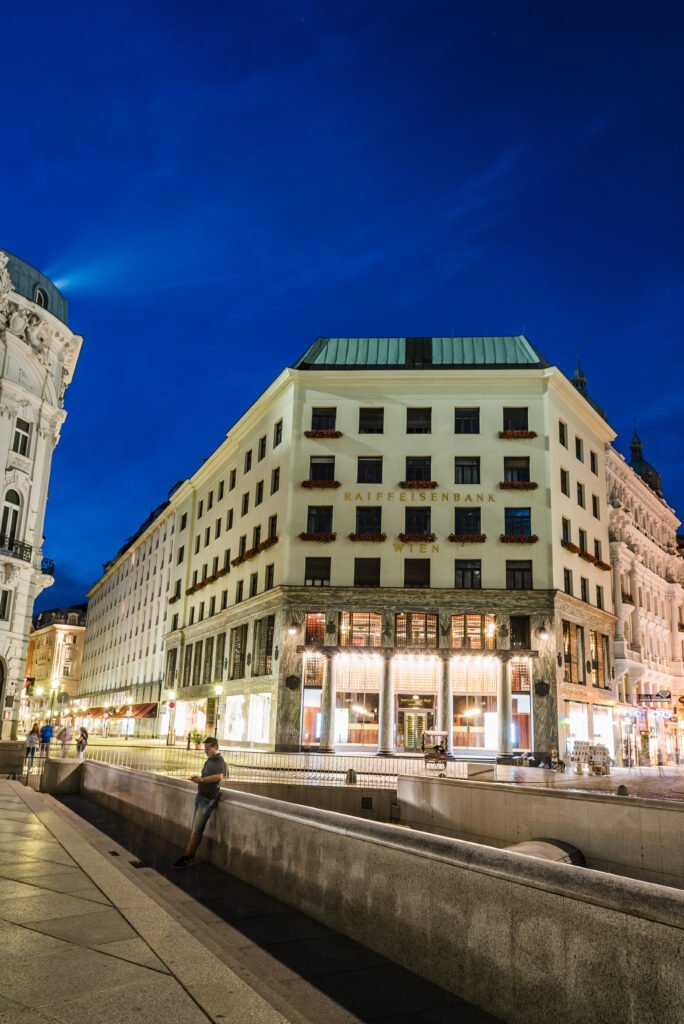
The Looshaus on Michaelerplatz, completed in 1911, became one of the city’s most controversial buildings.
Its comparatively plain upper façade stood in dramatic contrast to Vienna’s richly decorated historic architecture.
Yet Loos was not necessarily arguing for cold or uncomfortable interiors.
He believed that beautiful materials and carefully designed spaces could create richness without relying on excessive ornament.
Timber, marble, fine upholstery and thoughtful spatial arrangements remained important.
This is a particularly useful influence for anyone who loves European interiors but does not want their house filled with antiques.
Bring the Style Home
Begin with a restrained palette.
Warm stone, walnut, cream, charcoal and muted green work beautifully together.
Choose furniture with strong proportions rather than unnecessary decoration.
Introduce natural materials wherever practical.
A timber dining table, a marble side table or a carefully upholstered armchair can become the focal point of a room.
Then add a small number of personal objects.
A favourite painting. A stack of books. A beautiful vintage lamp.
Resist the temptation to decorate every available surface.
The result should feel calm, warm and considered.
Not empty.
And certainly not like an expensive hotel lobby where you are afraid to put down your cup of tea.
What Makes Viennese Interior Design So Timeless?
At first glance, these seven styles might seem to have very little in common.
The gilded splendour of Schönbrunn Palace is a long way from the geometric simplicity of the Wiener Werkstätte.
A Biedermeier sitting room feels entirely different from an ornate Ringstrasse apartment.
And Adolf Loos would probably have had a few things to say about some of Vienna’s more extravagant interiors.
Yet there is a thread connecting them.
Viennese design has repeatedly returned to the importance of materials, craftsmanship and the relationship between beautiful objects and everyday life.
Even the most elaborate interiors rely on proportion and balance.
Even the simplest rooms can contain remarkable craftsmanship.
And perhaps most importantly, the city’s most memorable spaces tend to have personality.
They feel connected to the people, ideas and history that shaped them.
That is something worth remembering when decorating a home today.
You do not need to follow one style perfectly.
In fact, you probably should not.
A Biedermeier desk can sit comfortably beside a contemporary chair. A geometric Secession-inspired print can look beautiful in a traditional room. A café-style marble table can bring a little Viennese charm to an otherwise ordinary kitchen.
The secret lies in choosing pieces that belong together without necessarily matching.
Three Easy Ways to Create a Vienna-Inspired Room
The Elegant Viennese Living Room
Begin with warm ivory walls and timber furniture.
Introduce a traditional patterned rug, a comfortable upholstered sofa and one beautiful antique or vintage piece.
A large mirror, framed artwork and a brass reading lamp add character.
Keep the palette restrained: cream, walnut, muted green and touches of antique gold.
The result should feel elegant but relaxed.
The Viennese Writer’s Study
Choose a walnut or dark oak writing desk.
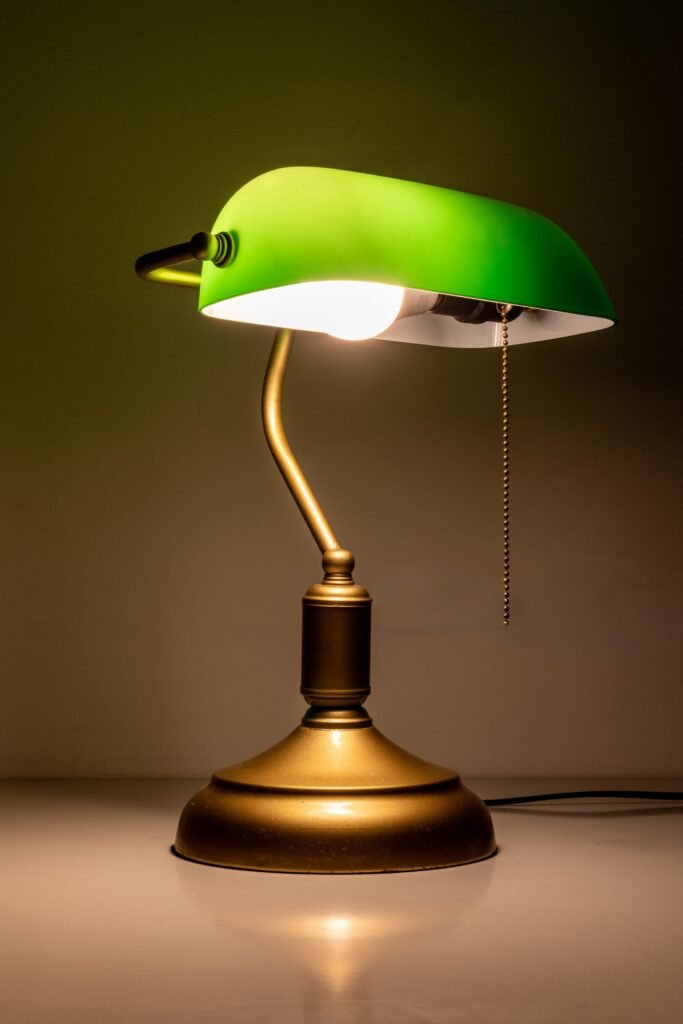
Add a comfortable chair, bookshelves and a shaded desk lamp.
Deep olive, tobacco brown, parchment and burgundy create a warm, thoughtful atmosphere.
Include framed prints or artwork that means something to you.
The room does not need to be large.
A quiet corner with a beautiful desk can capture the feeling perfectly.
The Little Vienna Café Corner
Find a small round café table and a bentwood chair.
Place them near a window.
Add a wall mirror, a framed print and perhaps a narrow bookshelf.
Marble, dark timber and warm cream provide the foundation.
Finish with good coffee and a book you have been meaning to read.
Of all the Viennese-inspired spaces you could create, this might be the one you use most.
Where to Find Vienna’s Most Beautiful Design Inspiration
For anyone visiting Vienna, some of the city’s finest design lessons can be discovered simply by stepping inside its historic buildings.
Schönbrunn Palace offers an extraordinary introduction to imperial interiors, particularly the decorative Rococo rooms and their elaborate craftsmanship.
The MAK – Museum of Applied Arts is essential for understanding Vienna’s design history, with collections ranging from Biedermeier furniture to the Wiener Werkstätte and Art Nouveau.
The Leopold Museum explores Vienna around 1900, when artists, architects and designers were transforming the way people thought about art and everyday life.
The Secession Building is a remarkable example of the city’s artistic rebellion, with its distinctive golden dome and Gustav Klimt’s famous Beethoven Frieze.
And for inspiration that requires little more than ordering a coffee, Café Sperl remains one of Vienna’s most atmospheric traditional coffeehouses.
Together, these places reveal how a city famous for its imperial grandeur also became one of the most influential centres of modern design.
The Beauty of a Home That Feels Collected
Perhaps the most appealing thing about Viennese interior design is that it does not demand perfection.
Vienna itself is a city of contrasts.
Grand palaces sit beside modest cafés. Elaborate nineteenth-century buildings share streets with restrained modern architecture. Old furniture continues to feel perfectly at home in contemporary spaces.
The city has never belonged entirely to one period or one style.
And neither should a beautiful home.
You can borrow the graceful furniture of Biedermeier, the elegant architectural details of a Ringstrasse apartment, the artistic patterns of the Secession and the welcoming atmosphere of a Viennese coffeehouse.
You can combine antiques with contemporary pieces.
You can appreciate beautiful craftsmanship without spending a fortune.
And you can create rooms that feel sophisticated without becoming formal or uncomfortable.
Because the finest Viennese interiors offer something more lasting than fashionable decoration.
They remind us that a beautiful room should be somewhere we genuinely enjoy being.
Not simply somewhere that looks beautiful in a photograph.
For more inspiration from the Austrian capital, explore our Vienna colour palettes and literary weekend guide, or discover how European cities can inspire beautiful, character-filled interiors at home.
For the Vienna Colour Palettes article:
If you’re drawn to Vienna’s beautiful interiors, explore our [Vienna Colour Palettes] for timeless combinations inspired by the city’s imperial palaces, historic cafés and elegant architecture.
For the Vienna Literary Weekend article:
Vienna’s beautiful interiors are only part of its charm. Discover the city’s extraordinary literary heritage in our [Vienna Literary Weekend Guide], where historic coffeehouses, famous writers and atmospheric streets come together.
For the Paris Apartment Colour Palettes article:
Love the understated elegance of European interiors? Our [5 Timeless Paris Apartment Colour Palettes] explores another beautiful approach to old-world decorating, with soft colours, classic details and effortlessly sophisticated style.
Britt & Tyler
We’re Britt and Tyler, the two Australians behind Cocktails & Cathedrals. We’re drawn to old buildings, beautiful rooms, bookshops and places that seem to hold a story. Our journal brings those interests together, with a fondness for slow afternoons and a well-made cocktail. We hope it helps you find places you’ll want to linger.
Travel slowly. Stay beautifully.
A little more about us →
One Comment