The Architecture of Vienna: Why the City Looks So Grand
Imperial ambition, magnificent palaces and a boulevard designed to impress — the story behind one of Europe’s most beautiful capitals.
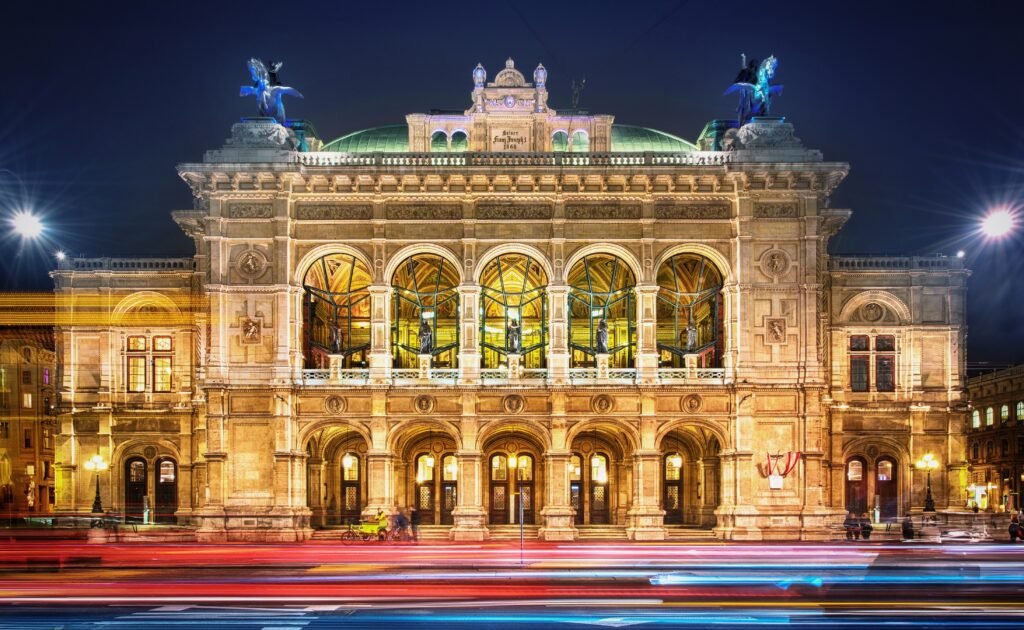
There is something about Vienna that makes even an ordinary walk feel rather grand.
It might be the enormous stone façades, the elegant apartment buildings with their wrought-iron balconies, or the way a magnificent palace can appear quite unexpectedly at the end of a narrow street.
Perhaps it is the cafés, where chandeliers hang above marble tables and a simple afternoon coffee still feels like a small occasion.
Whatever it is, Vienna has an unmistakable sense of grandeur.
But unlike cities whose beauty developed largely through centuries of gradual change, much of Vienna’s most recognisable architecture was the result of something far more deliberate.
For hundreds of years, this was the centre of Habsburg power, the capital of an empire that stretched across much of Central Europe. Its rulers, aristocrats and increasingly wealthy citizens wanted a city that reflected their importance.
And they built one.
From extravagant Baroque palaces to the monumental buildings of the Ringstrasse, Vienna’s architecture tells a fascinating story of wealth, politics, artistic ambition and the desire to create a city worthy of an empire.
To understand why Vienna looks the way it does, it helps to start with the people who shaped it.
A Capital Built to Impress
For more than six centuries, the Habsburg dynasty was central to Vienna’s development.
At its height, the empire brought together territories and peoples from across Central and Eastern Europe, making Vienna a centre of political power, diplomacy, music and culture.
An imperial capital needed more than an impressive royal residence. It required churches, theatres, libraries, government buildings and public spaces that communicated authority and prestige.
Architecture became one of the most visible ways to express that power.
Successive generations of rulers commissioned magnificent buildings, often employing some of Europe’s leading architects and artists.
But Vienna was never constructed according to one grand master plan.
Instead, it grew in layers.
Medieval churches stood alongside Renaissance courtyards. Baroque palaces appeared among older streets. In the nineteenth century, enormous new boulevards and public institutions transformed the city’s appearance yet again.
The result is a city where several centuries of European architectural history exist remarkably close together.
And nowhere is that contrast more obvious than in Vienna’s historic centre.
The Medieval Vienna Beneath the Grandeur
Before the Baroque palaces and imperial boulevards, Vienna was a medieval city enclosed by defensive walls.
Its streets were narrow, its buildings crowded together, and its most important landmarks were churches rather than palaces.
The most recognisable survivor of that earlier Vienna is St Stephen’s Cathedral, or Stephansdom.
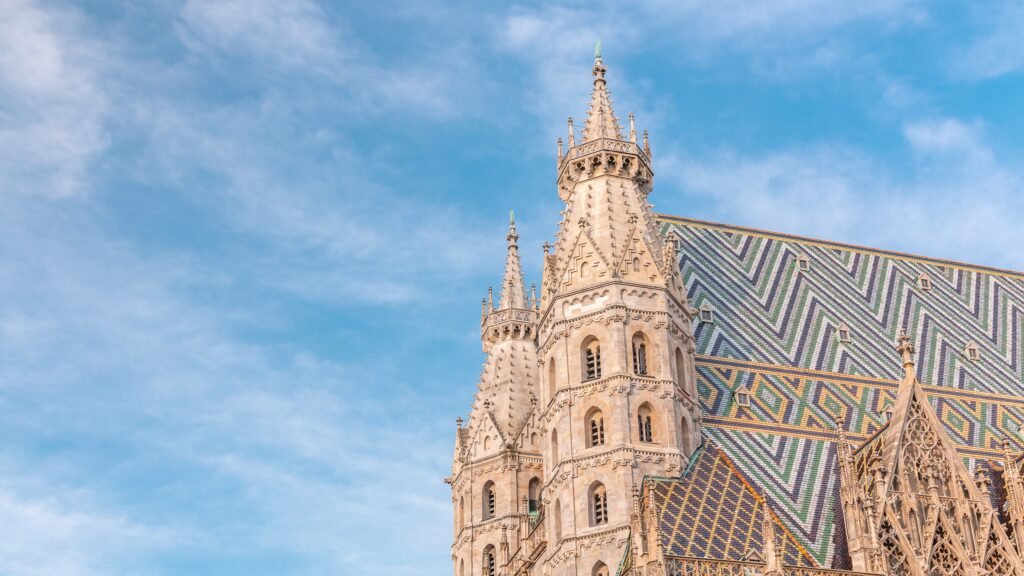
Rising above Stephansplatz in the heart of the old town, the cathedral is an extraordinary example of Gothic architecture.
Its soaring south tower reaches approximately 136 metres, while its steeply pitched roof is covered in colourful glazed tiles arranged in intricate geometric patterns.
The cathedral’s origins stretch back to the twelfth century, although much of its present appearance developed during the Gothic period.
What makes St Stephen’s particularly fascinating is how different it feels from the imperial architecture surrounding it.
Where Vienna’s later buildings celebrate earthly power through symmetry, columns and elaborate ornamentation, the cathedral reaches dramatically upwards.
Its pointed arches, tall windows and vertical lines were designed to direct attention towards heaven.
It belongs to an earlier Vienna, one whose medieval street pattern is still visible in parts of the surrounding Innere Stadt.
Wander away from the cathedral into the smaller lanes around Domgasse and Blutgasse, and the city suddenly feels more intimate.
This contrast between narrow medieval streets and vast imperial spaces is part of what makes Vienna so interesting to explore.
The Baroque Era: When Architecture Became Theatre
If medieval Vienna was concerned with religion and defence, Baroque Vienna was determined to impress.
The seventeenth and eighteenth centuries brought a period of extraordinary architectural ambition.
Following the failed Ottoman siege of 1683, Vienna experienced major rebuilding and expansion. Palaces, churches and aristocratic residences began appearing across the city, many inspired by the theatrical architecture of Italy.
Baroque architecture was designed to create an emotional response.
Buildings featured dramatic domes, sweeping staircases, curved façades, sculpted figures and richly decorated interiors.
Everything was intended to feel magnificent.
And Vienna embraced this style enthusiastically.
Schönbrunn Palace: An Imperial World of Its Own
Perhaps the most spectacular expression of Habsburg ambition is Schönbrunn Palace.
Originally developed as an imperial residence outside the city, Schönbrunn became one of the dynasty’s most important summer homes.
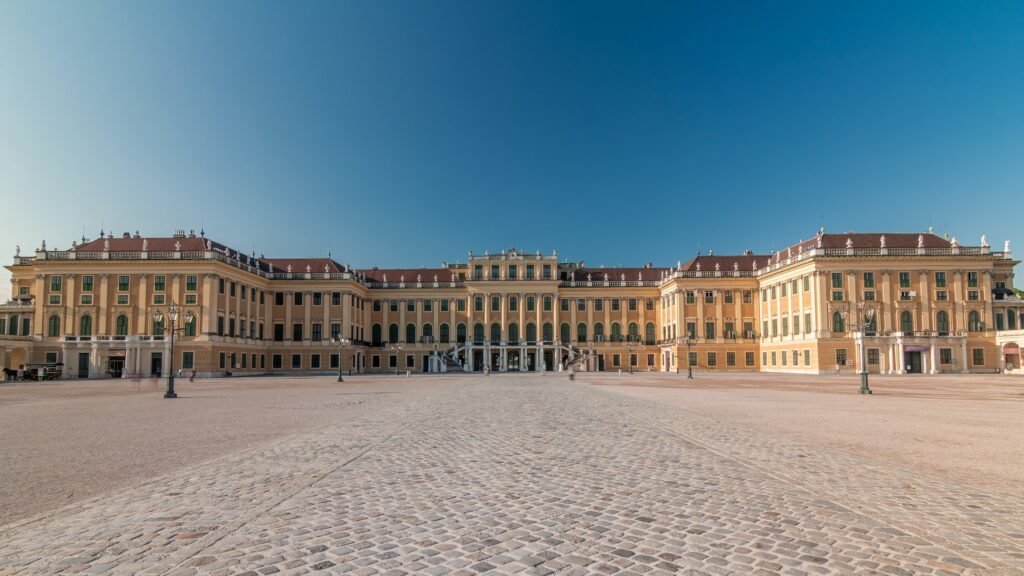
Its present appearance owes much to the eighteenth-century reign of Empress Maria Theresa, who transformed the palace into a magnificent centre of court life.
The enormous golden-yellow façade stretches across an expansive formal courtyard, while behind the building, carefully planned gardens extend towards the hilltop Gloriette.
Inside, elaborate ceremonial rooms, gilded decoration and delicate Rococo details reveal the extraordinary wealth of the imperial court.
But Schönbrunn was more than an extravagant home.
It was a carefully managed setting for political meetings, diplomatic receptions and the rituals of monarchy.
Even the layout of its rooms reinforced the hierarchy of court life.
The architecture was designed to remind visitors exactly who held power.
The Hofburg: A Palace That Grew With an Empire
While Schönbrunn served as a summer residence, the Hofburg was the historic heart of Habsburg rule.
Unlike Schönbrunn, the Hofburg is not one single building designed at one moment in time.
It is an enormous palace complex that evolved over centuries.
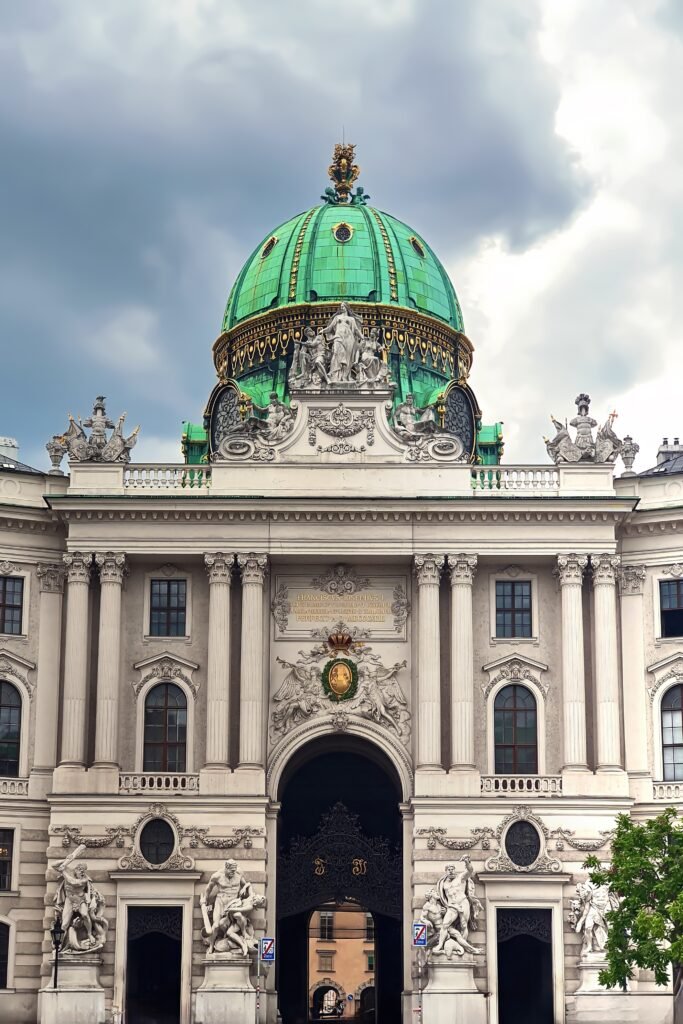
Its oldest sections date from the medieval period, while later rulers added courtyards, ceremonial rooms, libraries, chapels and monumental wings.
The result is a fascinating architectural mixture.
Walk through its different sections and you’ll encounter Renaissance, Baroque and nineteenth-century imperial architecture, sometimes within minutes of one another.
The grand Neue Burg façade overlooking Heldenplatz is particularly impressive.
Its sweeping curve, monumental columns and rooftop sculptures were intended to form part of an even more ambitious imperial complex that was never fully completed.
There is something almost symbolic about that unfinished vision.
Vienna’s rulers were still planning new monuments to imperial greatness shortly before the Habsburg monarchy came to an end in 1918.
Belvedere and Karlskirche: Baroque Drama at Its Finest
Two other buildings reveal just how theatrical Vienna’s Baroque architecture could become.
The Belvedere Palace complex was commissioned by Prince Eugene of Savoy, one of the Habsburg monarchy’s most successful military commanders.
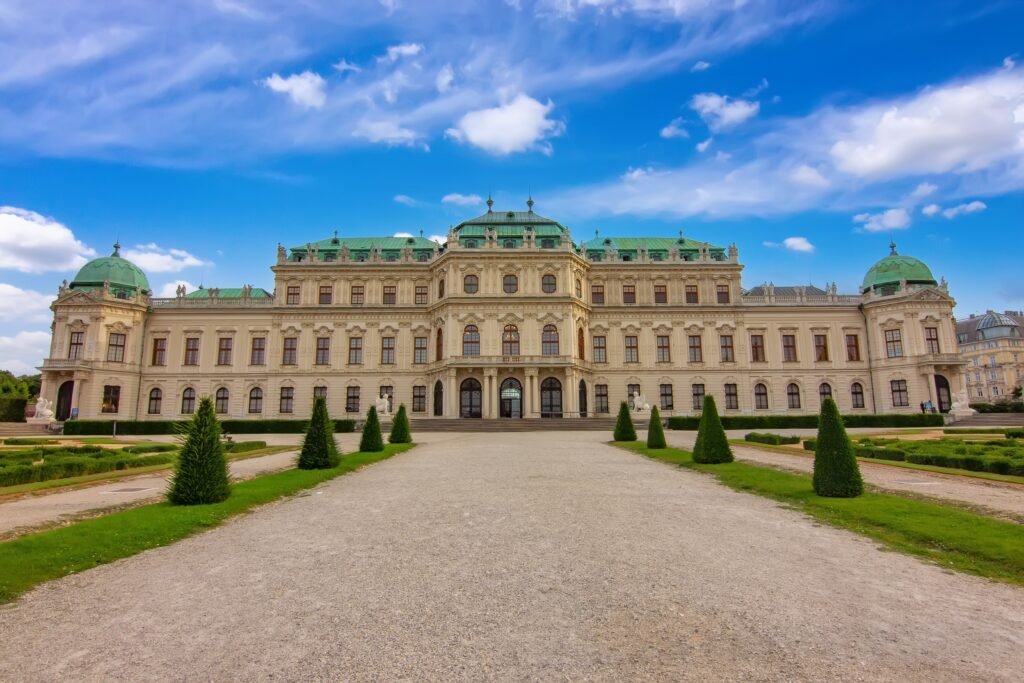
Designed by Johann Lukas von Hildebrandt, its two palaces and formal gardens create an extraordinary composition of architecture and landscape.
The Upper Belvedere, with its elaborate roofline and richly decorated façade, was designed as a spectacular setting for ceremonial occasions.
Today it houses one of Austria’s most important art collections, including Gustav Klimt’s The Kiss.
Then there is Karlskirche, the magnificent Church of St Charles Borromeo near Karlsplatz.
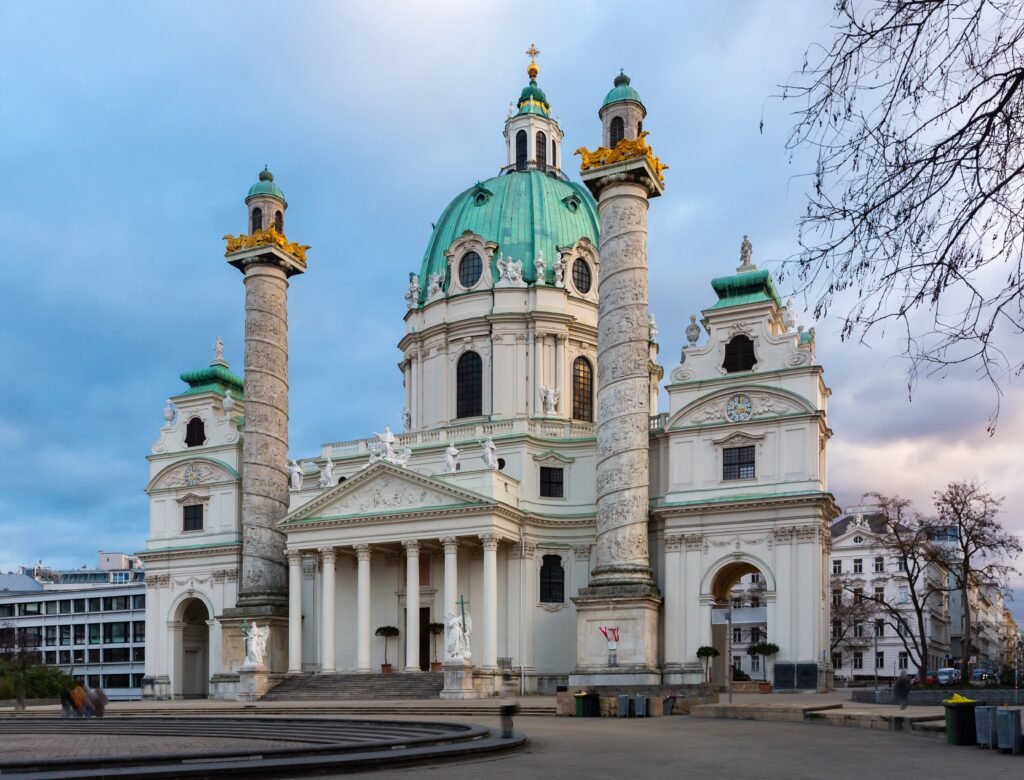
Commissioned following a devastating plague epidemic, the church combines an enormous green dome, a classical portico and two monumental columns inspired by ancient Roman architecture.
It is an unusual mixture of influences, but somehow they work beautifully together.
Seen across the reflecting pool in front of the church, Karlskirche is one of Vienna’s most striking architectural sights.
Yet for all the magnificence of its Baroque buildings, Vienna’s most dramatic transformation was still to come.
The Ringstrasse: The Boulevard That Changed Vienna Forever
In 1857, Emperor Franz Joseph made a decision that would permanently change the appearance of Vienna.
He ordered the demolition of the old city fortifications.
For centuries, these defensive walls had surrounded the historic centre, separating the imperial heart of Vienna from the expanding districts beyond.
By the middle of the nineteenth century, the walls had become increasingly impractical.
Vienna was growing, and the capital needed to modernise.
But rather than simply replacing the fortifications with ordinary streets, the emperor authorised an enormous new boulevard.
It would encircle the historic centre and provide space for some of the most ambitious public buildings in Europe.
The Ringstrasse was officially inaugurated in 1865, although construction continued for decades.
The boulevard, approximately 5.3 kilometres long, became an extraordinary showcase of nineteenth-century architecture.
And it is largely responsible for the grand, monumental appearance many visitors associate with Vienna today.
A Boulevard of Architectural Styles
What makes the Ringstrasse particularly interesting is that its buildings were not all designed in the same style.
Instead, architects borrowed from earlier periods of European history.
This approach, known as Historicism, used architecture to communicate the purpose and importance of each building.
The Austrian Parliament, designed by Theophil von Hansen, drew inspiration from ancient Greek architecture — a deliberate reference to the classical origins of democracy.
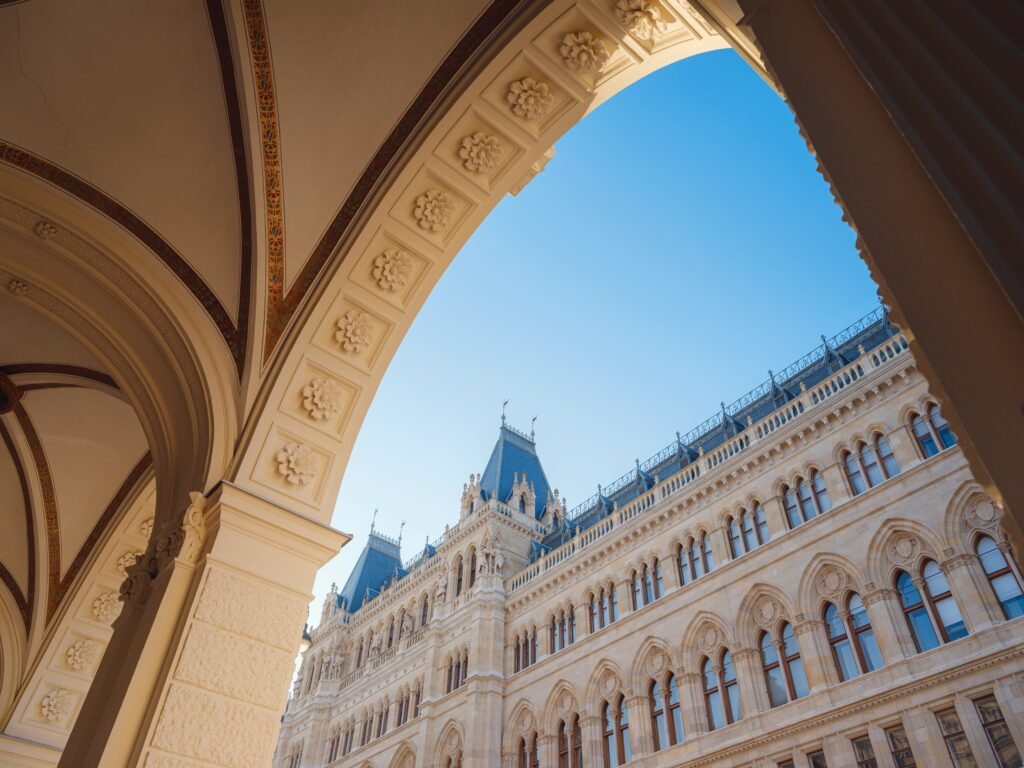
Vienna’s City Hall, or Rathaus, was built in an elaborate Neo-Gothic style, with pointed arches, slender towers and decorative stonework recalling the great civic buildings of medieval Europe.
The Vienna State Opera adopted a Neo-Renaissance design, its graceful arcades and sculpted façade reflecting the prestige of the performing arts.
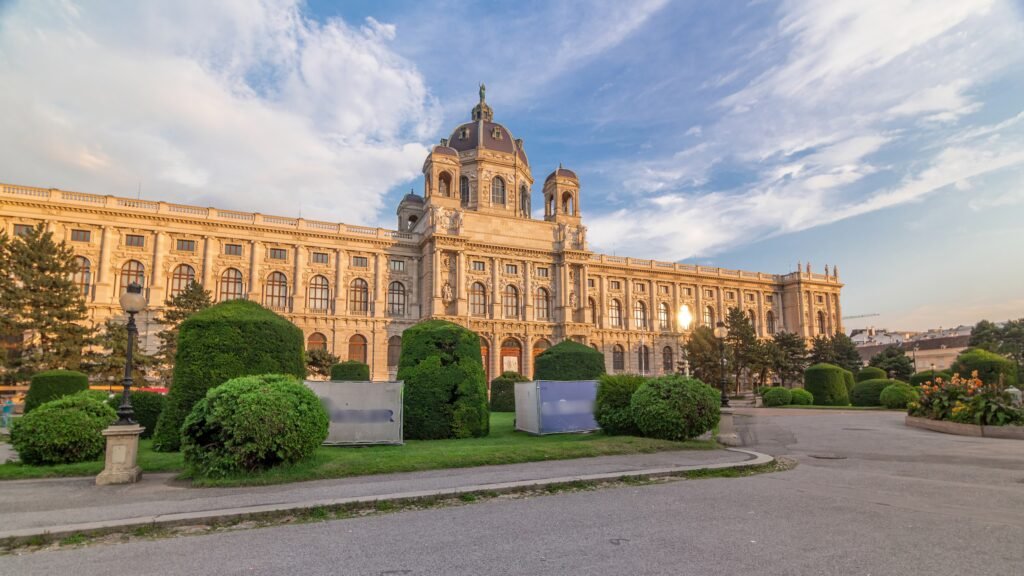
The Kunsthistorisches Museum and Natural History Museum were built as monumental counterparts, facing one another across Maria-Theresien-Platz.
And the Burgtheater embraced the grandeur of Neo-Baroque architecture.
Individually, these buildings are impressive.
Together, they create something extraordinary.
Walking along the Ringstrasse, you move through architectural interpretations of ancient Greece, medieval Europe, the Renaissance and the Baroque — all constructed within a relatively short period.
The boulevard was essentially a carefully curated exhibition of European architectural history.
And the buildings were enormous.
Vienna was not attempting to create a modest capital.
It was announcing its cultural, political and economic importance to the world.
The Grand Apartment Buildings Have a Story Too
Vienna’s grandeur is not limited to its palaces and public monuments.
Some of its most beautiful buildings were originally private residences.
As Vienna expanded during the nineteenth century, wealthy industrialists, bankers and merchants began building elaborate townhouses and apartment blocks.
Many wanted homes that reflected the prestige of the aristocracy.
They commissioned architects to create richly decorated façades, elegant entrance halls, sweeping staircases and impressive reception rooms.
Along the Ringstrasse, wealthy families constructed private urban palaces known as Ringstrassenpalais.
Among them were prominent Jewish families whose contributions to Vienna’s cultural and economic life were substantial.
Palais Epstein and Palais Ephrussi are reminders of this remarkable period of urban development.
But grand architecture also conceals less glamorous histories.
The enormous construction boom relied heavily on workers from across the empire, including migrants employed in Vienna’s demanding brickmaking industry.
The buildings that celebrated imperial wealth were made possible by countless labourers whose lives were very different from those of the people who commissioned them.
Understanding that contrast gives the Ringstrasse a deeper significance.
Its façades represent not only artistic achievement, but also the ambitions, inequalities and social transformations of nineteenth-century Vienna.
Why Vienna Became a City of Music, Art and Grand Public Buildings
Vienna’s architectural ambitions extended far beyond government and royalty.
By the nineteenth century, the city had become one of Europe’s great cultural centres.
Opera, theatre, classical music and the visual arts played a central role in Viennese society.
And culture required impressive surroundings.
The Vienna State Opera was not simply a place to hear music. Its architecture expressed the importance of opera to the city.
The Kunsthistorisches Museum was designed not merely to house art, but to present the Habsburg collections within a setting worthy of their significance.
Even Vienna’s historic coffeehouses reflected the city’s social and artistic culture.
Their tall ceilings, elegant interiors, upholstered seating and marble tables created spaces where writers, musicians, politicians and intellectuals could gather.
Some became almost as famous as the people who frequented them.
This relationship between architecture and everyday cultural life is one of Vienna’s most appealing qualities.
Its grand buildings were not simply decorative backdrops.
They were places where the city’s social and intellectual life unfolded.
And in many cases, they still are.
When Vienna’s Architects Rebelled Against the Past
By the end of the nineteenth century, not everyone was impressed by Vienna’s enthusiasm for historical architecture.
A new generation of artists and architects began questioning the elaborate ornamentation and imitation of earlier styles.
Why should modern buildings look like ancient temples or Renaissance palaces?
Why couldn’t architecture reflect contemporary life?
These ideas helped inspire Vienna’s extraordinary Art Nouveau and early modernist movements.
In 1897, a group of artists led by Gustav Klimt broke away from the established artistic institutions to form the Vienna Secession.
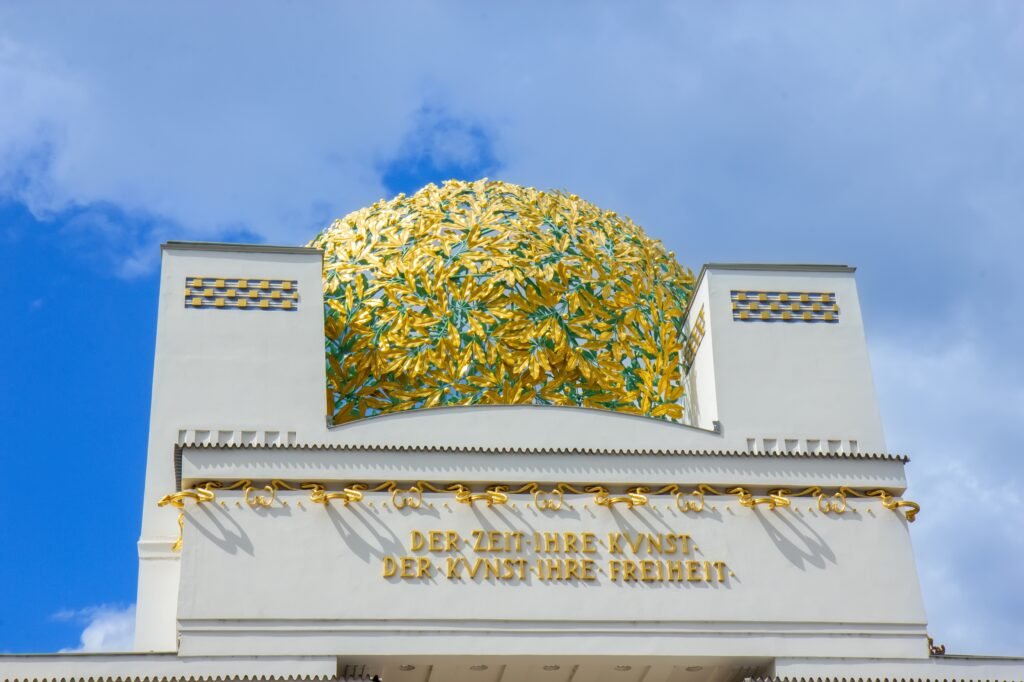
The movement rejected conservative artistic traditions and encouraged experimentation across painting, architecture and design.
The Secession Building, designed by Joseph Maria Olbrich, became one of its most recognisable symbols.
With its clean white surfaces, geometric forms and extraordinary golden laurel-leaf dome, it looked dramatically different from the ornate Ringstrasse buildings nearby.
Architect Otto Wagner was another central figure in Vienna’s architectural transformation.
His Postal Savings Bank combined modern materials and innovative construction techniques with an elegant, restrained design.
Meanwhile, Adolf Loos challenged decorative excess even more directly.
His famously understated Looshaus on Michaelerplatz caused controversy when it appeared opposite the ornate buildings of the Hofburg.
To many Viennese accustomed to elaborate façades, its comparative simplicity was almost shocking.
Yet these buildings are now celebrated as milestones in the development of modern architecture.
Vienna had spent generations creating monuments to its past.
At the beginning of the twentieth century, some of its most important architects were determined to build for the future.
We’ll explore this fascinating architectural rebellion in more detail in our guide to Vienna’s Art Nouveau buildings and the Secession movement.
Why Vienna Still Feels So Beautiful Today
There are European cities with older buildings than Vienna, and others with more dramatic skylines.
But Vienna possesses something particularly appealing: a remarkable sense of architectural continuity.
Its medieval streets, Baroque palaces, nineteenth-century boulevards and early modernist buildings all contribute to the city’s character.
The architecture is impressive without making every street feel like a museum.
Trams pass grand opera houses. Residents cycle beside imperial palaces. People sit in parks surrounded by buildings once designed to demonstrate the wealth of a dynasty.
And some of the city’s most beautiful spaces remain part of ordinary daily life.
This may be the real secret of Vienna’s charm.
Its grand architecture has survived the empire that created much of it, but the city has continued to live around and within those buildings.
The former symbols of imperial power now form the backdrop to a modern European capital.
How to Experience Vienna’s Architecture on Foot
One of the best ways to appreciate Vienna’s extraordinary architectural history is simply to walk through the historic centre.
Begin at St Stephen’s Cathedral, where the Gothic tower and surrounding medieval streets reveal the city’s older character.
From there, wander towards Michaelerplatz and the Hofburg, paying attention to the striking contrast between Adolf Loos’s modernist façade and the ornate imperial architecture opposite.
Continue through the palace complex towards Heldenplatz, where the vast scale of the Neue Burg becomes apparent.
From here, make your way towards Maria-Theresien-Platz, framed by the monumental buildings of the Kunsthistorisches Museum and Natural History Museum.
Continue along the Ringstrasse towards the Austrian Parliament and Vienna City Hall.
Within a relatively compact area, you’ll have encountered centuries of architectural ideas, from medieval religious symbolism to imperial Baroque grandeur, nineteenth-century Historicism and the beginnings of modernism.
Allow yourself time to look upwards.
Much of Vienna’s most beautiful decoration is found above street level — sculpted figures, ornate balconies, carved window surrounds and intricate rooflines that are easy to miss when you’re hurrying between attractions.
And when you’ve had enough walking, find yourself a traditional Viennese coffeehouse.
An afternoon spent beneath a high ceiling, with a coffee and a slice of cake, feels particularly appropriate in a city that has always understood the importance of beautiful surroundings.
A City Built for an Empire, and Left for Everyone Else
Vienna’s architecture is more than a collection of beautiful buildings.
It is a record of extraordinary ambition.
The Habsburgs built palaces to demonstrate their power. Aristocrats commissioned magnificent residences to establish their status. Wealthy citizens transformed entire streets. Architects borrowed from the past, then eventually rebelled against it.
Each generation left something behind.
The result is a city where the architecture tells the story of an empire that no longer exists, and of the artists, thinkers and ordinary people who helped shape the Vienna that followed.
Perhaps that is why Vienna feels so grand.
Its beauty was not accidental.
For centuries, people deliberately set out to create a city that would impress the world.
And remarkably, it still does.
Discover More of Vienna with Cocktails & Cathedrals
Vienna’s architecture is only part of its appeal. The city is equally fascinating for its literary history, elegant interiors and artistic traditions.
For more inspiration, explore our Literary Weekend in Vienna, discover the colours behind our 5 Timeless Vienna Colour Palettes, or take some old-world elegance home with Viennese Interior Design: 7 Timeless Styles.
And for those who love architecture, there’s more to discover in Vienna’s remarkable Art Nouveau buildings, historic coffeehouses and hidden corners.
Sometimes the best way to understand a city is not to rush through its famous attractions, but to look a little more closely at the beautiful things that have been there all along.
Britt & Tyler
We’re Britt and Tyler, the two Australians behind Cocktails & Cathedrals. We’re drawn to old buildings, beautiful rooms, bookshops and places that seem to hold a story. Our journal brings those interests together, with a fondness for slow afternoons and a well-made cocktail. We hope it helps you find places you’ll want to linger.
Travel slowly. Stay beautifully.
A little more about us →
2 Comments