The Historic Cafés of Vienna: Where Writers, Artists and Revolutionaries Met
Discover the legendary Viennese coffeehouses that shaped the city’s literary, artistic and intellectual life — and why they remain some of its most atmospheric places to spend an afternoon.
There is a particular kind of silence in a Viennese coffeehouse. Not the absence of conversation, but the comfortable murmur of a room where nobody is in a hurry to leave.
A waiter in a dark waistcoat moves between marble-topped tables. Newspapers hang from wooden holders. Somewhere, a spoon meets the side of a porcelain cup. Beyond the tall windows, trams rattle along the Ringstrasse, but inside, the afternoon seems to unfold at a different pace.
These are not simply pretty places to drink coffee.
For more than two centuries, Vienna’s cafés have been extensions of the city’s living rooms, libraries, debating chambers and creative studios. Writers composed novels here. Artists argued about the future of painting. Political exiles discussed revolution over cups of strong coffee.
Some of Europe’s most influential ideas were developed in rooms that still serve apple strudel today.
And although Vienna has changed considerably since its imperial heyday, many of its historic coffeehouses remain remarkably faithful to the atmosphere that made them famous.
For anyone drawn to the city’s literary past, these cafés are a natural companion to our Literary Weekend in Vienna, which explores the bookshops, libraries and streets connected to its extraordinary writers.
Here are eight historic cafés worth discovering, from magnificent nineteenth-century establishments to intimate rooms once frequented by Vienna’s most celebrated artists and intellectuals.
The Viennese Coffeehouse: A Cultural Institution
To understand Vienna, it helps to understand why its cafés became so important.
Coffeehouses appeared in Vienna in the late seventeenth century, eventually developing into an essential part of urban life.
By the nineteenth century, the coffeehouse was much more than somewhere to purchase a drink. For the price of a coffee, patrons could spend hours reading newspapers, writing letters, playing chess or discussing politics.
In a city crowded with intellectual ambition, they offered something particularly valuable: a place to think.
The great age of Viennese coffeehouse culture coincided with an extraordinary period in the city’s history.
Around 1900, Vienna was home to Sigmund Freud, Gustav Klimt, Egon Schiele, Gustav Mahler, Arthur Schnitzler and countless other figures whose work would influence the twentieth century.
The Austro-Hungarian Empire was approaching its final decades. Traditional artistic conventions were being challenged, political movements were gathering momentum and Vienna was becoming one of Europe’s most intellectually restless cities.
The coffeehouses provided a meeting place for this ferment.
Every café developed its own character and clientele. Some attracted journalists and writers. Others were associated with painters, musicians, politicians or members of the imperial establishment.
And unlike formal salons, the coffeehouse allowed people to linger without requiring an invitation.
In 2011, Viennese coffeehouse culture was included in Austria’s national inventory of intangible cultural heritage.
The recognition celebrates more than the coffee itself. It acknowledges a tradition built around conversation, hospitality, distinctive interiors and the pleasure of taking one’s time.
1. Café Central: The Coffeehouse of Writers and Revolutionaries
Address: Herrengasse / Strauchgasse, 1010 Vienna
Best for: Literary history, magnificent architecture and the intellectual world of old Vienna.
Few coffeehouses have a guest list quite as extraordinary as Café Central.
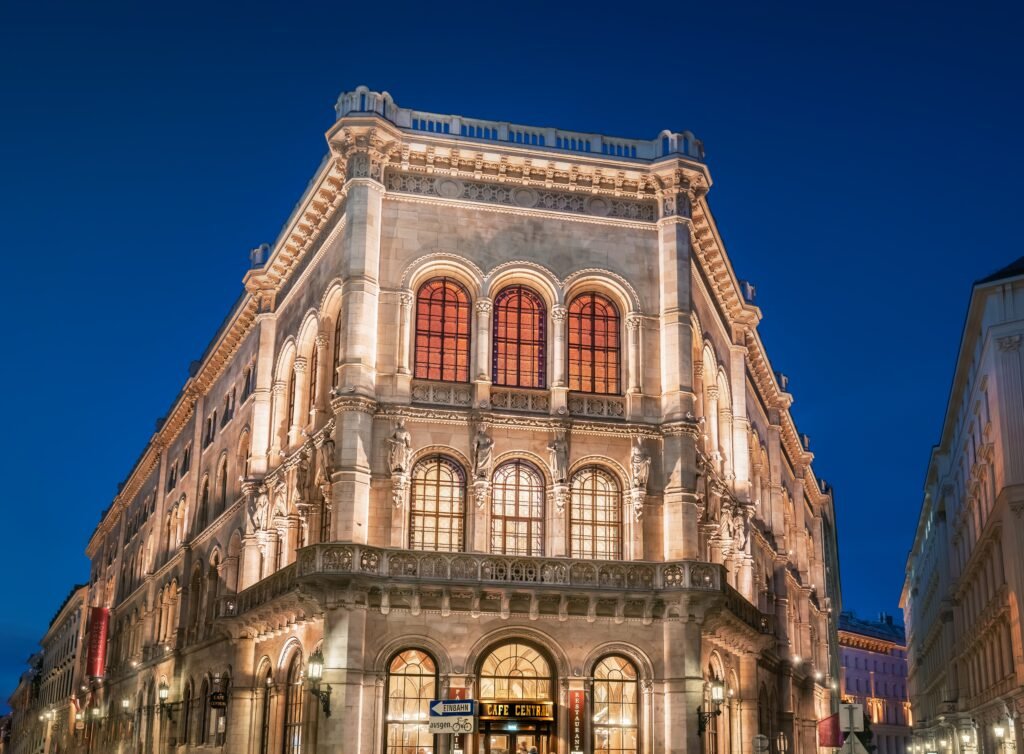
Opened in 1876 within the magnificent Palais Ferstel, it became one of the great gathering places of Vienna’s literary and intellectual elite.
Its soaring vaulted ceilings, slender columns and richly decorated interior created an atmosphere almost closer to a palace than a café.
Yet the people who gathered beneath those arches were not always interested in preserving the established order.
Among its celebrated patrons were writers Peter Altenberg, Alfred Polgar and Stefan Zweig, alongside psychoanalyst Sigmund Freud and architect Adolf Loos.
The Russian revolutionary Leon Trotsky also spent time here during his years in Vienna.
The contrast is irresistible: men discussing the collapse of empires while being served coffee beneath the architectural grandeur of one of Europe’s most powerful monarchies.
Peter Altenberg became so closely associated with Café Central that the establishment was practically an extension of his personal address.
The building itself is equally fascinating.
Palais Ferstel belongs to the ambitious nineteenth-century transformation that gave Vienna so many of its spectacular public buildings, grand boulevards and elaborate interiors.
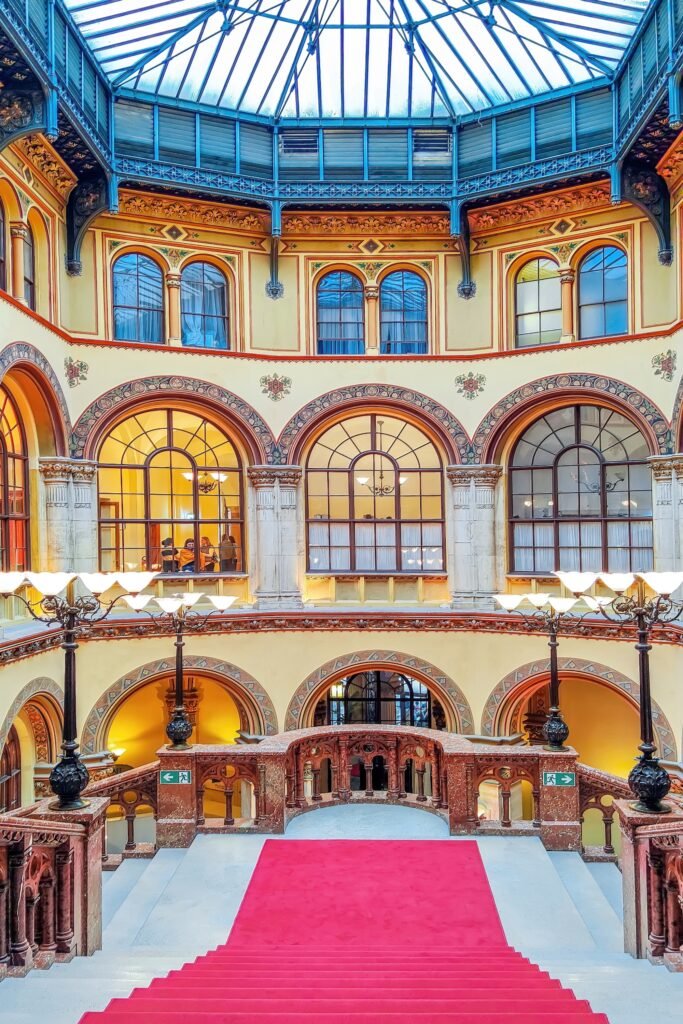
If you’re curious about the story behind that architectural confidence, our guide to The Architecture of Vienna: Why the City Looks So Grand explores how imperial ambition helped shape the city visitors see today.
Important visitor information: Café Central closed on 16 March 2026 for a major renovation, with reopening planned for winter 2026. During the closure, visitors can try DECENTRAL, its contemporary sister café at Freyung 3. Check the official Café Central website for reopening updates before travelling.
2. Café Landtmann: Freud’s Favourite Address on the Ringstrasse
Address: Universitätsring 4, 1010 Vienna
Best for: Grand Viennese elegance, traditional pastries and a glimpse of the imperial city’s social life.
Café Landtmann opened in 1873, the same year Vienna hosted its great World’s Fair.
It was a remarkable moment in the city’s development.
The Ringstrasse, Vienna’s grand boulevard, was transforming the former imperial capital into a modern European metropolis. Monumental public buildings, luxurious hotels and elegant cafés were appearing along its route.
Landtmann became part of this ambitious new city.
Situated near the Burgtheater, University of Vienna and Rathaus, the café attracted politicians, performers, academics and prominent members of society.
Sigmund Freud was among its best-known regular patrons.
It is easy to imagine why it appealed to him. The elegant surroundings offered a place to observe the rituals and peculiarities of Viennese society, while the location was conveniently close to the city’s intellectual institutions.
The café retains much of the polished atmosphere associated with the Ringstrasse’s golden age.
White tablecloths, upholstered seating, traditional service and an impressive pastry selection make it a particularly enjoyable place for a leisurely breakfast or afternoon coffee.
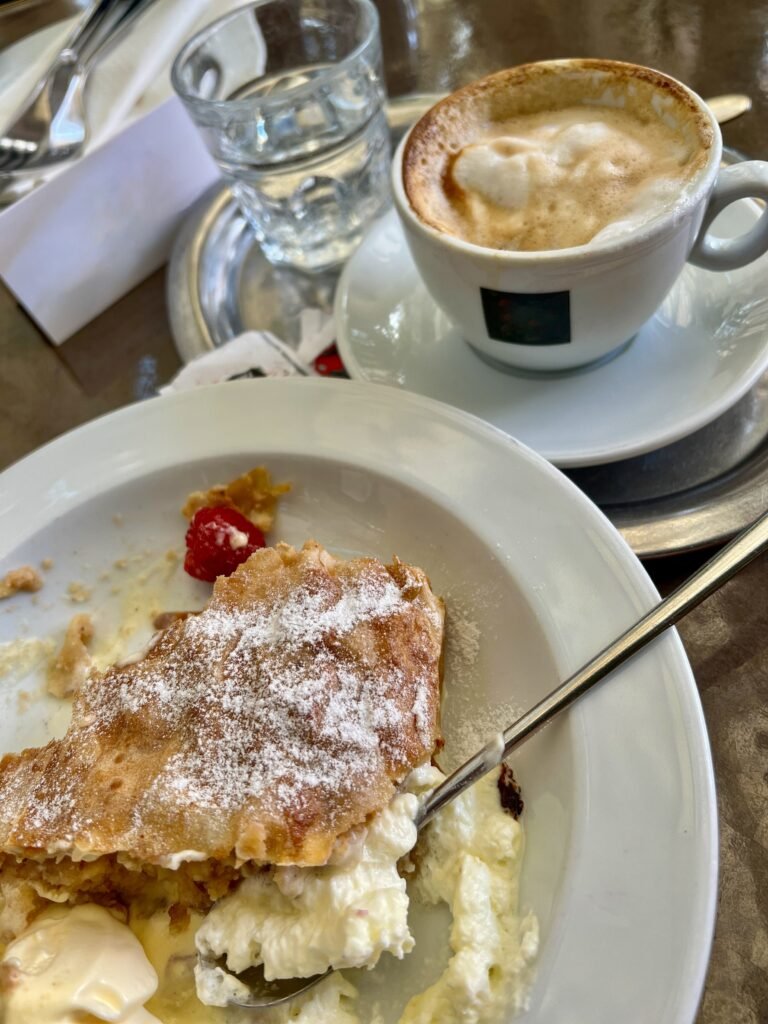
Order a Wiener Melange and a slice of Gugelhupf, the traditional Austrian ring-shaped cake.
Landtmann is one of the best places to appreciate the more refined, ceremonial side of Vienna’s coffeehouse tradition.
3. Café Museum: Where Vienna’s Artistic Revolution Gathered
Address: Operngasse 7, 1010 Vienna
Best for: Art Nouveau history, modernist design and the artists of the Vienna Secession.
Café Museum opened in 1899, during one of the most inventive periods in Viennese cultural history.
Its location could hardly have been more appropriate.
Just a short distance from the Secession Building, Vienna’s famous artists’ exhibition hall, it quickly became a gathering place for those challenging the artistic conventions of the nineteenth century.
The original interior was designed by Adolf Loos, the architect who would become one of the most outspoken opponents of unnecessary ornament.
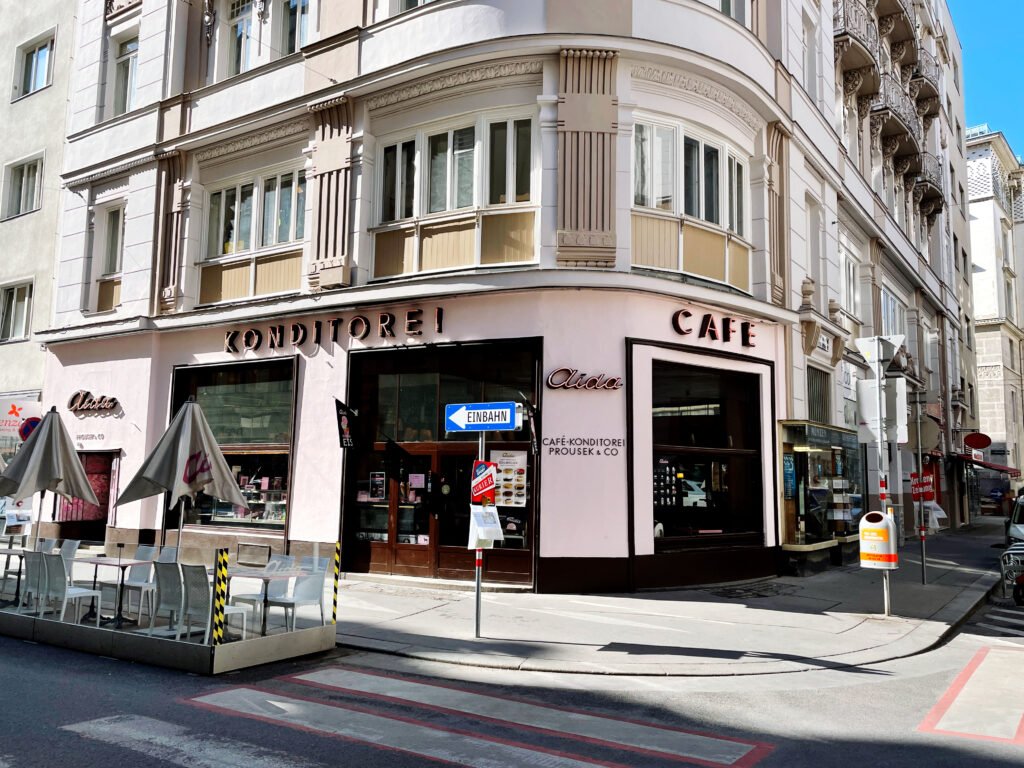
At a time when many Viennese cafés were filled with decorative flourishes and plush furnishings, Loos created something strikingly restrained.
His simplified approach was controversial, but it suited a generation of artists interested in breaking established rules.
Among the café’s notable visitors were Gustav Klimt, Egon Schiele, Oskar Kokoschka, Karl Kraus and Peter Altenberg.
The café became closely associated with the creative world surrounding the Vienna Secession.
Its interior has changed considerably since Loos’s original design. In 1931, architect Josef Zotti introduced a warmer style, and the café’s 2010 revival drew inspiration from that later period.
Today, Café Museum balances historical character with relatively restrained elegance.
It is an especially rewarding stop after visiting the Secession Building.
In fact, the two make a wonderful pairing for anyone following our Vienna Art Nouveau and the Secession Walking Guide, which explores the work of Otto Wagner, Gustav Klimt and the architects who helped transform the city.
You can spend the morning examining the art that challenged Vienna’s establishment, then sit in a café where many of those arguments once took place.
For anyone interested in the relationship between architecture, art and everyday life, few addresses in Vienna make a better pairing.
4. Café Hawelka: The Artists’ Living Room
Address: Dorotheergasse 6, 1010 Vienna
Best for: Bohemian atmosphere, artistic history and traditional Buchteln.
Not every great Viennese café resembles an imperial drawing room.
Café Hawelka is proof that character can be more compelling than grandeur.
Established by Leopold and Josefine Hawelka in 1936, the café developed into one of Vienna’s most distinctive cultural meeting places, particularly in the decades following the Second World War.
Its appeal was never primarily about polished elegance.
Instead, artists, writers, actors and musicians were drawn to an atmosphere that felt comfortably removed from conventional expectations.
The café became a place where creative people gathered, sometimes for hours, without any particular purpose beyond conversation.
The Hawelkas helped create that atmosphere through their remarkably personal approach to hospitality.
Over the years, the café welcomed figures from Austria’s artistic world as well as international visitors.
Inside, the room retains an informal, lived-in quality.
The furniture, subdued lighting and close arrangement of tables contribute to the feeling of entering somewhere that has accumulated decades of stories.
One tradition is especially worth seeking out.
In the evening, Café Hawelka serves Buchteln, soft yeast buns traditionally filled with plum jam.
Their arrival, traditionally around 8 pm, is part of the café’s enduring appeal.
For visitors who prefer a place with personality rather than perfection, Hawelka may be the most memorable coffeehouse in Vienna.
5. Café Sperl: A Nineteenth-Century Afternoon Preserved
Address: Gumpendorfer Straße 11, 1060 Vienna
Best for: Beautiful old-world interiors, unhurried afternoons and classic Viennese coffeehouse atmosphere.
Café Sperl opened in 1880, and walking inside can feel surprisingly close to entering a nineteenth-century photograph.
The proportions of the room are wonderfully generous.
High ceilings rise above dark timber panelling, bentwood chairs, marble tables and patterned upholstered benches. Traditional billiards tables contribute to the impression that the café belongs to another era.
Unlike some of Vienna’s more celebrated establishments, Sperl’s greatest appeal is not one famous historical patron.
It is the remarkable survival of the coffeehouse itself.
The building and its interiors preserve much of the character associated with Vienna’s late nineteenth-century cafés.
There is an appealing informality to the space, despite its handsome furnishings.
A person reading a newspaper can occupy a table beside friends enjoying cake, while other customers settle in for a longer conversation.
The café sits in the sixth district, within easy walking distance of the Naschmarkt and Vienna’s central cultural attractions.
It is an excellent place to stop during an afternoon exploring the streets beyond the historic centre.
And for anyone who loves the look of these old rooms, Vienna offers plenty of inspiration beyond its cafés. Our article on Viennese Interior Design: 7 Timeless Styles to Bring Old-World Elegance Home explores the furniture, materials and decorative traditions that give the city’s interiors their distinctive character.
Order the house Sperl Torte, if available, and allow enough time to enjoy the surroundings.
Of all Vienna’s historic coffeehouses, Sperl is particularly good at reminding visitors that the coffeehouse was designed for spending time, rather than saving it.
6. Café Frauenhuber: An Address with Mozart and Beethoven Connections
Address: Himmelpfortgasse 6, 1010 Vienna
Best for: Musical history, intimate atmosphere and traditional Austrian hospitality.
Café Frauenhuber offers a fascinating connection to Vienna’s musical past.
The coffeehouse traces its history at its present address to 1824, making it one of the city’s oldest surviving traditional cafés.
But the building’s musical associations stretch back even further.
Before it became the coffeehouse visitors know today, the premises operated as a dining establishment where musical performances were held.
According to the café’s historical records, Wolfgang Amadeus Mozart performed here in the late eighteenth century, and Ludwig van Beethoven also appeared at the venue.
That distinction is worth understanding: the composers performed in the earlier establishment occupying the premises, rather than in Café Frauenhuber as it exists today.
Even so, it is a remarkable connection.
The surroundings are smaller and quieter than those of Vienna’s grand Ringstrasse cafés.
Traditional furniture, warm interiors and a relatively intimate dining room create the feeling of somewhere that has maintained its identity despite the changing city outside.
This is a lovely choice for travellers who enjoy historic places without requiring a spectacular architectural setting.
It is also an appealing stop for anyone exploring Vienna through its extraordinary musical heritage.
7. Café Schwarzenberg: The Grandeur of the Ringstrasse
Address: Kärntner Ring 17, 1010 Vienna
Best for: Imperial-era interiors, traditional service and a leisurely stop near the State Opera.
Café Schwarzenberg is another surviving reminder of Vienna’s great Ringstrasse era.
The café occupies an impressive position on the famous boulevard, where the city’s nineteenth-century ambitions are still visible in the architecture.
Vienna’s tourism authority identifies Schwarzenberg as its oldest surviving Ringstrasse coffeehouse.
Step inside and the appeal becomes immediately apparent.
Tall windows, elegant furnishings and carefully preserved period character create an atmosphere far removed from the speed of modern coffee culture.
The café remains a place for traditional coffee specialties, cakes, conversation and the kind of attentive service that has long been associated with Vienna’s grand establishments.
Its history has not always been secure.
In 1980, the premises nearly became a car dealership, an extraordinary possibility given the character of the surviving interior.
Fortunately, that transformation was prevented.
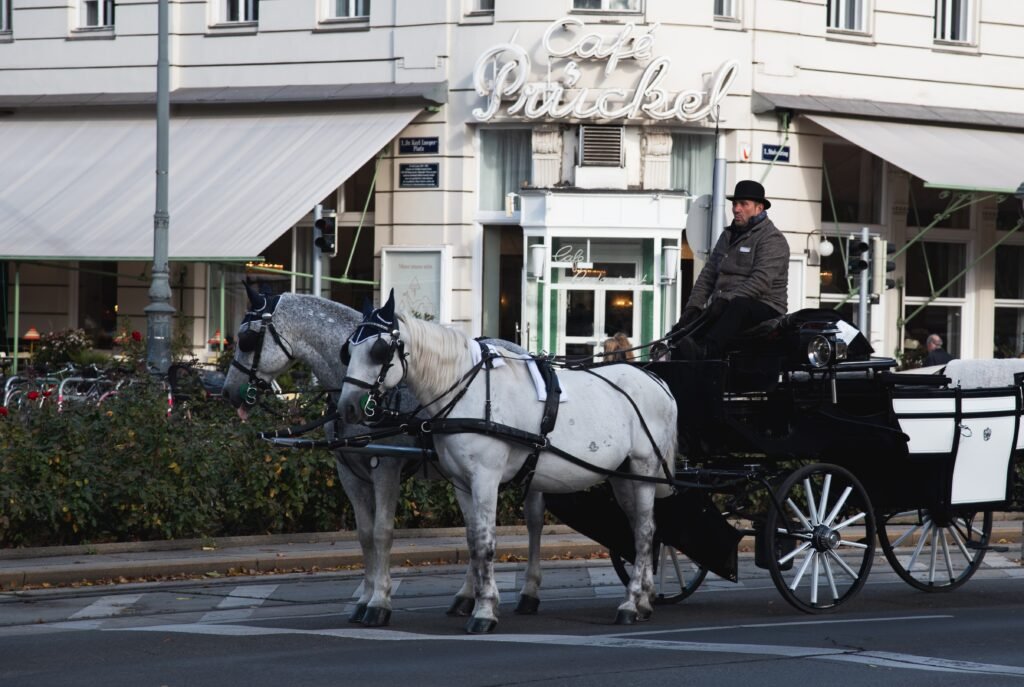
Today, Schwarzenberg provides a particularly attractive introduction to the classic Viennese coffeehouse.
Its location also makes it a convenient stop when exploring the State Opera, Musikverein and the surrounding historic streets.
Visit in the afternoon for coffee and cake, or enjoy the café as part of an evening in Vienna’s musical district.
8. Café Bräunerhof: The Literary Café of Thomas Bernhard
Address: Stallburggasse 2, 1010 Vienna
Best for: Literary connections, quieter elegance and an old-fashioned Viennese atmosphere.
For readers interested in Austrian literature, Café Bräunerhof deserves a place on the itinerary.
Its most famous regular was the novelist and playwright Thomas Bernhard, one of Austria’s most provocative twentieth-century writers.
Bernhard was renowned for his uncompromising criticism of Austrian society, its institutions and its cultural habits.
Yet despite his frequently hostile observations about the country, he remained strongly connected to Vienna’s coffeehouse world.
He visited the Bräunerhof almost daily.
There is something wonderfully characteristic about a writer who found so much to criticise in Austrian life becoming deeply attached to one of its most enduring traditions.
The café occupies a pleasant position in the historic centre, not far from the Hofburg and the elegant shopping streets around the Graben.
Its interior offers many of the details associated with traditional coffeehouse culture: marble tables, upholstered seating, newspapers and a sense that lingering is entirely acceptable.
Compared with the architectural spectacle of Café Central, the Bräunerhof is more understated.
But for those who enjoy visiting places connected to great writers, that is part of its charm.
Bring a book, order coffee and allow the afternoon to take its own course.
What Should You Order in a Traditional Viennese Coffeehouse?
One of the pleasures of visiting Vienna’s historic cafés is discovering that ordering coffee can feel like learning a small piece of the city’s language.
A few traditional choices are particularly worth knowing.
Wiener Melange
Perhaps Vienna’s most recognisable coffee specialty.
A Melange combines coffee with warm milk and a layer of milk foam, creating a smooth drink somewhat similar to a cappuccino.
It is an excellent starting point for a first visit.
Einspänner
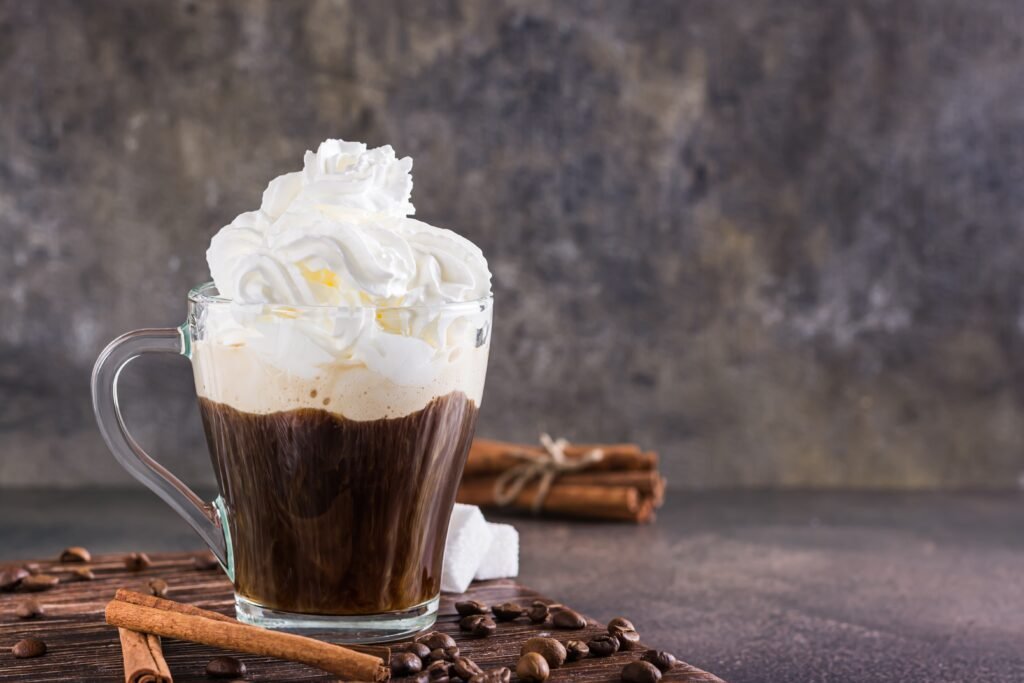
A stronger coffee served in a glass, traditionally topped with a generous layer of whipped cream.
Its name is associated with Vienna’s old single-horse carriage drivers, who needed a drink that would remain warm while they worked.
Kleiner Brauner
A small black coffee served with milk or cream on the side.
A good choice for those who prefer their coffee stronger and less milky.
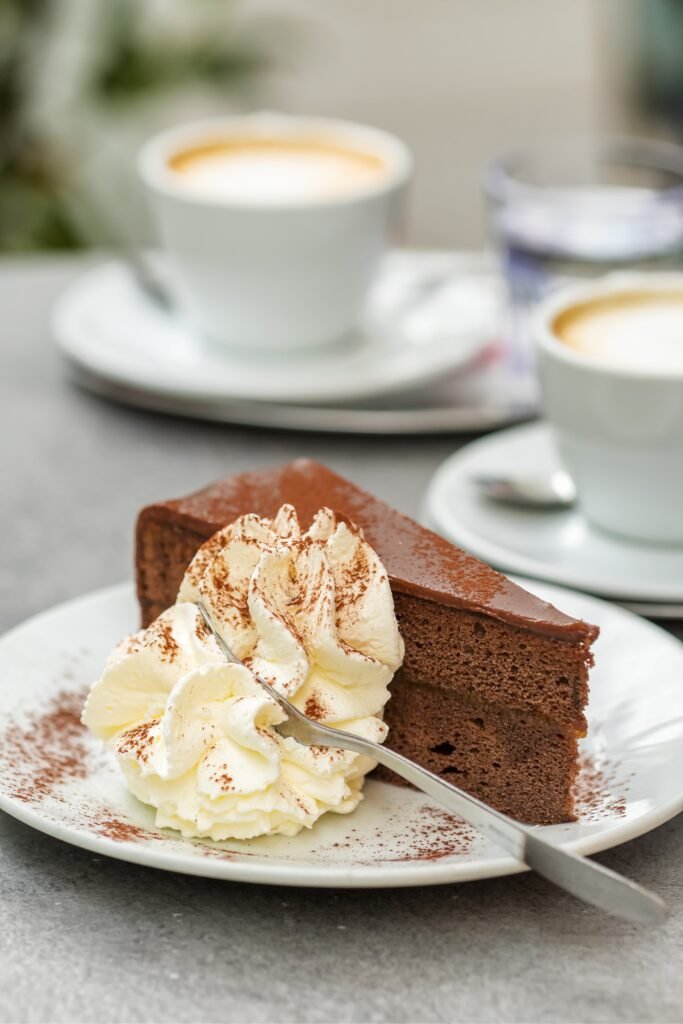
The cakes and pastries
The pastries are every bit as important as the coffee.
Look for Apfelstrudel, Sachertorte, Gugelhupf and the many beautiful cakes displayed in traditional glass cabinets.
At Café Hawelka, the evening Buchteln are particularly worth trying.
And do not be surprised when your coffee arrives with a small glass of water.
It is one of the characteristic rituals of Viennese coffeehouse service.
The Colours and Interiors of Vienna’s Coffeehouses
There is another reason these rooms stay in the memory long after the coffee has been forgotten.
Their interiors are extraordinarily beautiful.
Dark walnut timber. Burgundy upholstery. Marble tabletops. Bentwood chairs. Brass details softened by time. Tall windows framed by curtains that seem perfectly suited to an afternoon of doing very little.
What makes these spaces appealing is not simply that they are old.
It is the balance between grandeur and comfort.
The most beautiful Viennese cafés feel elegant without making their guests uncomfortable. The furniture is designed to be used. The tables are intended for conversation. The rooms reward people who stay.
That balance also makes Vienna a wonderful source of inspiration for interiors at home.
If you love the deep reds, warm creams and aged timber found in these historic rooms, our 5 Timeless Vienna Colour Palettes for an Elegant Old-World Home includes a coffeehouse-inspired palette built around burgundy, walnut and soft neutrals.
You don’t need an imperial apartment to borrow the atmosphere.
Sometimes an old wooden chair, a marble-topped table and a good book are enough.
How to Experience Vienna’s Historic Cafés
It would be easy to turn Vienna’s coffeehouses into another checklist of attractions.
But that rather misses the point.
The best approach is to choose two or three cafés that genuinely interest you and make them part of a slower day exploring the city.
For a literary afternoon, begin around the Hofburg and Herrengasse, where Café Central and Café Bräunerhof connect visitors to Vienna’s extraordinary community of writers and thinkers.
Continue through the historic centre to Café Hawelka, where the atmosphere is more informal and artistic.
For an architecture-focused afternoon, combine the Secession Building with Café Museum, then walk towards Café Sperl for a quieter experience in a beautifully preserved interior.
And for a taste of the imperial city, Café Landtmann and Café Schwarzenberg offer two contrasting examples of the great Ringstrasse coffeehouse tradition.
There is no need to visit every café in a single day.
In fact, the experience is probably better when you don’t.
A Viennese coffeehouse rewards the visitor who arrives without an immediate plan to leave.
Vienna and Budapest: Two Great Coffeehouse Cities
Vienna is not the only city shaped by the coffeehouse tradition.
Across the former Austro-Hungarian Empire, cafés became important gathering places for writers, journalists, artists and political thinkers.
Perhaps nowhere is that legacy more visible than Budapest.
The Hungarian capital developed its own spectacular coffeehouse culture, with establishments such as the New York Café becoming celebrated meeting places for the city’s literary and artistic communities.
There are similarities between the two cities, but also important differences.
Vienna’s coffeehouses often favour an atmosphere of polished restraint, even when their interiors are undeniably grand.
Budapest’s most famous historic cafés can feel altogether more theatrical, with gilded interiors and richly decorative architecture.
Both are worth experiencing.
If you’re planning a journey through Central Europe, our guide to The Historic Cafés of Budapest: Where Writers, Artists and Revolutionaries Met makes a natural companion to this Vienna itinerary.
Together, the two cities offer a fascinating glimpse into the social and intellectual life of the former empire.
Why Vienna’s Historic Coffeehouses Still Matter
Vienna is famous for its palaces, museums, concert halls and monumental architecture.
But some of the most revealing places in the city are much smaller.
Inside its coffeehouses, the distance between history and everyday life seems unusually short.
The rooms where writers debated ideas and artists challenged convention are still places where people meet friends, read newspapers, work through problems and watch the world go by.
The old empire has disappeared. Artistic revolutions have become museum exhibitions. The political arguments of a century ago belong to history.
Yet the simple pleasure of spending an afternoon in a café remains.
Perhaps that is the real achievement of Vienna’s coffeehouse culture.
It has preserved not only beautiful interiors and fascinating stories, but a way of experiencing the city that feels increasingly valuable.
Order a coffee. Choose a table. Stay a little longer than you intended.
In Vienna, that may be the most authentic experience of all.
Britt & Tyler
We’re Britt and Tyler, the two Australians behind Cocktails & Cathedrals. We’re drawn to old buildings, beautiful rooms, bookshops and places that seem to hold a story. Our journal brings those interests together, with a fondness for slow afternoons and a well-made cocktail. We hope it helps you find places you’ll want to linger.
Travel slowly. Stay beautifully.
A little more about us →