Vernacular Interiors: The Design Style You Know Without Knowing Its Name
There is a particular kind of room that feels as though it could never belong anywhere else.
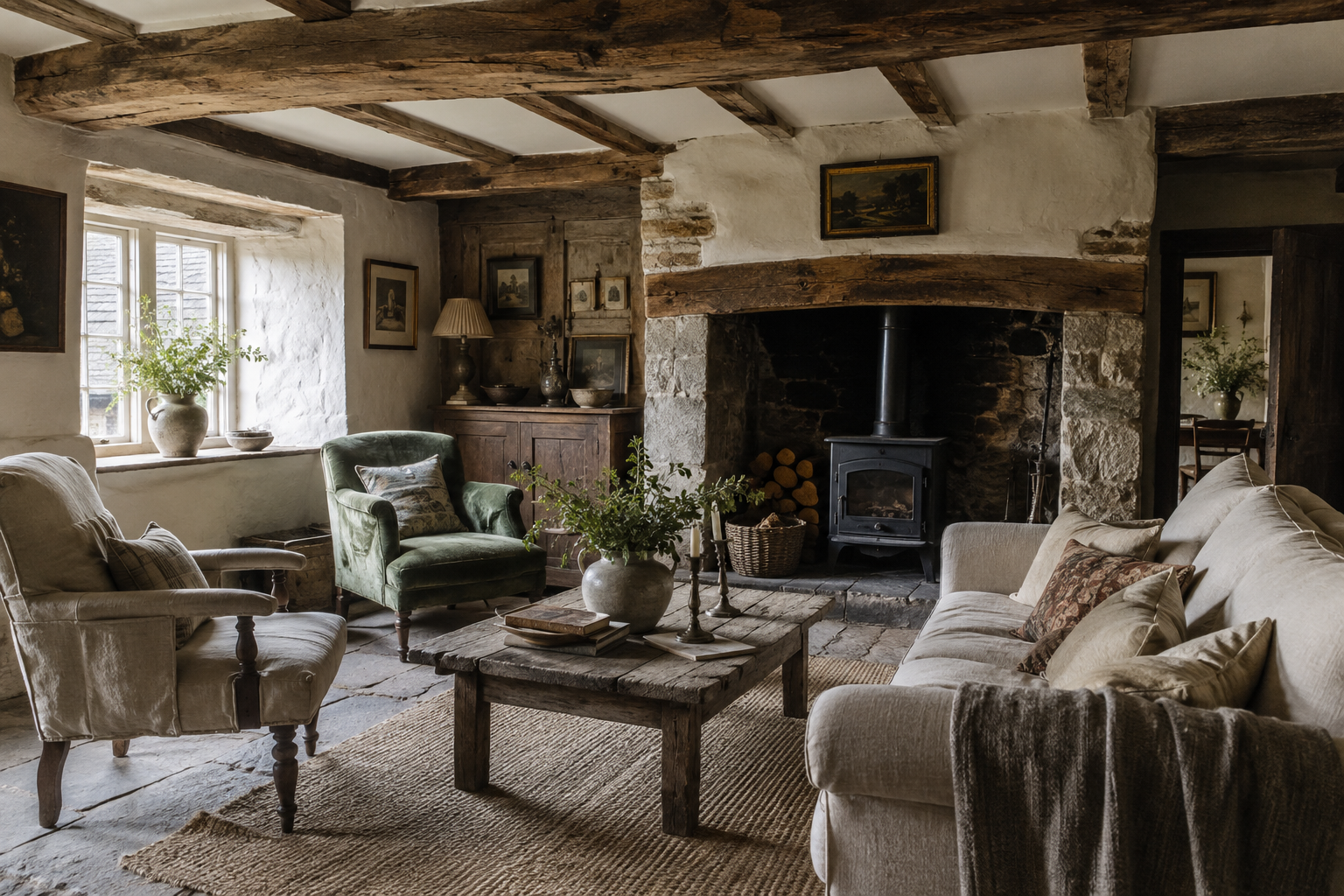
A stone cottage in the Cotswolds with low beams and limewashed walls. A whitewashed house on a Greek island, its rooms cool and simple beneath the Mediterranean sun. A Tuscan farmhouse with terracotta floors worn smooth over generations. A timber cabin tucked into the mountains of Norway.
None of these interiors were originally designed to follow a trend.
They simply belonged to their place.
And that, essentially, is vernacular design.
It may be one of the oldest forms of interior design in the world, yet it is a term relatively few people outside architecture and design circles ever use.
Today, when interiors can begin to look remarkably similar from London to Los Angeles, vernacular design offers something increasingly rare: a home with a genuine sense of place.
What Is Vernacular Design?
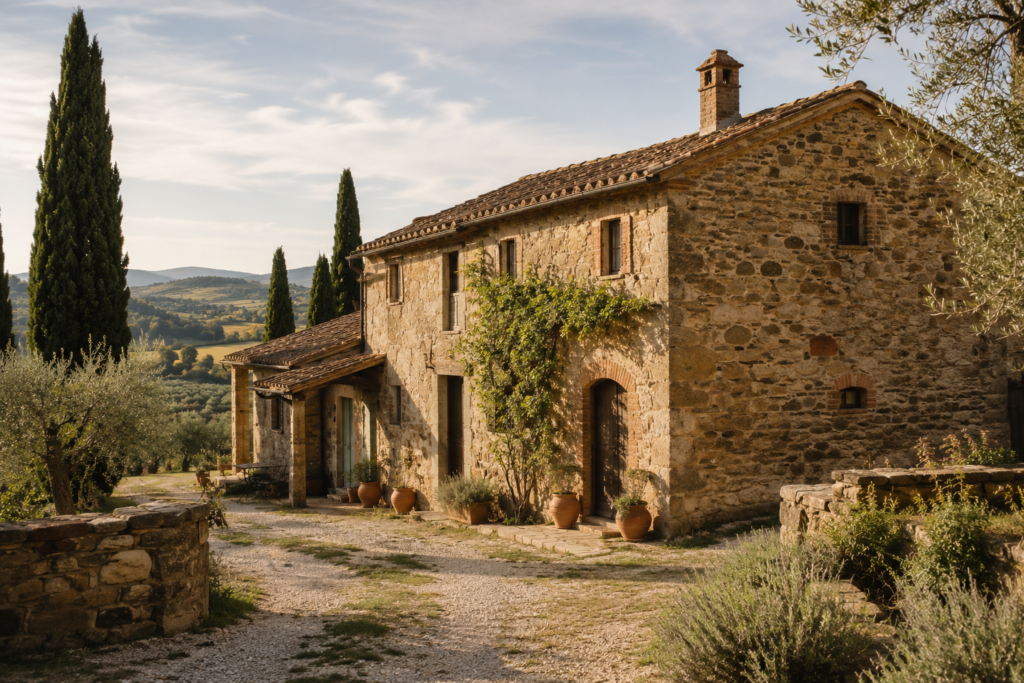
Vernacular design describes buildings and interiors shaped primarily by local materials, climate, craftsmanship and tradition.
Rather than beginning with an aesthetic and searching for materials to create it, vernacular architecture traditionally worked the other way around.
People built with what was available.
In a region rich in limestone, houses were built from limestone.
Where forests were abundant, timber dominated.
In hot, dry climates, thick masonry walls helped keep interiors cool. In colder regions, smaller windows, fireplaces and heavy timber construction helped retain warmth.
Over generations, these practical decisions slowly developed into distinctive regional styles.
The result was architecture that didn’t merely sit within a landscape.
It belonged to it.
Before Interior Design Became “Interior Design”
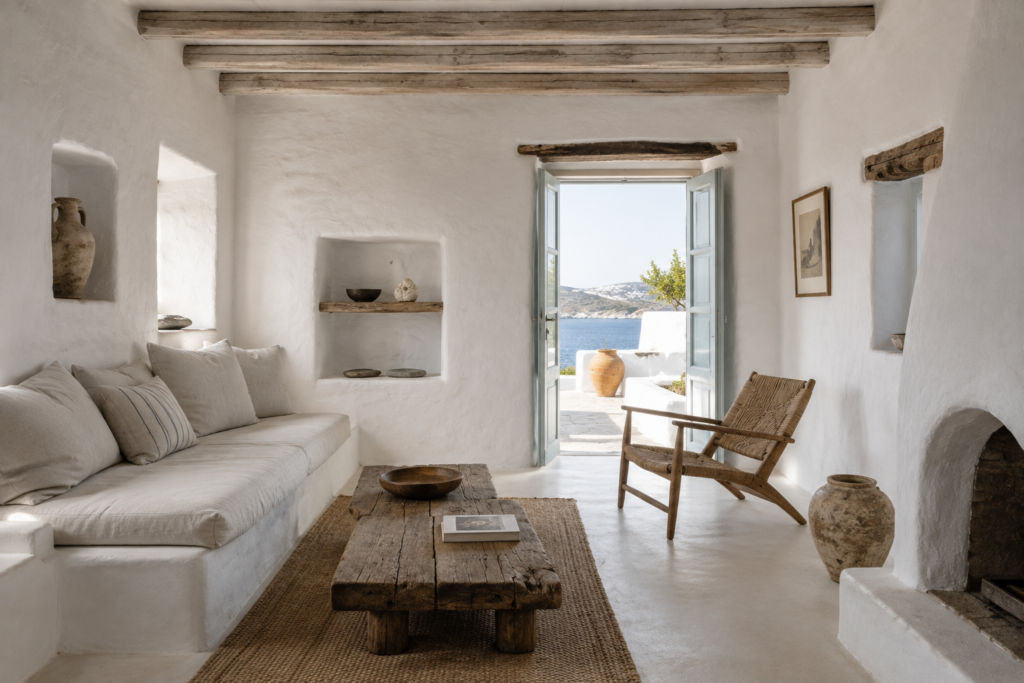
One of the most fascinating things about vernacular interiors is that many of their most beautiful features were never intended to be decorative.
Exposed beams weren’t installed to create rustic character. They held up the roof.
Stone walls weren’t exposed because someone wanted texture. Stone was simply what the house was made from.
Terracotta tiles weren’t chosen from a showroom to add Mediterranean warmth. They were produced from local clay.
Alcoves, shutters, fireplaces, built-in benches and deep window reveals often existed because they solved practical problems.
And yet centuries later, these are precisely the details we try to recreate.
Perhaps that’s part of their appeal.
Vernacular interiors possess something that deliberately styled rooms sometimes struggle to achieve: authenticity without effort.
Vernacular Design Looks Different Everywhere
Unlike Art Deco, Bauhaus or Mid-Century Modernism, vernacular design doesn’t have a single recognisable appearance.
There is no universal vernacular colour palette.
No particular chair.
No definitive floor plan.
Instead, vernacular design changes completely depending on where you are.
England
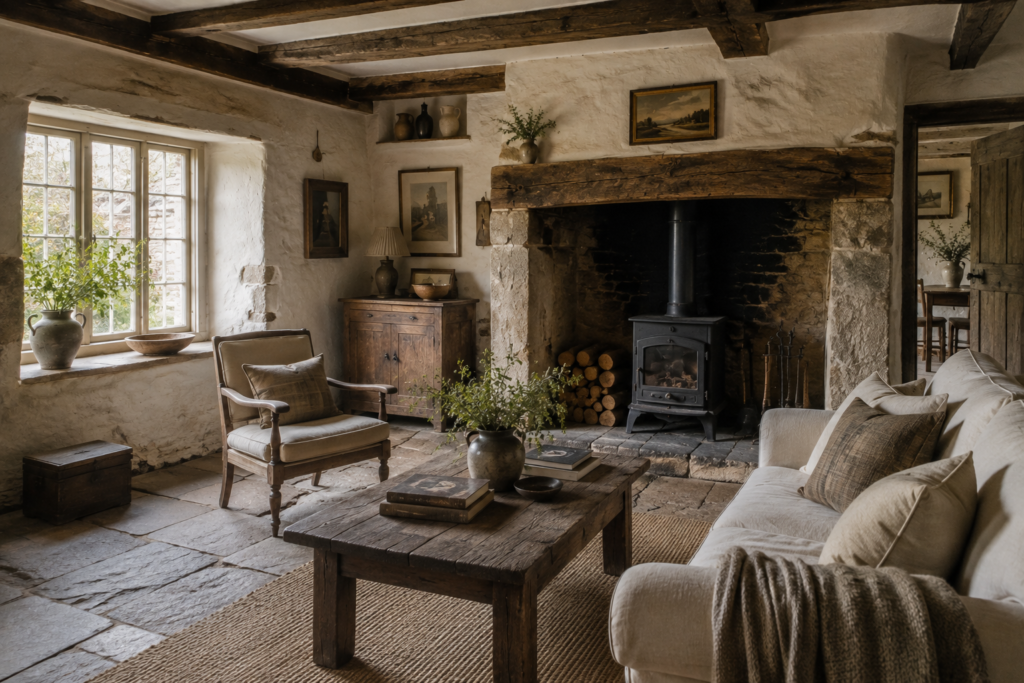
Traditional English vernacular interiors might include exposed oak beams, limestone or brick fireplaces, flagstone floors, plaster walls and small-paned windows.
Furniture often feels collected rather than coordinated, with timber pieces, upholstered chairs and objects accumulated over generations.
Tuscany
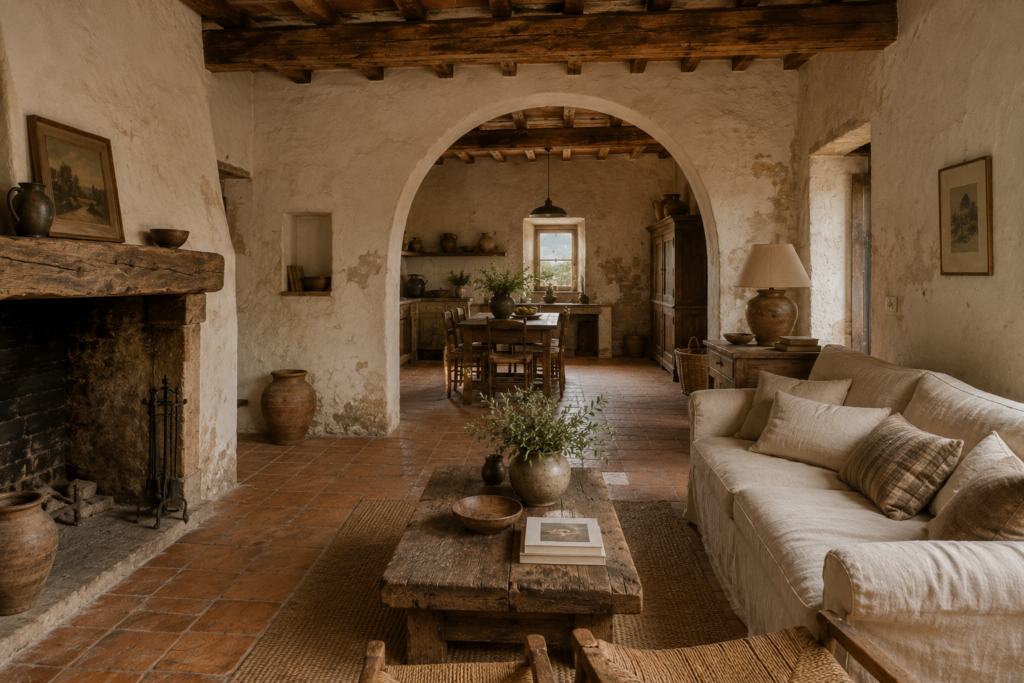
In rural Tuscany, vernacular interiors often feature terracotta floors, rough plaster walls, exposed timber ceilings and local stone.
The palette comes almost directly from the landscape: clay, olive, ochre, faded cream and warm brown.
The Greek Islands
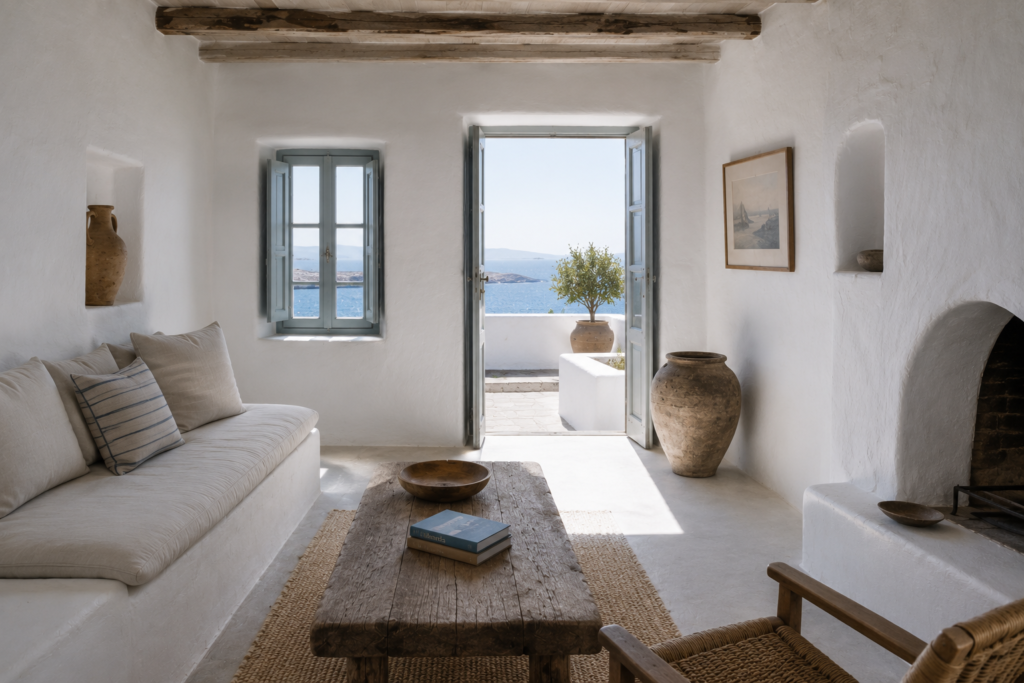
Traditional Cycladic homes developed around an entirely different climate.
Thick whitewashed walls reflect the intense Mediterranean sun, while small openings and simple built-in furniture help interiors remain cool.
The result is the wonderfully restrained combination of white plaster, stone, timber and occasional flashes of blue that has become synonymous with the Greek islands.
Scandinavia
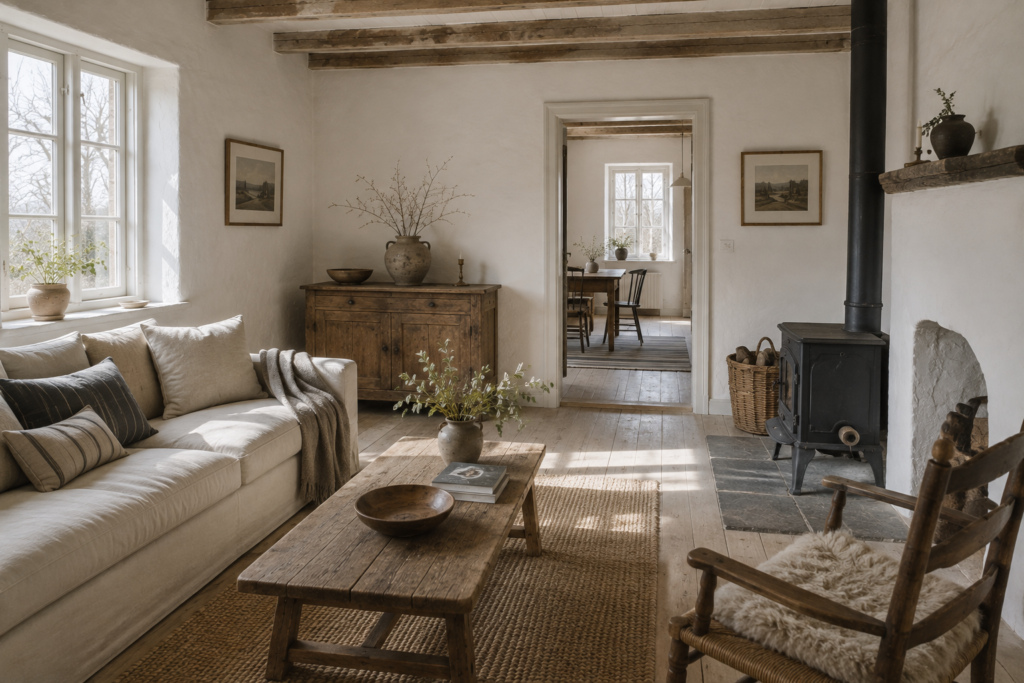
Northern European vernacular traditions responded to long winters and limited daylight.
Timber construction, fireplaces, painted wood, woven textiles and relatively simple furniture created interiors that were practical but deeply comforting.
Long before hygge became an international design concept, Scandinavian homes were already being shaped around warmth, shelter and the realities of northern life.
Why Vernacular Interiors Feel So Good
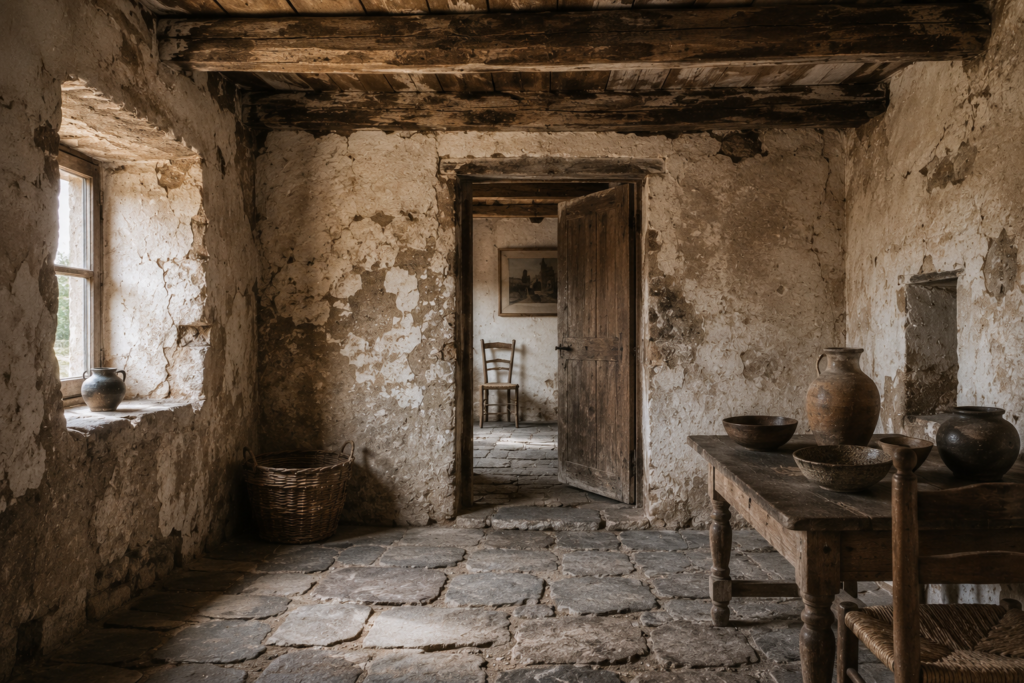
There is often an imperfection to vernacular interiors.
Floors aren’t perfectly level.
Walls aren’t perfectly straight.
Timbers bear marks from tools and age.
Stone varies in colour and texture.
Nothing feels particularly manufactured.
These irregularities give a room visual depth, but they also give it a sense of history.
Modern construction has become extraordinarily good at producing perfect surfaces. Plasterboard is flat. Tiles are identical. Engineered flooring repeats predictably. Cabinetry can be manufactured to millimetre precision.
Vernacular interiors remind us that beauty doesn’t necessarily require perfection.
Sometimes the crooked beam is the best thing in the room.
The Materials Matter
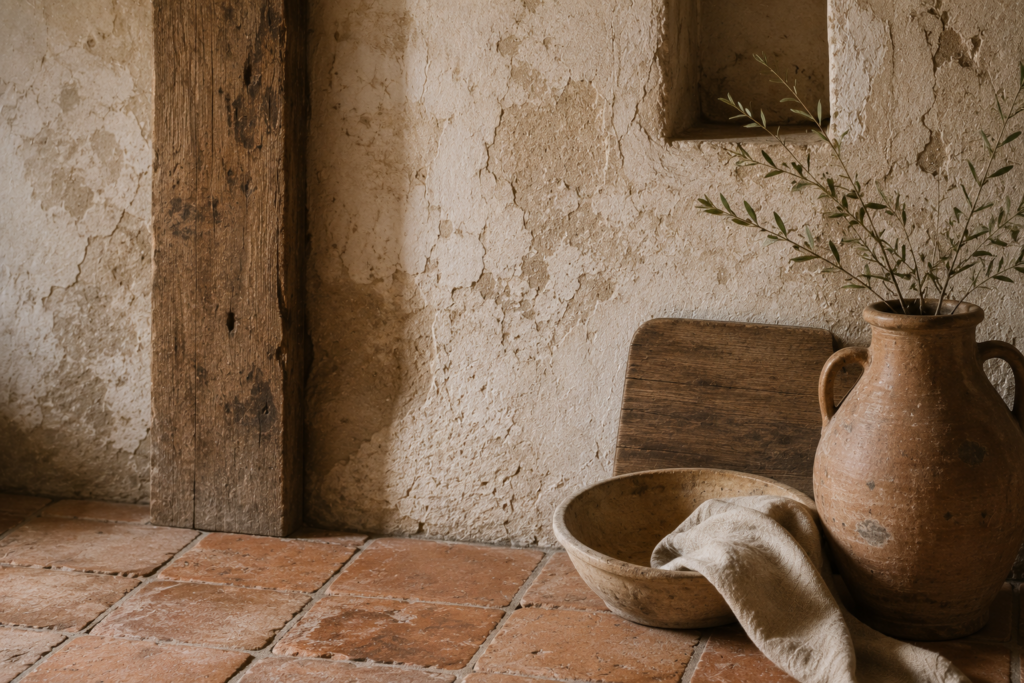
If you want to borrow from vernacular design, materials are far more important than decorative accessories.
Look toward materials that could plausibly have come from the landscape surrounding the house:
Stone. Lime plaster. Timber. Terracotta. Brick. Slate. Linen. Wool. Iron.
Better still if those materials are allowed to look like themselves.
Timber doesn’t necessarily need to be perfectly polished.
Stone doesn’t need to be completely uniform.
Linen can crease.
Brass can tarnish.
A vernacular interior tends to become more beautiful as its materials age.
That is almost the opposite of many contemporary interiors, where the goal is often to keep everything looking permanently new.
How to Bring Vernacular Style Into a Modern Home
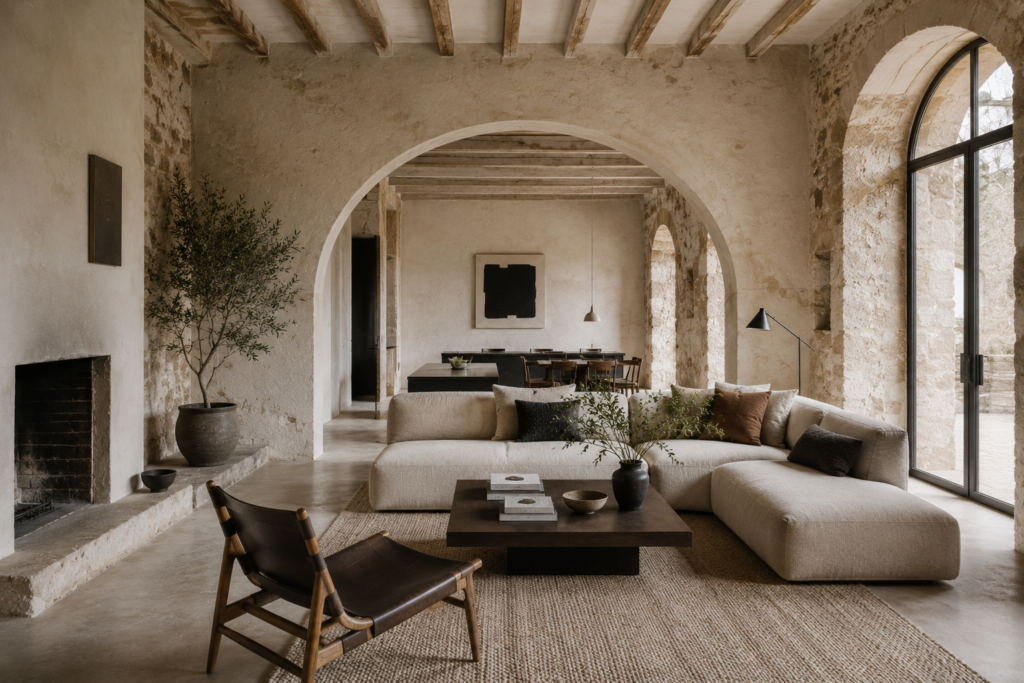
You don’t need to live in a 300-year-old farmhouse to introduce vernacular ideas into your home.
In fact, copying historical architecture too literally can quickly make a newer house feel theatrical.
Instead, borrow the philosophy.
Start With Where You Live
Ask what materials traditionally belong to your region.
Local stone, timber species, clay, brick and natural fibres can immediately make a house feel more connected to its surroundings.
Choose Natural Materials
Where possible, favour materials that develop character rather than deteriorate visually.
Solid timber, natural stone, linen, aged metals and handmade ceramics become more interesting with use.
If you love the way vernacular interiors borrow their colours from landscape and local materials, have a look at my 10 vernacular colour palettes inspired by place.
Let Things Be Imperfect
Not every surface needs to be flawless.
Handmade tiles with subtle variations, limewashed walls, reclaimed timber and irregular stone can prevent a room from feeling overly manufactured.
Avoid Over-Styling
Vernacular interiors rarely look as though every object arrived on the same afternoon.
Furniture can come from different periods. Art doesn’t need to match the sofa. Old pieces can sit comfortably beside new ones.
The goal is a room that appears to have evolved.
Look to Architecture Before Décor
This might be the most important lesson.
Instead of trying to create character entirely through cushions, lamps and accessories, consider the bones of the room.
A deep window reveal.
An arched opening.
A timber ceiling.
A plaster fireplace.
A built-in niche.
A beautiful floor.
When the architecture provides the character, surprisingly little decoration is required.
Vernacular Doesn’t Mean Rustic
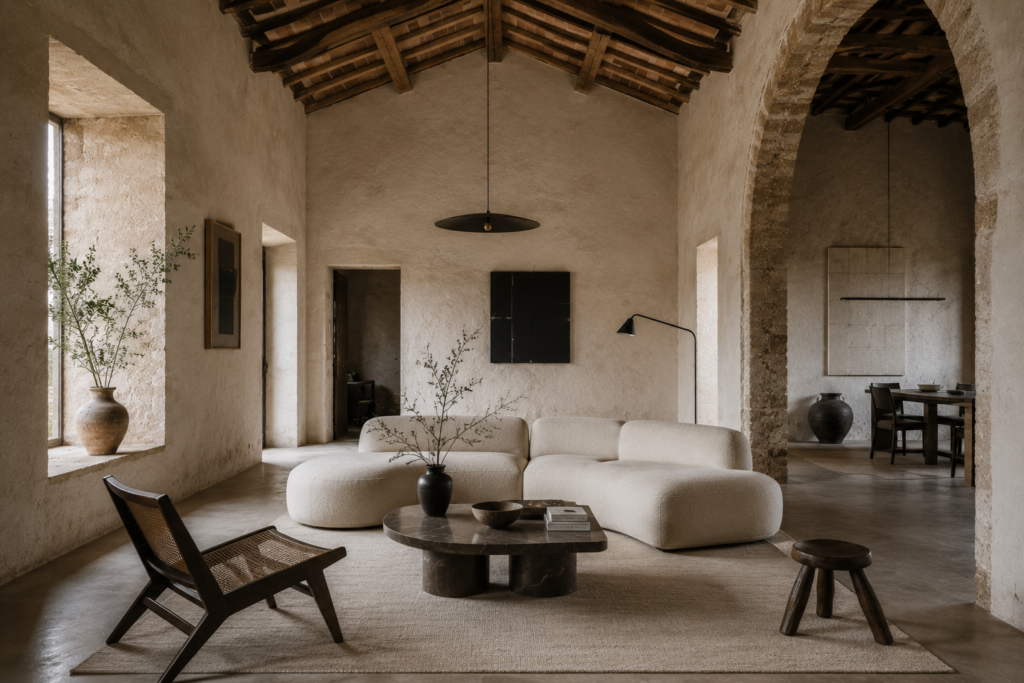
This is where the style becomes particularly interesting.
Vernacular design is often associated with rustic cottages and farmhouses, but it doesn’t necessarily need to look rustic at all.
A room might contain centuries-old stone walls and an extremely contemporary sofa.
A traditional Mediterranean house might have simple modern lighting and almost no decoration.
An old timber cottage could contain beautifully restrained Scandinavian furniture.
The contrast can make the original architecture feel even stronger.
The secret is allowing the building to remain the dominant voice.
Why Vernacular Design Feels Relevant Again
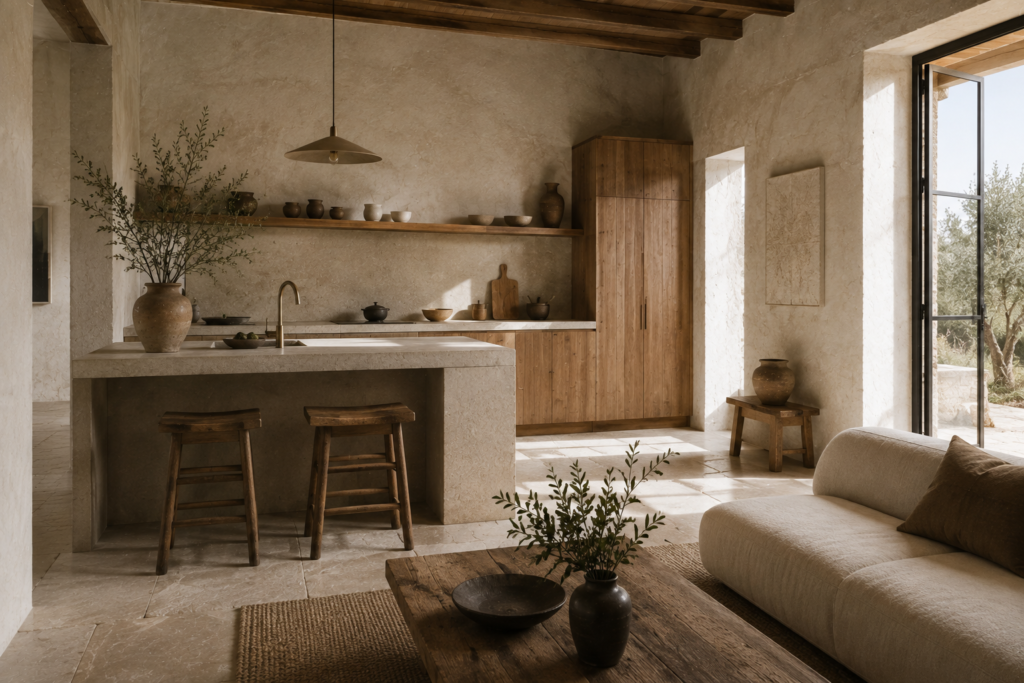
For the past decade, interior design has been remarkably global.
The same marble kitchen islands, boucle chairs, brass fittings and neutral palettes appear in homes thousands of kilometres apart.
They can be beautiful.
But sometimes it becomes difficult to tell whether you’re looking at a house in Sydney, California, London or Copenhagen.
Vernacular design proposes something different.
Instead of asking:
What is everyone else doing?
It asks:
What belongs here?
That small change in thinking can produce homes that feel far more individual.
And perhaps that’s why we’re seeing renewed interest in limewash, natural stone, handmade tiles, reclaimed timber, local craftsmanship and traditional building techniques.
They give houses something difficult to purchase from a catalogue.
A sense of belonging.
A Style That Was Never Really a Style
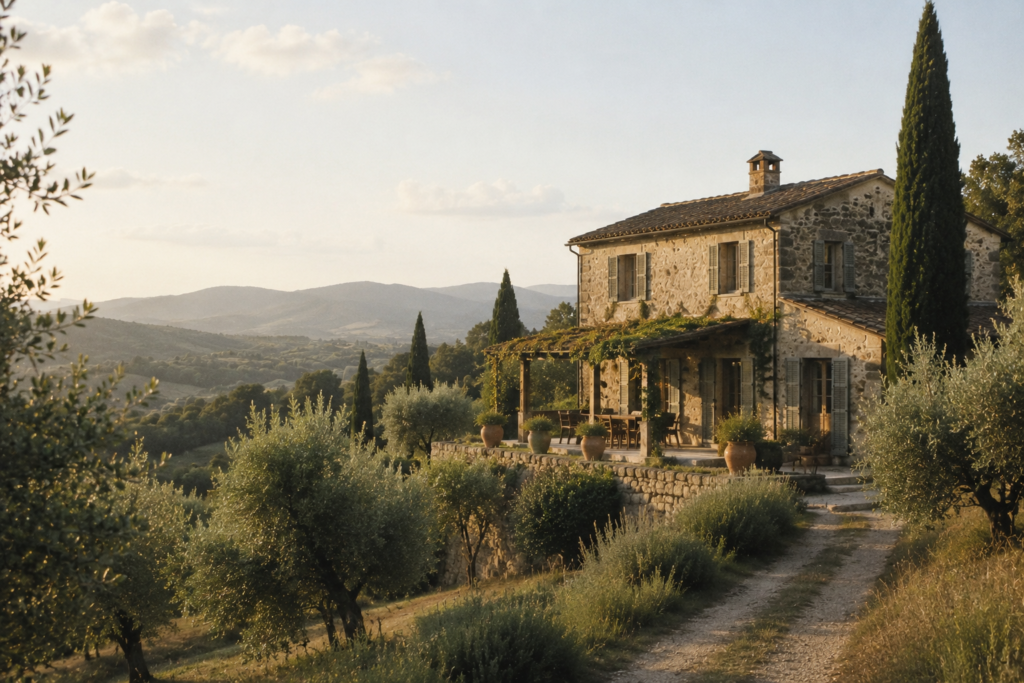
The irony of vernacular design is that the people who created some of its most beautiful examples probably wouldn’t have considered themselves designers at all.
They were simply building houses with the materials, skills and knowledge available to them.
Generation after generation refined those solutions until entire regions developed their own architectural language.
Today, we can borrow from those traditions.
But perhaps the most useful lesson isn’t to recreate a Tuscan farmhouse or an English cottage.
It’s to rediscover the idea behind them.
Look at the landscape. Use honest materials. Respect craftsmanship. Design for the climate. Allow things to age. And create a home that couldn’t quite belong anywhere else.
That might be the most timeless interior design style of all.
Britt & Tyler
We’re Britt and Tyler, the two Australians behind Cocktails & Cathedrals. We’re drawn to old buildings, beautiful rooms, bookshops and places that seem to hold a story. Our journal brings those interests together, with a fondness for slow afternoons and a well-made cocktail. We hope it helps you find places you’ll want to linger.
Travel slowly. Stay beautifully.
A little more about us →