9 Art Deco Interior Details to Steal from Europe’s Grand Hotels
From sculptural lighting and curved furniture to polished wood and geometric floors, discover the Art Deco details that give Europe’s grand hotels their unmistakable glamour.
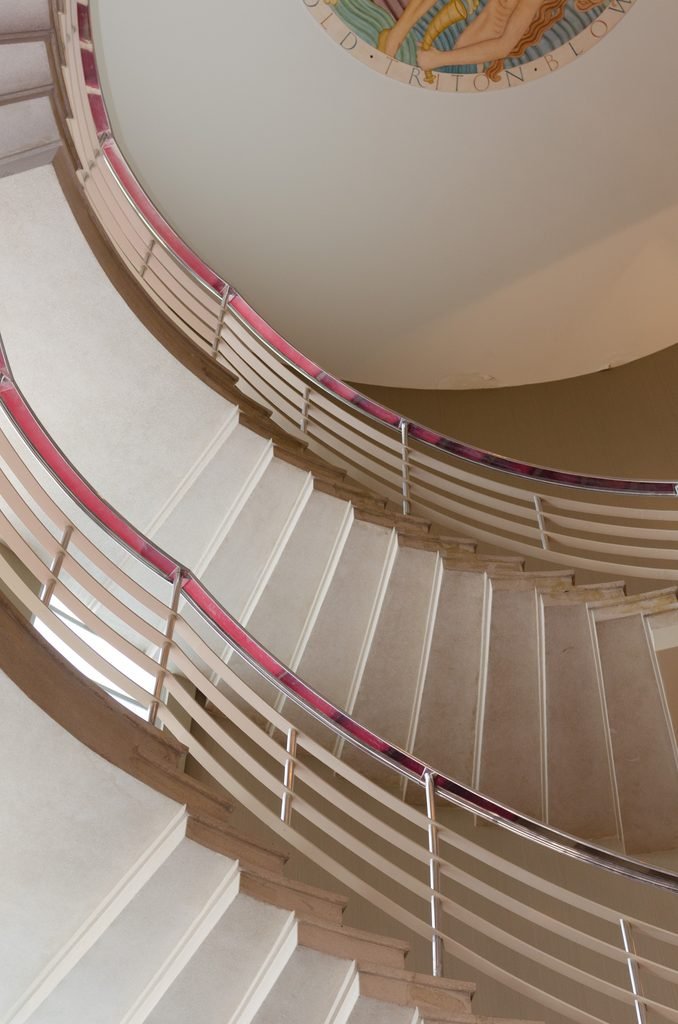
There is something wonderfully theatrical about stepping into a grand European hotel. Perhaps it’s the glow of a brass wall lamp against a dark timber panel, the sweep of a velvet sofa, or a beautifully patterned marble floor that makes an entrance feel like an occasion.
Look closely and you’ll spot the Art Deco interior details that give these hotels their character, from the curve of a chair to the pattern underfoot.
Emerging in the early twentieth century and flourishing during the 1920s and 1930s, Art Deco brought together geometry, craftsmanship, luxurious materials and a fascination with modernity. It found a natural home in the hotels, theatres, restaurants and fashionable apartments of Europe’s great cities.
Unlike the delicate ornamentation of Art Nouveau, Art Deco embraced strong shapes, polished surfaces, symmetry and an unmistakable sense of confidence.
But what makes an Art Deco interior so captivating isn’t necessarily one dramatic statement piece. It’s the smaller details working together: the curve of a chair echoed in a ceiling, the warm reflection of a lamp in a polished table, or the repetition of geometric patterns throughout a room.
And while few of us have the proportions or budget of a grand European hotel, these details are surprisingly easy to borrow.
Here are nine Art Deco interior details worth bringing home.
1. Sculptural Lighting That Doubles as Decoration
In an Art Deco interior, lighting is rarely an afterthought.
Look closely at the interiors of grand hotels from the period and you’ll often notice beautifully considered lamps and wall lights. Frosted glass globes, stepped brass bases, symmetrical sconces and elegant metal stems all contribute to the overall design.
The shapes are often relatively simple, but their proportions make them feel sculptural.
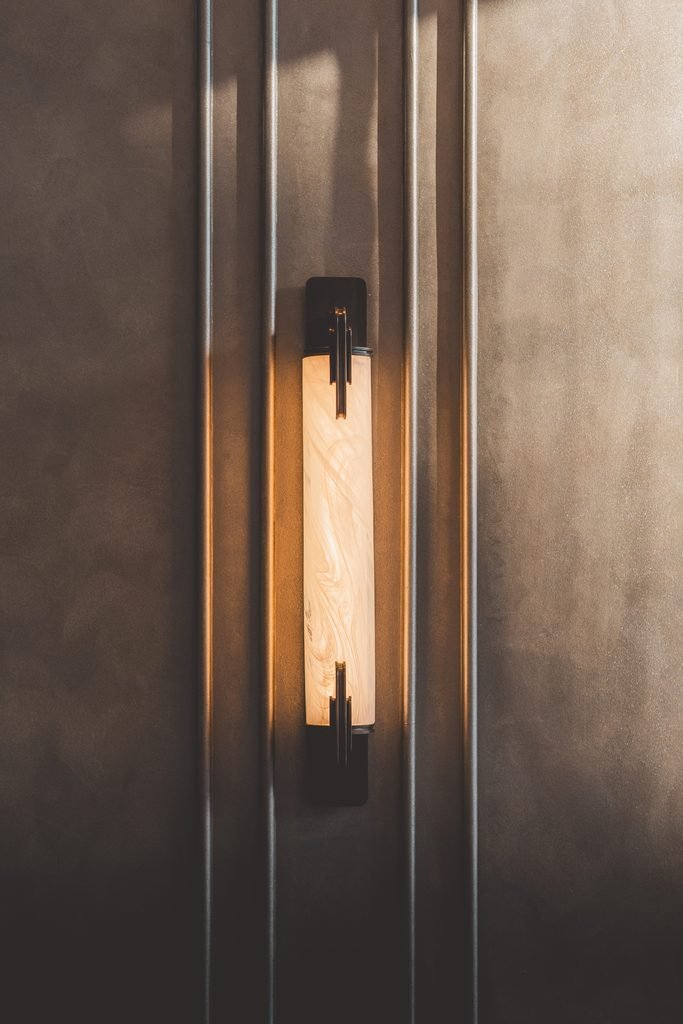
One particularly beautiful detail is the way rounded glass shades can echo the curves of furniture, ceilings or architectural features elsewhere in the room. This repetition creates a sense of harmony without everything needing to match.
Bring it home: Replace an ordinary bedside lamp with a brass-and-opal-glass design, or introduce a pair of geometric wall sconces beside a mirror. Even one carefully chosen light fitting can lend a modern bedroom or sitting room a touch of grand-hotel elegance.
Warm, diffused light is particularly effective, bringing softness to the polished surfaces and darker colours often associated with Art Deco.
2. Curved Furniture with a Sense of Occasion
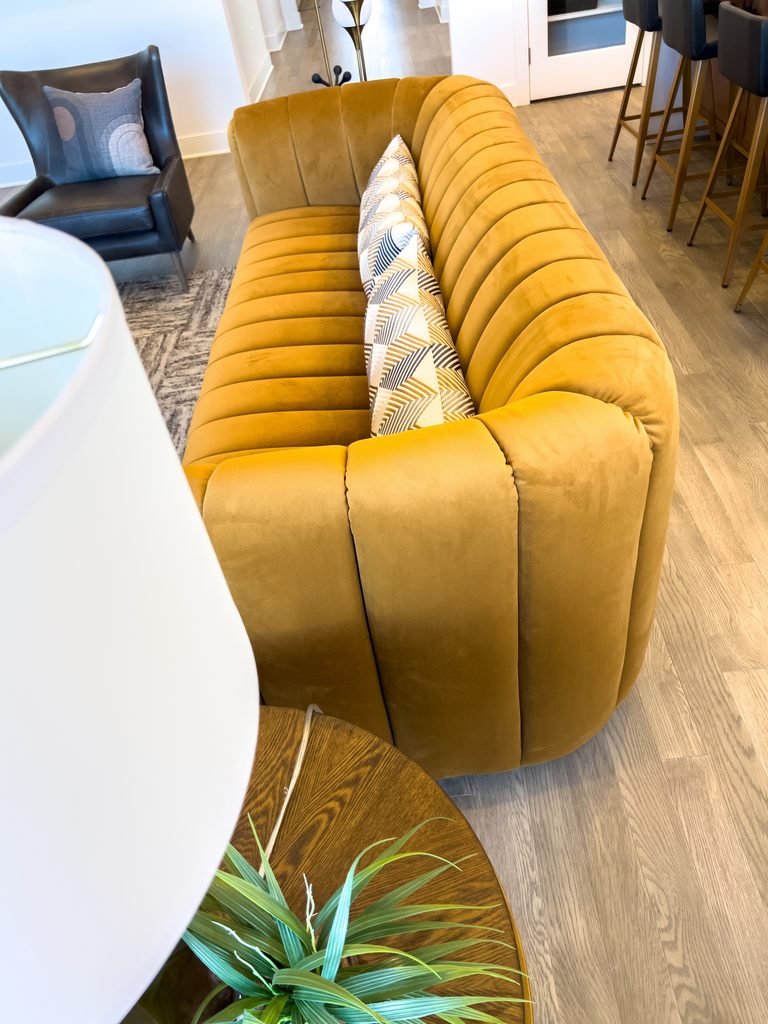
Art Deco may be famous for its angular patterns, but some of its most memorable interiors are filled with beautiful curves.
Think rounded velvet armchairs, generously upholstered sofas, barrel-backed dining chairs and elegant chaise longues.
These pieces bring a sense of movement and softness to rooms that might otherwise feel overly formal.
In a grand hotel lounge, curved furniture also serves a practical purpose. It creates inviting places to gather, transforming a large, impressive space into a series of intimate seating areas.
The secret lies in the silhouette. A beautifully rounded chair can have far more presence than an elaborate piece covered in decorative details.
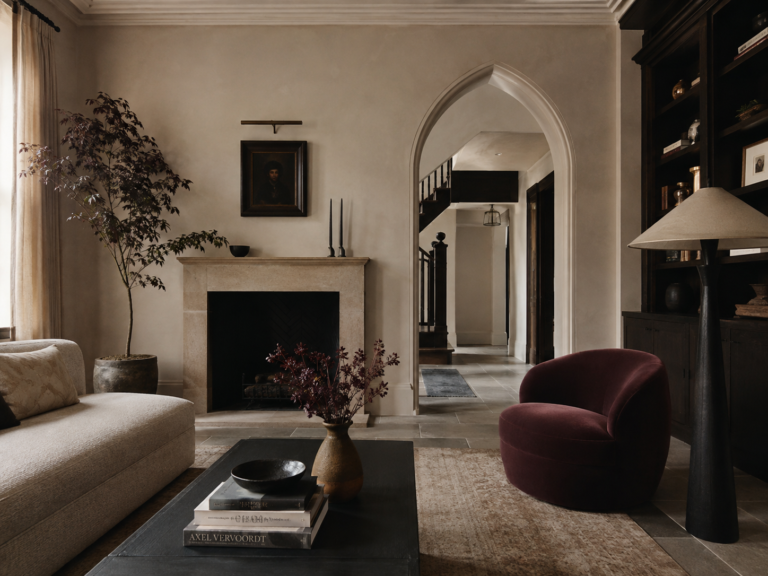
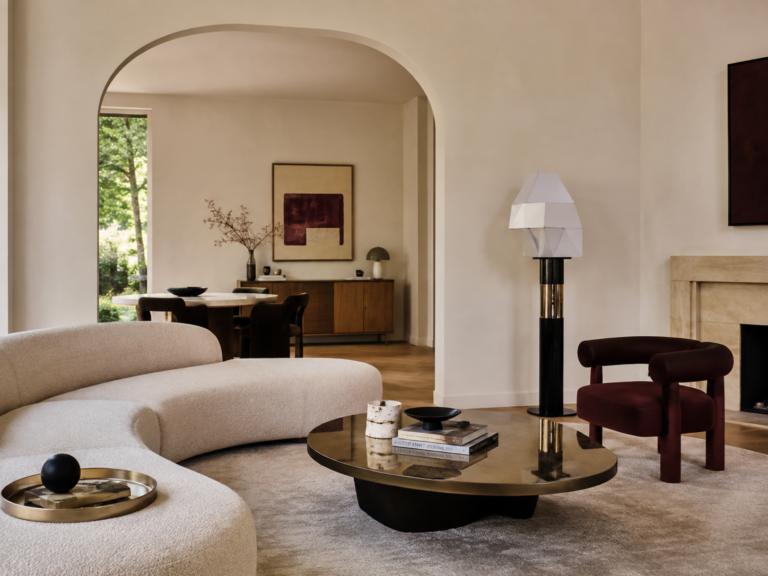
Bring it home: Consider a single curved accent chair upholstered in velvet, a rounded sofa, or dining chairs with gently sweeping backs. You don’t need an entire matching furniture collection.
For a contemporary interpretation, pair sculptural seating with a simple marble-topped table or a dark timber sideboard.
The contrast between soft curves and clean architectural lines is part of what makes this look so appealing.
3. Geometric Floors That Make an Entrance
Few decorative features capture the confidence of Art Deco quite like a geometric floor.
In the entrances and public spaces of grand hotels, flooring was often treated as an important part of the architecture rather than simply a practical surface.
Bold black-and-white marble, contrasting stone borders, chevron patterns and repeating geometric designs could turn an ordinary floor into something spectacular.
These designs often emphasised symmetry, directing the eye towards a staircase, reception desk or impressive doorway.
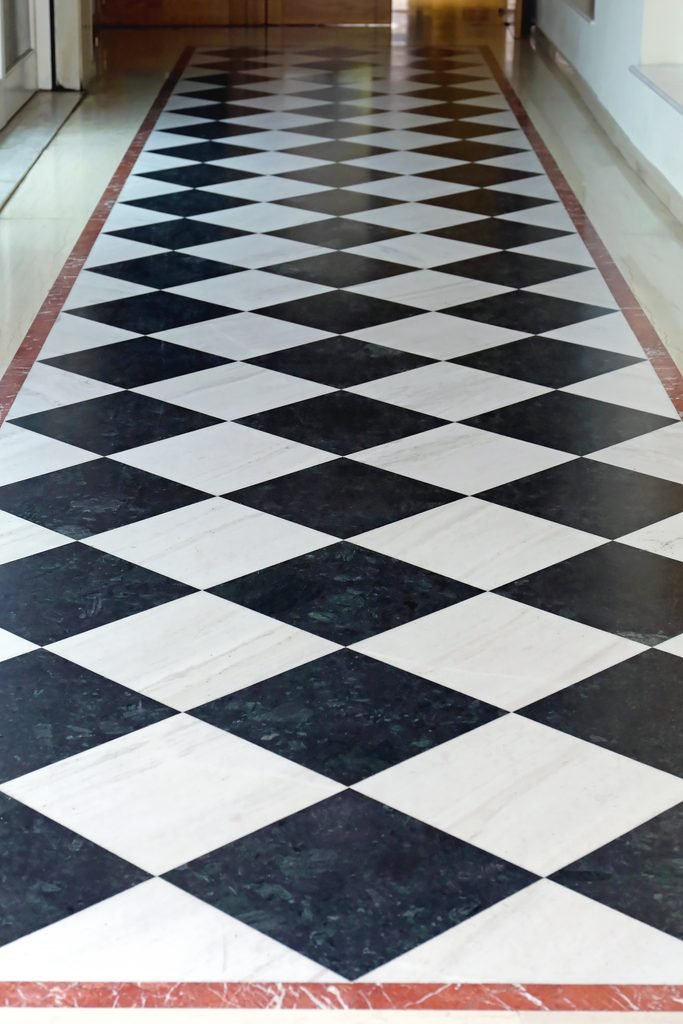
While marble was a luxurious choice, it’s the pattern and contrast that really give these floors their character.
Bring it home: A black-and-white checkerboard floor can make a striking statement in a hallway, bathroom or kitchen. For something subtler, consider small geometric tiles in cream, charcoal or muted green.
If replacing flooring isn’t an option, a patterned rug can introduce a similar sense of rhythm.
Keep the surrounding furnishings relatively restrained and allow the floor to become the room’s focal point.
4. Brass and Bronze Details That Catch the Light
One of the easiest ways to recognise an Art Deco-inspired interior is to look for its metallic details.
Brass and bronze appear in everything from lighting and furniture frames to door handles, mirrors and decorative trims.
In Europe’s glamorous hotel interiors, these finishes helped introduce warmth and a sense of luxury, particularly when paired with marble, dark wood and richly coloured upholstery.
What makes them effective is often their restraint.
A fine brass border around a cabinet or a beautifully shaped metal handle can feel more sophisticated than a room filled with shiny decorative objects.
Art Deco interiors frequently rely on these small accents to connect different elements of a space.

Bring it home: Start with details you already have. Changing cabinet handles, introducing a brass-framed mirror or choosing a bronze table lamp can transform the atmosphere of a room without major expense.
For an understated look, combine aged or brushed brass with cream walls, walnut furniture and warm lighting.
The result feels elegant and collected rather than overly glamorous.
5. Statement Mirrors with Architectural Shapes
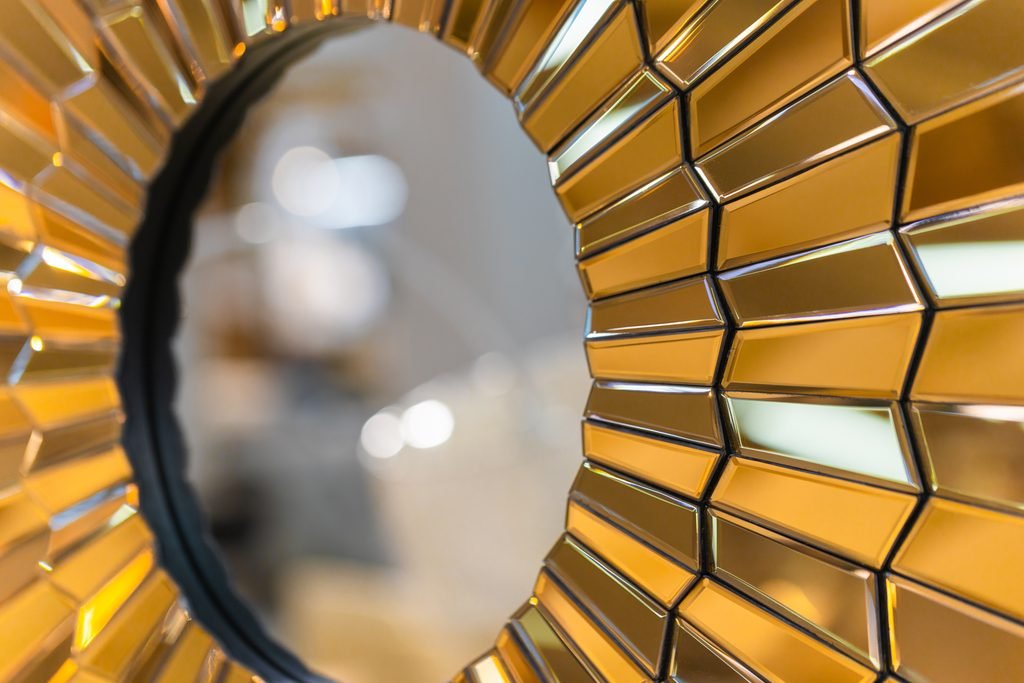
Mirrors were particularly well suited to the glamour of Art Deco.
Not only did they reflect light and make rooms feel more expansive, but their frames offered another opportunity to introduce the geometric shapes associated with the style.
Sunburst mirrors, stepped frames, bevelled glass and elongated forms all have a place in Art Deco-inspired interiors.
Some designs are wonderfully extravagant, while others rely on a simple architectural outline to make their impression.
In a grand hotel, a large mirror could lend importance to an entrance hall or bring additional sparkle to a softly illuminated lounge.
At home, the same principle works on a smaller scale.
Bring it home: Look for a mirror with an unusual geometric silhouette rather than a conventional rectangular frame.
A stepped mirror above a hallway console, an elongated mirror in a bedroom or a sunburst design above a fireplace can all introduce Art Deco character.
If you love a more subtle interpretation, a simple bevelled mirror with a narrow metallic frame can be just as effective.
The aim is to choose a piece that feels intentional, almost like a small work of architecture.
6. Rich Velvet and Jewel-Toned Upholstery
Art Deco interiors were never afraid of colour.
Deep emerald green, ruby red, sapphire blue and rich burgundy could be used to give a room depth and atmosphere, particularly when combined with luxurious fabrics.
Velvet was especially well suited to these interiors because of the way it interacts with light.
A velvet armchair can appear dramatically different throughout the day, shifting between shadowy richness and a soft, luminous sheen.
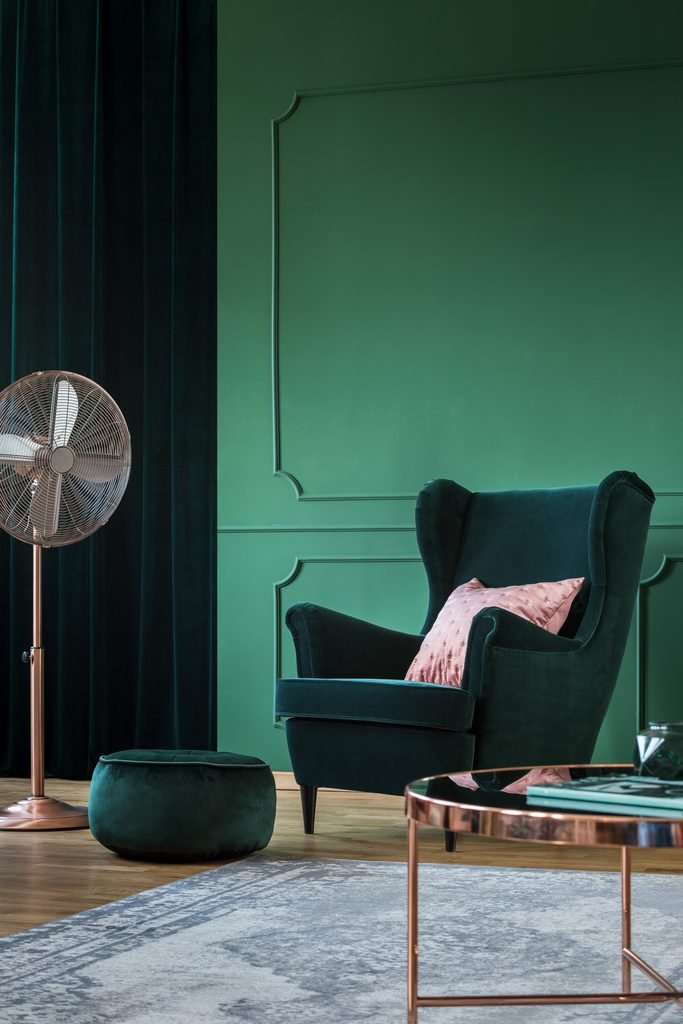
In the lounges of grand hotels, these textures helped create an atmosphere that felt both sophisticated and welcoming.
Today, they’re one of the simplest ways to introduce a little old-world glamour.
Bring it home: Begin with a single statement piece, such as a deep green velvet chair, a burgundy upholstered bench or a pair of midnight-blue cushions.
For a quieter interpretation, consider velvet in warm taupe, tobacco or muted olive.
Pair the fabric with dark timber, warm metallic accents and softly diffused lighting.
You don’t need a room full of jewel tones. Often, one beautiful colour against a restrained background is enough.
7. Fluted Glass and Decorative Room Dividers
Some of the most intriguing Art Deco details are those that combine beauty with practicality.
Fluted and ribbed glass are wonderful examples.
Their textured surfaces soften and distort the view through the glass while allowing light to pass between spaces.
Paired with slender metal frames or dark timber, decorative glazing can create an atmosphere that feels both glamorous and architectural.
You’ll find this kind of detailing in many historic and Art Deco-inspired interiors, particularly around doors, partitions, cabinets and light fittings.
It has a slightly mysterious quality, suggesting what lies beyond without revealing everything at once.

Bring it home: Introduce fluted glass through cabinet doors, a decorative pendant light or a small glazed partition.
In a hotel-inspired bathroom, ribbed glass can provide privacy while maintaining a feeling of openness.
Even a simple glass-fronted cabinet with textured panels can bring an Art Deco influence into an otherwise contemporary room.
This is one of those details that feels luxurious without necessarily being elaborate.
8. Dark Polished Wood and Beautiful Cabinetry
While Art Deco is often associated with marble and metallic finishes, timber played an equally important role in its interiors.
Rich walnut, beautifully figured veneers, glossy cabinetry and carefully crafted furniture contributed warmth and depth.
In grand hotel lounges and private suites, dark timber could create a sense of intimacy, particularly when paired with soft lighting and luxurious textiles.
The appeal lies in both the colour and the craftsmanship.
Simple geometric forms become considerably more interesting when finished in beautiful wood with a subtle sheen.
A polished cabinet or sideboard can feel architectural without being excessively ornate.
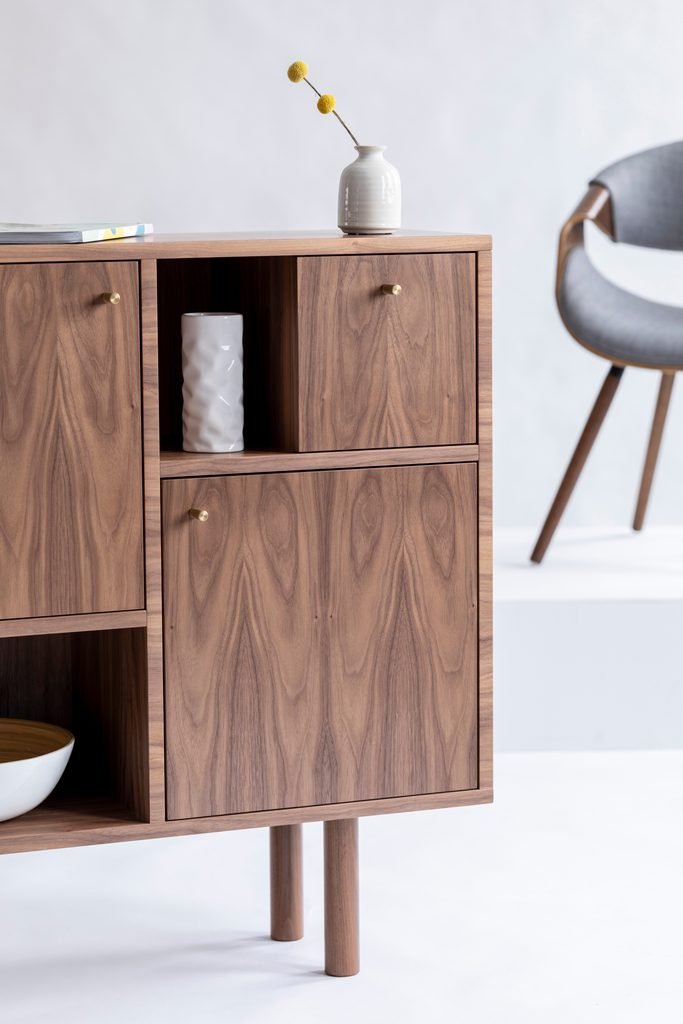
Bring it home: Look for a vintage walnut sideboard, a dark timber drinks cabinet or a beautifully proportioned bedside table.
Second-hand furniture can be particularly rewarding here, especially pieces with interesting veneers, curved corners or original brass handles.
If your home is light and contemporary, a single darker timber piece can introduce the richness associated with Art Deco without overwhelming the space.
Allow the natural grain and finish of the wood to provide much of the decoration.
9. Dramatic Ceilings and Architectural Details
Perhaps the most overlooked aspect of Art Deco interiors is the architecture itself.
It’s easy to admire a beautiful lamp or luxurious sofa without noticing how carefully the surrounding room has been designed.
Look upwards in a grand hotel and you may discover stepped ceilings, geometric plasterwork, curved corners, decorative cornices or beautifully symmetrical arrangements.
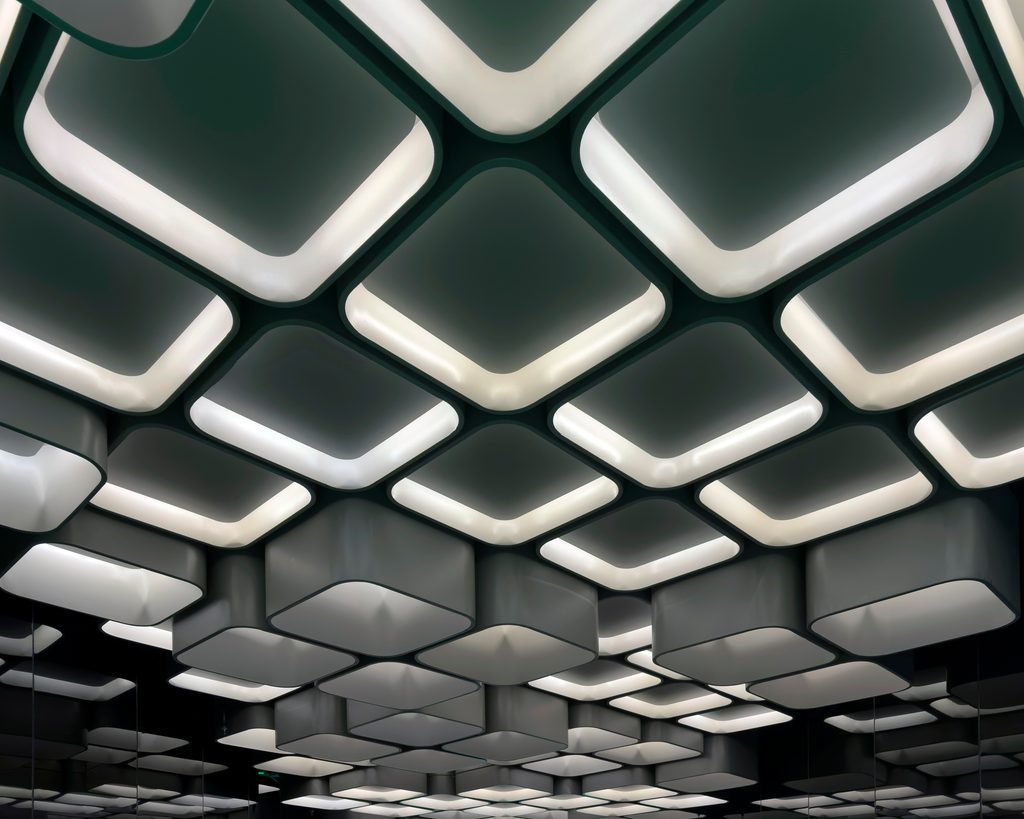
These architectural features often repeat shapes found elsewhere in the room.
A rounded ceiling detail might echo the shape of a glass pendant. A stepped doorway could reflect the outline of a mirror or the pattern of a nearby floor.
It’s this relationship between architecture, furniture and decoration that gives the finest interiors their sense of completeness.
Bring it home: You don’t need to rebuild your ceiling to borrow the idea.
Consider introducing simple decorative mouldings, painting existing architectural details in a contrasting shade, or using a beautifully shaped ceiling light as a focal point.
A wide doorway, symmetrical furniture arrangement or carefully positioned pair of wall lights can also create a more architectural feeling.
The important thing is to look beyond individual decorative objects and think about how the elements of your room relate to one another.
Sometimes, the most effective Art Deco detail is the one you barely notice at first.
How to Bring Art Deco Style into a Modern Home
The beauty of borrowing from Europe’s grand hotels is that you don’t have to recreate an entire historic interior.
In fact, Art Deco often looks its best when a few carefully chosen details are combined with simpler, contemporary furnishings.
A rounded velvet chair beside a modern bookcase. A brass globe lamp on an antique walnut table. A geometric tiled floor beneath otherwise understated bathroom fittings.
These small combinations can introduce atmosphere without making a room feel like a period film set.
If you’re unsure where to begin, consider choosing just three elements: one sculptural shape, one rich material and one beautiful lighting feature.
For example, a curved armchair, a dark wood side table and a warm brass lamp can create a wonderfully inviting reading corner.
Alternatively, a bevelled mirror, geometric tiles and simple metallic fittings can transform a modest bathroom into something reminiscent of a boutique European hotel.
The secret is balance.
Art Deco was a style that celebrated luxury, but its enduring appeal comes just as much from thoughtful proportions, repeating shapes and attention to detail.
The Enduring Glamour of Art Deco
Nearly a century after its great flowering, Art Deco continues to influence the interiors of some of the world’s most atmospheric hotels, restaurants and private homes.
Perhaps that’s because its defining qualities never really go out of fashion: beautiful craftsmanship, confident design, rich materials and a willingness to make everyday spaces feel special.
The next time you find yourself admiring a grand European hotel interior, look a little closer.
Notice the curve of a lamp, the geometry of a floor, the reflection of brass against polished wood or the subtle symmetry of a room.
Often, it’s these smaller details that reveal the true character of the space.
And sometimes, bringing a little of that glamour home requires nothing more than learning to see it.
Because the most beautiful rooms aren’t always the ones with the grandest architecture or the most expensive furnishings. They’re the ones where every detail feels like it belongs.
Britt & Tyler
We’re Britt and Tyler, the two Australians behind Cocktails & Cathedrals. We’re drawn to old buildings, beautiful rooms, bookshops and places that seem to hold a story. Our journal brings those interests together, with a fondness for slow afternoons and a well-made cocktail. We hope it helps you find places you’ll want to linger.
Travel slowly. Stay beautifully.
A little more about us →
One Comment